




Curved Writing Bureau
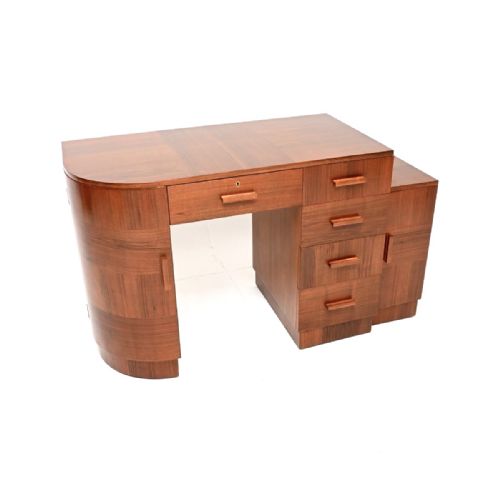
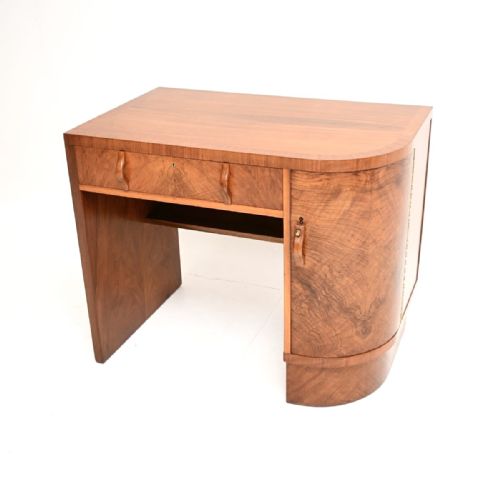
A curved writing bureau offers a dedicated space for correspondence, bringing elegance and practical surface area to a room.
Curved Writing Bureau
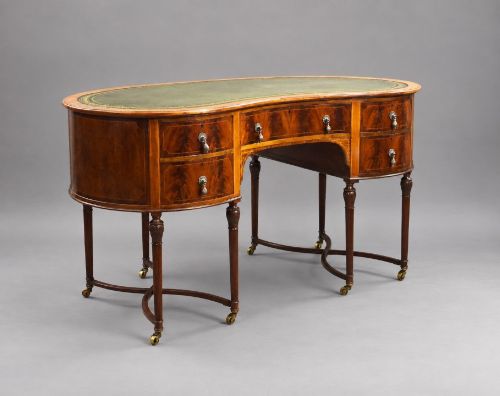
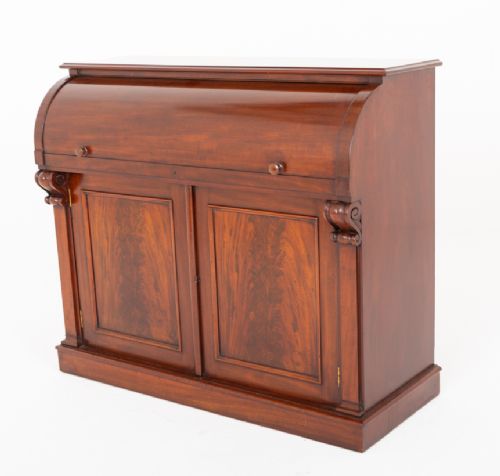
A curved writing bureau encompasses several distinct forms designed for correspondence and paperwork. The listings reveal pieces ranging from kidney-shaped desks to cylinder top desks, Carlton House desks, and bureau bookcases.
The objects serve as functional writing stations incorporating drawers, compartments, and leather writing surfaces. Origins span English workshops to French and Austrian makers, reflecting diverse stylistic influences.
Materials and construction methods
Cabinet makers utilised a palette of fine timbers including mahogany, flame mahogany, satinwood, rosewood, kingwood, walnut, and oak. These woods were frequently selected for their grain patterns and enhanced through marquetry inlay.
Surfaces often incorporate inset leather writing panels framed by timber borders. Hardware typically consists of brass fittings for handles, escutcheons, and structural supports on drawers and writing compartments.
Construction techniques balanced structural integrity with aesthetic refinement, utilising curved framing for cylinder lids and kidney-shaped silhouettes. Cabinet makers employed specialised joinery to shape solid timbers and apply veneers smoothly.
The listings show pieces spanning the 18th, 19th, and 20th centuries, covering Edwardian, Victorian, Georgian, and Art Deco periods.
Distinguishing quality across pieces
Quality reveals itself in the selection of timber veneers and the precision of marquetry inlay. Pieces utilising figured walnut, flame mahogany, or finely patterned satinwood demonstrate superior material choice by the maker.
The complexity of the form dictates distinction, from simple writing tables to intricate Carlton House desks and bureau bookcases with numerous internal compartments. The smoothness of mechanical elements, such as cylinder tops and drawer runners, separates standard execution from finer work.
George Hepplewhite·Maurice Adams
The Curved Writing Bureau Glossary
- Kidney-shaped desk
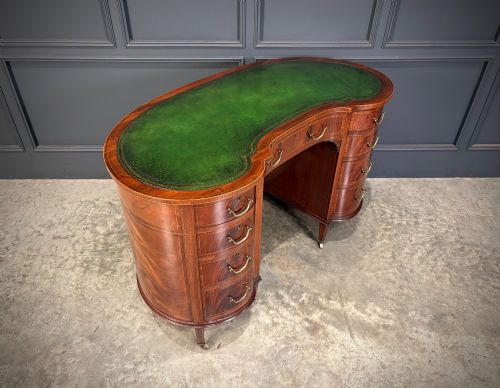
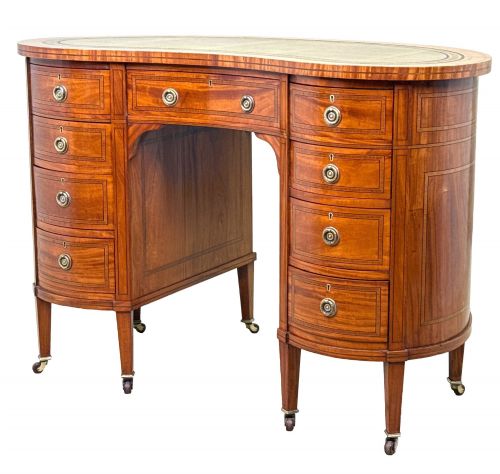
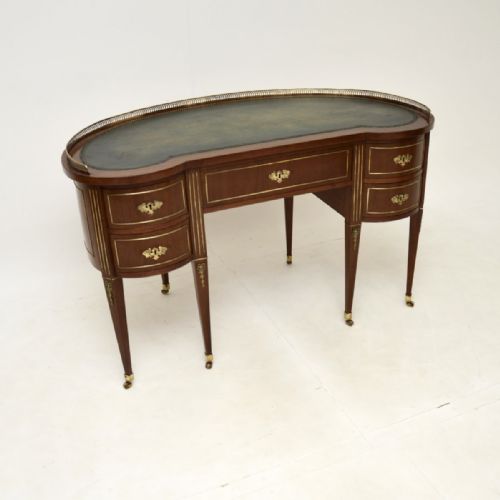
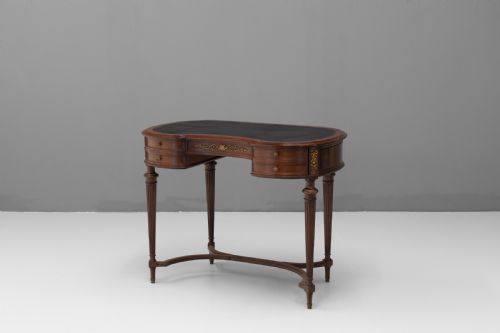
- A writing table featuring a concave curve on the working side to accommodate the user. This curved silhouette appears frequently in Edwardian and Victorian satinwood and mahogany examples.
- Carlton House desk
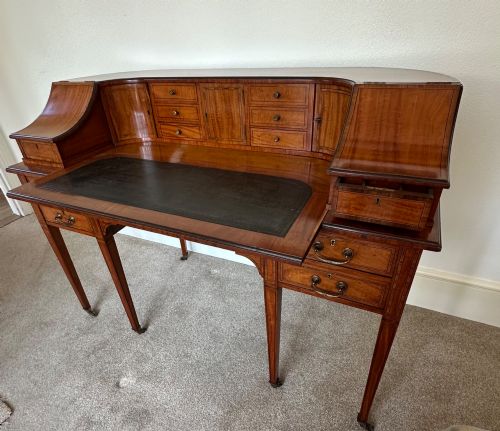
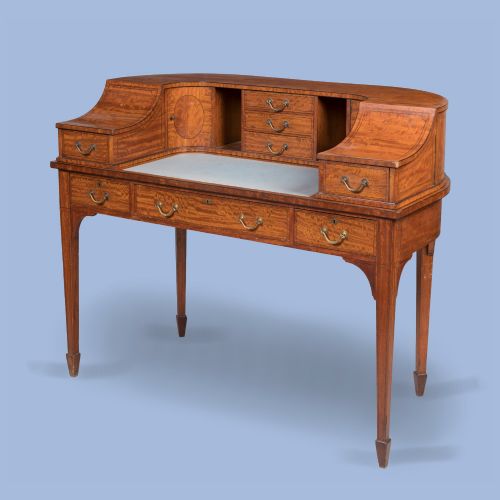
- A form of writing desk featuring a superstructure of small drawers and pigeonholes arranged in a concave curve around the back and sides. George Hepplewhite designed early iterations of this form.
- Cylinder desk
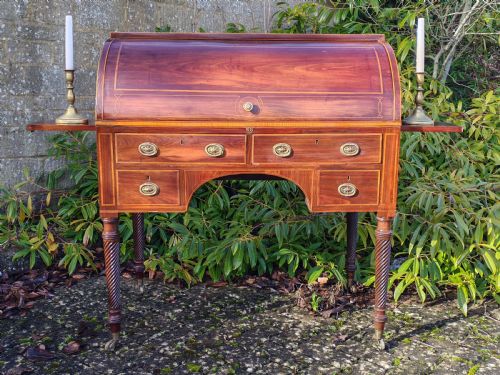
- A writing desk fitted with a quarter-circle rotating wooden cylinder that conceals the writing surface and interior compartments. When rolled open, the writing slide extends forward.
- Escritoire
- A writing cabinet or bureau designed for correspondence. These pieces incorporate fitted compartments and a writing flap behind a fall-front or curved door.
- Marquetry
- The art of applying pieces of veneer to a structure to form decorative patterns and pictures. Makers utilised contrasting timbers such as satinwood and mahogany to create detailed surface designs.
Curved Writing Bureau: Frequently Asked Questions
What is a curved writing bureau?
A curved writing bureau is a desk designed for correspondence featuring rounded contours, such as a kidney shape or a cylindrical lid. These pieces incorporate storage compartments, drawers, and writing surfaces.
They appear in various styles including Edwardian, Victorian, and Art Deco, utilising timbers like mahogany, satinwood, and walnut.
How do I identify an Edwardian desk?
Edwardian desks often feature satinwood or mahogany construction, frequently shaped as kidney desks or Carlton House desks. They date from the early 1900s and late 1890s.
These pieces typically display light inlaid decoration and refined proportions suited for residential writing rooms.
What is a Carlton House desk?
A Carlton House desk is a specialised writing desk with a curved superstructure of small drawers and pigeonholes enclosing the writing area. George Hepplewhite designed early versions of this form.
They provide extensive compartment space while maintaining a polished aesthetic suitable for prominent placement in a room.
How were cylinder desks used?
Cylinder desks served as private writing stations where correspondence could be secured simply by rolling down the wooden cylinder. The mechanism covers both the writing surface and internal pigeonholes.
Victorian and Georgian examples often combine this function with mahogany or satinwood construction and leather writing inserts.