


Curved Wood Furniture
Curved wood furniture brings together smooth lines and rich grains, offering pieces shaped to sit gracefully in any room.
Curved Wood Furniture
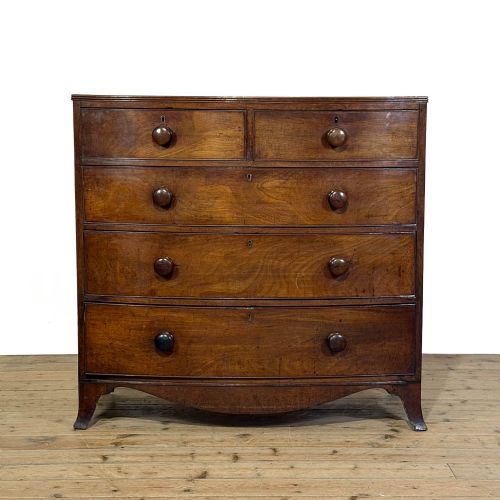
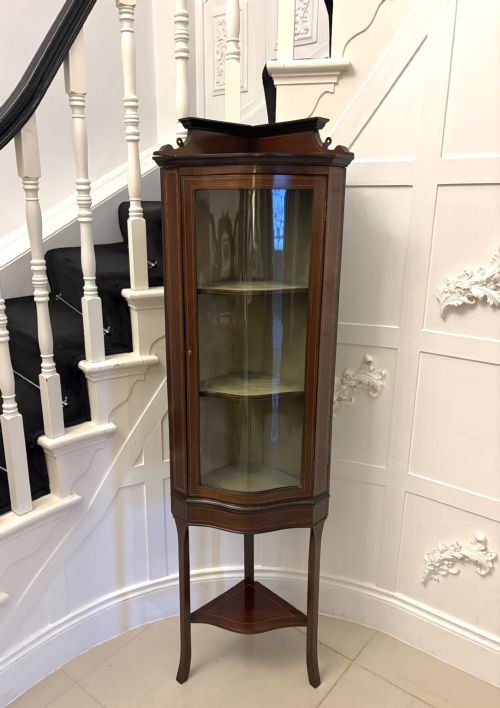
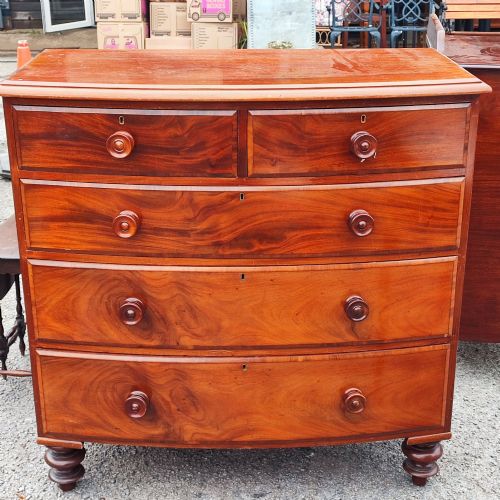
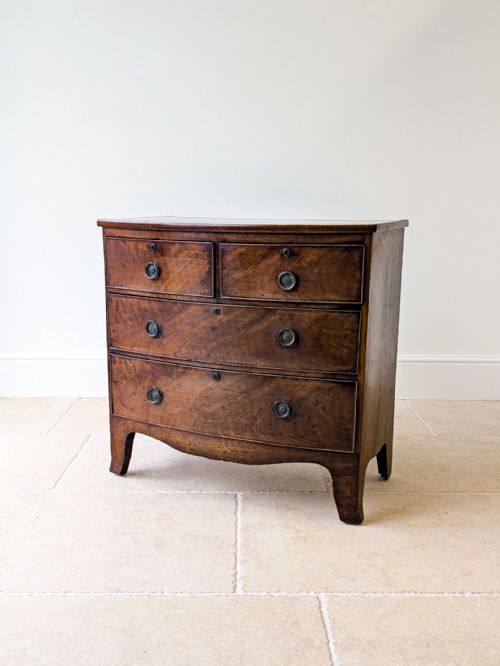
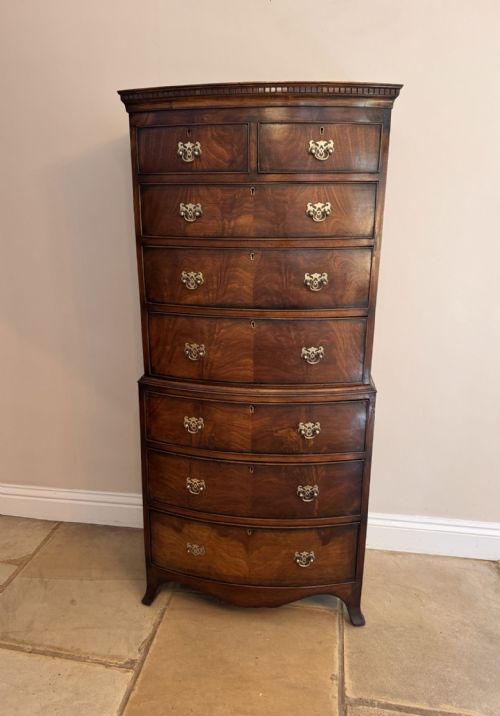
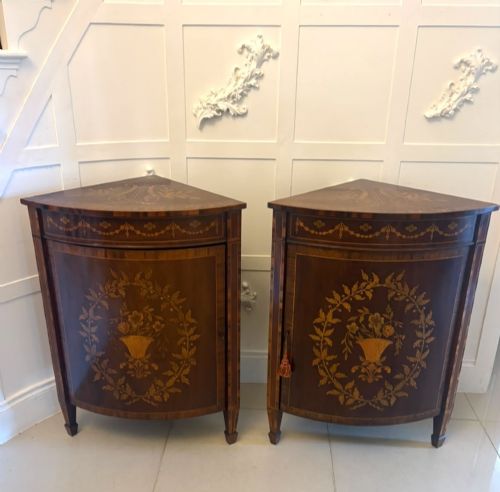
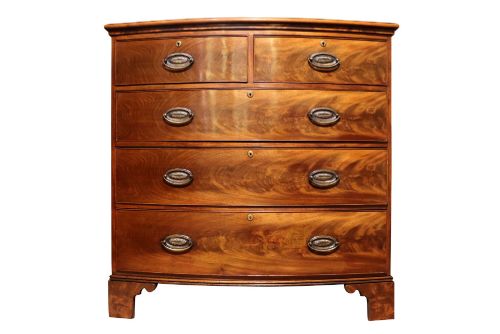
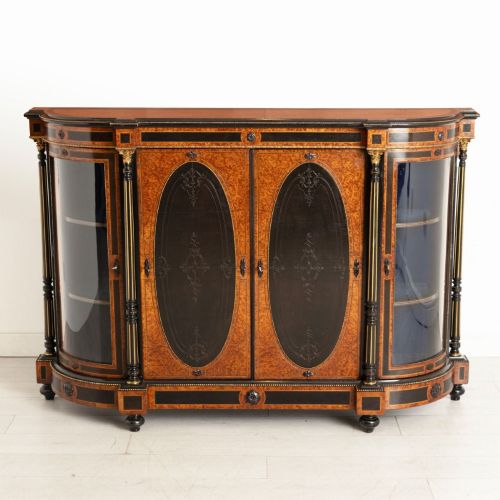
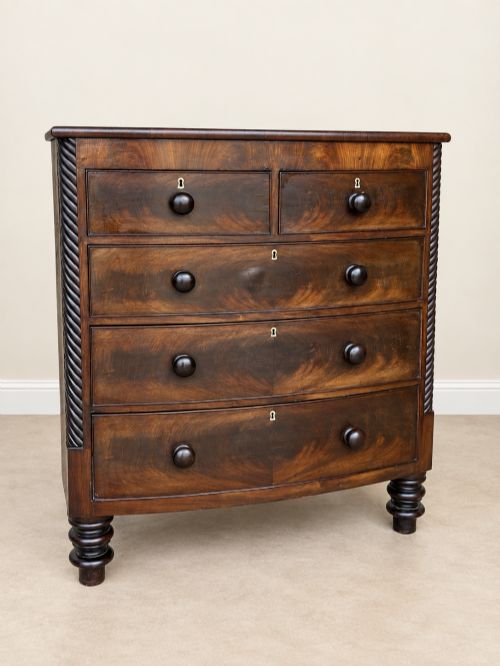
Curved wood furniture spans centuries of design, taking the form of bowfront chests of drawers, rounded cabinets, and sweeping armchairs. When exploring curved wood furniture, pieces in mahogany dominate the selection alongside walnut, satinwood, and bentwood forms.
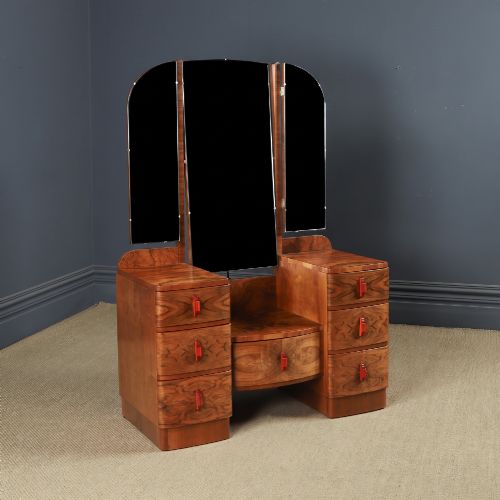
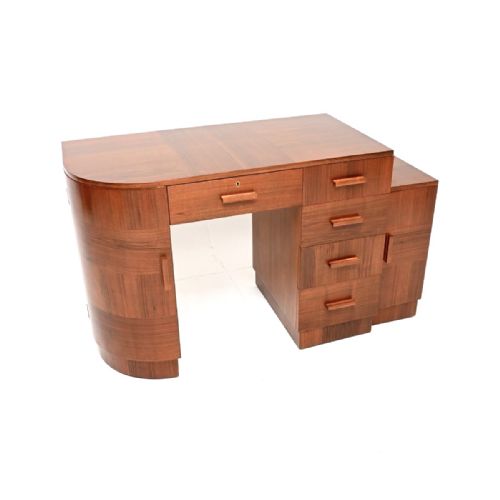
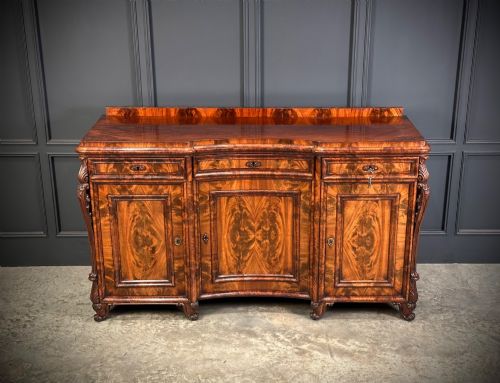
The objects range from Georgian and Victorian storage pieces to Art Deco tables, desks, and seating. Bowfront chests form a substantial portion of the available items, originating from various nineteenth and early twentieth-century periods.
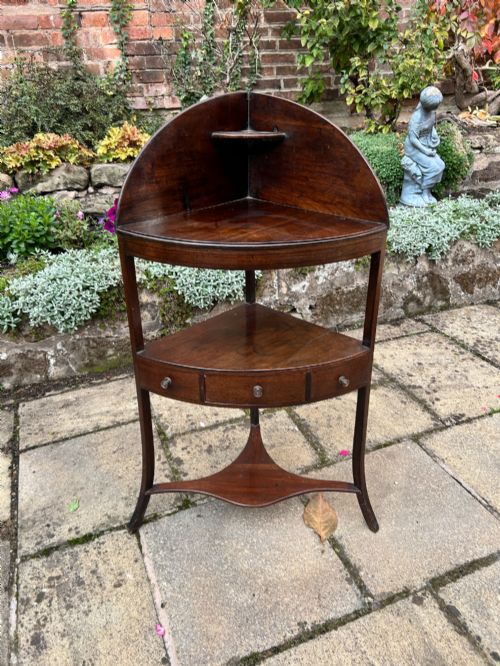
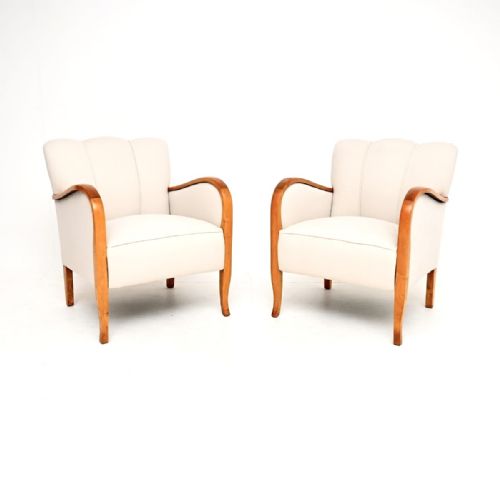
Makers and designers from the nineteenth and twentieth centuries utilised natural timber properties to create rounded facades and sweeping profiles. Buyers encounter everything from formal Georgian corner stands to twentieth-century bentwood armchairs.
How they were made
Cabinet makers worked with solid timbers and wood veneers like mahogany, walnut, and satinwood, applying heat and lamination techniques to achieve curved fronts. Bowfront chests and rounded cabinets relied on careful timber selection to follow continuous sweeping lines without splitting.
Bentwood techniques shaped softened timber into continuous loops for chairs, while specialised joinery supported serpentine and bombe profiles. Brass hardware, inlay work, and glass panels completed pieces ranging from Georgian drawers to Art Deco seating.
Curved Wood Furniture Retail Price Guide 2026
Typical asking prices for curved wood furniture among the pieces listed under this phrase on Sellingantiques today, from the lower quarter to the upper quarter. They describe what is for sale here now, not the wider market.
Listings feature mahogany, walnut, satinwood, and bentwood across periods spanning from the Georgian era through Art Deco.
What varies in quality
Quality rests in the precision of the timber curves and the matching of wood grain across rounded drawer fronts and cabinet doors. Superior examples maintain structural integrity in the bent framework and display well-figured veneers without lifting or heavy patching.
The sophistication of the joinery and the retention of original brass handles or decorative inlays set finer pieces apart. Workshop execution dictates whether a curved profile remains taut and balanced over decades of use.
C. Hindley & Sons·Heals·Betty Joel
The Curved Wood Furniture Glossary
- Bowfront
- A convex curved front profile commonly found on chests of drawers and cabinets. This shape softens the corners of case pieces and displays figured wood grains effectively.
- Bentwood
- Wood that is moistened with steam or heat and bent into curved structural forms. It creates lightweight yet resilient frames for chairs and tables.
- Bombe
- A swollen or bulging out-curved shape seen on continental case furniture. The profile requires skilled woodworking to taper gracefully from top to base.
- Veneer
- A thin layer of decorative wood applied to a secondary timber base. Figured veneers give curved surfaces intricate patterns and visual depth.
- Canterbury
- A low stand with partitioned sections designed for holding sheet music or books. These pieces often incorporate curved dividers or slender turned legs.
Curved Wood Furniture: Frequently Asked Questions
How do I care for bentwood?
Bentwood furniture benefits from stable indoor humidity levels to prevent the wood from drying out or shifting. Keep pieces away from direct heat sources and strong sunlight.
Dust regularly with a dry cloth and apply a suitable wax polish periodically to nourish the wood surface.
What distinguishes Art Deco curves?
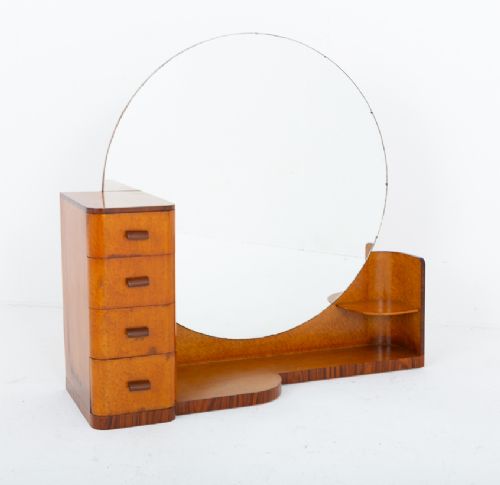
Art Deco curved furniture relies on streamlined, geometric sweeps executed in exotic woods like rosewood and satin birch. These twentieth-century designs favour clean, uninterrupted lines over traditional ornamentation.
Chairs, desks, and dressing tables from this era emphasise rounded silhouettes and modern upholstery.
Where does bentwood work best?
Bentwood seating and occasional tables fit well in dining rooms, studies, or seating areas where lighter frames are desired. Their organic curves complement both traditional and modern interiors.
Armchairs and side tables offer flexible placement due to their open and airy profiles.