



Curved Wall Console Table
A curved wall console table is a half-round or serpentine focal point designed to anchor a hallway or principal room.
Curved Wall Console Table
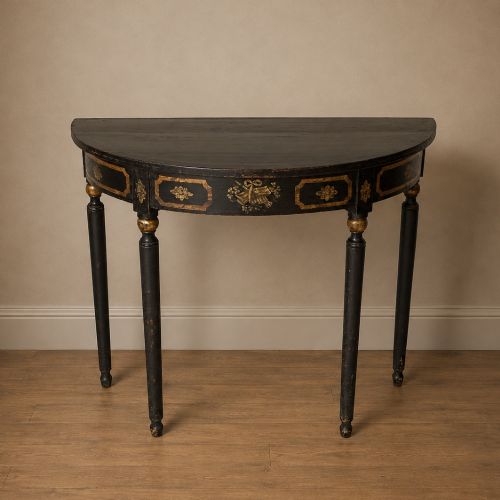
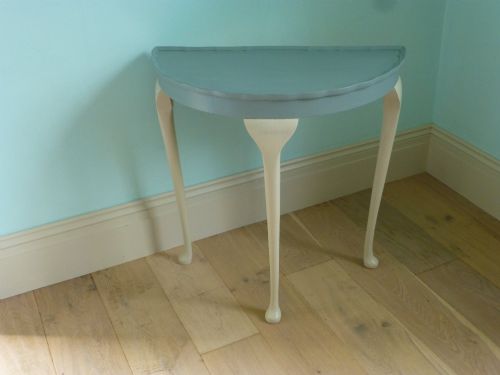
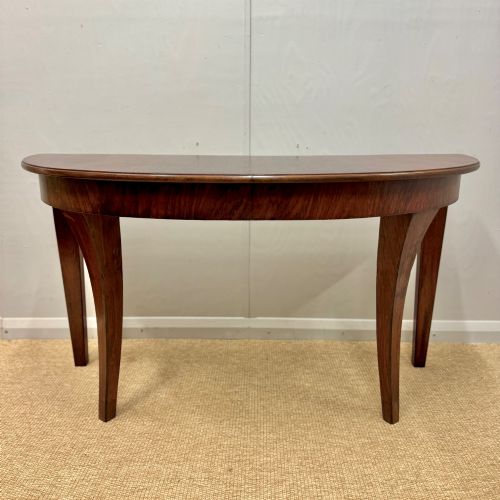
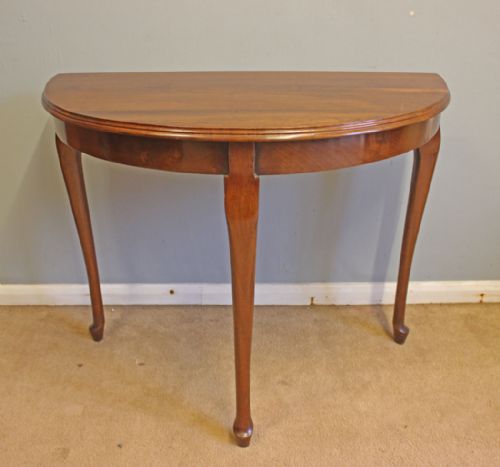
When you search for a curved wall console table, you are looking at demi-lune, serpentine, and half-round ledge tables designed to sit flush against a wall. The pieces you are most likely to meet on this page take the form of demi-lune hall tables and side tables shaped to save floor space while offering a display surface. They appear across periods from the eighteenth century up to the nineteen-thirties.
The architectural shape of a curved wall console table relies on a flat rear edge that meets the plaster while the front sweeps outward in a half-circle or gentle wave. Makers built these forms in oak, walnut, mahogany, and satinwood, frequently finishing them with paint, gold leaf, or marble tops. They serve primarily as decorative accents in entrance halls and formal reception rooms.
How they were made
Cabinetmakers constructed the carcase of a curved wall console table using timber such as mahogany, oak, walnut, and satinwood, often applying burr veneers or decorative paint finishes. Some examples incorporate marble slabs fitted directly into the top surface to provide a durable and cool stage for ornaments.
Details on these tables include parcel gilt highlights, hand-painted decoration, and concave legs that follow the rhythmic sweep of the apron. Workshops employed traditional joinery to bend or shape timber to the specific demi-lune and serpentine profiles required for wall placement.
The listings show curved wall console tables fashioned from walnut, satinwood, mahogany, and painted wood, spanning the Georgian period to the nineteen-thirties.
What varies in quality
The distinction between standard examples and superior pieces rests on the choice of timber figure, such as burr walnut or figured satinwood, and the crispness of carved or painted details. Finer tables demonstrate disciplined proportions where the curve of the top mirrors the structural support of the legs without heavy visual weight.
Surface finish plays a major role in overall quality, separating workshop items with simple painted pine from those featuring meticulous parcel gilding, high-grade marble tops, or work stamped by notable firms like Maple and Co. The integrity of the original construction and the subtlety of the serpentine sweep define the upper tier of these tables.
Maple and Co
The Curved Wall Console Table Glossary
- Demi-lune
- Half-moon shape. This term describes tables with a flat back edge designed to stand against a wall and a semicircular front.
- Serpentine
- Waving contour. The term refers to a front edge that curves outward in the centre and inward at the sides, or vice versa.
- Parcel gilt
- Partially gilded. It describes woodwork decorated with gold leaf applied only to specific carved details or mouldings.
- Maserbirch
- Burl birch. A Scandinavian timber showing a spotted, highly figured grain pattern often found on Biedermeier pieces.
- Concave
- Inwardly curved. The word defines legs or aprons that sweep inward rather than standing straight or swelling outward.
Curved Wall Console Table: Frequently Asked Questions
What is a curved wall console table used for?
These tables provide a compact surface for lamps, clocks, and decorative objects in narrow spaces like hallways and landings. Because they anchor directly against the wall, they offer display potential without obstructing foot traffic.
Historically, they also served as serving surfaces or focal points beneath a matching mirror in formal reception rooms. Their shallow depth makes them practical for modern interiors where floor space is limited.
How do I style a curved wall console table?
Place the flat back edge securely against a blank wall in an entryway or living room to let the curved front draw the eye. Pairing the table with a hanging mirror or a piece of artwork above it creates a balanced focal point.
Keep the arrangement on top uncluttered to highlight the wood grain, marble top, or painted finish of the piece. Avoid overloading the surface so the architectural sweep of the demi-lune or serpentine shape remains visible.
How can I tell the period of a console table?
Dating relies on identifying the primary timbers, the style of the legs, and the finishing techniques used on the carcase. Pieces from the Georgian era often feature satinwood or painted decoration, while nineteenth-century versions lean towards rosewood, walnut, and heavier revival styles.
Later pieces from the nineteen-twenties and thirties display simpler oak or painted constructions. Examining the construction methods underneath and behind the table helps confirm its age.
Are these tables sturdy without being bolted to the wall?
Many console tables were originally designed to rely partly on wall fixings or brackets for absolute stability, particularly demi-lune shapes with only two front legs. Four-legged versions stand independently, but wall attachment remains a sensible precaution for pieces carrying heavy marble tops.
Checking the leg placement and floor contact will tell you whether a table requires additional support. Most examples function well on level floors when positioned correctly.