
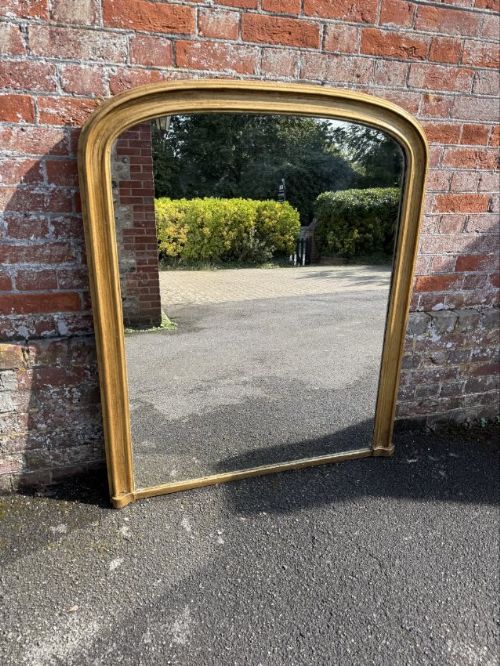
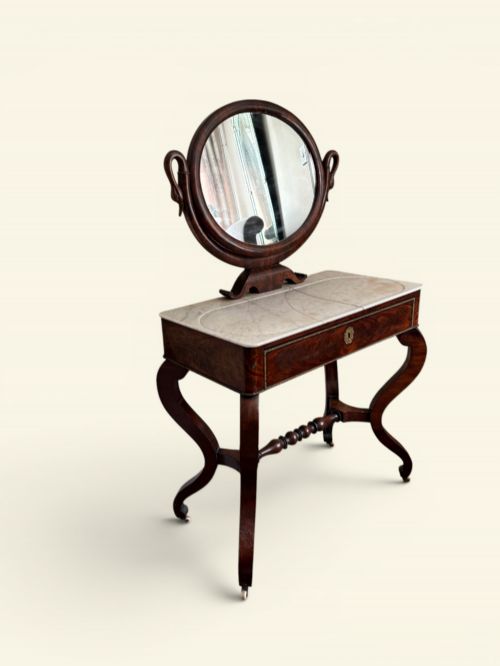
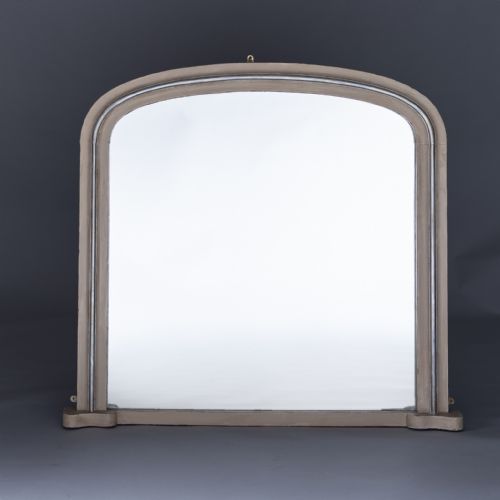


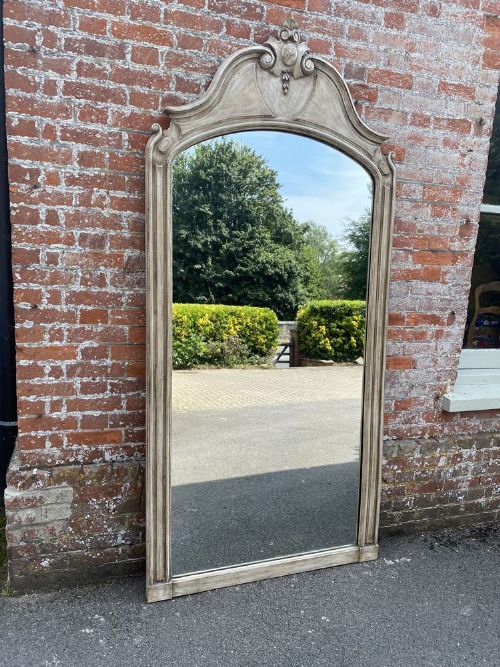
Curved Top Mirror
These curved top mirror examples offer elegance through fluid arched forms, bringing period character and reflective depth to any interior.
Curved Top Mirror
A curved top mirror brings distinct architectural presence to a room, predominantly appearing across the nineteenth century in both English and French traditions. Buyers searching for a curved top mirror frequently encounter large overmantle designs, wall mirrors, and dressing table mirrors that utilise arched or shaped silhouettes.
The inventory demonstrates a clear division between imposing Victorian overmantle pieces and refined French wall mirrors. These items often span the eighteenth and nineteenth centuries, incorporating specific regional styles such as French provincial and Mid-Victorian aesthetics.
Construction and materials
Makers constructed these frames using solid woods such as mahogany, oak, and satinwood, frequently applying layers of gesso to build up intricate decorative motifs. Gold leaf and paint finishes were then meticulously applied to the prepared wooden surfaces.
Mirrors from the Victorian and French traditions integrate traditional silvering techniques alongside brass hardware where functional adjustments are required. Carved wooden elements define the arched crowns, uniting structure and ornamentation.
Listings feature 19th-century pieces alongside 18th-century examples, utilising materials such as gesso, gold leaf, mahogany, marble, and brass.
Distinguishing quality
Quality rests in the crispness of the carved wood and gesso ornamentation, where superior pieces retain sharp relief rather than softened contours. The depth of the gilding and the integrity of the original paint layers further separate standard examples from finer works.
Proportion and scale dictate the visual impact of each piece, with larger overmantle mirrors requiring robust internal framing to support the heavy glass. The retention of original mirror plates with authentic foxing adds considerable merit.
The Curved Top Mirror Glossary
- Overmantle mirror
- A large mirror designed to hang specifically above a fireplace mantelpiece. These pieces often feature wide frames and arched tops to command the wall space.
- Gesso
- A plaster-like mixture applied to wood frames to create a smooth surface for gilding or painting. Artisans carved intricate details directly into this layer.
- Parcel-gilt
- A decorative treatment where only specific portions of a frame are gilded with gold leaf, contrasting with painted or exposed wood.
- Silvered
- A term describing the reflective backing applied to glass. Older pieces often exhibit natural oxidation known as foxing.
Curved Top Mirror: Frequently Asked Questions
How do I clean an antique mirror frame?
Dust gently using a dry, soft brush to protect fragile gesso and gold leaf surfaces. Avoid chemical sprays that strip historic finishes.
Use a minimal amount of distilled water on a cloth for the glass plate, taking care not to let moisture seep behind the frame edges.
Are curved top mirrors fragile?
The combination of heavy glass plates and intricate wooden or gesso frames requires careful handling during movement. Securing the piece properly to wall studs is essential for safety.
Historic silvering on the glass can also degrade if exposed to damp environments over extended periods.
How do I date a curved top mirror?
Examine the construction methods visible on the reverse of the frame, including joinery and screw types. Material choices like oak, mahogany, or satinwood offer further chronological clues.
Stylistic indicators such as Victorian proportions or French provincial carving help narrow the manufacturing era.