

Curved Study Desk
A curved study desk offers an elegant workspace, combining practical form with rich period materials to anchor a room.
Curved Study Desk
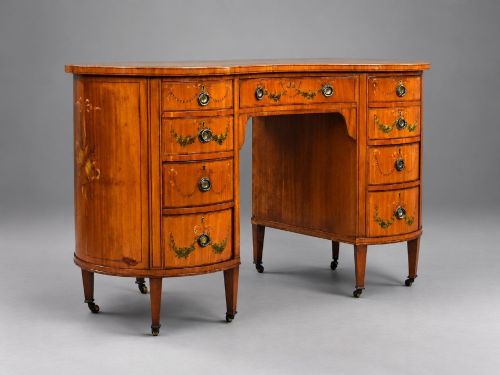
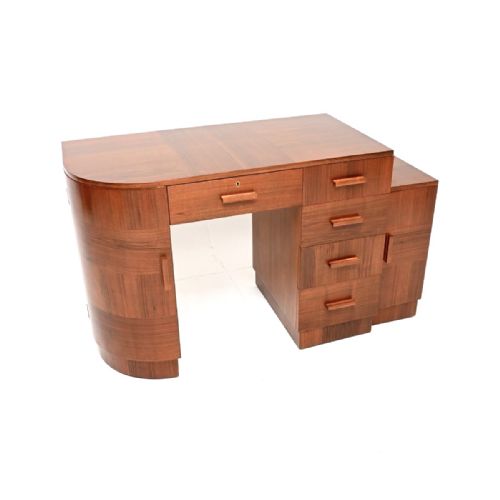
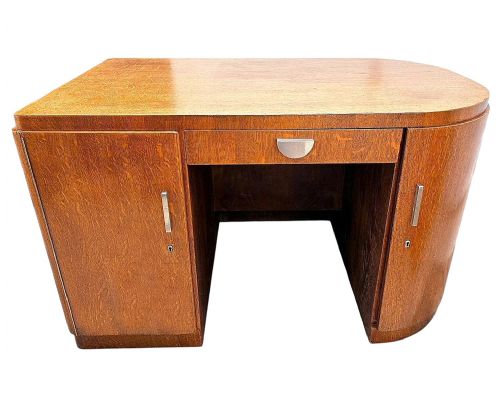
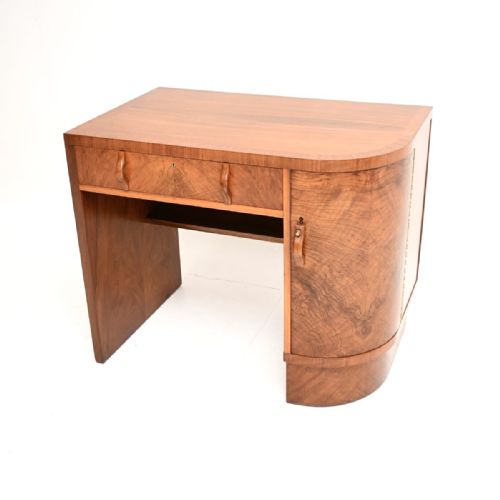
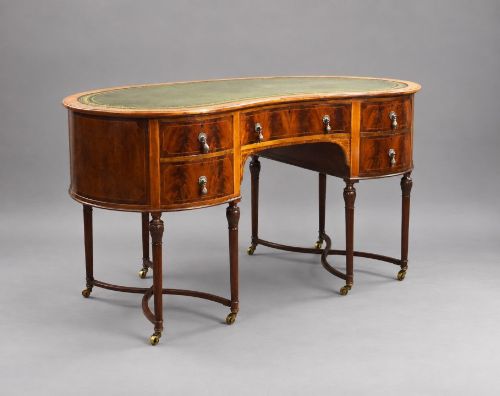
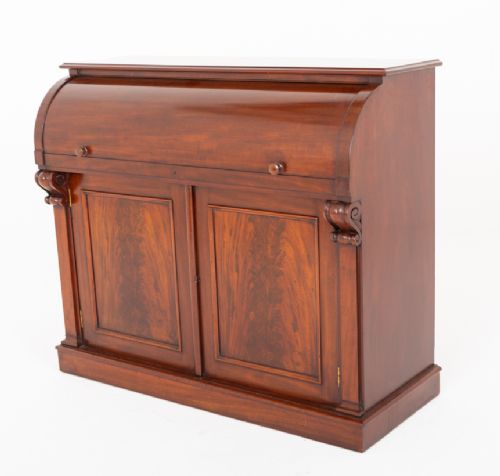
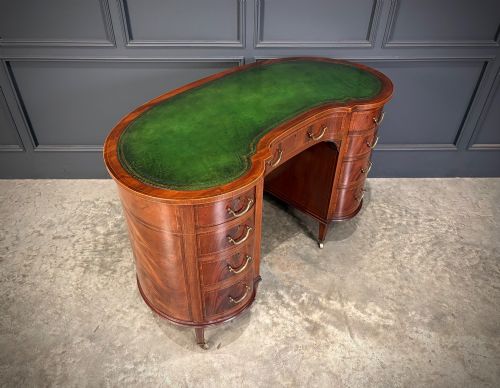
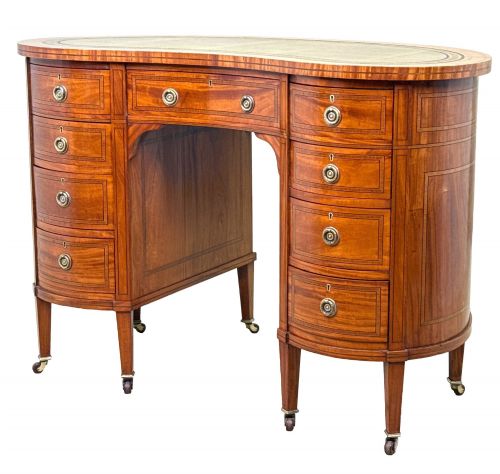
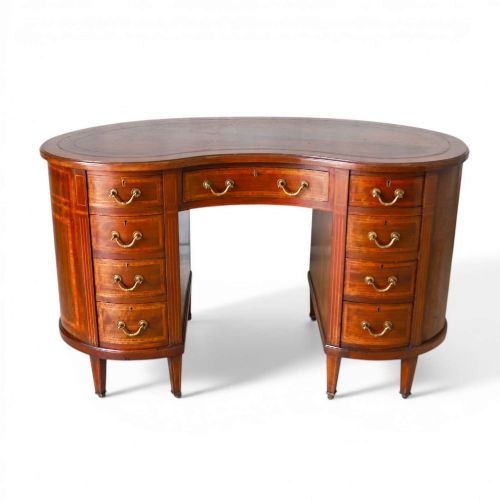
A curved study desk encompasses several distinctive forms designed for writing and administration, featuring sweeping lines that set them apart from standard rectangular tables. Buyers searching for a curved study desk encounter kidney-shaped writing tables, cylinder desks, and serpentine kneehole variations originating from the Georgian, Victorian, and Edwardian periods.
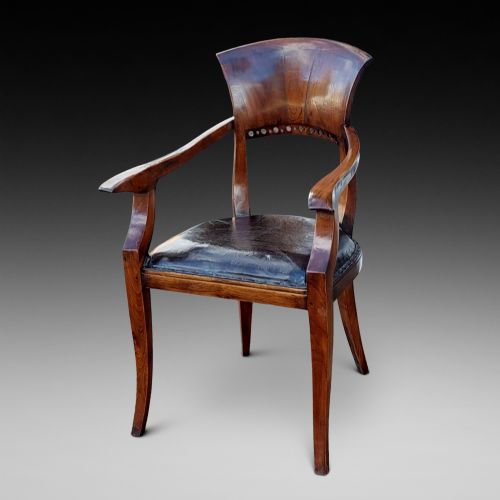
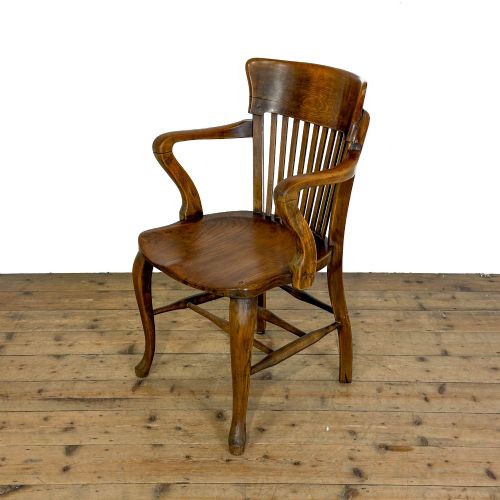
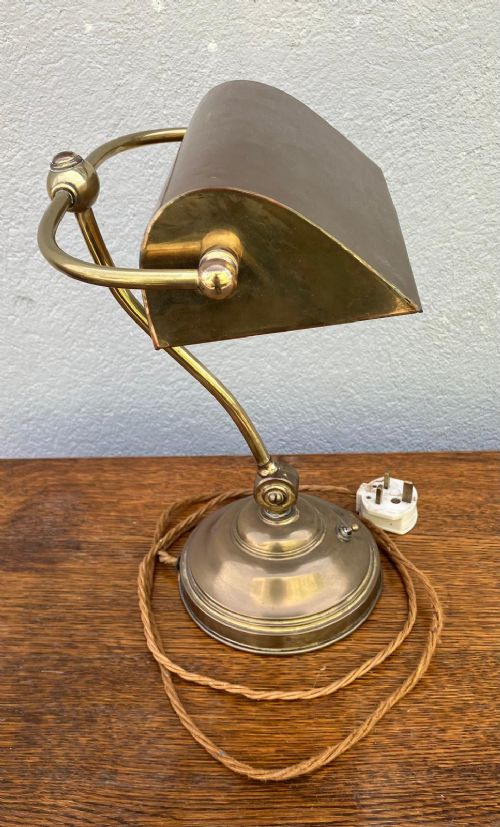
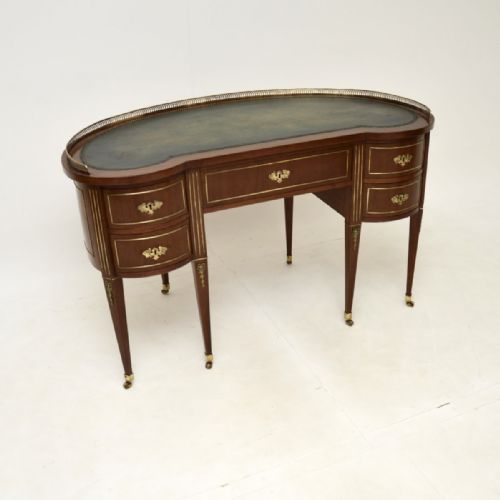
The kidney-shaped desk dominates the selection, celebrated for its characteristic concave front that wraps around the user. Alongside these writing surfaces, the category extends to associated seating such as swivel armchairs and functional accessories like brass and bakelite desk lamps.
Materials and construction
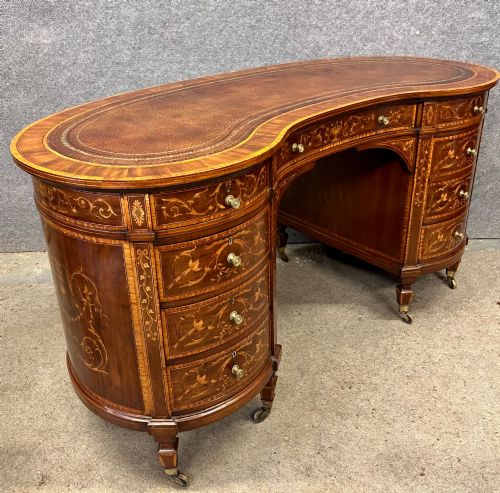
Cabinetmakers utilised robust timbers including mahogany, satinwood, walnut, and oak, frequently selecting veneers like flame mahogany or burr elm to display intricate grain patterns. Inlaid decoration in contrasting woods defines many pieces, while structural integrity relies on traditional joinery methods suited to sweeping curves.
Writing surfaces typically incorporate inset leather tops, often tooled with gilt borders, providing a durable and refined working area. Metal components appear in brass handles, fittings, and swan-neck desk lamps, balancing the warmth of the primary timber structures.
Curved Study Desk Retail Price Guide 2026
Typical asking prices for curved study desk among the pieces listed under this phrase on Sellingantiques today, from the lower quarter to the upper quarter. They describe what is for sale here now, not the wider market.
Assessing quality and craftsmanship
Quality rests upon the precision required to shape curved timbers and maintain harmonious proportions across the writing surface and pedestals. Superior examples display carefully chosen veneer matching, meticulous marquetry inlay, and timber stability that prevents warping along complex radiuses.
The retention of original fittings, such as brass hardware and leather inserts, elevates a piece significantly. Finer construction also shows in the interior drawer assembly and the finish applied to secondary timbers.
Collinson and Lock·Edward William Godwin·Maurice Adams
The Curved Study Desk Glossary
- Kidney-shaped
- A desk or table featuring a concave front curve that wraps around the seated user. This ergonomic form gained popularity during the late eighteenth century and saw revivals through the Victorian and Edwardian eras.
- Carlton House desk
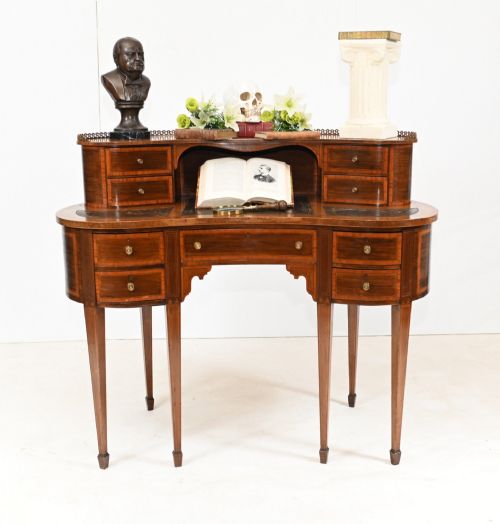
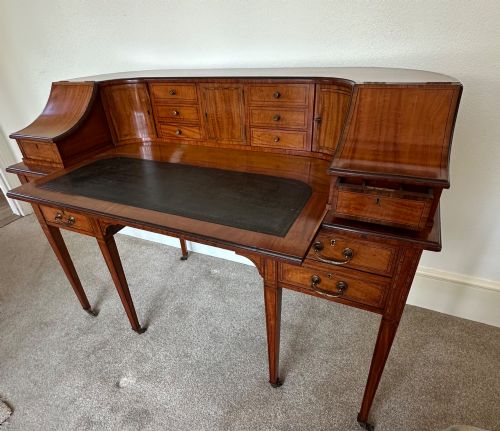
- A form of writing desk with a fitted superstructure curving around the back and sides of the writing surface. It typically incorporates small drawers and pigeonholes arranged in a horseshoe configuration.
- Cylinder desk
- A writing desk featuring a rotating quarter-cylinder shutter that conceals the writing surface and internal compartments when closed. This mechanism requires precise cabinetwork to operate smoothly along its curved track.
- Serpentine
- A shape characterised by a central convex curve flanked by concave sections, or vice versa. This contour adds movement and visual complexity to the front of a desk or cabinet.
- Inlay
- A technique where pieces of contrasting wood, metal, or shell are inserted into depressions carved into the primary timber surface to create decorative patterns.
Curved Study Desk: Frequently Asked Questions
How do I style a curved desk in a modern room?
A curved study desk works effectively when placed away from walls, allowing the sweeping back to function as a visual centrepiece in an open space. Pairing the desk with a period swivel armchair or a complementary side chair creates a cohesive study arrangement.
Because these desks feature distinct silhouettes and rich timber grains, surrounding decor can remain understated. Proper lighting, such as a period brass or bakelite desk lamp, complements the functional character of the workspace.
What is a Carlton house desk?
A Carlton house desk is a specialised writing table featuring a raised, curved superstructure fitted with numerous small drawers and compartments. This layout provides extensive organisation while maintaining a compact footprint.
Originating in the late eighteenth century, these desks were designed for correspondence and paperwork, offering a secure and orderly workspace. The enclosing superstructure follows a graceful curve around the writer.
How do I care for a leather desk top?
Leather writing surfaces require gentle cleaning with a slightly damp cloth to remove dust and prevent the material from drying out. Avoid harsh chemical cleaners or excessive moisture, which can damage the gilt tooling.
Conditioning balms specifically formulated for antique leather help maintain suppleness over time. Protecting the surface from direct sunlight prevents fading of the leather and the surrounding timber.
How do I identify a Georgian desk?
Georgian desks display restrained classical proportions, solid timber construction, and precise joinery characteristic of the eighteenth and early nineteenth centuries. Mahogany is the predominant wood, often accented with subtle cockbeading around drawer edges.
Interior construction utilises secondary woods like oak or pine, and hardware consists of cast brass handles appropriate to the period. These pieces prioritize structural honesty and balanced design over excessive ornamentation.