


Curved Mirror Dressing Table
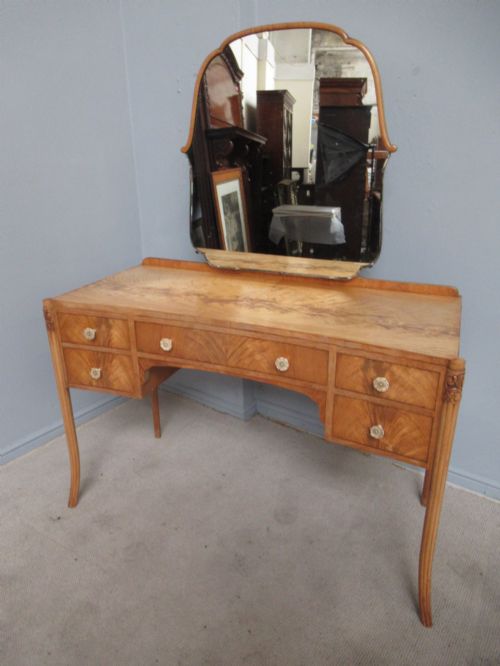
A curved mirror dressing table brings symmetry and sheen to a bedroom, and the most common versions here date from the Art Deco era.
Curved Mirror Dressing Table
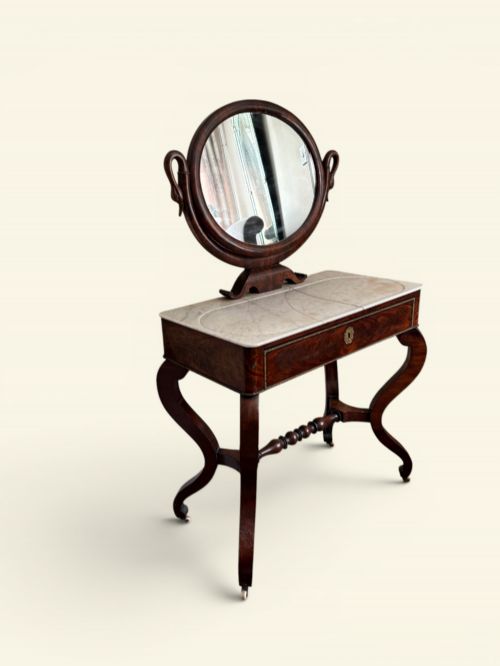
A curved mirror dressing table serves as a functional and decorative vanity, combining a fitted glass surface with storage compartments. Buyers looking for this search phrase will encounter vanity chests, pedestal dressing tables, and dressing tables paired with chairs.
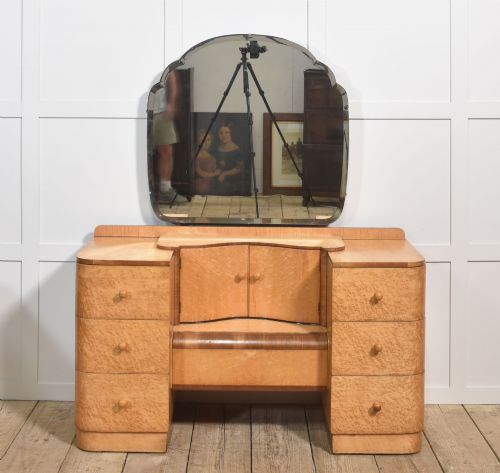
The selections span multiple periods, ranging from 18th-century French designs and Queen Anne walnut pieces to Victorian items and 1930s modernist works. Art Deco examples dominate the available selection, often showcasing sweeping lines and symmetrical wood veneers.
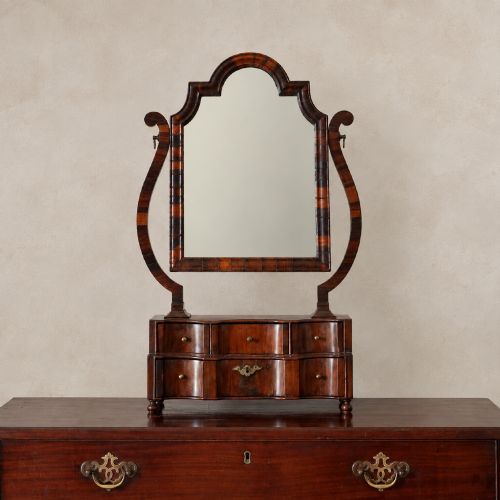
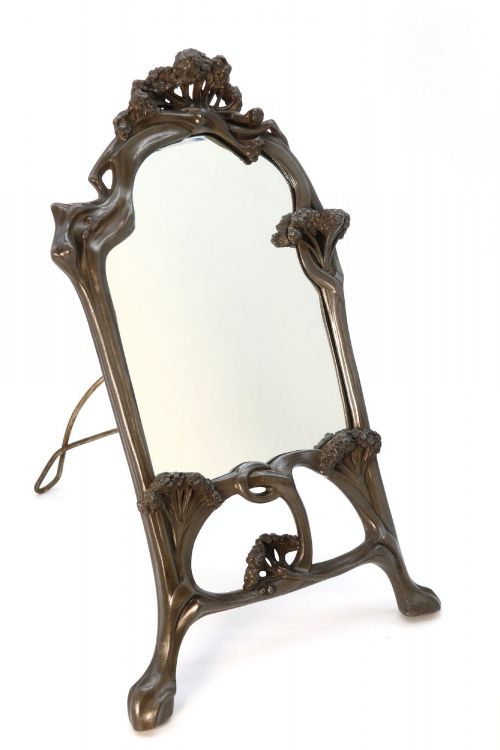
Smaller variants such as table mirrors and toilet mirrors also appear alongside full-sized dressing tables. These smaller pieces offer the same reflective glass curves on a portable scale for placement on top of existing furniture.
What varies in quality
The grade of timber veneer significantly differentiates standard pieces from exceptional examples, with burr walnut and figured maple demanding superior craftsmanship in matching grain patterns. The integration of the mirror glass into the overall silhouette also dictates the refinement of the piece.
Attribution to known makers or workshops elevates the standing of a dressing table within the marketplace. Construction methods, such as the precision of the pedestal joinery and the quality of the brass hardware, reflect the maker's original investment of time and skill.
Some Art Deco mirrors include hidden side cabinets just right for secret cosmetic storage.
Louis Auguste Moreau·Maurice Adams·Harry and Lou Epstein·Betty Joel
The Curved Mirror Dressing Table Glossary
- Burr walnut
- A wood veneer taken from the wart-like growths on walnut trees, prized for its swirling, highly figured patterns. It frequently covers the large flat surfaces of Art Deco vanity units.
- Toilet mirror
- A small mirror mounted on a pivoting frame, designed to sit atop a chest of drawers or dressing table. These typically date from earlier periods before full-length attached mirrors became standard.
- Birds eye maple
- A figured timber showing small, circular dots resembling bird eyes interrupting the grain. This material appears on light-toned dressing tables from the 1930s.
- Pedestal dressing table
- A vanity unit featuring two vertical banks of drawers supporting the main table top. This form provides substantial storage beneath the writing or cosmetic surface.
Curved Mirror Dressing Table: Frequently Asked Questions
How do I clean a vintage mirror glass?
Use a soft microfiber cloth with a gentle glass cleaner sprayed onto the cloth rather than directly onto the mirror surface. This prevents moisture from seeping behind the silvered backing.
Avoid harsh ammonia-based products that can degrade the antique silvering around the edges of the curved glass over time.
Can I separate the mirror from the table?
Many dressing tables feature detachable mirrors held in place by screw fittings or slot brackets at the rear. This design historically facilitated transport and placement within the bedroom.
Care must be taken when handling older wooden brackets and heavy glass plates during any relocation.
How do I identify a 1930s piece?
Look for symmetrical geometries, waterfall edges, and the prominent use of burr walnut or maple veneers. These modern stylistic choices define the interwar aesthetic.
Maker attributions and simpler hardware designs further point towards the 1930s modernist output.