
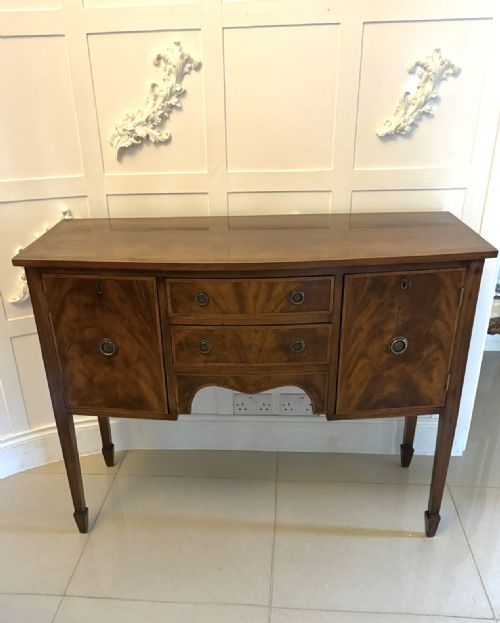
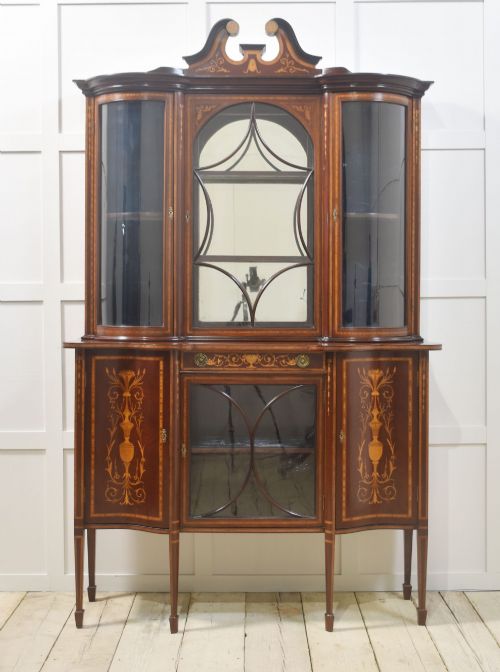

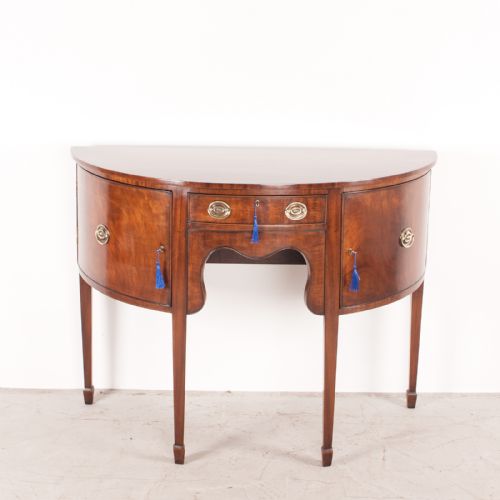


Curved Mahogany Sideboard
A curved mahogany sideboard brings architectural grace to a dining room, combining rich timber with sweeping lines designed to command the space.
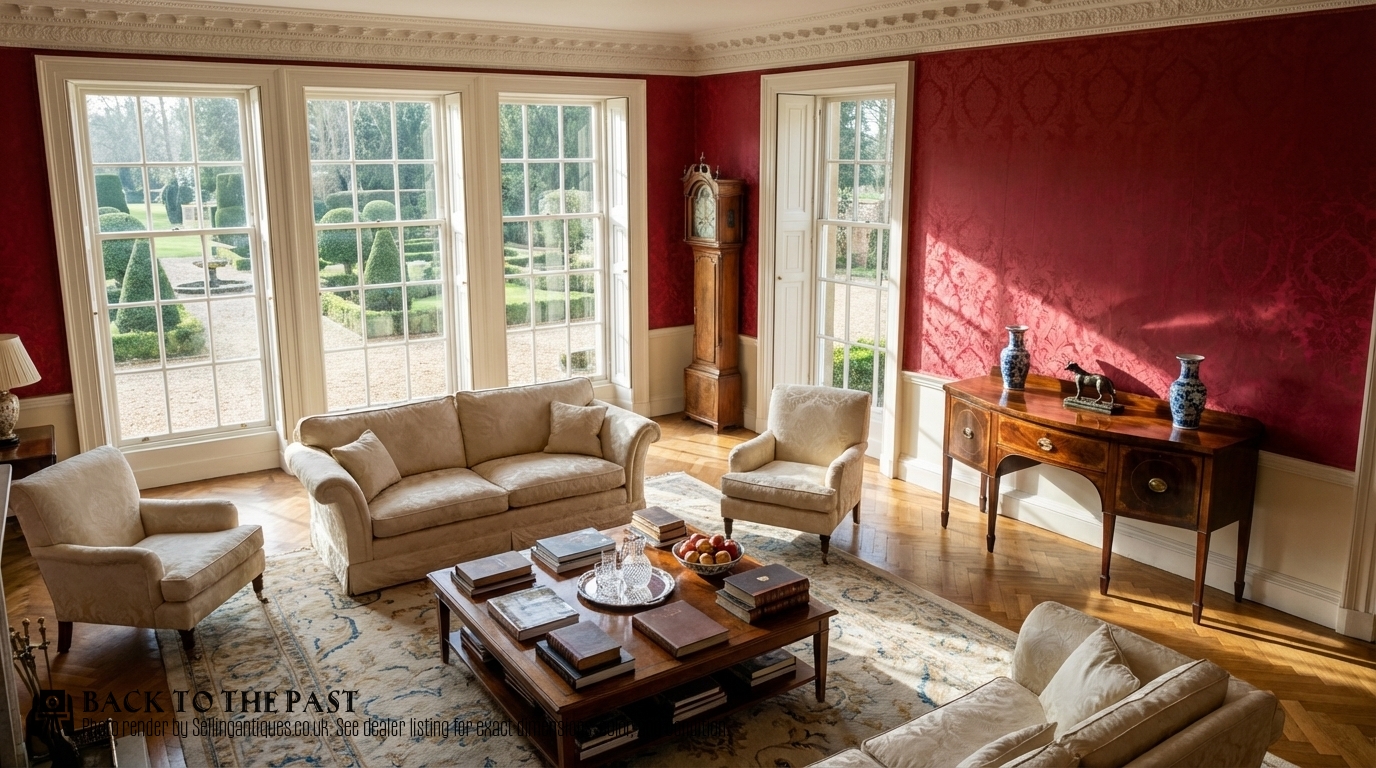
Curved Mahogany Sideboard
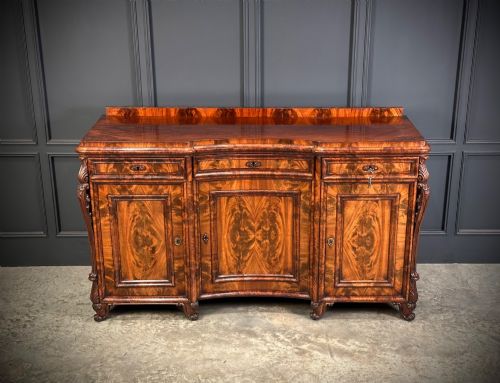
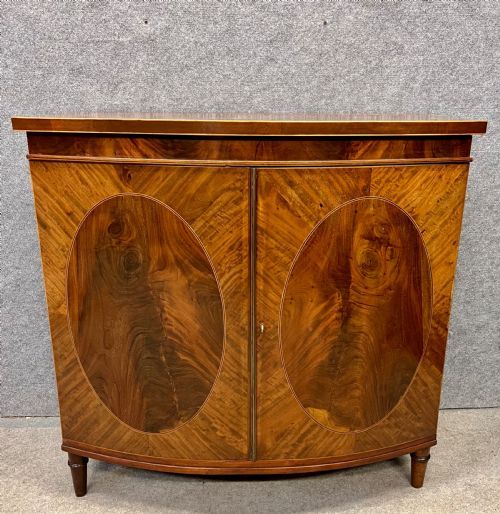
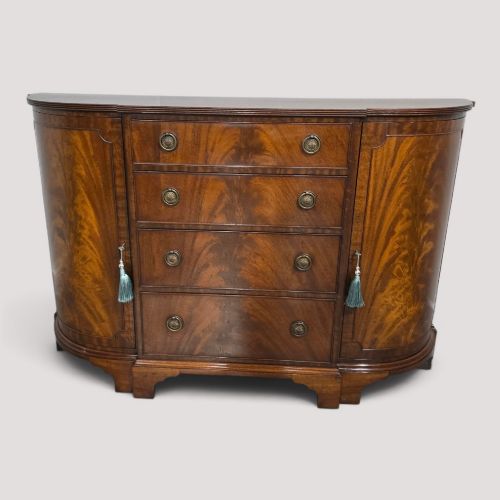
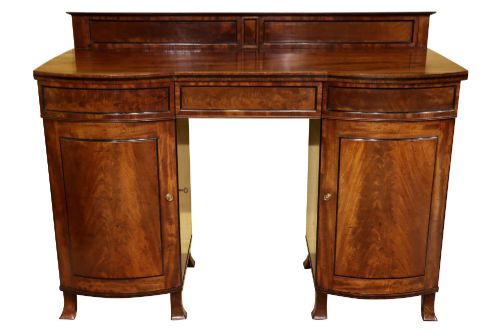
A curved mahogany sideboard presents a sweeping frontal line, encompassing bow fronts, serpentine shapes, and demi-lune forms that soften the geometry of a room. When exploring a curved mahogany sideboard, buyers frequently encounter Georgian, Regency, and Edwardian examples shaped by cabinetmakers to serve both storage and display functions.
The proportions span from compact small sideboards to substantial serving tables and side cabinets. Georgian and Regency periods dominate the early designs, while Edwardian Sheraton Revival pieces and later twentieth-century interpretations continue the tradition of graceful curves in mahogany.
Beyond the standard dining room sideboard, the listings include related forms such as demi-lune commodes, display cabinets, and side cabinets featuring the same curved silhouette. These variations share a common reliance on figured timber and refined proportions to achieve their visual impact.
Materials and Construction
Cabinetmakers constructed these pieces primarily from solid mahogany and flame mahogany veneer, often selecting specific cuts to highlight dramatic grain patterns across the curved drawer fronts and doors. Satinwood, boxwood, and various stringing inlays provide contrasting borders that trace the sweeping contours of the frame.
Structural elements frequently incorporate secondary timbers to support the curved facades, while brass fittings such as handles, feet, and gallery rails add functional accents. Glass panels appear in associated display pieces, and occasional parcel gilt details enhance the neoclassical and Sheraton revival aesthetics.
Curved Mahogany Sideboard Retail Price Guide 2026
Typical asking prices for curved mahogany sideboard among the pieces listed under this phrase on Sellingantiques today, from the lower quarter to the upper quarter. They describe what is for sale here now, not the wider market.
Georgian, Regency, and Edwardian periods are represented alongside twentieth-century French and Italian interpretations.
Assessing Craftsmanship
The division between standard production and exceptional work rests on the handling of the curved timber and the precision of the veneer matching. Superior pieces exhibit seamless transitions along the bow or serpentine front, where grain patterns mirror one another across the symmetrical doors and drawers.
The refinement of the secondary details also dictates the standing of a piece, from the crispness of the satinwood and boxwood stringing inlay to the weight and original casting of the brass hardware. Structural integrity in the curved framework ensures that doors and drawers operate smoothly despite seasonal changes in timber.
Bowman Brothers
The Curved Mahogany Sideboard Glossary
- Bow front
- A convex curved front that projects outward from the centre, commonly seen on Georgian and Regency sideboards to soften rigid room angles.
- Serpentine
- A curved front featuring a central convex section flanked by two concave curves, creating an undulating silhouette that demands advanced cabinetmaking skill.
- Demi-lune
- A half-moon shape with a flat back designed to sit flush against a wall, frequently utilised in sideboards, commodes, and serving tables.
- Flame mahogany veneer
- A distinctively figured wood veneer sliced from timber where the branches join the main trunk, producing a flame-like pattern highly prized for cabinet fronts.
- Stringing
- Thin strips of contrasting wood, such as boxwood or satinwood, inlaid into channels on the mahogany surface to create delicate geometric borders.
Curved Mahogany Sideboard: Frequently Asked Questions
Where should I place a curved mahogany sideboard?
These pieces suit dining rooms, grand hallways, or living spaces where their sweeping lines can be appreciated without obstructing traffic flow. The curved silhouette allows them to sit comfortably against flat walls while projecting visual interest into the room.
Because they often incorporate deep drawers or cabinets, placement should allow adequate clearance for opening doors and accessing interior fittings without crowding adjacent furniture.
How do I distinguish a Georgian sideboard from later revivals?
Examining the construction methods, interior secondary timbers, and handling of the mahogany veneer reveals the era of manufacture. Georgian pieces display period-specific joinery and hand-cut elements, whereas Edwardian Sheraton Revival examples often show more standardised internal framing.
Stylistic cues also provide guidance, as original eighteenth and early nineteenth-century pieces carry the proportions and understated hardware characteristic of their period, while later interpretations frequently incorporate brighter satinwood contrasts.
How do I care for flame mahogany veneer?
Maintaining mahogany requires consistent indoor humidity levels and protection from direct sunlight, which can fade the rich reddish-brown tones over time. Regular dusting with a soft, dry cloth preserves the polished finish without the need for heavy chemical polishes.
Applying a traditional beeswax occasionally helps nourish the timber and maintain the natural lustre of the veneer across the curved surfaces.
What is the difference between a sideboard and a commode?
Sideboards were traditionally engineered for the dining room to store silver, linen, and serving accessories, often featuring long surfaces for food preparation or display. Commodes generally originated as lower chests of drawers or cabinets intended for bedrooms or reception rooms.
In curved formats, both types share similar decorative vocabularies involving mahogany and inlay, but their internal storage configurations reflect their original domestic functions.