




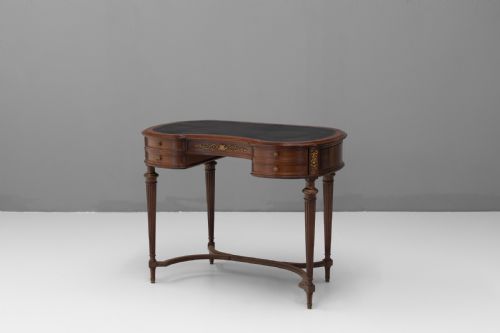


Curved Leg Writing Table
A curved leg writing table is a refined surface for correspondence, combining practical workspace with elegant fluid lines.
Curved Leg Writing Table
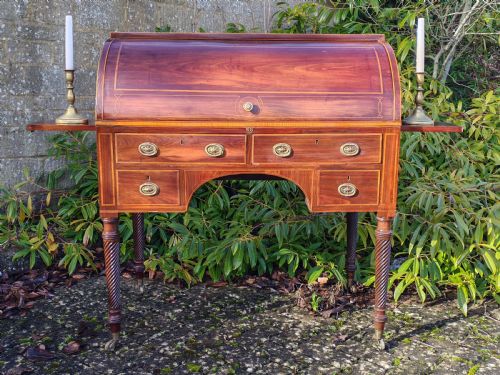
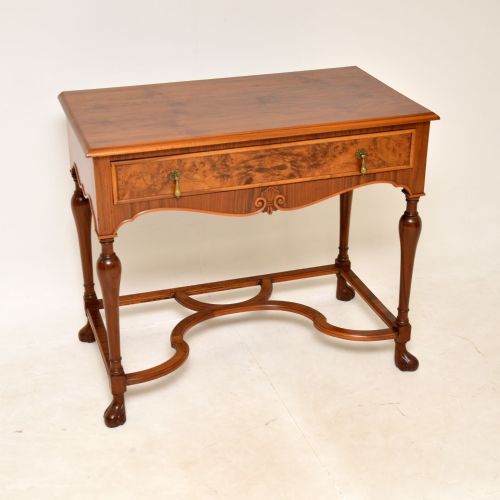
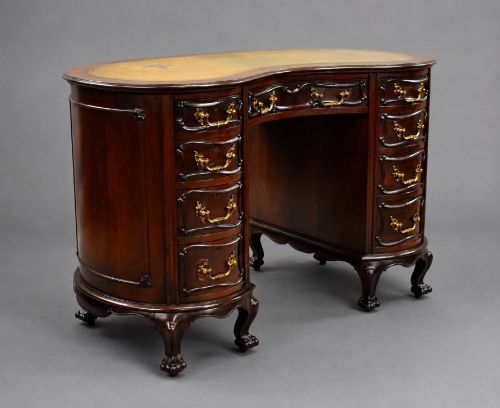
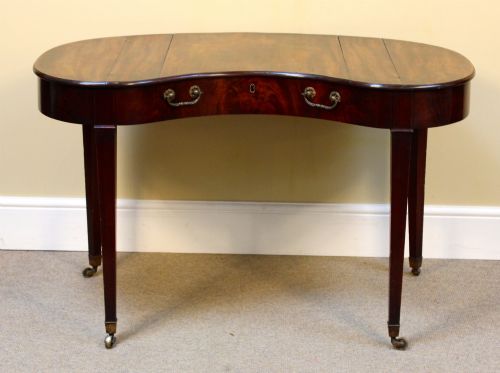
A curved leg writing table encompasses various forms designed for study and daily administration, ranging from compact library tables to elaborate desks. The selection includes distinct iterations such as kidney-shaped writing tables and cylinder top desks, alongside related forms like side and console tables.
Origins span Georgian, Regency, Edwardian, and Art Deco periods, demonstrating a continuous evolution of the writing table. Stylistic revivals such as Louis XV, Sheraton, and Queen Anne heavily influence the shaping of the legs and the overall silhouette.
How they were made
Construction relies primarily on timbers such as mahogany, walnut, burr walnut, oak, and satinwood, chosen for durability and grain figure. Cabinetmakers utilised these woods for solid framing and decorative veneer work, sometimes enhanced by contrasting stringing.
Surfaces frequently incorporate inset leather panels to provide a smooth writing plane, complemented by brass hardware for handles and escutcheons. Ormolu mounts appear on specific revival pieces to accent the structural contours.
Curved Leg Writing Table Retail Price Guide 2026
Typical asking prices for curved leg writing table among the pieces listed under this phrase on Sellingantiques today, from the lower quarter to the upper quarter. They describe what is for sale here now, not the wider market.
Some nineteenth century makers tucked curved drawers into surprisingly snug kneeholes, keeping inkwells safely out of reach.
What varies in quality
Excellence in a curved leg writing table rests upon the selection of figured timber veneers and the precision of inlaid details. Superior examples exhibit harmonious proportions and seamless integration of the writing surface into the framework.
The refinement of the leg curvature and the execution of period stylistic details distinguish superior workshops from standard production. Interior drawer construction and the original patination of the wood further define the standing of each piece.
The Curved Leg Writing Table Glossary
- Kidney shape
- A distinctive concave-fronted desktop configuration designed to wrap partially around the user. This curved profile is frequently observed on nineteenth century and Victorian writing tables.
- Cylinder top
- A desk featuring a rolling quarter-circle wooden shutter that conceals pigeonholes and writing compartments. When closed, it presents a smooth cylindrical enclosure.
- Carlton House desk
- A form of writing table characterised by a raised superstructure of small drawers and compartments curving around the back and sides of the desk. These often incorporate inlaid mahogany and satinwood.
- Ormolu
- Gilded bronze ornamentation applied to furniture for decorative accent. It appears on revival pieces to highlight structural lines and enrich the overall appearance.
- Stringing
- Thin inlay lines of contrasting wood or light-coloured material embedded into the primary timber surface. This technique outlines drawers and borders panels for subtle visual definition.
Curved Leg Writing Table: Frequently Asked Questions
What is a curved leg writing table used for?
These tables provide a dedicated surface for handwriting, correspondence, and administrative tasks. They serve functionally in studies and bedrooms alike.
Historically, they accommodated the daily writing of letters and ledger management. Today, they function effectively as compact desks or decorative console surfaces.
How do I identify a Victorian writing table?
Victorian examples often employ dense timbers like mahogany and rosewood, frequently exhibiting deeper colour tones and robust proportions. Characteristic forms include kidney shapes and kneehole configurations.
Stylistic markers often draw upon revival idioms such as rococo curves or structural heavy framing. Hardware and drawer construction methods help confirm the nineteenth century origin.
Are these desks suitable for daily use?
Most antique writing tables accommodate modern writing implements and portable technology quite well. Their solid timber construction provides a stable and durable working platform.
Care should be taken to protect leather writing surfaces from excessive moisture and sharp implements. Regular polishing helps maintain the finish of the surrounding wood.
What distinguishes a Georgian writing table?
Georgian pieces emphasise architectural balance, restrained inlay work, and select mahogany or satinwood veneers. Proportions tend to be linear and understated compared to later Victorian exuberance.
Detailing often includes fine cockbeading around drawers and tapered or curved legs reflecting classical influence. Such pieces represent earlier craftsmanship from the eighteenth and early nineteenth centuries.