





Curved Glazed Credenza Cabinet
These curved glazed credenza cabinet examples bring architectural presence and disciplined display to a room, uniting timber grain with glass.
Curved Glazed Credenza Cabinet
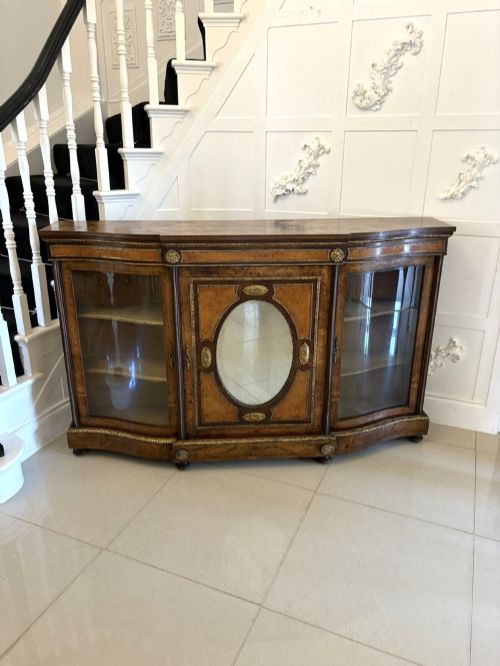
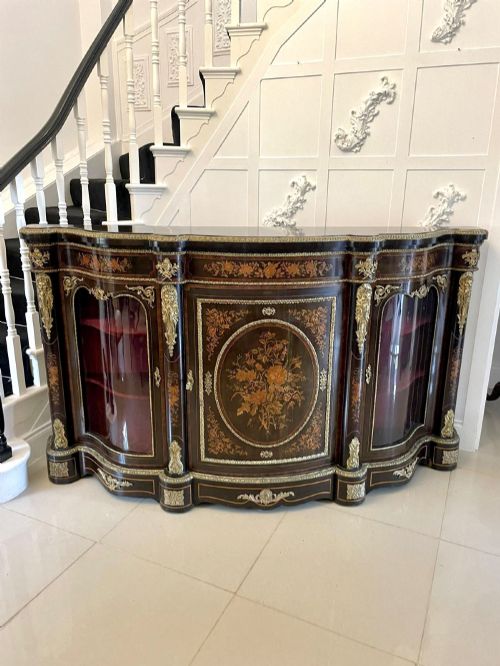
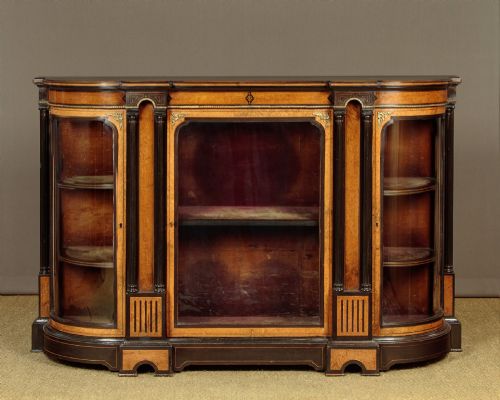
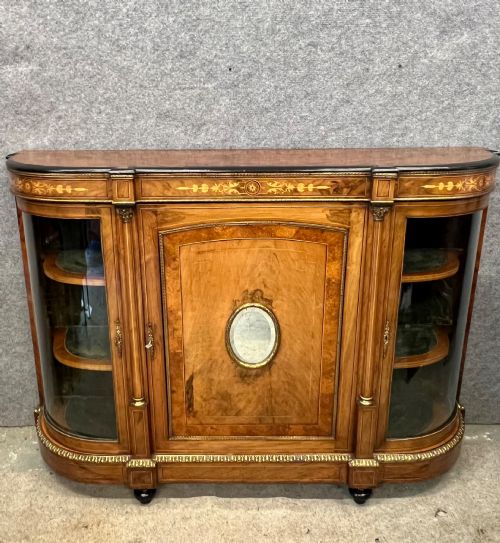
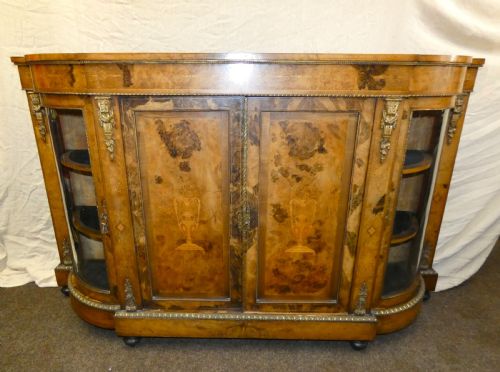
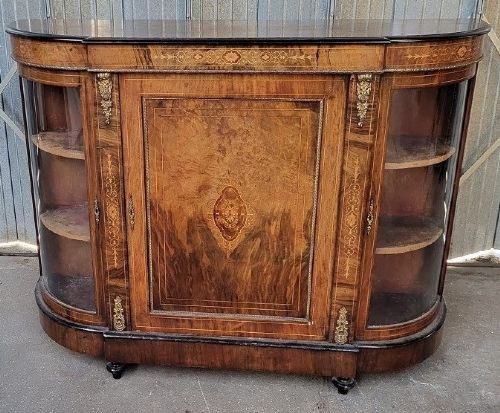
A curved glazed credenza cabinet is a low storage and display piece originating chiefly in the Victorian era, spanning the mid-nineteenth century through to the early twentieth century. The selections available here are dominated by Victorian burr walnut examples alongside French Revival and Napoleon III interpretations. These pieces combine central cupboard doors with flanking curved glazed side compartments designed for exhibition.
The objects appear under various overlapping designations such as sideboards, display cabinets, and side cabinets, yet all share a low profile suitable for formal reception rooms. Makers constructed these items to anchor a wall while offering visible storage for porcelain or glassware behind curved glass panes. Walnut forms the foundational timber across the majority of pieces, frequently enriched with marquetry and contrasting boxwood inlay.
Materials and Technique
Craftsmen utilised burr walnut veneers applied over solid carcassing, selecting timber for intricate grain patterns that draw the eye across the curved surfaces. Ormolu mounts in cast gilt bronze frame the central doors and corners, adding metallic definition to the timber construction. Marquetry floral details and boxwood stringing demonstrate meticulous hand-cutting and inlay techniques applied directly to the primary surfaces.
Ebonised wood and exotic veneers such as amboyna and kingwood appear alongside marble tops on specific French-influenced examples. Glazing requires specialised bending of glass to match the radius of the side cabinets, a demanding process that defines the curved glazed credenza cabinet form. Interior shelves sit behind hinged glazed doors secured with brass locks and key escutcheons.
Inlaid boxwood and floral marquetry serve as the primary decorative vocabulary across walnut and ebonised wood carcases.
Judging Quality
Distinctions in quality rest upon the selection of timber figures and the precision of the marquetry inlay. Superior examples display symmetrical burr walnut grain across curved doors and panels, avoiding disjointed timber patches. The crispness of the cast ormolu mounts and the integration of porcelain plaques dictate the upper echelon of these items.
Structural integrity of the curved glass frames and the smooth alignment of bowed doors reveal the original maker's joinery standards. Finer pieces demonstrate restraint in inlay design, where boxwood and floral motifs enhance rather than crowd the primary wood tone.
James Hicks·Gillow
The Curved Glazed Credenza Cabinet Glossary
- Credenza
- A low cabinet designed for storage and display, originating in Renaissance Italy and adapted heavily during the Victorian period. These pieces sit low against walls and typically feature glazed side sections.
- Ormolu
- Gilt bronze mounts applied to furniture edges and panels for decorative accent. The technique involves mercury gilding on cast bronze elements.
- Marquetry
- Decorative patterns formed by fitting veneer pieces onto a structural surface. Craftsmen employ various wood types to create floral or geometric compositions.
- Burr Walnut
- Walnut timber taken from tree growths where the grain has swirled into intricate knots and patterns. This material commands high regard for its decorative movement.
- Bow Front
- A convex curved front profile that projects outward in a smooth arc. This shape requires specialised joinery to house curved doors and glass.
Curved Glazed Credenza Cabinet: Frequently Asked Questions
What is a curved glazed credenza cabinet?
A curved glazed credenza cabinet is a low nineteenth-century storage and display unit featuring bowed glass doors at the sides and timber cupboards in the centre.
Cabinetmakers built these pieces primarily in walnut to showcase porcelain and decorative objects in formal Victorian rooms.
How were these cabinets used originally?
These furnishings served as status pieces in Victorian drawing rooms and dining rooms, holding fine china, glassware, and decorative ornaments behind glass.
The flat top surface also provided an area for displaying lamps, candelabra, or smaller decorative objects during formal gatherings.
How do I care for burr walnut?
Protect burr walnut surfaces by keeping them away from direct sunlight and maintaining stable room humidity to prevent veneer lifting or timber cracking.
Dust regularly with a dry cloth and apply occasional specialist wax polish sparingly to nourish the grain without building up heavy residue.
How can I date a Victorian credenza?
Dating relies on examining construction methods, timber choices, and stylistic markers such as ormolu mounts and marquetry motifs characteristic of the mid to late nineteenth century.
Pieces bearing specific cabinetmaker stamps or retailer marks offer clearer documentation regarding their exact decade of origin.