
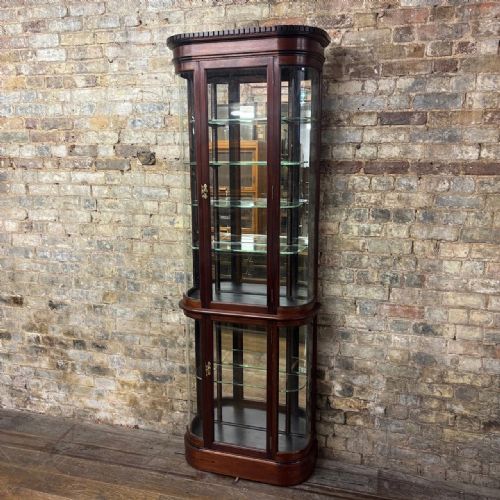
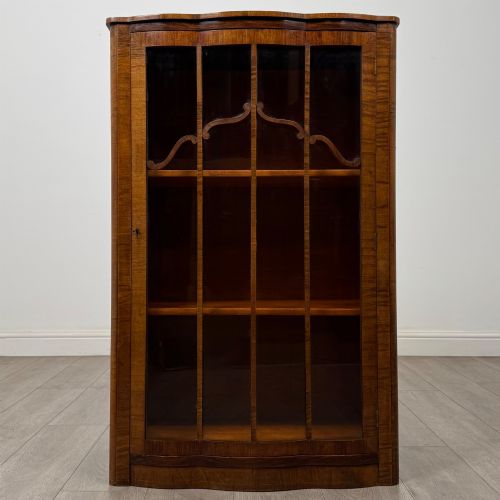
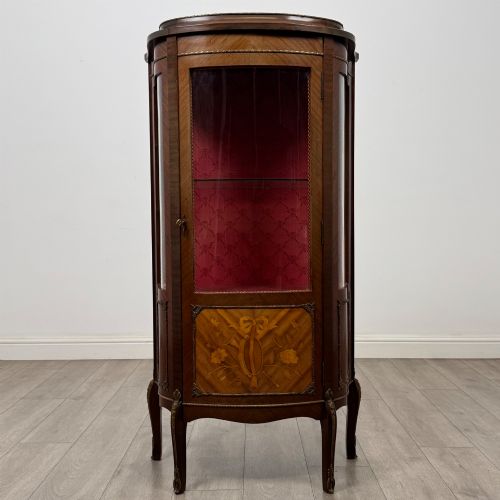
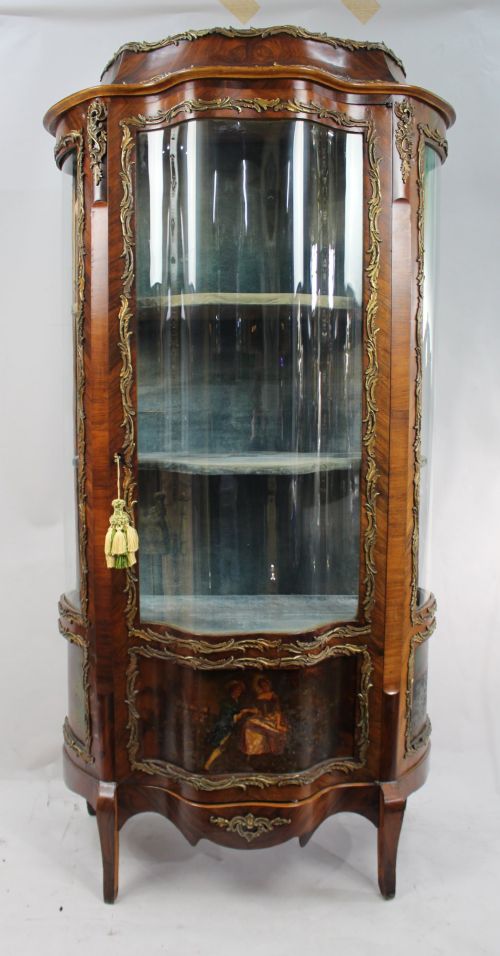


Curved Glass China Cabinet
A curved glass china cabinet brings gentle lines and bright interiors to a room, holding precious porcelain behind bent panes.
Curved Glass China Cabinet
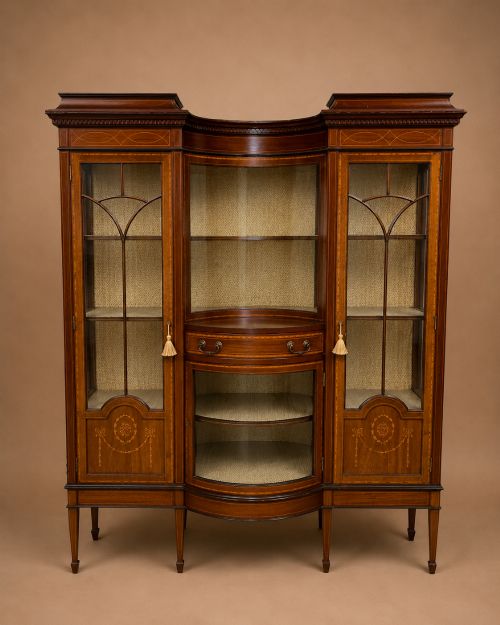
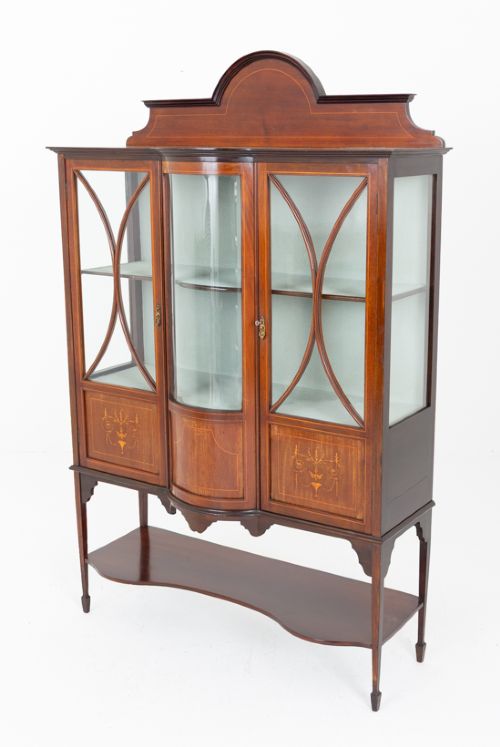
When you search for a curved glass china cabinet, you encounter display pieces, vitrines, and corner cabinets designed to showcase domestic collections. These items span the Victorian, Edwardian, and Art Deco eras, reaching from the late nineteenth century into the nineteen-thirties.
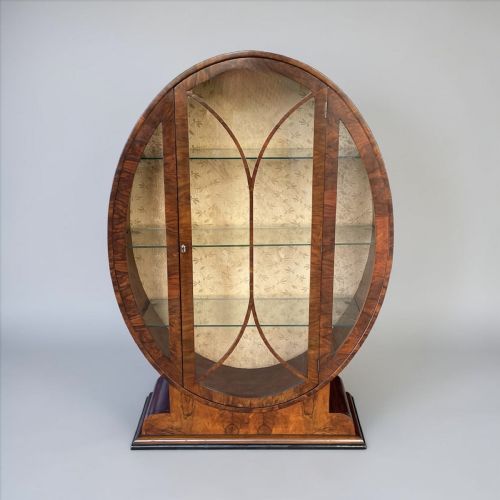
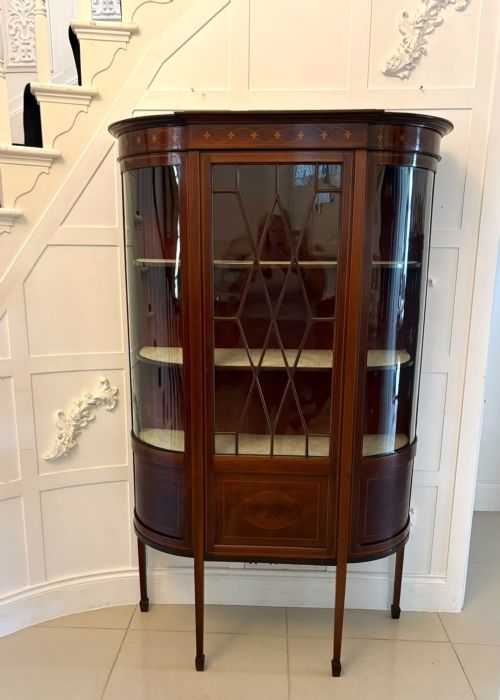
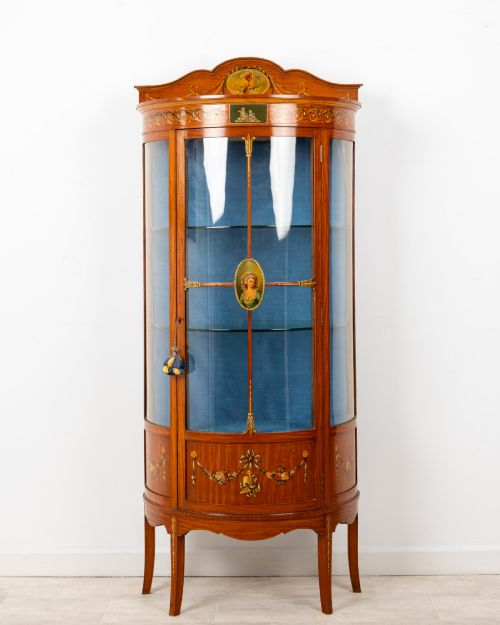
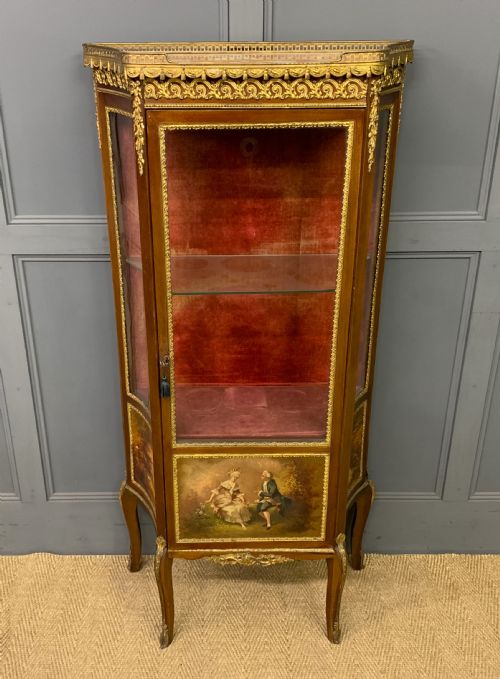
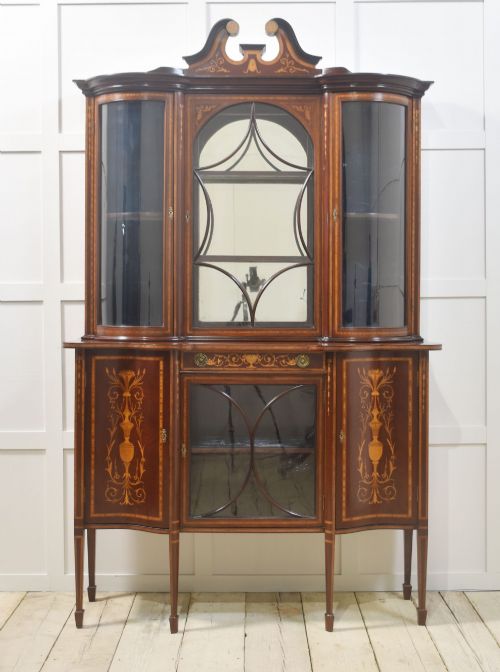
The Edwardian iterations often rely on mahogany, satinwood, and walnut with delicate inlays, while the Art Deco period introduces bolder walnut and clove shapes. French influences appear regularly through serpentine and bow-front forms that utilise bent glazing to soften room corners.
Display cabinets and vitrines serve primarily to protect and display china, glassware, and decorative objects. The glass wraps around the frame to permit light from multiple angles, illuminating the interior shelves.
Construction and Materials
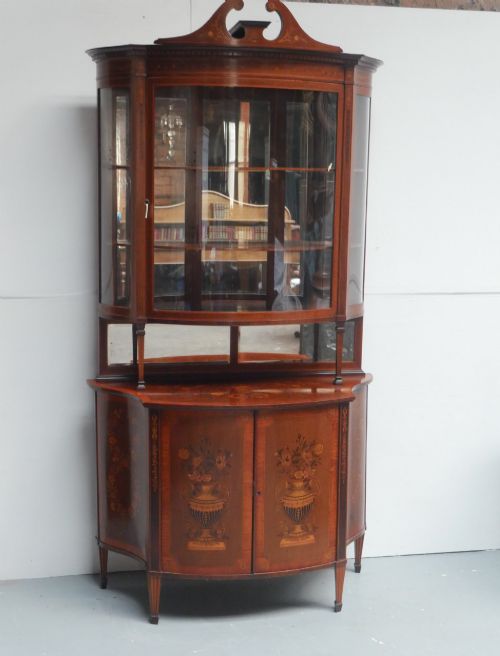
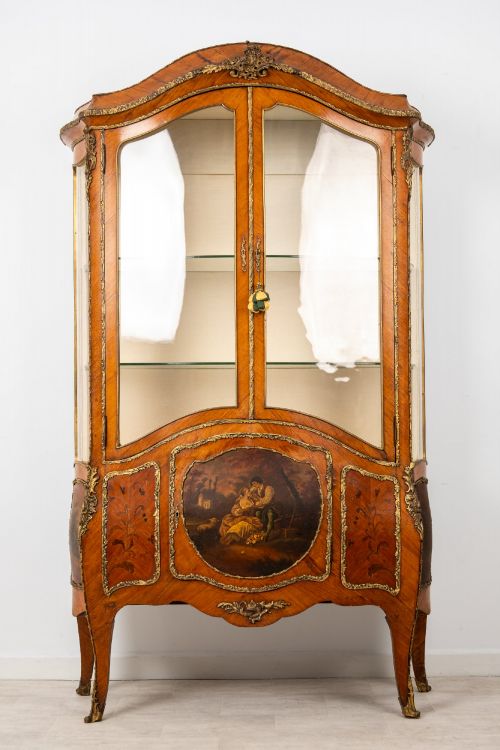
Cabinet makers built these frames using dense hardwoods like mahogany, walnut, kingwood, and satinwood, frequently applying marquetry and fruitwood inlay for surface decoration. Ormolu mounts and brass fixtures added gilded structural accents to French and English designs alike.
The defining feature, the curved glass itself, required specialised heating and bending techniques to fit into bowed, serpentine, or circular timber channels. Interior surfaces often incorporated fabric linings to cushion displayed ceramics and glassware.
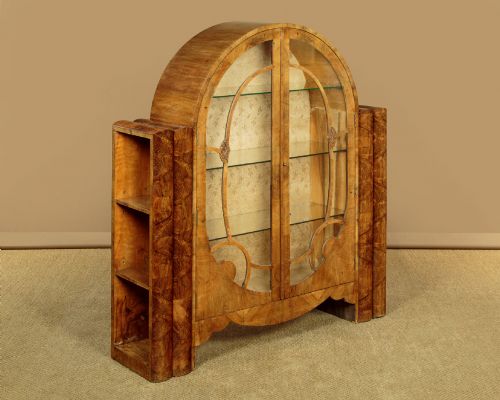
Cabinet forms include standard display units, tall bookcases, corner configurations, and distinctive clove-shaped or circular structures.
Distinctions in Quality
The standard of a curved glass china cabinet rests on the precision of the timber work and the clarity of the bent glass panes. Superior examples display seamless joins in the marquetry and hand-chased ormolu mounts that fit the timber contours exactly.
Finer pieces reveal meticulous attention to interior details, such as adjustable shelving, painted decoration, and well-fitted doors that close flush against the curved wooden rebates without binding.
Edwards & Roberts·François Linke·Paul Sormani·Maurice Adams
The Curved Glass China Cabinet Glossary
- Vitrine
- A glass-fronted cabinet designed specifically for displaying porcelain, curiosities, and fine objects. These pieces often feature glass on the sides as well as the doors to maximise light.
- Ormolu
- Gilded bronze mounts applied to the exterior corners, feet, and crests of furniture. This technique gained widespread use on nineteenth-century French cabinets.
- Marquetry
- Decorative patterns formed by fitting small pieces of veneer into a wooden background. Makers used contrasting woods to create floral or geometric designs across the doors and panels.
- Serpentine
- A furniture front or shelf edge shaped with a central convex curve flanked by two concave curves. This contour requires careful carpentry to match the glass curvature.
- Bow Front
- A convex, outward-curving cabinet front that projects into the room. This shape permits a wider interior display area while softening the rectilinear corners of furniture.
Curved Glass China Cabinet: Frequently Asked Questions
What is a curved glass china cabinet used for?
These cabinets were historically manufactured to house and display valuable porcelain sets, crystal glassware, and decorative ornaments. The enclosed shelving protects delicate items from household dust while keeping them fully visible.
In contemporary interiors, they continue to serve the same display function, often acting as focal points in dining rooms, living spaces, or hallways.
How do I distinguish Edwardian pieces from Art Deco ones?
Edwardian cabinets generally date around nineteen hundred, utilising light timbers like satinwood and mahogany alongside classical revival styles and intricate inlaid patterns. They lean toward traditional elegance and refined floral motifs.
Art Deco examples, appearing around nineteen thirty, favour figured walnut, geometric silhouettes, and unadorned surfaces that emphasise natural wood grain and unusual shapes like circular or clove forms.
Where should I place a corner cabinet?
Corner cabinets fit neatly into ninety-degree room junctions, utilising dead space to display collections without protruding into the main floor area. They work effectively in smaller rooms where wall space is limited.
Positioning them away from direct, harsh sunlight prevents fading on interior fabric linings and protects sensitive antique finishes over time.
How do French styles differ from English ones?
French cabinets from the nineteenth century frequently incorporate elaborate ormolu mounts, kingwood veneers, and painted Vernis Martin panels. Their designs often draw on Louis XV and Louis XVI revivals.
English equivalents tend to focus on Sheraton Revival mahogany, satinwood stringing, and more restrained architectural lines, prioritizing timber selection over gilded ornamentation.