
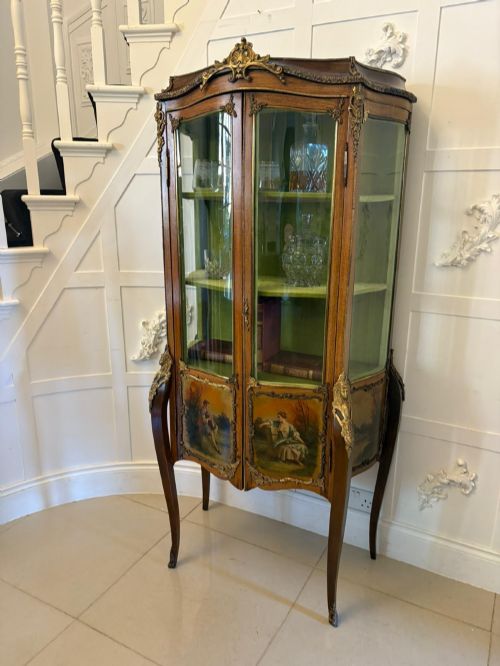
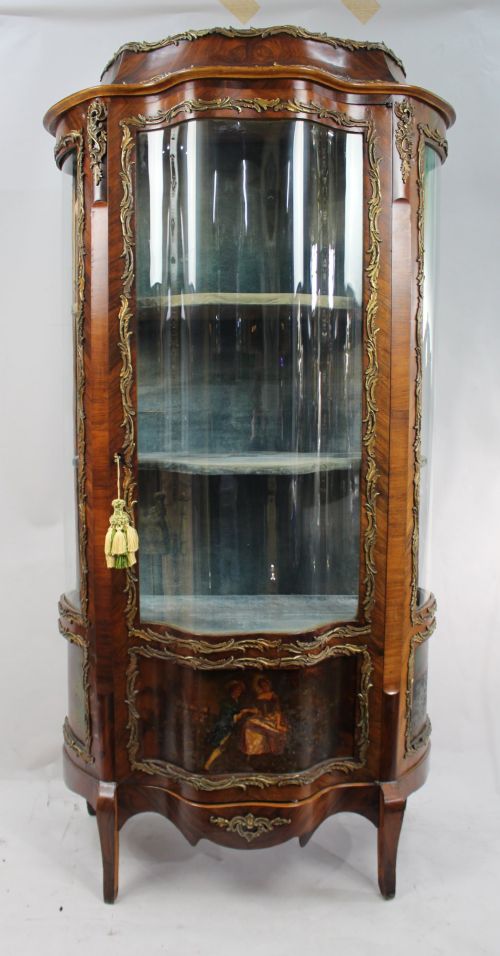
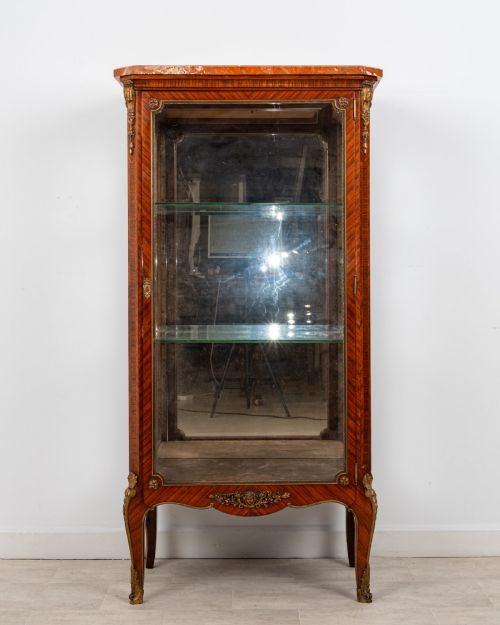


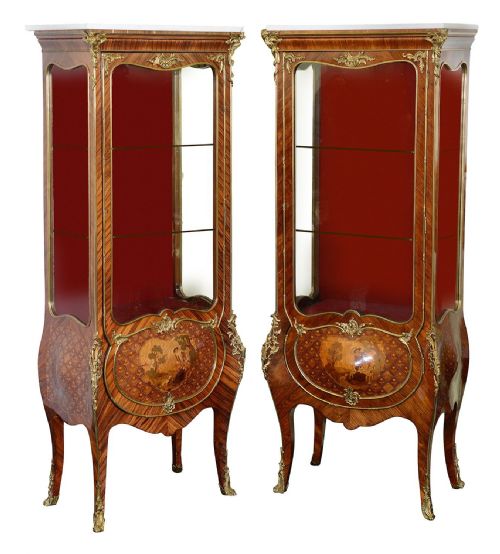


Rococo Revival Vitrine Cabinet
These rococo revival vitrine cabinet examples are decorative display pieces built to showcase prized possessions with theatrical French flair.
Rococo Revival Vitrine Cabinet
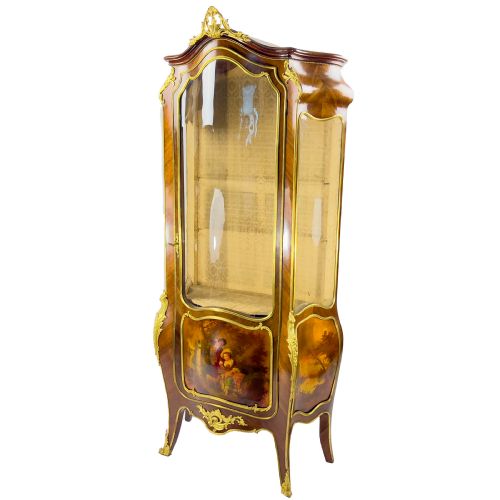
A rococo revival vitrine cabinet is an ornate glazed display piece designed for showing ceramics, glassware, and small treasures. These cabinets emerge primarily from the nineteenth century, drawing heavily on French Louis XV and Louis XVI aesthetics.
Most examples encountered here are French in origin, taking the form of serpentine or bombe display furniture fitted with glass panels and shelves. Makers and manufacturers of the Victorian era adapted these continental designs for grand drawing rooms.
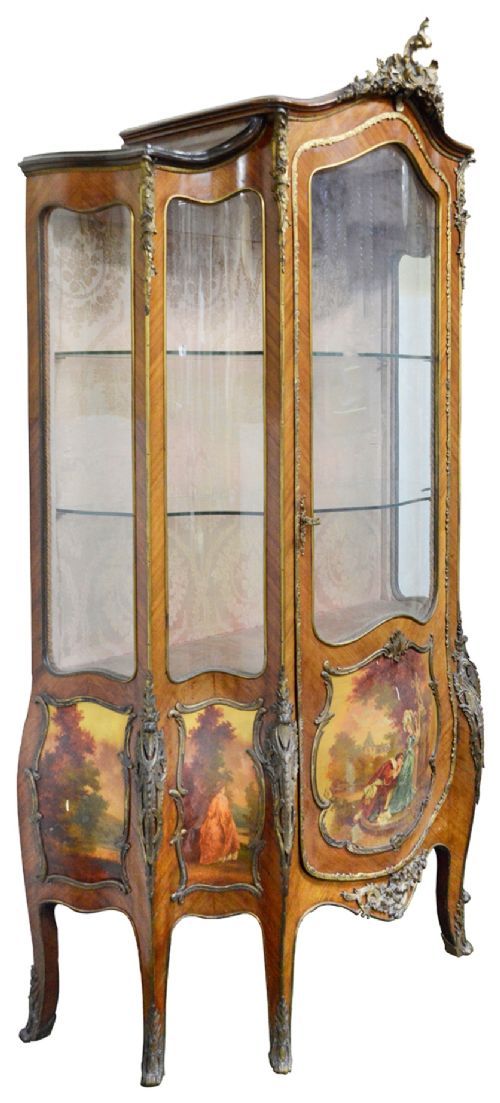
Forms range from intimate table-standing vitrines to large imposing display cabinets with shaped marble tops and painted lower panels. The focus remains squarely on glazed visibility and decorative curved woodwork.
Materials and construction
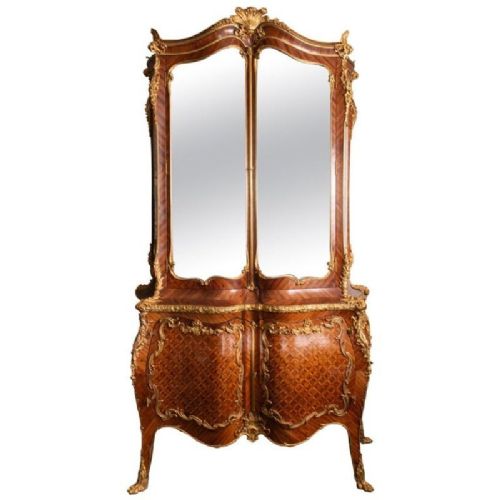
Construction relies heavily on fine timbers such as kingwood and mahogany, often laid in intricate parquetry or marquetry patterns. Carcasses are shaped with curved serpentine fronts and bombe profiles requiring advanced cabinetmaking skill.
Metal mounts in ormolu and gilt bronze accent the structural corners, frames, and feet to highlight the extravagant floral curves. Glass panels are integrated into sides and doors, while marble tops provide a heavy, contrasting surface.
Painted decorative panels, known in the trade through Vernis Martin lacquer techniques, introduce pastoral scenes to the lower sections of the cabinets.
Listings feature nineteenth-century periods alongside materials like kingwood, ormolu, marble, and Vernis Martin lacquer.
Qualities of distinction
Quality separates along the ambition of the timber work and the crispness of the cast bronze or ormolu mounts. Finer pieces display hand-chased metalwork and complex parquetry rather than printed veneers or simple brass pressings.
The integration of hand-painted Vernis Martin panels elevates a piece significantly above standard glazed cabinetry. Proportions, the smoothness of serpentine curves, and the weight of genuine marble tops dictate the upper tier of the range.
François Linke·Gouffel
The Rococo Revival Vitrine Cabinet Glossary
- Vitrine
- A glass-fronted cabinet designed specifically for displaying fine objects and curiosities. These pieces often feature glazed sides to maximise internal light.
- Ormolu
- Gilt bronze mounts applied to furniture for decorative enrichment and edge protection. The term derives from the French for ground gold.
- Vernis Martin
- A simulated Japanese lacquer technique developed in France, used to produce lustrous painted decorative panels. It appears frequently on the lower doors of display cabinets.
- Kingwood
- A dense, richly grained tropical timber favoured by elite cabinetmakers for high-end marquetry and parquetry. It lends a distinctive dark striped appearance to the surface.
- Bombe
- A swelling, outward-curving furniture profile associated with continental Rococo design. This curved form demands high technical proficiency from the maker.
Rococo Revival Vitrine Cabinet: Frequently Asked Questions
What is a vitrine used for?
These glazed cabinets were built to protect and display delicate porcelain, silver, and curiosities collected during travels. The glass doors and sides allowed owners to exhibit their status and taste to visitors.
Today, they serve the exact same purpose in modern homes. They keep dust away from collections while offering 360-degree visibility.
How do I identify a 19th-century piece?
Nineteenth-century examples rely on period timber construction methods, hand-chased ormolu mounts, and authentic hand-mixed varnishes. Look closely at the joints and the weight of the bronze elements.
Revival pieces from this era deliberately copied eighteenth-century French royal styles, blending Victorian manufacturing with continental aesthetics.
Where should I place a vitrine cabinet?
Place your cabinet in a well-lit room away from direct sunlight to protect interior displays and delicate wood finishes. Because many feature glazed sides, ambient light passing through enhances the contents.
Ensure the floor is level, as heavy marble tops and solid timber carcasses require stable footing to keep doors and locks aligned.