



Kingwood Vernis Martin Vitrine
A kingwood vernis martin vitrine brings together rich timber, gilt mounts and painted panels to display precious objects.
Kingwood Vernis Martin Vitrine
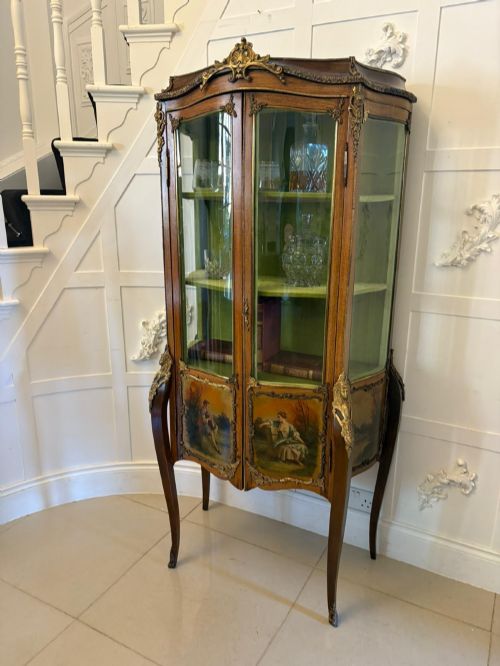
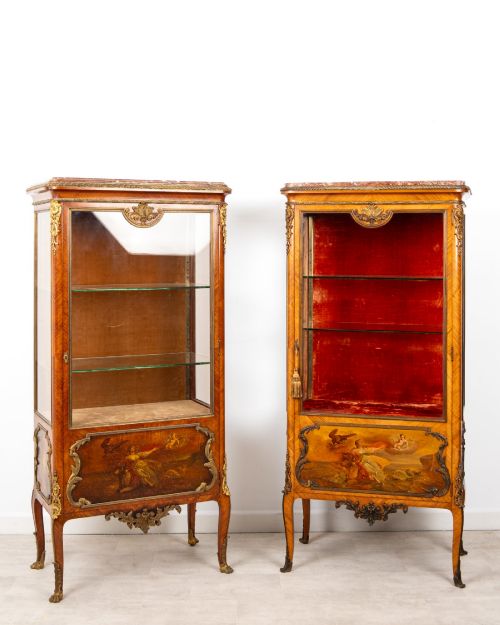
A kingwood vernis martin vitrine is a display cabinet designed to showcase porcelain, silver and small curiosities behind glass panels. These pieces emerge predominantly from the nineteenth century, often reflecting French revival tastes including Louis XV and Louis XVI styles.
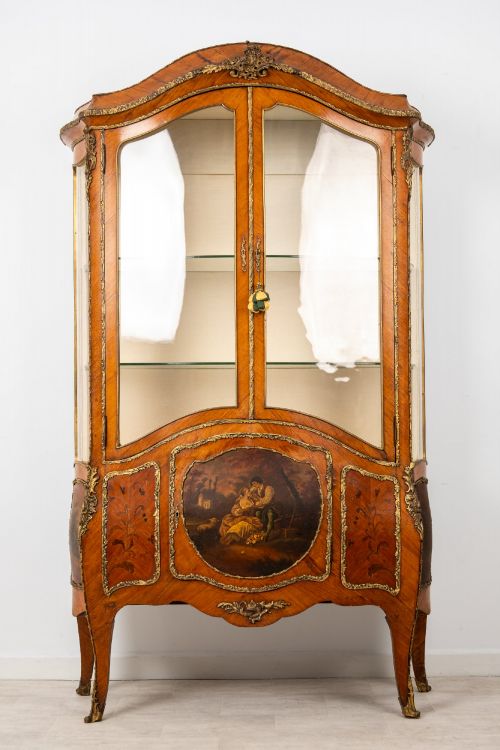
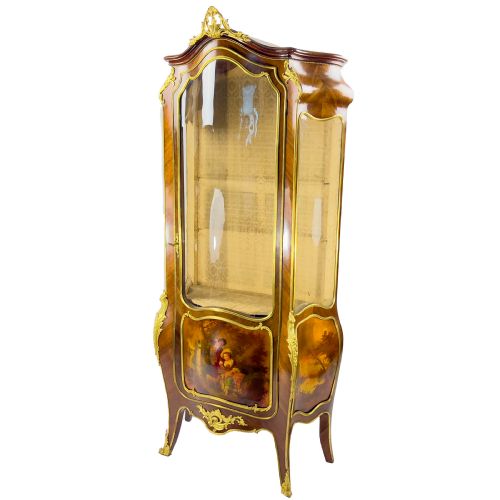
The form ranges from rectilinear display cabinets to serpentine and bombe profiles, sometimes adopting distinctive shapes such as the sedan style. Buyers encounter pieces standing on slender cabriole legs or robust bases, frequently topped with shaped marble.
French workshops produced the majority of these cabinets, utilising rich veneers and decorative painted panels to create a striking focal point in a reception room or parlour.
Materials and Construction
Cabinetmakers constructed the carcase using structural timbers before applying warm kingwood veneers, prized for its distinctive grain patterns and rich colour. Ormolu or gilt bronze mounts were cast, chased and applied to corners, framing and feet to accentuate the curved outlines.
The characteristic painted panels employ the vernis martin technique, a European imitation of Asian lacquer involving multiple layers of varnish applied over figurative or pastoral scenes. Glass panels fitted to doors and sides allow light into the interior, which is often lined with fabric to display objects safely.
The Martin brothers kept their lacquer recipe so secret that contemporaries suspected alchemical magic was involved.
Judging Quality in Vernis Martin Vitrines
Quality rests in the precision of the cabinetwork and the artistic merit of the painted decoration. Superior examples display finely hand-painted vernis martin panels with clear detail and depth, rather than simpler transfer prints or flat decoration.
The execution of the ormolu mounts dictates distinction, with better pieces exhibiting crisp chiselling and heavy casting rather than soft, light metalwork. Synchronisation between the timber veneer, the contour of the bombe or serpentine shape, and the weight of the mounts defines the finer workshops.
François Linke
The Kingwood Vernis Martin Vitrine Glossary
- Kingwood
- A dense, heavily figured Brazilian timber displaying rich brown and violet hues, utilised widely for high-end French veneer work.
- Vernis Martin
- A simulated lacquer finish developed in eighteenth-century France by the Martin brothers, consisting of translucent resin layers over painted scenes.
- Ormolu
- Gilt bronze ornamentation applied to furniture, created by mercury gilding cast brass or bronze components.
- Vitrine
- A glass-fronted display cabinet designed for the presentation of decorative objects and porcelain.
- Bombe
- A swelling, outward-curved furniture shape characteristic of mid-eighteenth-century French design and its later nineteenth-century revivals.
Kingwood Vernis Martin Vitrine: Frequently Asked Questions
What is a vernis martin finish?
Vernis martin is a specialised decorative varnish technique developed in eighteenth-century France to imitate Asian lacquer. Artisans built up translucent layers over painted panels to create a hard, glossy surface with notable depth.
Cabinets utilising this technique feature figurative or pastoral scenes that retain their luminosity under glass display lighting.
How do I care for a marble top vitrine?
Marble tops require gentle cleaning with a damp cloth and neutral soap, avoiding acidic liquids that etch the polished stone surface. Placing felt pads beneath heavy decorative objects prevents scratching.
Maintaining stable room humidity protects both the stone and the underlying kingwood veneer from expansion and cracking.
Where were these cabinets made?
The majority of these display cabinets originated in French workshops during the nineteenth century, particularly in Paris. Cabinetmakers drew heavily on eighteenth-century court styles.
These pieces were exported widely or produced for international exhibitions catering to affluent Victorian collectors.
What is the difference between bombe and serpentine forms?
A bombe form swells outward in a continuous convex curve across the front and sides of the cabinet carcase. This silhouette requires considerable skill in veneer application and mount fitting.
Serpentine forms combine alternating convex and concave curves, creating an undulating front profile rather than a rounded outward bulge.