



Curved Front Walnut Drawers
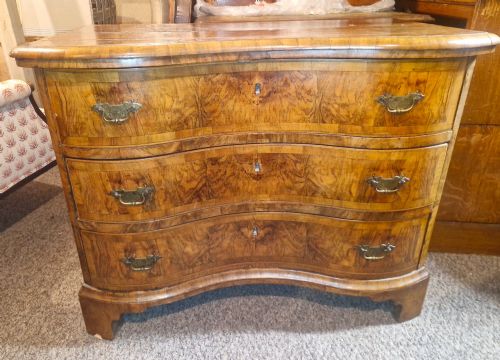
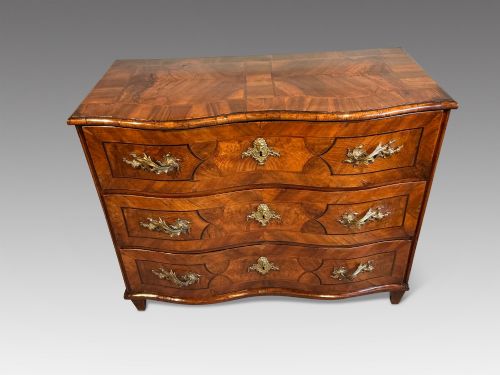
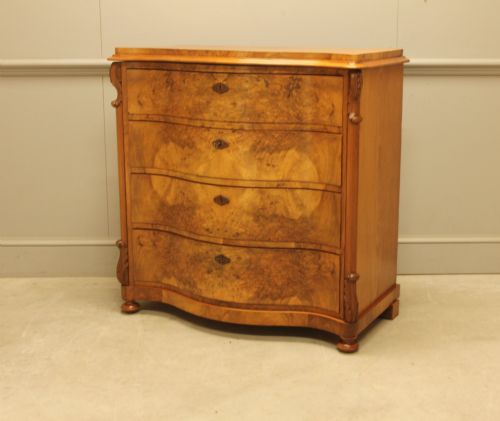
These curved front walnut drawers are robust storage pieces shaped with serpentine, bombe or bow fronts, bringing rich timber grain to domestic rooms.
Curved Front Walnut Drawers
When you search for curved front walnut drawers, you encounter chests of drawers, tallboys and commodes dating from the eighteenth century to the twentieth century. These pieces originate from Britain, France, Germany, Italy, Sweden and workshops producing Art Deco designs.
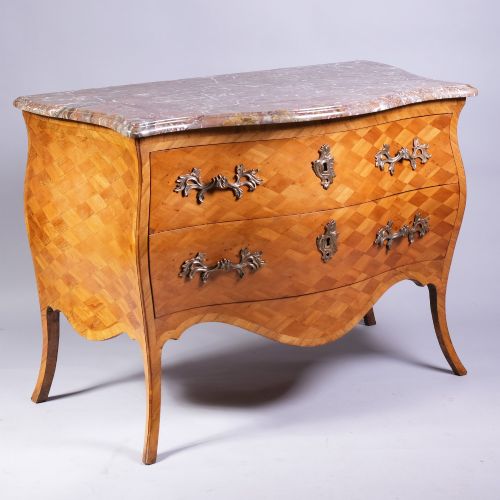
The dominant forms on this page include serpentine front chests, marble-topped commodes and bombe shapes. Walnut timber provides the primary body, frequently enhanced by burr walnut veneers, fruitwood details and marquetry patterns.
How they were made
Cabinetmakers constructed these frames using solid walnut or applied burr walnut veneer over secondary carcase timbers. Figured wood selections and marquetry added ornamental surface patterns across drawer fronts and sides.
Many examples incorporate shaped marble tops, alongside cast brass or bronze mounts and handles. Structural forms rely on curved serpentine or bombe outlines shaped during the woodworking process.
Curved Front Walnut Drawers Retail Price Guide 2026
Typical asking prices for curved front walnut drawers among the pieces listed under this phrase on Sellingantiques today, from the lower quarter to the upper quarter. They describe what is for sale here now, not the wider market.
Some nineteenth-century commodes weigh considerably more than expected due to thick marble tops paired with solid bronze mounts.
What varies in quality
Quality shifts according to the precision of the curved carcase construction and the handling of the walnut veneers. Finer pieces display carefully matched wood grain across the drawer fronts and harmonious proportions in their serpentine or bombe outlines.
The integration of secondary materials such as marble slabs, marquetry inlay and cast brass or bronze mounts influences the character of each piece. Simpler painted or veneered versions contrast with heavily ornamented continental commodes.
Heal's
The Curved Front Walnut Drawers Glossary
- Serpentine front
- A furniture front curving inward centrally and outward at the ends in a gentle wave shape. This profile requires skilled carpentry to shape the drawers and carcase.
- Bombe
- A bulging or swelling convex shape seen on the sides and fronts of continental commodes. The technique creates a voluminous profile that narrows toward the base.
- Burr walnut
- A timber harvested from the wart-like growths on walnut trees, yielding swirling grain patterns. Cabinetmakers sliced this wood into veneers to cover large drawer surfaces.
- Commode
- A low chest of drawers or cabinet originating in France during the eighteenth century. These pieces frequently feature marble tops and decorative mounts.
- Marquetry
- The art of applying small pieces of veneer to form decorative pictures or geometric patterns. Craftsmen utilised different coloured woods to create contrast.
Curved Front Walnut Drawers: Frequently Asked Questions
What is a bombe commode?
A bombe commode is a continental chest of drawers featuring outward-bulging sides and fronts. This swollen profile requires advanced woodworking techniques to ensure the drawers operate smoothly within the curved carcase.
These pieces often date to the eighteenth century and frequently incorporate marquetry or gilt metal mounts. They function as focal storage items in living spaces or bedrooms.
How do I care for walnut furniture?
Walnut surfaces benefit from stable indoor humidity and shelter from direct sunlight to prevent timber movement and fading. Dusting with a dry cloth maintains the finish without moisture damage.
Avoid placing damp items or heavy heat sources directly onto the wood or marble tops. Periodic mild waxing preserves the natural sheen of the veneer.
Where were these chests made?
These storage pieces originate from various European centres including Britain, France, Germany, Italy and Sweden. Continental workshops produced many of the bombe and marble-topped commodes.
English cabinetmakers focused primarily on serpentine and bow front chests of drawers. Regional preferences shaped the choice of marquetry, mounts and overall proportions.
What is the difference between a serpentine and a bow front?
A serpentine front curves inward at the centre and outward at the edges in an S-shape wave. This profile demands complex shaping of both drawer frames and surrounding carcases.
A bow front projects outward in a continuous convex curve from side to side. Both styles soften the rectangular geometry typical of standard chests of drawers.