



Curved Front Walnut Chest
A curved front walnut chest offers generous storage paired with the rich, undulating grain of fine timber.
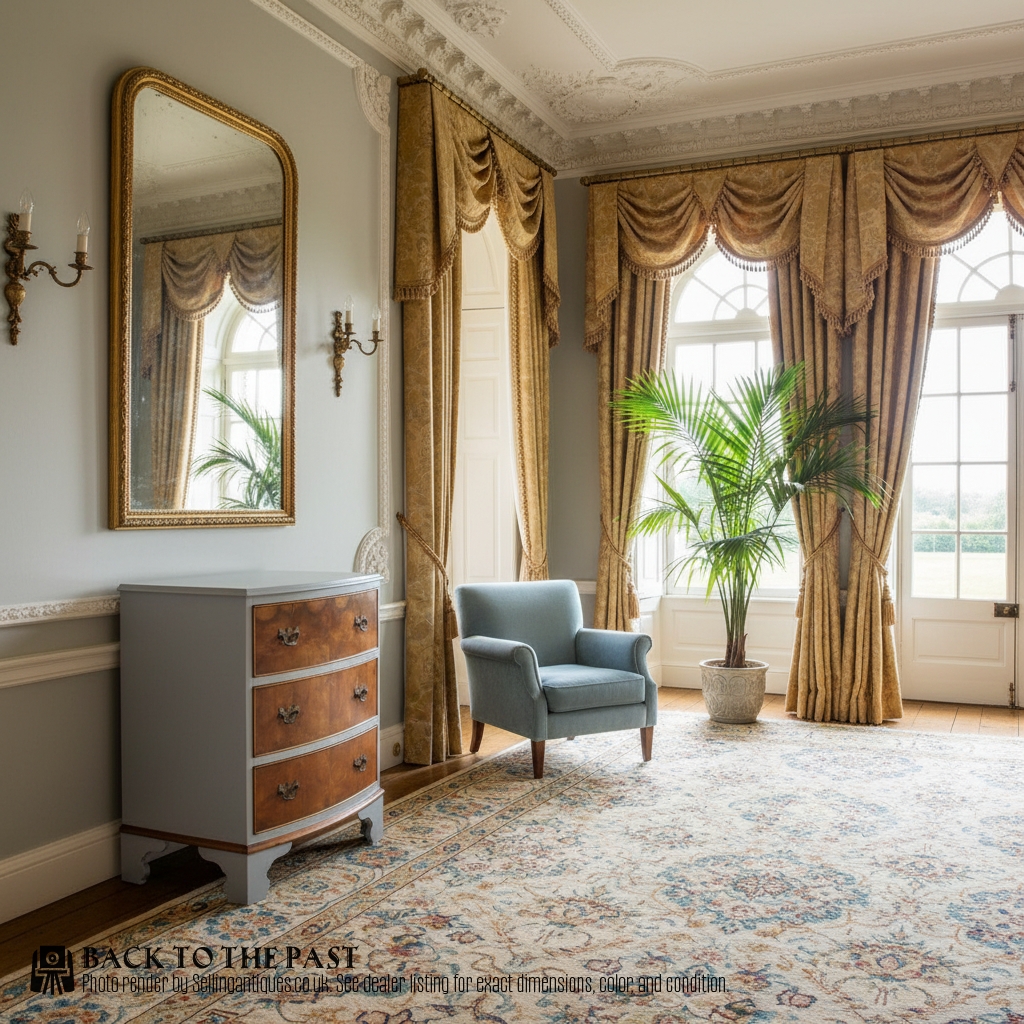
Curved Front Walnut Chest
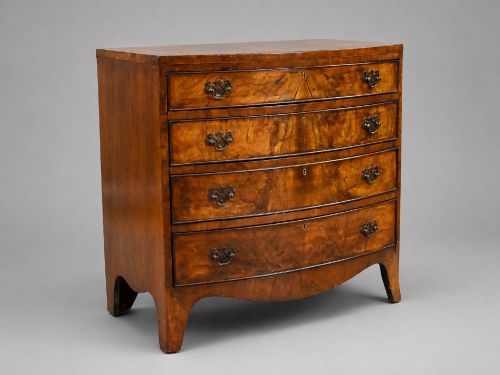
A curved front walnut chest brings a sweeping, rhythmic silhouette to storage furniture, departing from the rigid lines of flat-fronted pieces. These items span various eras from the eighteenth century through the Art Deco period, taking forms such as commodes, tallboys, dressing tables, and standard chests of drawers.
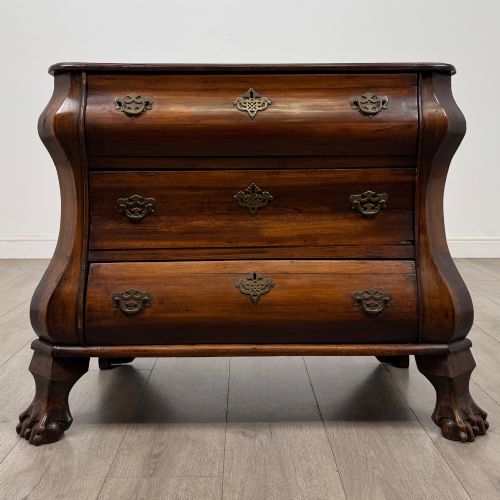
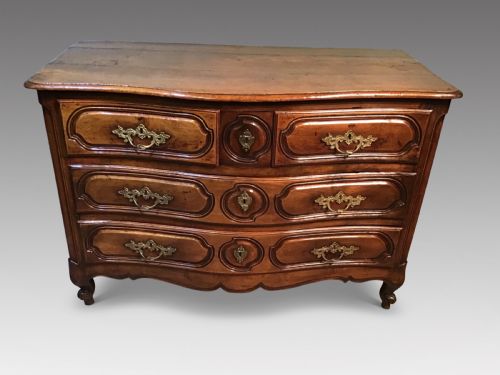
You are most likely to encounter bow front and bombe variations on this page, executed in figured walnut, burr walnut, or plain walnut timber. Examples range from eighteenth-century continental commodes to early twentieth-century British bow fronts, reflecting diverse regional tastes.
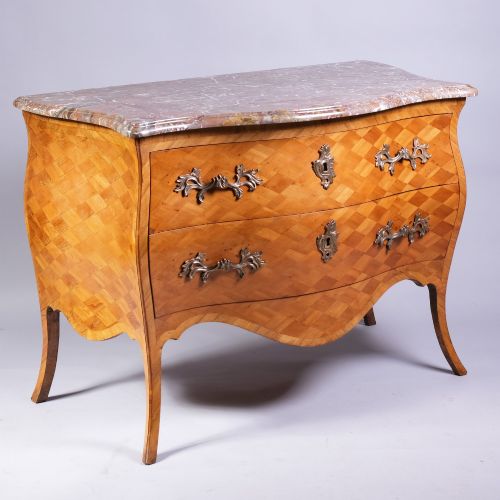
Originating primarily from British, French, Italian, and German workshops, these pieces showcase both restrained Georgian proportions and exuberant baroque or rococo curves. Their surfaces often feature decorative veneers like marquetry alongside solid walnut construction.
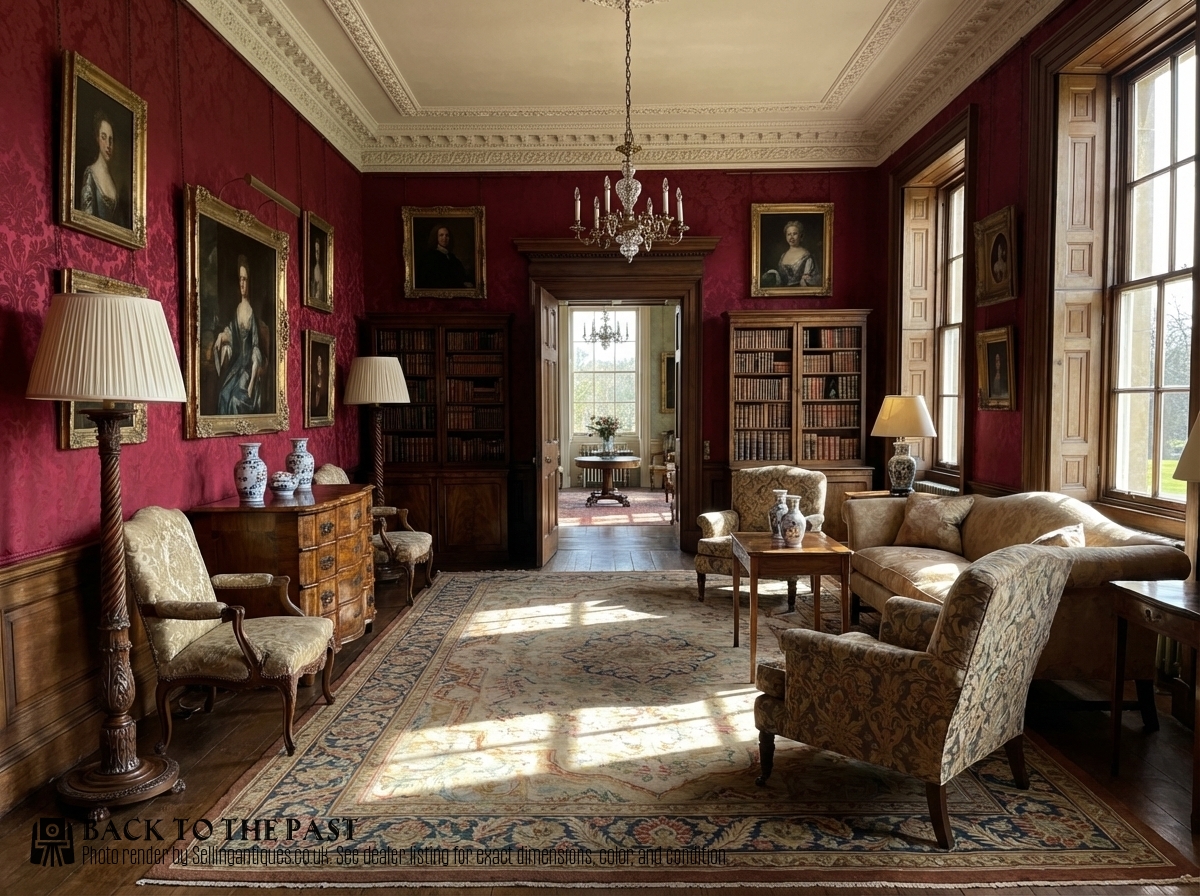
How they were made
Cabinetmakers constructed these pieces using solid timbers like oak, mahogany, or fruitwood for the internal carcase, applying figured or burr walnut veneers to the exterior surfaces. This technique allowed craftsmen to display dramatic grain patterns across the sweeping curves of the drawer fronts and sides.
Specialised bending and shaping methods formed the distinctive bow fronts, serpentine outlines, and bulging bombe profiles characteristic of these designs. Workshops incorporated brass handles, escutcheons, and occasionally marble tops or ormolu mounts to complete the construction.
Listings feature walnut, burr walnut, and figured walnut timbers across eighteenth-century, Victorian, Edwardian, and Art Deco periods.
What varies in quality
The sophistication of the veneer selection largely defines the visual success of the piece, with matched burr or figured walnut creating a harmonious, symmetrical flow across curved surfaces. Finer examples display meticulous attention to grain alignment around drawer edges and corners.
The integrity of the structural curves and the crispness of applied carving or marquetry separate standard production from master craftsmanship. Superior execution ensures that drawers operate smoothly within complex curved housings and that timber movement is properly accommodated.
Maurice Adams·Heal's
The Curved Front Walnut Chest Glossary
- Bow front
- A convex curved cabinet front that swells outward in the centre, common in British and continental furniture from the eighteenth century onward.
- Bombe
- A bulging, swelling commode profile with outward-curving sides and fronts, frequently seen in Dutch, French, and Italian pieces.
- Burr walnut
- A veneer sliced from walnut tree growths, prized for its swirling, highly figured knot patterns.
- Commode
- A low chest of drawers or cabinet, a term most commonly applied to continental European examples.
- Serpentine outline
- A furniture edge or front shaped with a double curve, dipping inward centrally and swelling outward at the ends.
- Tallboy
- A tall chest of drawers made by stacking one chest atop another, providing substantial vertical storage.
Curved Front Walnut Chest: Frequently Asked Questions
How do I clean walnut veneer?
Dust regularly with a soft, dry cloth to prevent dirt accumulation on the delicate wooden surface. Avoid modern silicone sprays and excessive moisture, using only specialist furniture wax sparingly when the timber appears dry.
Keep the chest away from direct sunlight and heat sources to prevent the walnut veneer from drying out, cracking, or lifting over time.
How do I date a walnut chest?
Examine the construction methods of the drawers, secondary interior timbers, and handles to establish the likely period of manufacture. Dovetail joints, timber types, and the style of the curved facade offer key clues regarding age.
Compare the veneer patterns and overall proportions against known regional styles, noting whether the piece displays Georgian restraint or later revival characteristics.
Where should I place a curved chest?
Position the piece where its sweeping silhouette and figured wood grain can be fully appreciated without obstructing room flow. Hallways, living rooms, and bedrooms benefit from the softened angles of bow front and serpentine designs.
Ensure the location maintains a stable temperature and humidity level to protect older timbers and decorative veneers from environmental stress.