
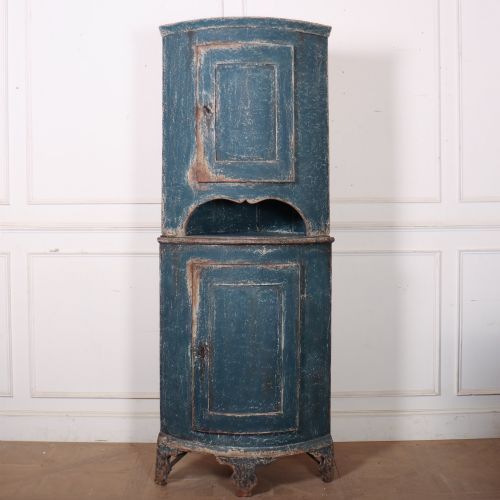
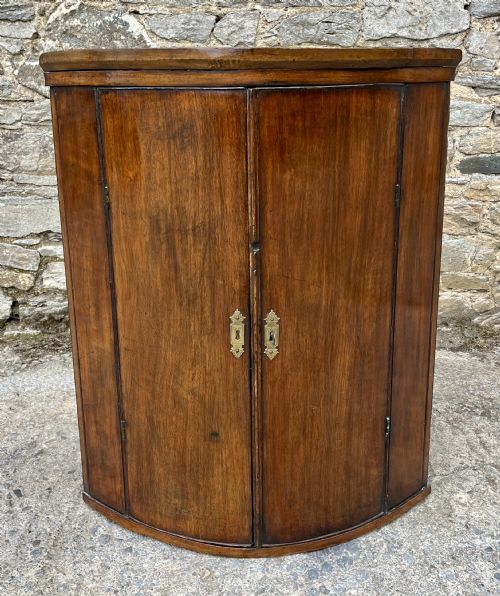
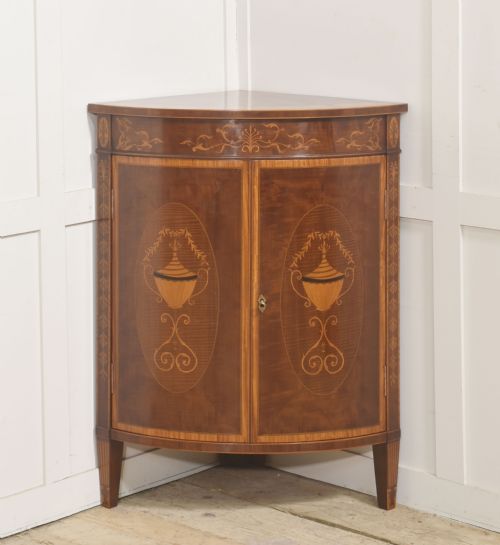
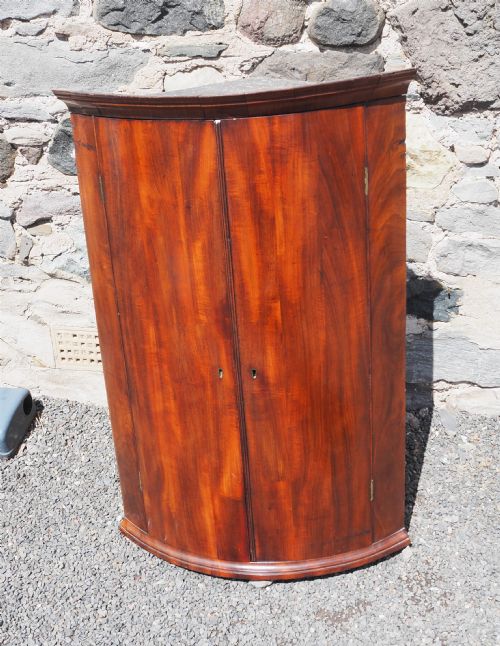


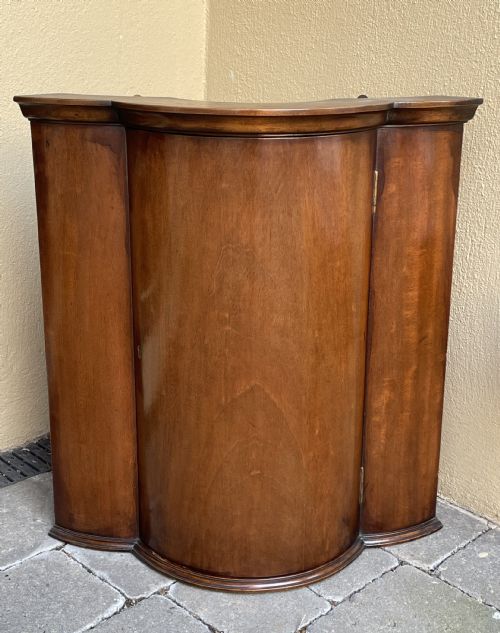

Curved Corner Cupboard
A curved corner cupboard turns awkward dead space into a focal point, bringing rich timber and clever geometry into the room.
Curved Corner Cupboard
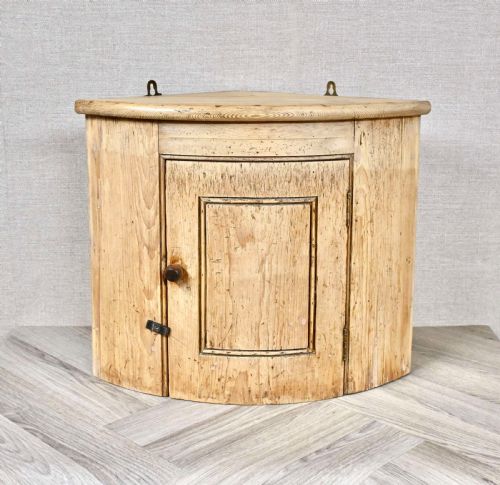
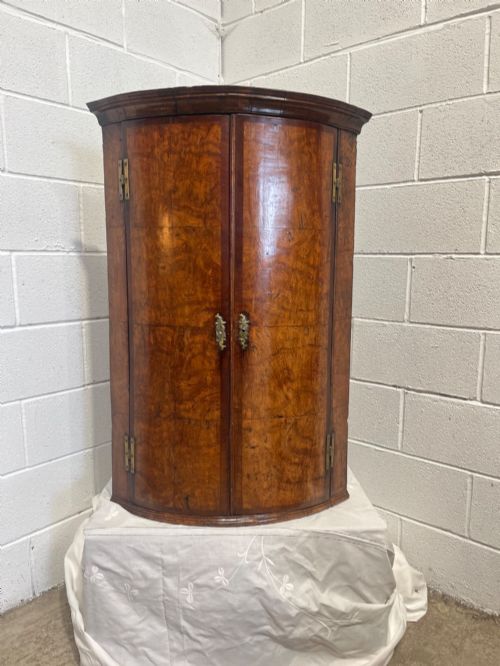
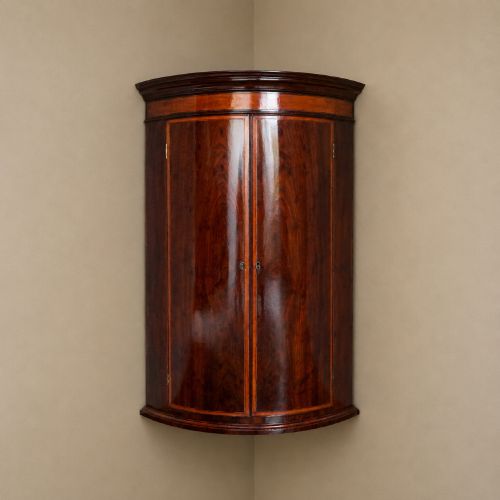
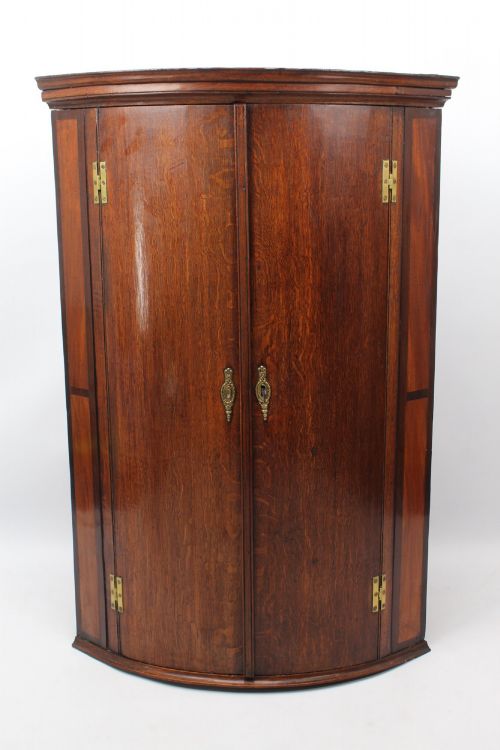
A curved corner cupboard makes use of empty room corners, offering storage or display through a convex or bow front. The selection spans sturdy oak and walnut pieces from the eighteenth century alongside refined mahogany and inlaid items from the Georgian and Victorian eras.
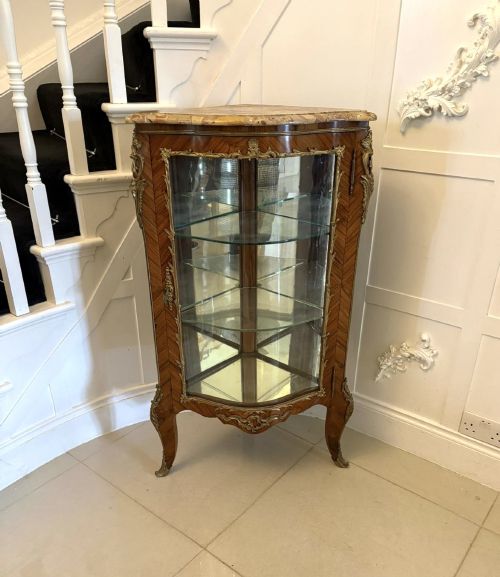
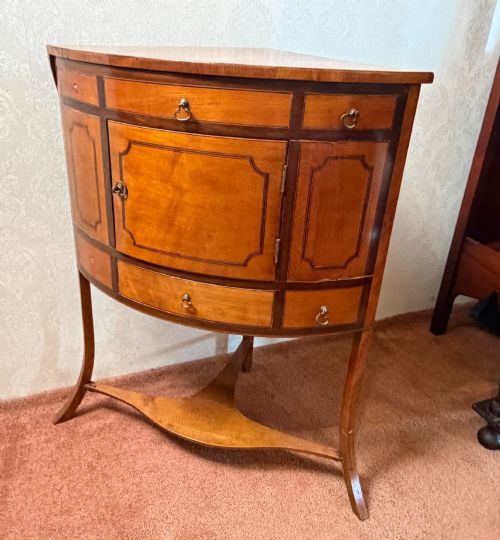
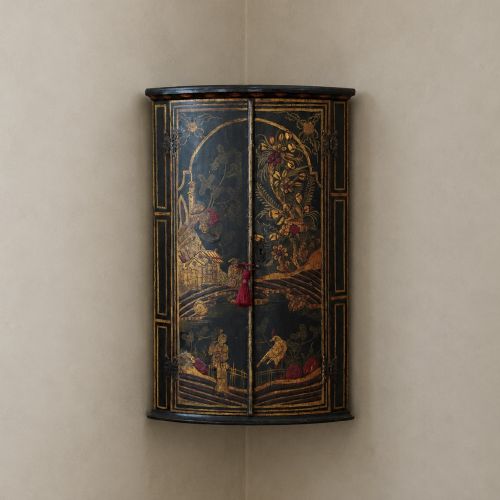
The layout includes both wall-hanging designs and tall standing cabinets, some featuring glazed doors for display. Many examples rely on a bow front or serpentine profile to soften the rigid geometry of a standard room corner.
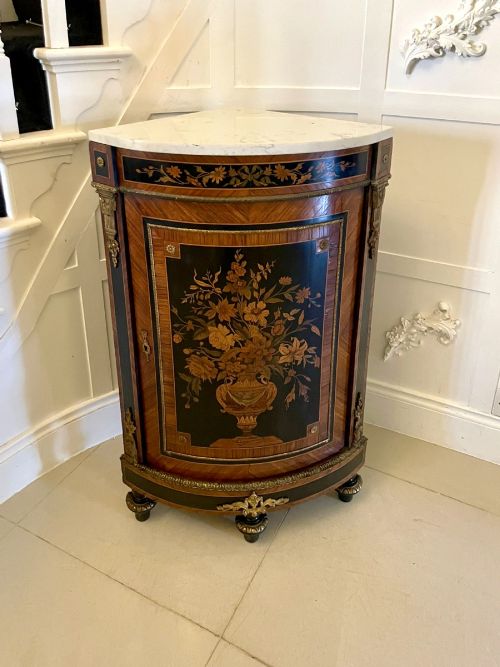
Origins stretch across English, French, Dutch, and Swedish workshops, bringing varied regional timbers and decorative schemes to the form. Buyers encounter simpler country pine and oak versions alongside grander revival pieces fitted with marble tops.
Materials and construction
Cabinet makers relied on solid timbers such as mahogany, oak, walnut, and pine for the main structure, often applying decorative veneers like burr oak or plum pudding mahogany to the prominent surfaces. Marquetry and parquetry patterns add intricate geometric or floral detailing to French and revival pieces.
Curved Corner Cupboard Retail Price Guide 2026
Typical asking prices for curved corner cupboard among the pieces listed under this phrase on Sellingantiques today, from the lower quarter to the upper quarter. They describe what is for sale here now, not the wider market.
Periods represented on the page stretch from the 18th century through the Georgian and Victorian eras to 1900.
What separates the tiers
The grade of the timber and the precision of the curved joinery dictate the quality of a piece. Finer cabinets employ figured veneers like plum pudding mahogany or intricate marquetry, whereas utilitarian country examples use plain oak or pine.
Hardware and secondary decorative elements also signal the standard of manufacture. Well-executed ormolu mounts, quality brass fittings, and integrated marble tops elevate a cabinet from a simple storage box to a refined display piece.
Edwards And Roberts
The Curved Corner Cupboard Glossary
- Bow front
- A convex, outwardly curved front profile that softens the corners of a cabinet. This shape is common in Georgian and nineteenth-century designs.
- Serpentine
- A shaped front edge that curves outward in the centre and inward at the sides. It demands high skill from the cabinet maker.
- Marquetry
- The art of applying pieces of veneer to a structure to form decorative patterns or pictures. Craftsmen utilise various coloured woods to create contrast.
- Ormolu
- Gilt bronze mounts applied for decorative effect on cabinet doors or frames. This technique appears frequently on French revival pieces.
- Tambour
- A surface constructed from narrow strips of wood glued to a flexible canvas backing, allowing doors to slide around curved tracks.
Curved Corner Cupboard: Frequently Asked Questions
How do I hang a wall cabinet?
Hanging corner cabinets require secure fixing into solid masonry or direct wall studs using appropriate brackets. Because these units hold heavy timber and sometimes glass, professional installation ensures safety.
Once mounted properly, the cabinet distributes weight evenly against both intersecting walls. Check that the internal fixing points align with the structural framing of your room.
Where should I place a corner cupboard?
These cabinets suit empty room junctions that standard rectangular furniture cannot occupy. Dining rooms, hallways, and drawing rooms all benefit from utilising awkward dead space.
Standing versions anchor directly on the floor, while hanging models free up valuable surface area below. Consider the swing clearance of curved doors when positioning near doorways or seating.
What is the difference between hanging and standing cupboards?
Hanging cupboards mount directly to the wall at eye or chest level, leaving the floor entirely clear beneath them. Standing versions rest on the floor and frequently offer greater storage capacity, sometimes in double-height formats.
Selection depends on your ceiling height, floor space, and whether you want to display items at eye level. Both styles make use of the same curved corner geometry.
How do I identify Georgian pieces?
Georgian cabinets often display characteristic timbers like mahogany, oak, or walnut paired with traditional joinery methods. Look for hand-cut dovetails in the drawer construction and period brass hardware.
Proportions tend to be classic and restrained, though variations like bow fronts and japanned Chinoiserie finishes occur. Comparing the construction details against documented period examples helps confirm the era.