
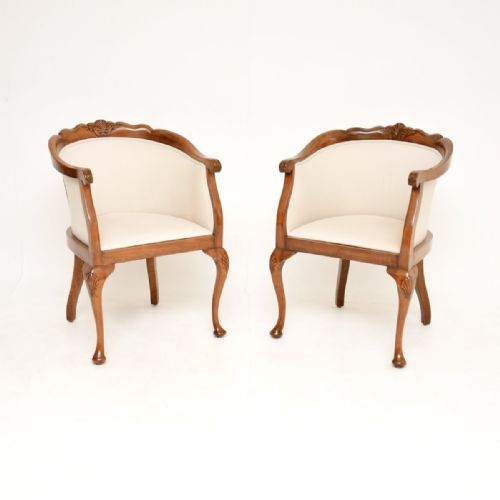
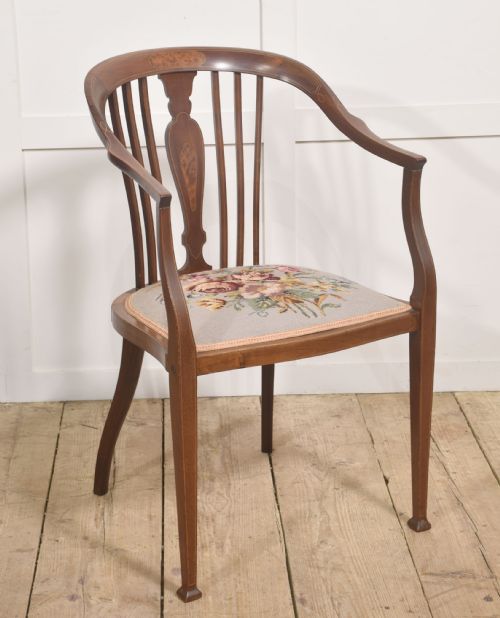

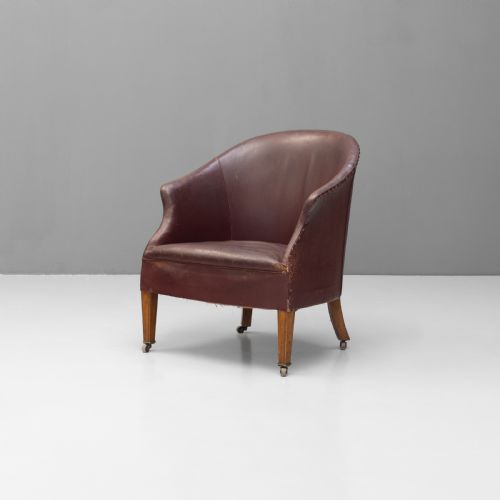


Curved Back Tub Chair
A curved back tub chair wraps the sitter in a continuous embrace, uniting sturdy support with deep, upholstered comfort.
Curved Back Tub Chair
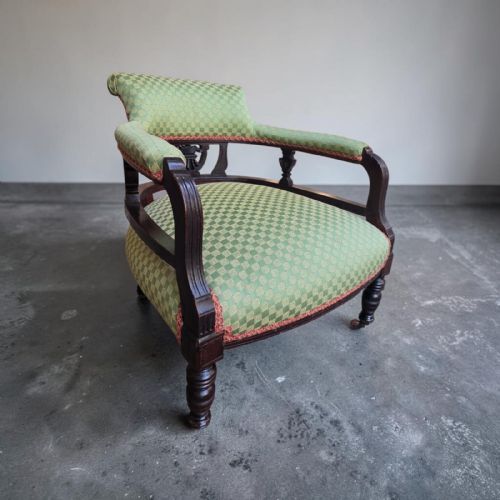
A curved back tub chair is a seating form defined by its semicircular backrest, which flows seamlessly into low arms to cradle the body. These pieces surface frequently from the nineteenth century and the Edwardian era, spanning uses from intimate salon seating to sturdy library and office desks.
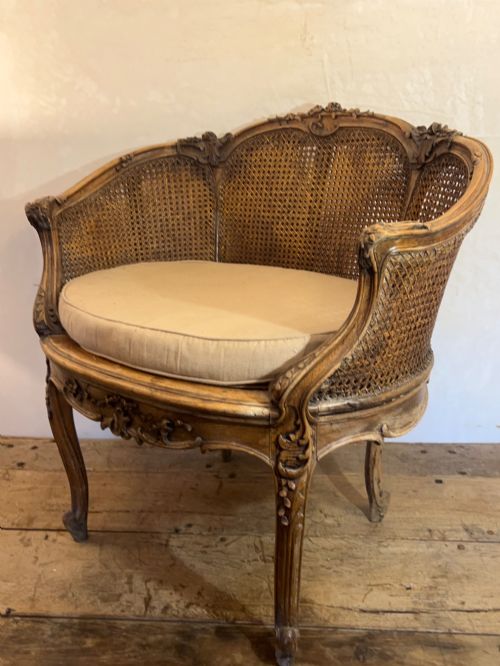
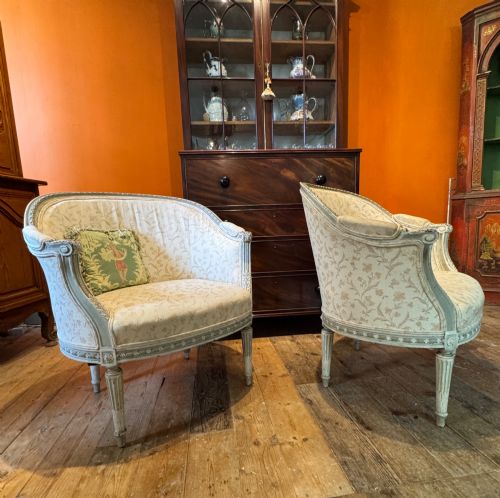
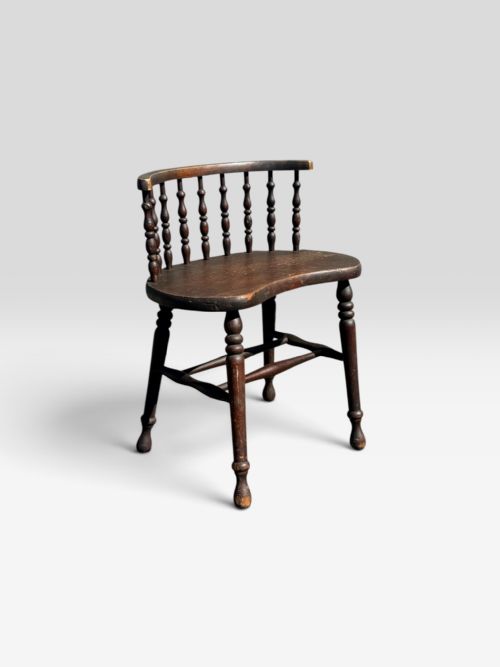
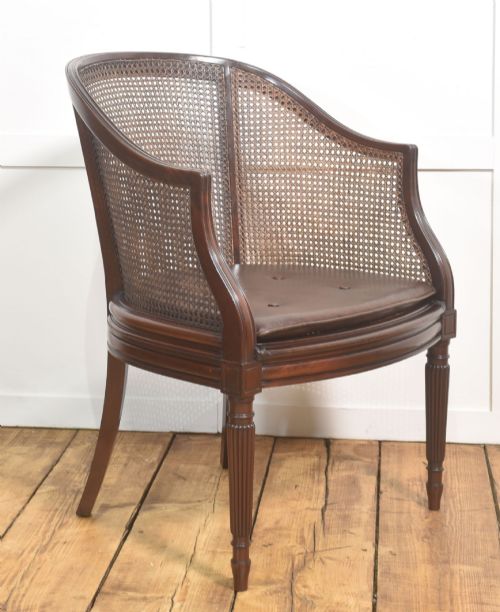
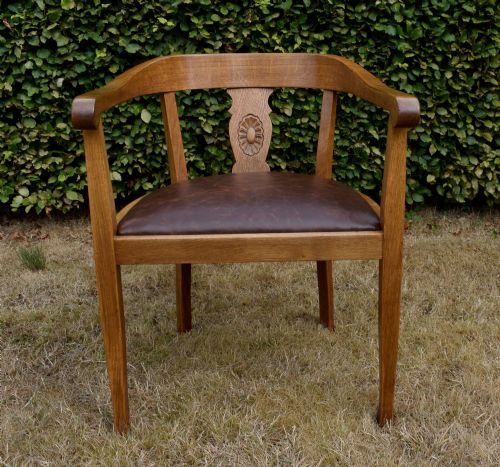
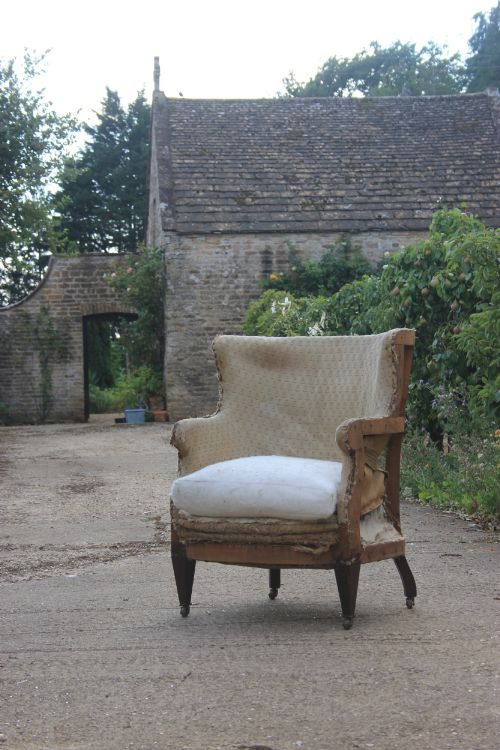
The selections on this page range from compact nineteenth-century French corbeille seats to Edwardian mahogany frames and oak captain's chairs. Buyers also encounter barrel back designs, walnut frames, and occasional pieces featuring cane or leather upholstery.
Makers adapted the form across decades, employing styles from Queen Anne revivals to Art Deco lines. Whether utilised as a desk chair or a corner seat, each piece maintains the distinctive rounded profile that gives the category its name.
Materials and construction
Cabinetmakers built these frames using dense hardwoods such as mahogany, walnut, oak, and elm, often shaping the curved back rails from steam-bent timber or segmented joined sections. Inlaid details in satinwood, marquetry, and original paint finishes frequently decorate the exposed wooden surfaces.
Upholstery techniques varied from traditional horsehair stuffing beneath fabric, leather, or velvet to woven cane panels fitted into bentwood and teak structures. Brass castors, swivel mechanisms, and ebonised highlights complete the construction of functional desk and office variants.
One cheerful Edwardian barrel back managed to survive a century of sitting without losing its jaunty original proportions.
Assessing quality in the build
Quality rests upon the integrity of the curved wooden frame and the tightness of its joinery, particularly where the arms meet the back rail. Solid timbers like mahogany and walnut show crisper carved details and greater resilience than softer woods over centuries of use.
The refinement of the upholstery work and the preservation of original surfaces, whether polished wood, cane panels, or leather, distinguish superior examples. Subtleties in proportion and restraint in inlay separate workshop pieces designed for daily utility from standard commercial production.
The Curved Back Tub Chair Glossary
- Tub chair
- A deep-seated armchair with a continuous curved back and low arms forming a tub-like enclosure. This form provides enclosing comfort and support for the sitter.
- Captain's chair
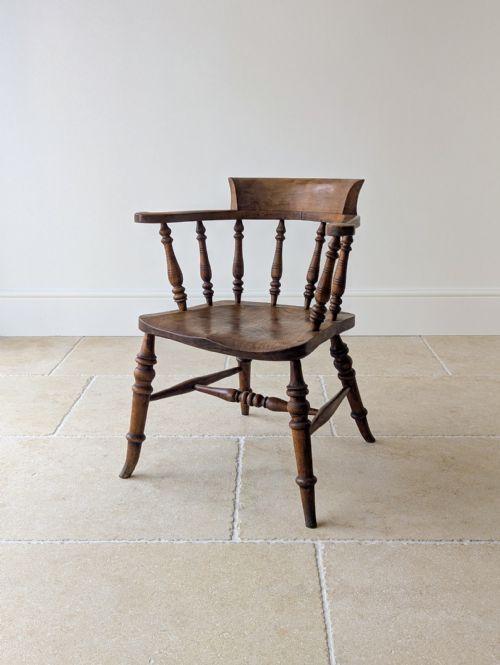
- A sturdy wooden swivel or fixed armchair featuring a low curved back rail supported by spindles. These practical seats often served at nineteenth-century office desks.
- Bergère
- An enclosed upholstered armchair with wooden framing and woven cane sides or back panels. French examples often retain painted finishes and loose squab cushions.
- Marquetry
- The art of applying decorative veneer pieces to a wooden structure to form geometric or floral patterns. Edwardian makers utilised this technique extensively on mahogany salon chairs.
- Corbeille
- A French term for a basket-shaped armchair with a rounded, flaring back. These nineteenth-century seats often follow Louis XV or Louis XVI revival styles.
Curved Back Tub Chair: Frequently Asked Questions
Where should I place a curved back tub chair?
These compact chairs suit studies, reading corners, and bedrooms where space is at a premium yet comfortable seating is desired. Their finished backs allow them to sit away from walls in open room layouts.
Desk and office variants function practically at writing tables, while upholstered parlour models complement sofas and occasional tables.
How do I care for leather and wood?
Maintain wooden frames by dusting with a dry cloth and occasionally feeding the polish with traditional beeswax. Avoid placing pieces near direct heat sources to prevent timber from splitting.
Condition leather upholstery sparingly with specialised balms to keep the hide supple without altering its historic patina.
Can I use these chairs at a modern desk?
Many nineteenth-century and Edwardian examples, particularly oak captain's chairs and mahogany desk chairs, provide ergonomic support suitable for contemporary workspaces. Some vintage models incorporate swivel mechanisms and adjustable heights.
Check the seat height and clearance measurements against your desk before purchasing to ensure a comfortable fit.
How do I distinguish Edwardian from Victorian chairs?
Victorian pieces generally display heavier proportions, darker mahogany or walnut timbers, and more elaborate carved ornamentation. Their upholstery tends to be deep and sprung.
Edwardian designs often exhibit lighter frames, satinwood inlay, brighter mahogany tones, and occasionally painted surfaces or delicate cane work reflecting neoclassical revivals.