




Curved Art Deco Bookcase
These curved art deco bookcase pieces offer sweeping lines and practical shelving, built to anchor a room with architectural confidence.
Curved Art Deco Bookcase
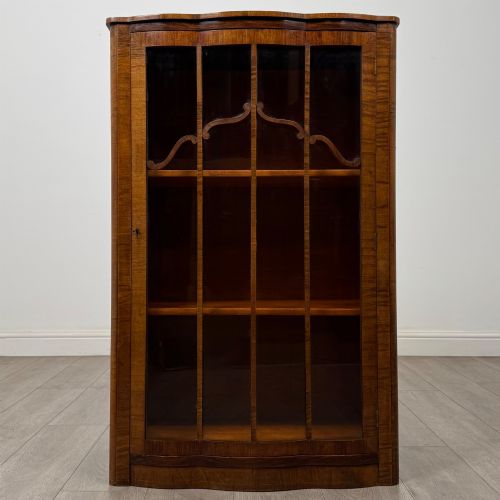
When you search for a curved art deco bookcase, you enter a domain of 1930 design where rectilinear furniture yields to circular and rounded forms. These pieces serve primarily as display cabinets, vitrines, and bureau bookcases designed to showcase books and objects behind glass.
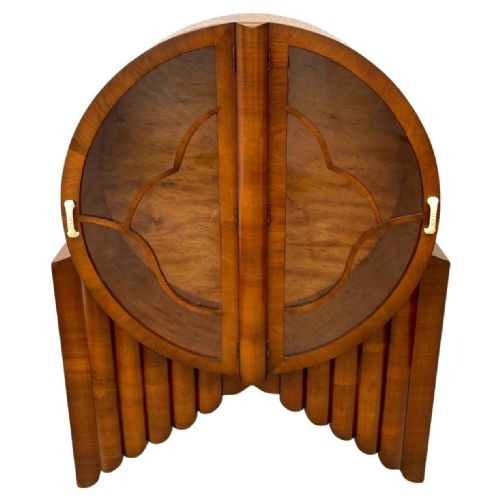
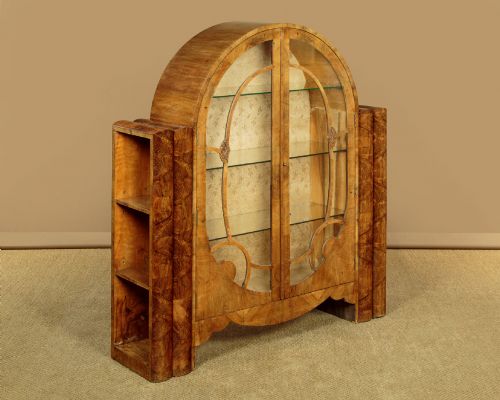
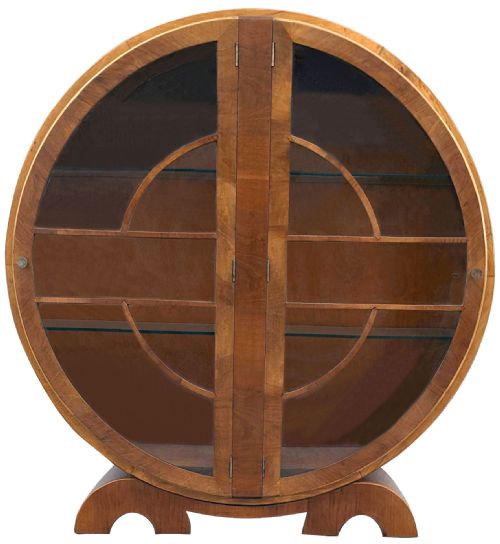
The version you are most likely to meet on this page dates from around 1930, though Edwardian and 1920 antecedents also appear. They span forms such as rocket cabinets, circular display cabinets, and cathedral vitrines that utilise sweeping radiuses to soften interior corners.
How they were made
Cabinet makers constructed these pieces using walnut, burr walnut veneer, and figured walnut over sturdy carcases, often incorporating curved glass panes for the doors. Sycamore provides interior contrast, whilst brass hardware accents the exterior form.
Veneering techniques allowed workshops to wrap grain patterns fluidly around tight radiuses and circular drums. Glazing bars and curved frames required specialist joinery to follow the sweeping arcs characteristic of the style.
Rocket cabinets stand upright like miniature architectural launchpads, daring your collection of novels to attempt lunar orbit.
What varies in quality
The distinction between ordinary and exceptional examples rests upon the ambition of the geometry and the selection of timber veneers. Matched burr walnut figures that flow seamlessly around a curved door demonstrate superior workshop execution.
Named makers such as Betty Joel or Maurice Adams introduce a higher tier of design pedigree compared to uncredited production pieces. The integration of architectural elements, such as cathedral arches or circular drums, elevates the status of the cabinet.
Betty Joel·Maurice Adams
The Curved Art Deco Bookcase Glossary
- Burr walnut
- A wood veneer taken from the growth growths of a walnut tree, prized for its swirling, highly figured grain patterns. It provides a rich texture across curved door panels.
- Vitrine
- A glass-fronted display cabinet intended for the exhibition of ceramics, books, or small valuables. In this period, the vitrine often adopts rounded or cylindrical glass forms.
- Bureau bookcase
- A hybrid form combining a sloping writing flap with upper shelving or display space. It merges desk functionality with the storage of a bookcase.
- Sycamore
- A light-coloured hardwood frequently utilised for interior linings and contrasting details within darker walnut carcases. It brightens the enclosed spaces of display cabinets.
Curved Art Deco Bookcase: Frequently Asked Questions
What is a curved art deco bookcase?
A curved art deco bookcase is a storage and display piece originating largely from the 1930s, defined by rounded corners, circular drums, and sweeping glass doors. These cabinets combine the practicality of shelving with the architectural dynamism of the period.
They function as focal points in a room, designed to hold books while exposing decorative objects through curved glass panels.
How were these cabinets used?
These cabinets served primarily to house libraries and display valued ornaments within domestic interiors. The inclusion of glass doors protected contents from dust while maintaining visual access.
Some variants incorporate bureau sections, allowing the piece to double as a compact writing desk alongside its primary role as a bookcase.
How do I live with walnut furniture?
Living with walnut furniture involves placing pieces away from direct sunlight and maintaining stable room humidity to protect the delicate veneers. Regular polishing with appropriate wax preserves the depth of the grain.
Their rounded footprints allow them to soften corners in modern or traditional spaces alike, functioning naturally alongside diverse interior palettes.
How do I identify a 1930 piece?
Identification relies on observing characteristic stylistic traits such as rounded geometry, waterfall edges, and the use of figured walnut veneers. The presence of curved glass and specific hardware styles anchors the date firmly in the interwar period.
Cabinet construction methods and occasional maker attributions further confirm the 1930 origin against earlier Edwardian or 1920 transitional forms.