

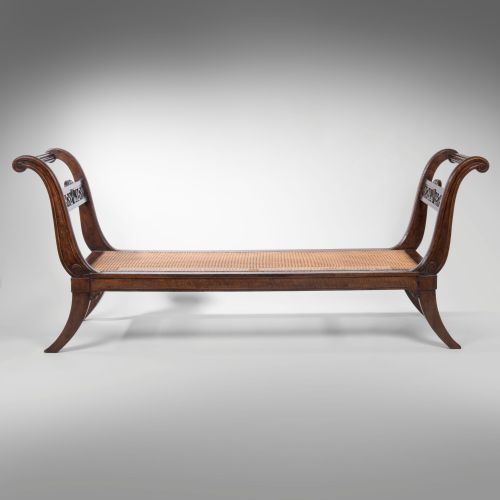
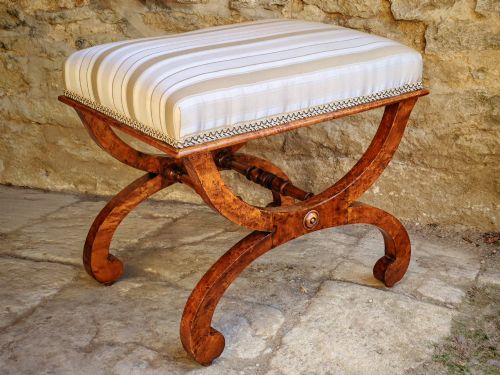


Curule Seat Stool
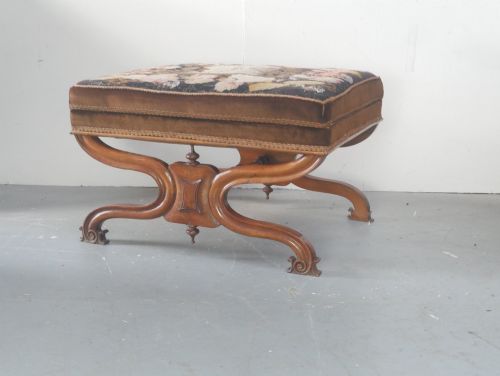
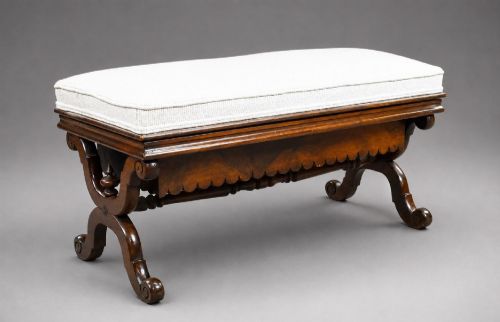
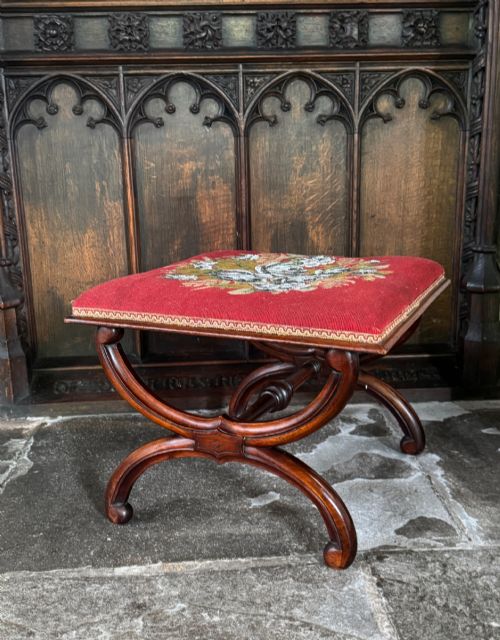
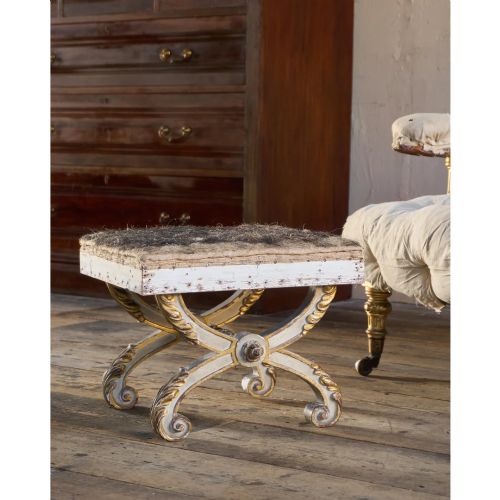
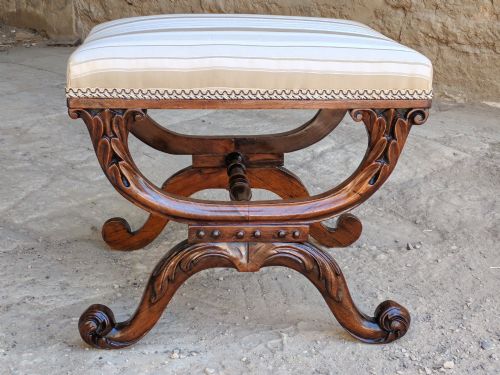
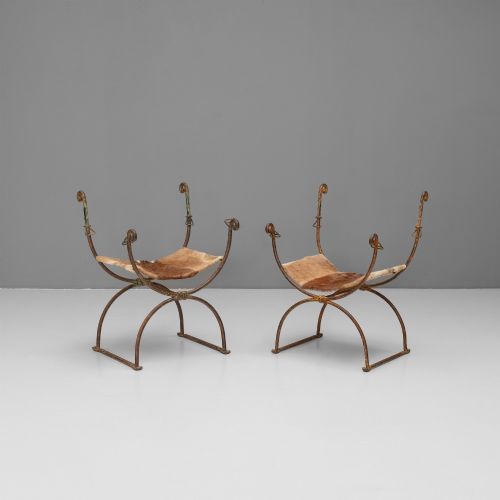
A curule seat stool is a cross-framed piece drawing on ancient Roman forms, offering a distinct architectural silhouette that suits grand hallways and dressing rooms alike.
Curule Seat Stool
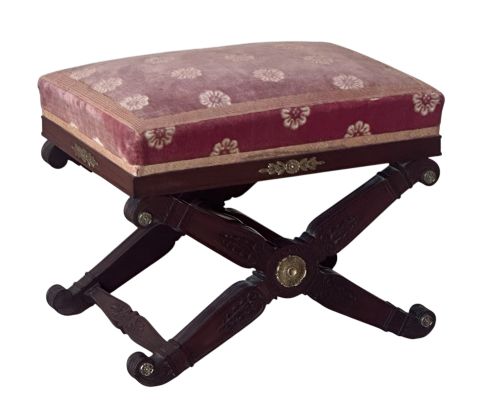
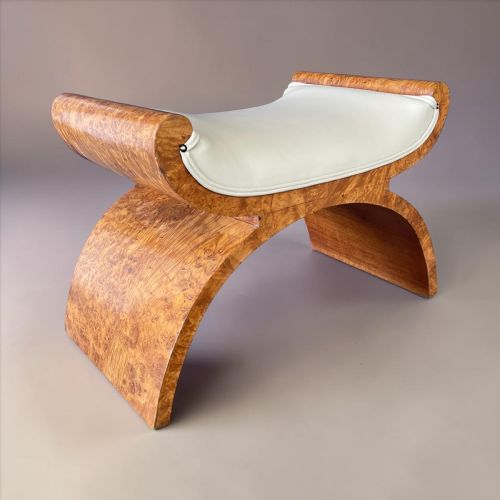
A curule seat stool relies on the intersecting X-frame geometry that dates back to classical antiquity, revived during periods that favoured neoclassical design. Buyers seeking this form encounter examples spanning the nineteenth century, including Regency, William IV, and Victorian periods, alongside later Edwardian and Art Deco interpretations.
The inventory on this page ranges from compact footstools and dressing stools to larger window seats and benches. Mahogany, rosewood, and walnut form the structural basis of these pieces, frequently paired with upholstered seats in velvet, leather, or damask.
Materials and Construction
Cabinetmakers constructed the X-frames using dense hardwoods such as mahogany, rosewood, walnut, and satinwood, often steam-bent or carved to achieve the characteristic sweeping curves. Giltwood, gesso, and ebonised finishes appear on pieces influenced by French Empire and Aesthetic Movement styles, adding surface contrast to the timber frames.
Upholstery techniques vary from traditional webbing and stuffing to decorative beadwork, needlepoint, and buttoned leather. Brass mounts, castors, and turned stretchers provide structural reinforcement and functional mobility to the heavier window seats and benches.
Object forms include low footstools, dressing stools, Piano stools, and extended window seats with cane or leather seats.
Craftsmanship and Proportion
Quality in a curule seat stool resides in the rigidity of the intersecting joints and the precision of the carved or moulded frame. Superior pieces maintain balanced proportions where the X-frame supports weight without shifting, whereas lesser examples suffer from loose joinery at the central pivot.
The selection of timber grain, such as figured mahogany or burr maple, combined with crisp carving on the terminals and feet, distinguishes standard production items from workshop pieces created by known makers.
Miles and Edwards·Harry and Lou Epstein
The Curule Seat Stool Glossary
- Curule
- A folding chair or stool shape derived from ancient Roman magistrate seats, featuring intersecting curved legs that form an X-shape. This classic silhouette provides both structural strength and visual lightness.
- X-Frame
- A furniture base constructed from two diagonal members crossing in the middle to support the seat. It serves as the defining architectural characteristic of curule stools and window seats.
- Giltwood
- Timber coated with a thin layer of gold leaf over a prepared gesso ground. This finish is frequently found on Neoclassical and French Empire examples.
- Aesthetic Movement
- A late nineteenth-century design style emphasising art for art's sake, often resulting in ebonised woodwork with simple geometric lines or subtle gilding.
- Window Seat
- An elongated stool or bench designed specifically to sit within a bay window recess, frequently featuring upholstered armrests or ends.
Curule Seat Stool: Frequently Asked Questions
Where should I place a curule seat stool?
These pieces function effectively at the foot of a bed, beneath a dressing table, or positioned in a hallway as a window seat. Their compact footprint allows them to occupy transitional spaces where rigid chairs might feel too heavy.
The distinct X-frame profile also makes them suitable as occasional seating in a drawing room, where they can be moved easily without cluttering the floor plan.
How do I distinguish Regency from Victorian examples?
Regency and early nineteenth-century pieces generally display cleaner neoclassical lines, using figured rosewood or mahogany with restrained brass mounts. They often echo ancient Roman or French Empire proportions with a lighter aesthetic.
Victorian iterations tend to be heavier in construction, incorporating darker walnut, carved details like animal heads, or elaborate beadwork and patterned damask upholstery that reflect changing domestic tastes.
Are these stools comfortable for daily seating?
Most historic stools were designed for short periods of sitting, such as dressing or putting on shoes, rather than lounging. Their supportive webbing and firm padding provide a stable surface.
Larger window seats with upholstered ends offer additional leaning support, though the primary appeal remains decorative and functional rather than plush.
How do I care for the wood and upholstery?
Maintain timber frames by dusting with a dry cloth and applying traditional beeswax sparingly to nourish polished mahogany or walnut surfaces. Avoid placing pieces in direct sunlight to prevent fading on rosewood or giltwood finishes.
Upholstery care depends on the fabric type; velvet and damask benefit from gentle brushing, while leather requires periodic conditioning to keep the material supple.