
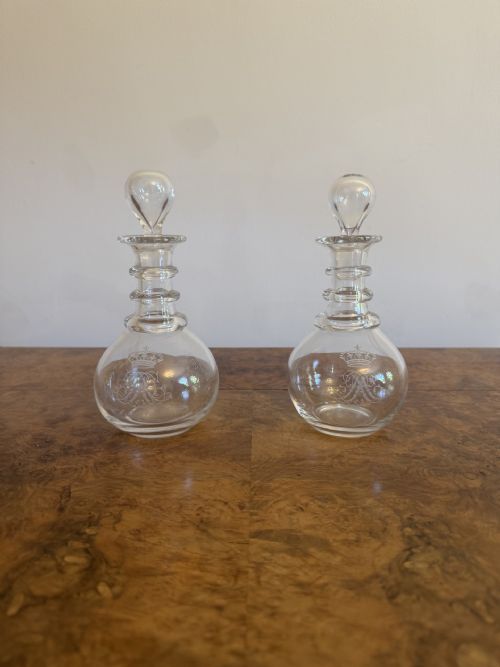
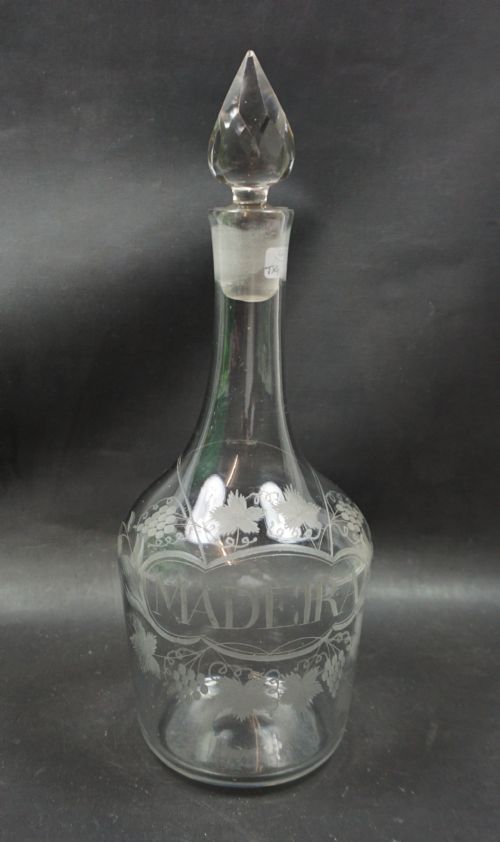
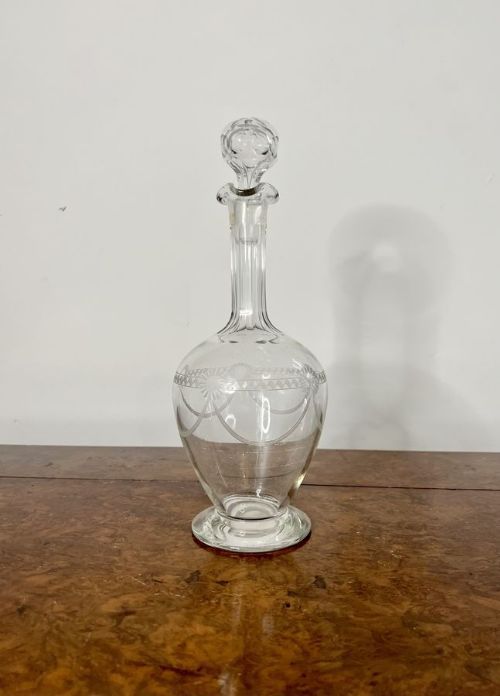

Crystal Spirit Carafe
A crystal spirit carafe is a heavy glass vessel designed to hold spirits, bringing tactile weight and clarity to a sideboard.
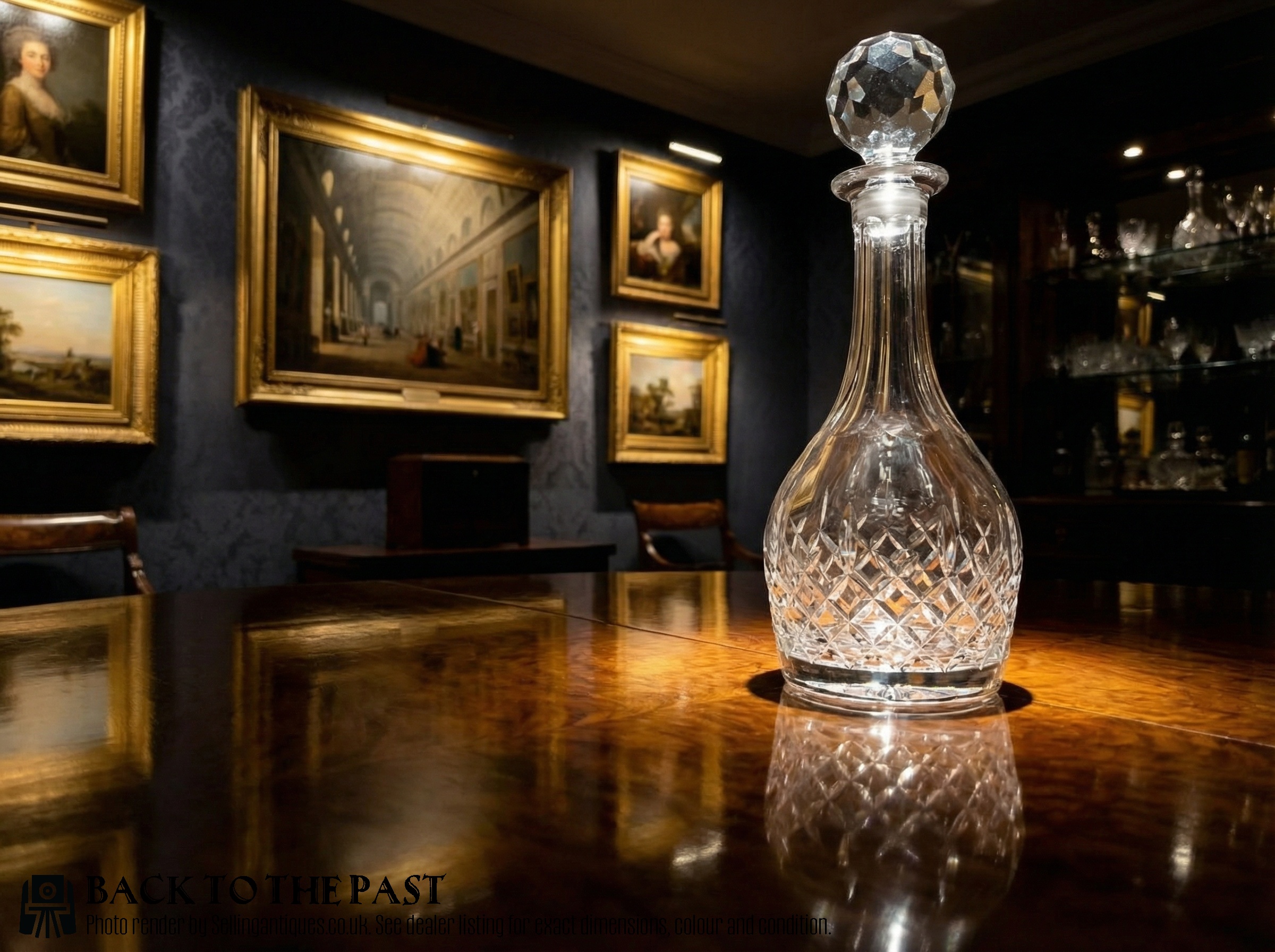
Crystal Spirit Carafe
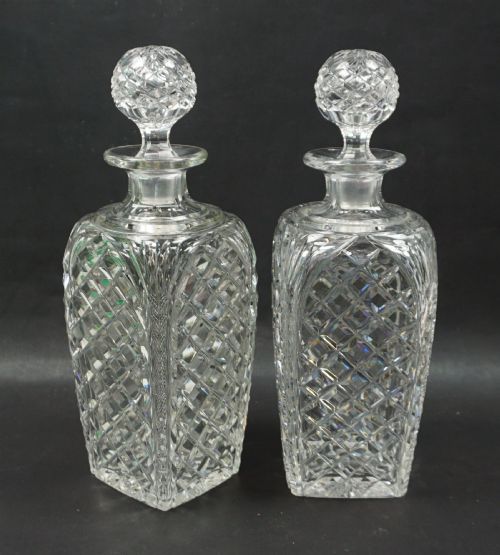
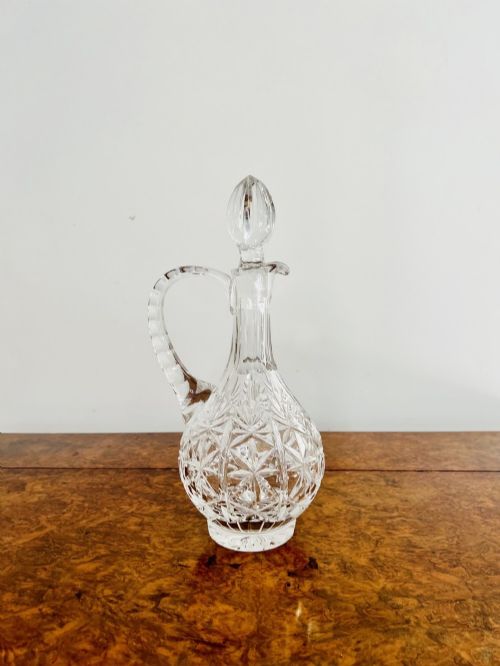
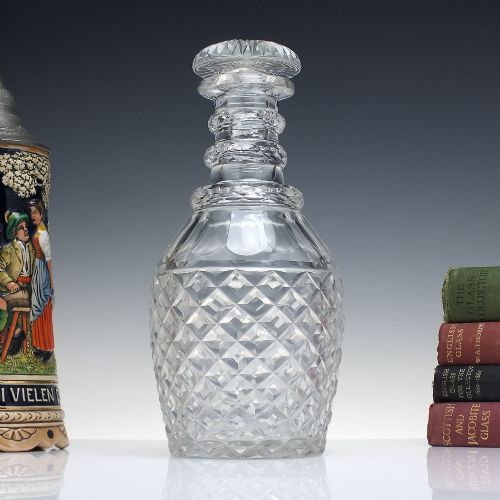
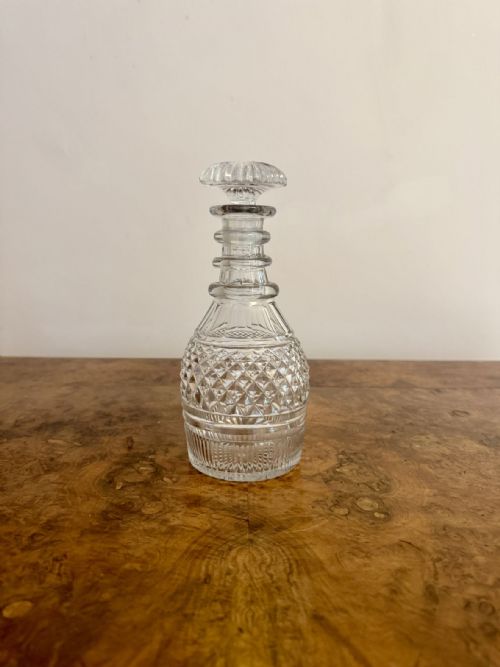
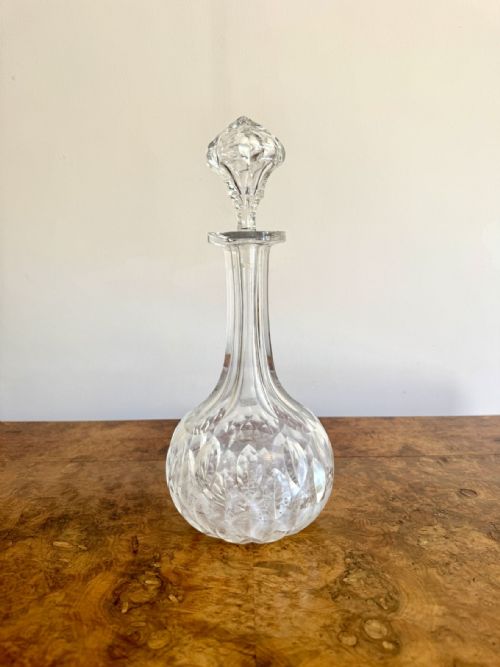
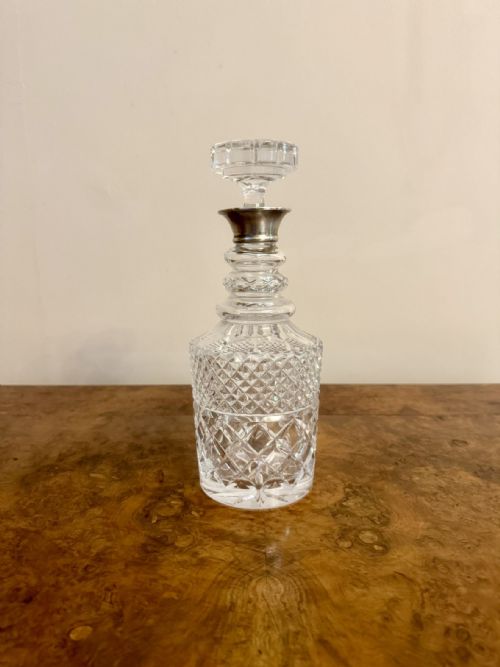
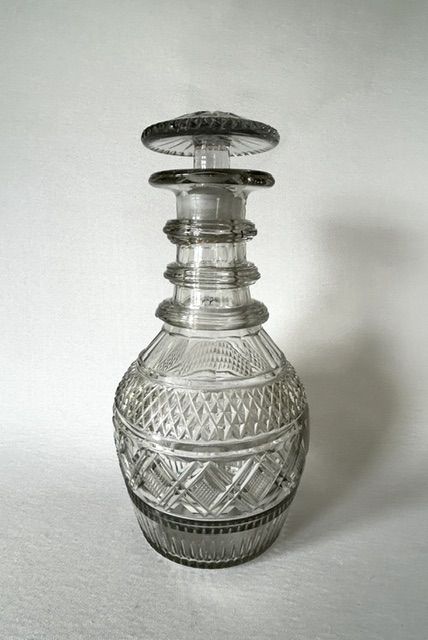
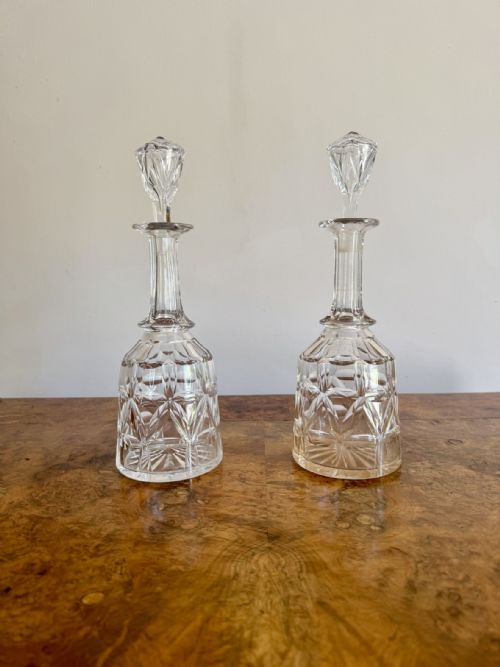
A crystal spirit carafe is fundamentally a container for holding and pouring spirits like whisky, brandy, or wine, appearing in forms such as bell shapes, square section tapered bodies, and shaft and globe designs. When browsing this selection, buyers frequently encounter Edwardian and Victorian examples, alongside earlier Regency and George III pieces.
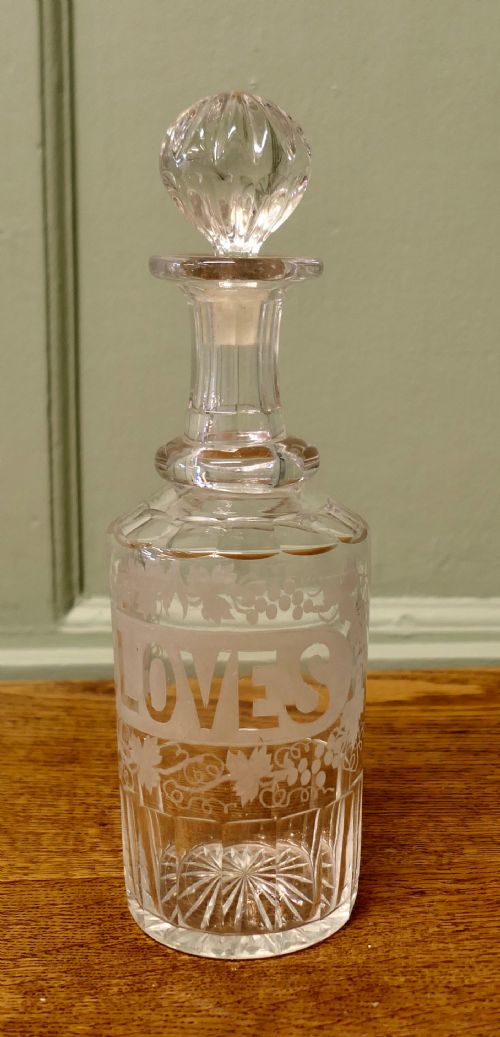
The objects span multiple decades from the nineteenth century into the early twentieth century, showing diverse silhouettes from large shoulder decanters to matched pairs. English and Bohemian origins predominate, often accompanied by fitted stoppers and occasionally inscribed labels denoting specific contents like Madeira.
Makers and workshops utilised distinct regional styles, ranging from Irish cut glass to London glasshouses. These vessels served functional roles on dining tables and sideboards, evolving through stylistic periods including Art Deco and Arts & Crafts.
Materials and methods of construction
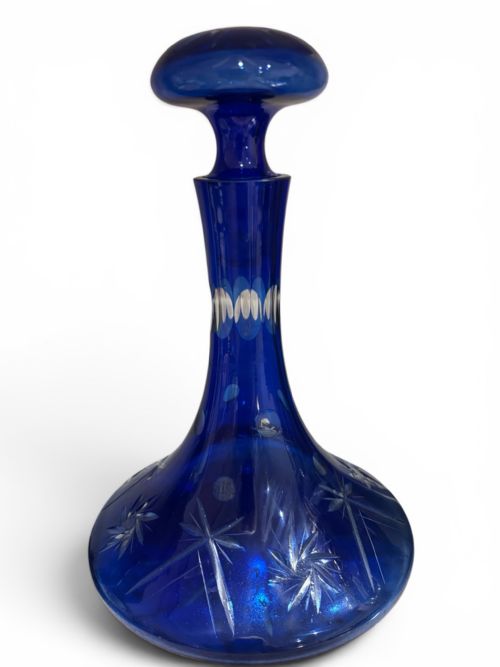
Makers shaped lead crystal, clear glass, and coloured variations such as cobalt and blue glass through techniques including cutting, optical blowing, and engraving. The heavy substance of lead crystal allowed artisans to carve deep geometric patterns that catch the light.
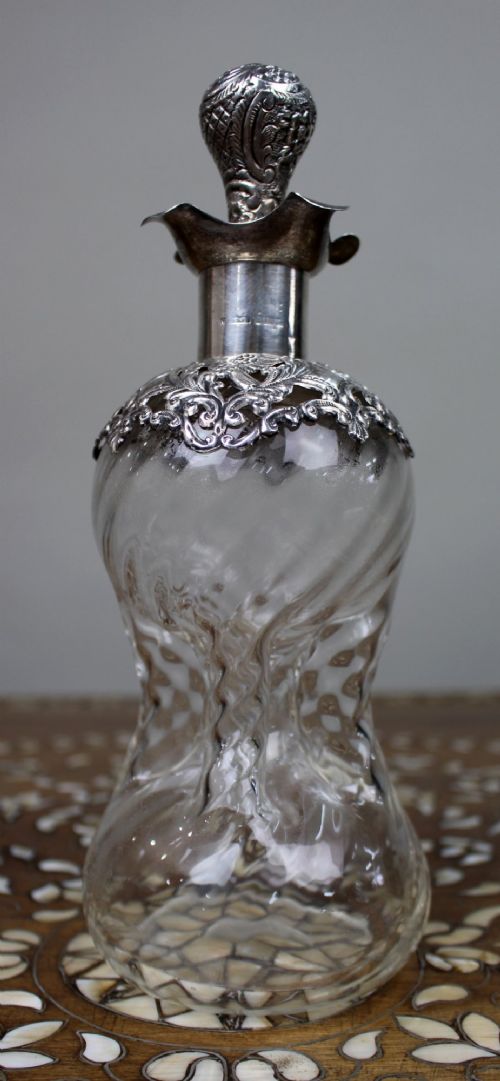
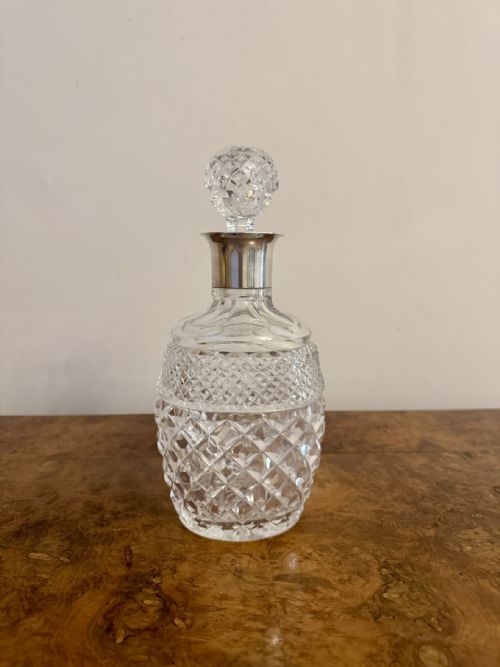
Many examples incorporate fitted sterling silver collars, mounts, and hallmarked bands that secure the neck and add structural contrast to the glass body. Engraving techniques applied lettering for spirit labels directly onto the clear surface by hand.
Distinctions in execution and finish
Quality rests in the crispness of the glass cutting and the weight of the lead crystal, where deeper and more precise facets create sharper refraction. The presence of original matching stoppers and hallmarked silver collars elevates an example above plain or altered vessels.
Proportion and symmetry define the finer pieces, particularly in matched pairs and ship's decanters where balance is critical for stability. Superior engraving work, such as legible script for spirit titles, demonstrates a higher level of craftsmanship.
James Powell
The Crystal Spirit Carafe Glossary
- Cut glass
- Glass decorated by grinding facets or patterns into the surface using a wheel. This technique creates sharp edges and brilliant light refraction.
- Lead crystal
- A type of glass containing lead oxide, which increases the weight, clarity, and brilliance of the material. It is softer than standard glass, making it ideal for deep cutting.
- Ship's decanter
- A form with a wide base and tapered neck designed to prevent tipping on rolling tables at sea. The low centre of gravity provided stability during maritime travel.
- Sterling silver collar
- A band of high-purity silver fitted around the neck of a decanter. These often bear hallmarks indicating the assay office and year of manufacture.
- Optically blown
- A method where glass is blown into a ribbed or patterned mould before shaping. This imparts subtle internal patterns or fluting to the walls of the vessel.
Crystal Spirit Carafe: Frequently Asked Questions
What is a crystal spirit carafe used for?
These vessels serve to hold, aerate, and pour spirits such as whisky, brandy, or wine at the table or sideboard. They combine practical storage with decorative presence.
Historically, they replaced original bottles to present beverages with elegance during meals and social gatherings.
How do I identify a Victorian crystal spirit carafe?
Victorian examples often feature heavy cut glass facets, robust proportions, and distinct silhouettes like shaft and globe designs. They frequently date between eighteen eighty and nineteen hundred.
Look for thick lead crystal and traditional decorative motifs typical of nineteenth-century English manufacture.
Why do some have silver collars?
Silver collars were added to reinforce the rim and provide a refined mounting for the stopper. Many include hallmarks that help date the piece.
These mounts also protect the glass lip from chipping during frequent pouring.
How should I clean an antique decanter?
Gentle washing with warm water and specialised cleaning beads removes internal residue without scratching the aged glass. Avoid harsh chemical detergents that might harm historic surfaces.
Stoppers should be washed separately and stored loosely to prevent them from sticking.