

Crystal Spirit Bottle
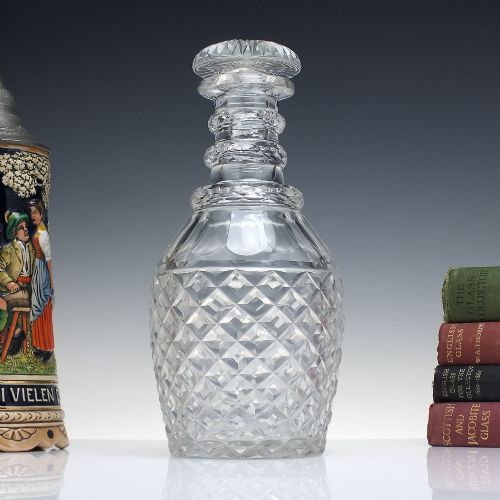
A crystal spirit bottle holds liquor in heavy refractive glass, bringing weight and clarity to a sideboard or table.
Crystal Spirit Bottle
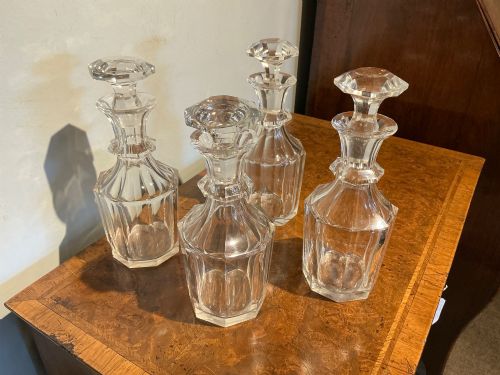
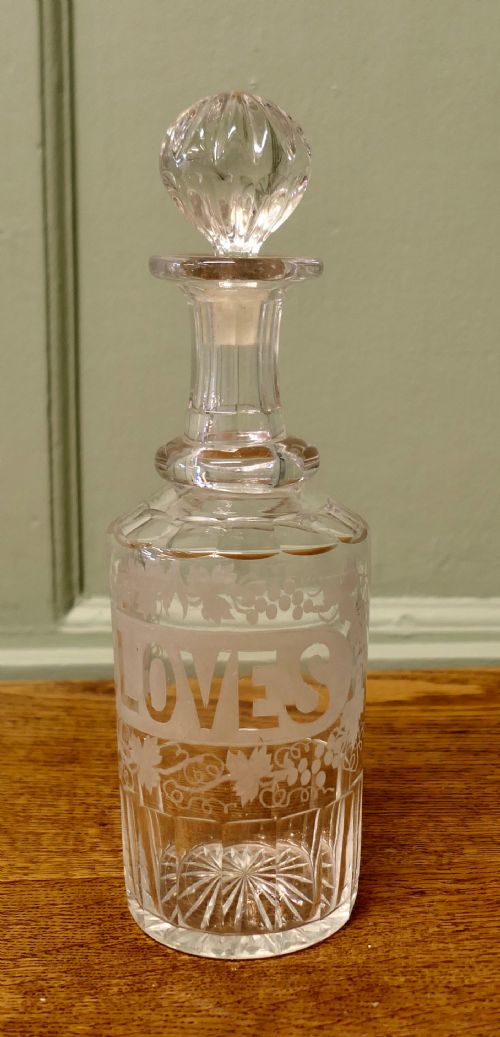
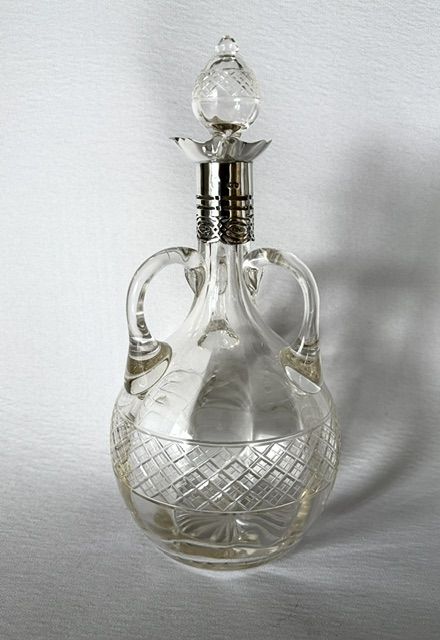
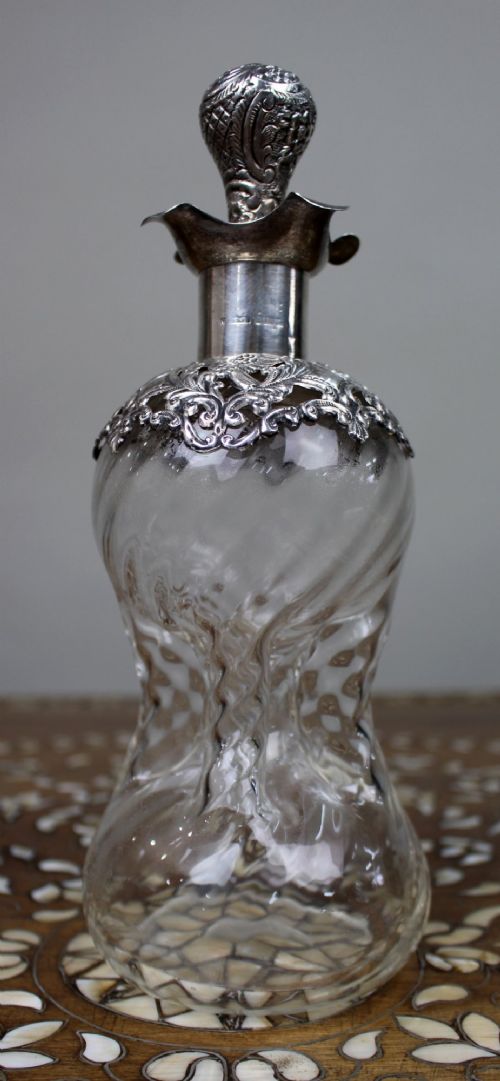
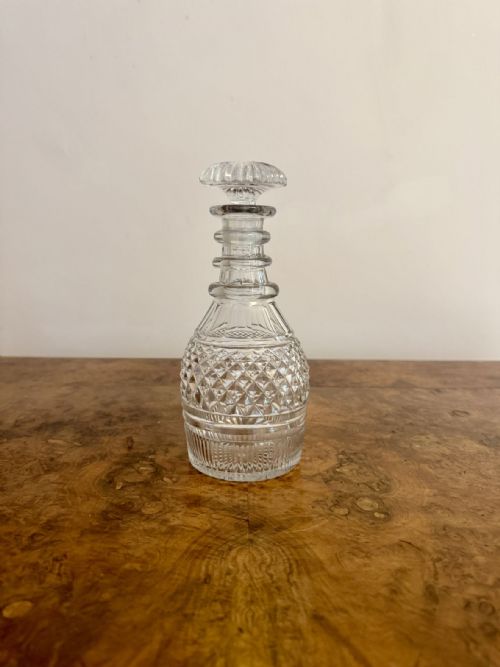
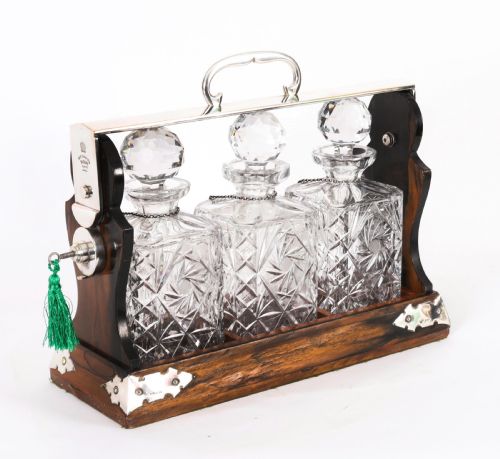
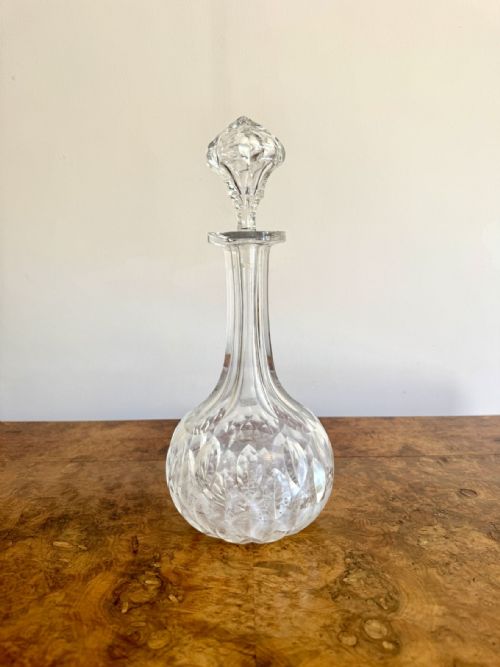
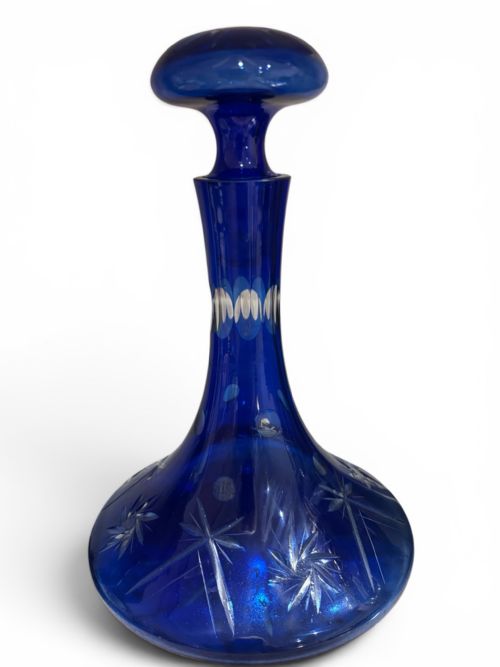
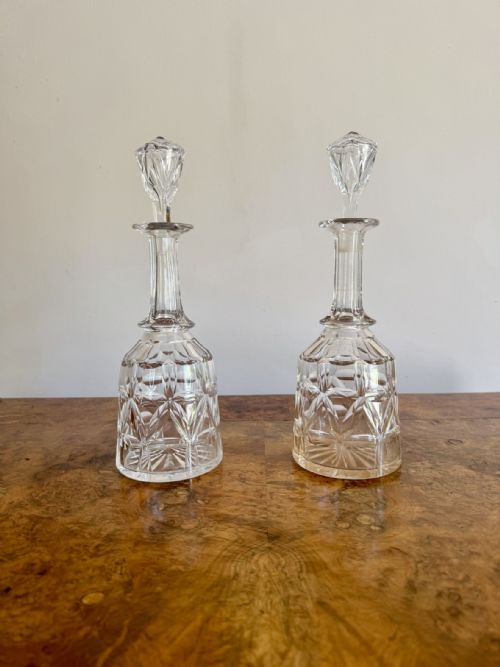
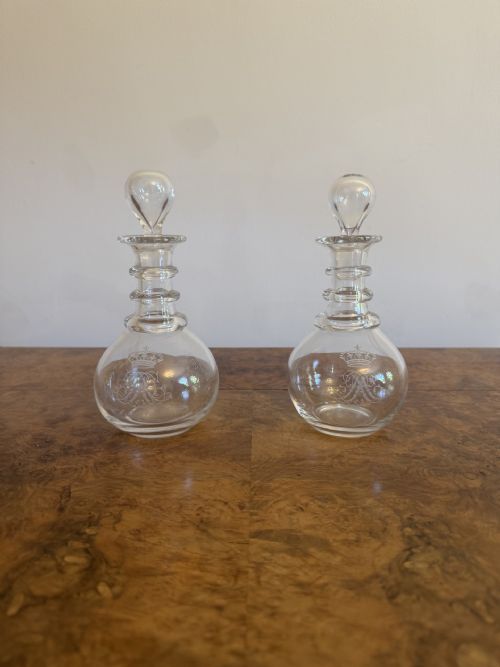
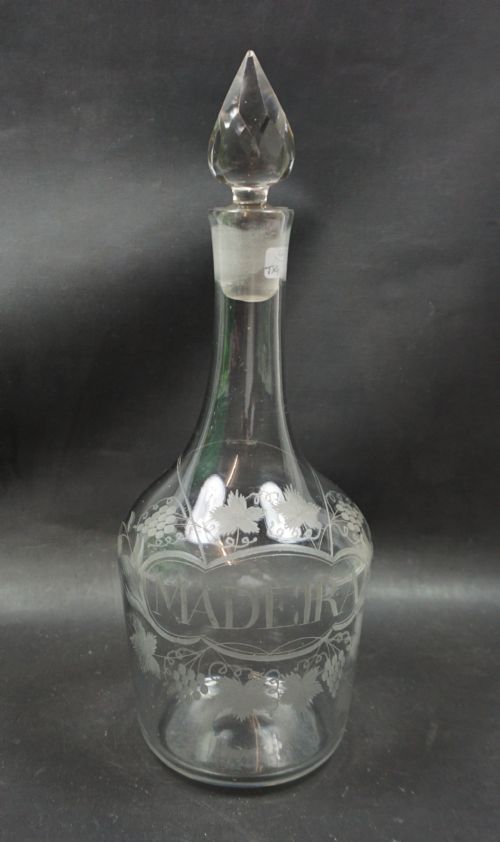
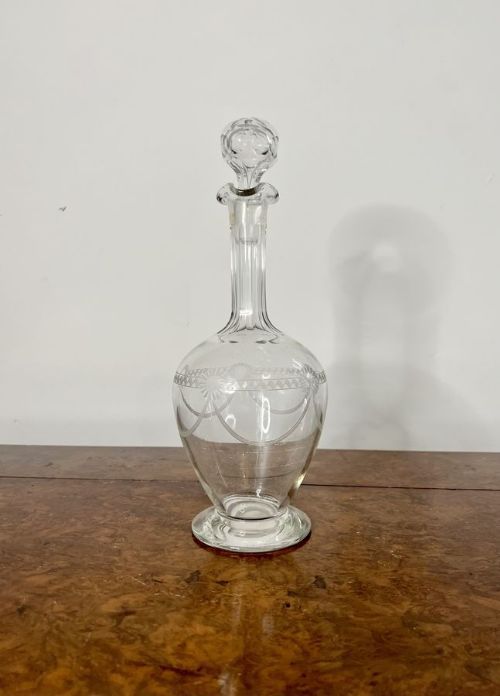
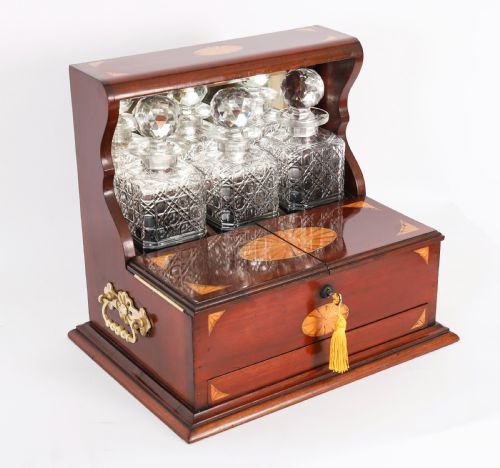
A crystal spirit bottle typically appears as a decanter or a multi-bottle tantalus dating from the Victorian and Edwardian eras, alongside pieces stretching back to the Georgian and Regency periods. You will regularly encounter single cut glass vessels, pairs, and matching sets designed to hold whiskey, brandy, or wine.
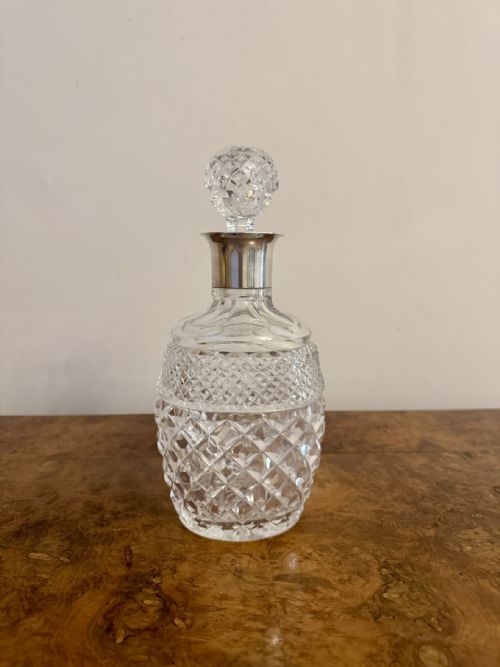
The selection ranges from bell-shaped and shoulder decanters to secure locking frames fitted with silver plate or sterling mounts. These vessels served both domestic storage and display, keeping spirits ready for after-dinner service in the dining room or drawing room.
Lead crystal and silver mounts
Maker's workshops formed these pieces using lead crystal and heavy cut glass, often applying optical blowing techniques to create uniform walls and clear refractive patterns. Cutting wheels ground geometric facets deep into the material to catch the light.
Some bottles come permanently trapped behind locked wooden bars, daring you to pour a drink without the key.
Clarity, depth of cut and mount integrity
Quality rests in the purity of the crystal and the crispness of the glass cutting, where deep, sharp facets produce brilliant light refraction compared to soft, rounded pressing. Heavier lead content yields a more resonant ring and greater physical weight.
The standard of the associated metalwork and cabinetry distinguishes finer items, seen in fully hallmarked sterling silver collars, precision-fitted wooden frames, and original matching stoppers. Retaining the original key for a locking tantalus elevates the piece.
Betjemann’s·James Powell
The Crystal Spirit Bottle Glossary
- Tantalus
- A locking wooden frame designed to secure spirit decanters and prevent unauthorized access while displaying the bottles inside. The mechanism holds the stoppers fast until a key releases the top bar.
- Lead crystal
- Glass containing a significant percentage of lead oxide, which increases the weight, refractive index, and clarity of the material. This composition permits deep wheel-cutting without fracturing the walls.
- Collar
- A metal band fitted around the neck of a decanter, frequently made from sterling silver and sometimes bearing hallmarks. It protects the pouring rim and anchors a chain for a spirit label.
- Shaft and globe
- A traditional silhouette featuring a long narrow neck above a rounded globular body. This form balances stability with ease of pouring.
Crystal Spirit Bottle: Frequently Asked Questions
How do I date a crystal spirit bottle?
Dating relies on stylistic clues, manufacturing traits, and silver hallmarks when mounts are present. Victorian and Edwardian examples often display distinct cutting patterns and heavier wooden frames.
Shape and neck configurations also shift across decades, moving from Georgian shaft and globe forms to early twentieth-century bell shapes and Art Deco profiles.
What is a tantalus used for?
A tantalus secures spirit bottles behind a locking bar to restrict access to the liquor inside. The name derives from the mythological figure, as the bottles remain visible yet out of reach.
Wealth Victorian households used them on sideboards to protect fine spirits from domestic staff while displaying the cut glass to guests.
Are stoppers usually original?
Many pieces retain their original matching stoppers, which were ground to fit the specific neck of each individual bottle during production. Replacement stoppers frequently show slight discrepancies in glass tone or grinding.
Examining the frost on the lower peg helps determine if the stopper belongs to the vessel.
How should I clean old cut glass?
Gentle washing in warm water with mild detergent preserves the clear surface and protects any silver collars from harsh chemicals. Avoid sudden temperature changes that can stress old lead crystal.
Patting metal mounts dry immediately prevents spotting on silver components.