











Crystal Rummer Glasses
Crystal rummer glasses are sturdy historic vessels created for robust toasts, offering substantial weight and generous bowls that suit a collector of early British drinkware.
Crystal Rummer Glasses
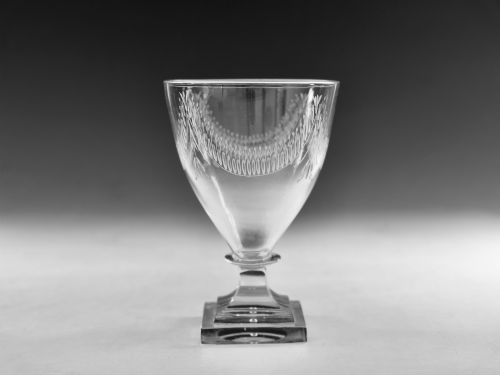
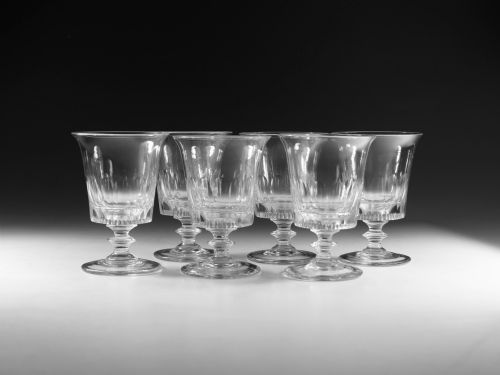
Crystal rummer glasses are heavy drinking vessels primarily encountered from the Georgian, Regency, and Victorian periods. These pieces include large table rummers, bucket rummers, and square base rummers designed for hearty consumption of ale, spirits, and wine.
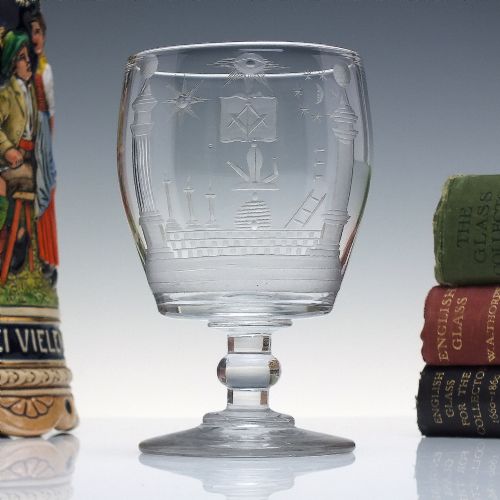
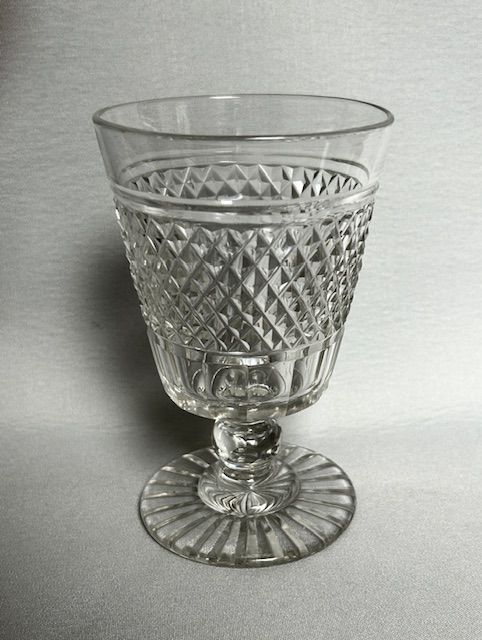
The selections on this page span English, Anglo-Irish, and Bohemian origins, featuring forms with plain stems, baluster stems, and distinctive lemon squeezer feet. Collectors frequently encounter pieces decorated with wheel engraving, hobnail cutting, or commemorative subjects like ships and Masonic symbols.
Materials and construction
Makers utilised lead glass, lead crystal, and flint glass to achieve the brilliant clarity and heavy handle characteristic of these drinking vessels. The substantial weight of lead crystal allowed artisans to apply deep facets and intricate cutting without compromising the structural integrity of the bowl.
Surface decoration was achieved through wheel engraving and skilled cutting techniques, producing motifs such as hops, barley, and armorial crests. Bases were formed using varied methods, from heavy square lemon squeezer feet pressed in moulds to traditional turned conical and baluster stems.
Crystal Rummer Glasses Retail Price Guide 2026
Typical asking prices for crystal rummer glasses among the pieces listed under this phrase on Sellingantiques today, from the lower quarter to the upper quarter. They describe what is for sale here now, not the wider market.
Listings on this page include lead crystal, cranberry glass, and amber glass across Georgian, Regency, and Victorian periods.
Quality and manufacture
The quality of crystal rummer glasses depends heavily on the crispness of the cutting and the clarity of the metal itself. Superior pieces display deep, sharply defined facets and smooth, polished engraving rather than shallow, muddy surface marks.
Proportion and weight also dictate the distinction between standard vessels and exceptional examples. A well-balanced rummer exhibits harmonious wall thickness throughout the bowl and stem, along with stability in the foot whether formed as a heavy square base or a traditional round plinth.
The Crystal Rummer Glasses Glossary
- Lead crystal
- Glass containing lead oxide that increases refractive index and weight. This material provides the characteristic ring and heavy feel found in antique rummers.
- Lemon squeezer base
- A moulded square glass foot with indented corners resembling a citrus juicer. These bases appear frequently on Georgian rummers from the late eighteenth and early nineteenth centuries.
- Hobnail cut
- A raised, diamond-shaped facet pattern carved into the exterior of the glass. This dense geometric cutting reflects light intensely across the body of the vessel.
- Baluster stem
- A turned stem shape featuring swollen curves resembling an architectural column. This form provides a secure grip on heavier drinking vessels.
- Flint glass
- An early British term for clear potash-lead glass. It denotes the brilliant, transparent material used before modern optical glass standards.
Crystal Rummer Glasses: Frequently Asked Questions
What were crystal rummer glasses used for?
These large vessels were designed for drinking ale, rum, punch, and heavy wines during communal toasts and gatherings. Their generous capacity made them versatile table glasses for the home.
Over time, smaller variations emerged for spirits and drams, while larger table rummers held central positions during formal dinners and celebratory events.
How do I date an antique rummer?
Dating relies on observing foot styles, stem formations, and cutting techniques recorded across the periods. Square lemon squeezer feet and ovoid bowls typically point toward the Georgian era.
Later Victorian examples often introduce etched pan shapes and heavier lead crystal compositions, while specific engraved motifs provide clues to regional English and Irish workshops.
Can I use antique rummers for drinks today?
Many collectors enjoy using these sturdy lead glass vessels for modern dining and celebratory toasts. Their thick walls provide surprising durability compared to delicate modern stemware.
Hand washing is essential to preserve the historic lead crystal and prevent thermal shock or scratching from modern dishwashers.
What is the difference between an ale glass and a rummer?
Rummers generally feature wider bowls and heavier proportions suited to large volumes of mixed drinks or heavy ale. Ale glasses often display taller, narrower profiles specifically engraved with agricultural motifs like hops and barley.
Both forms share the heavy lead glass material seen across eighteenth and nineteenth-century British drinkware.