



Crystal Prism Lustres
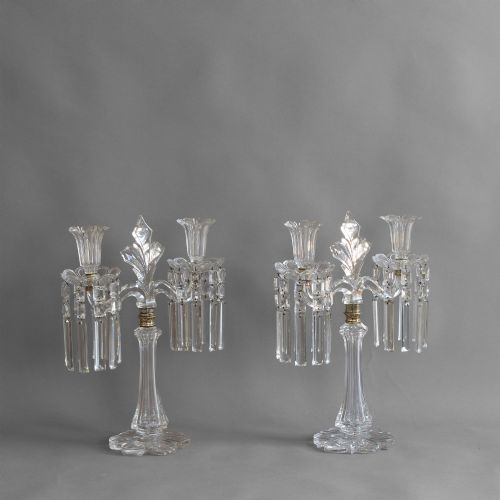
Crystal prism lustres are decorative glass and crystal candle holders hung with glass pendants designed to catch and refract light.
Crystal Prism Lustres
When searching for crystal prism lustres, buyers encounter ornamental table and mantel pieces designed to hold candles while scattering light through hanging glass drops. These objects function primarily as decorative centrepieces rather than simple lighting sources.
The selections span distinct historical periods including the Regency era and the Victorian period, alongside early twentieth-century examples. Common forms include pairs of mantel lustres, table lustres, and occasional chandeliers or candelabras.
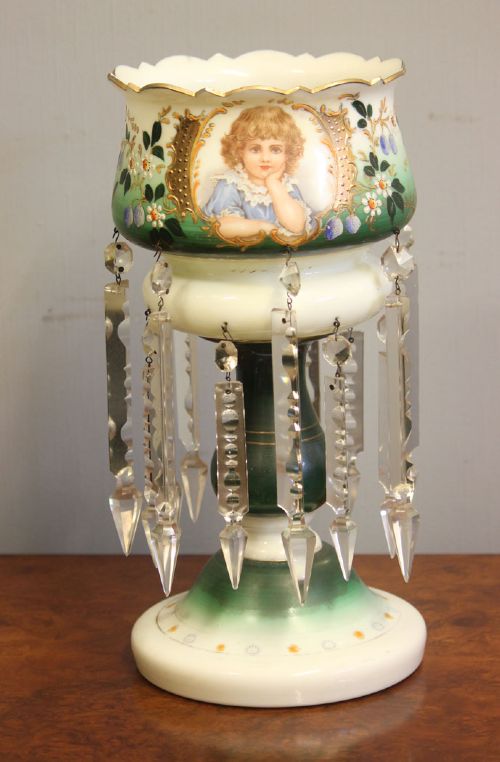
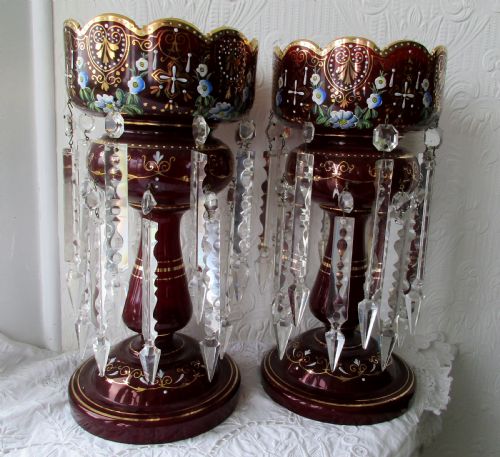
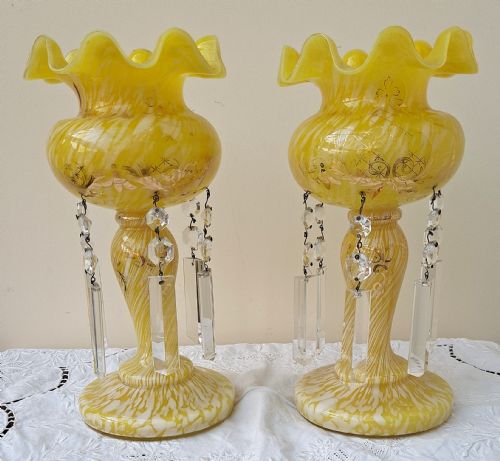
Most examples originate from English and French makers, incorporating coloured glass bodies such as ruby, green, yellow, cranberry, and opaline glass. Overlay and flash glass techniques also appear frequently among the nineteenth-century pieces.
How they were made
Glassmakers shaped bodies using blown or pressed glass, frequently applying layers of coloured glass over clear glass for overlay effects. Workers then cut facets into the glass and crystal surfaces by hand to maximise light refraction.
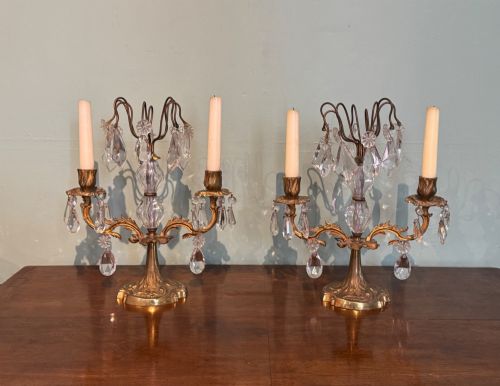
Metal mounts incorporate brass, bronze, gilt bronze, ormolu, and gold leaf to secure the glass components and form the bases or stems. Hanging glass drops, known as prisms, attach to the main body via small wire loops.
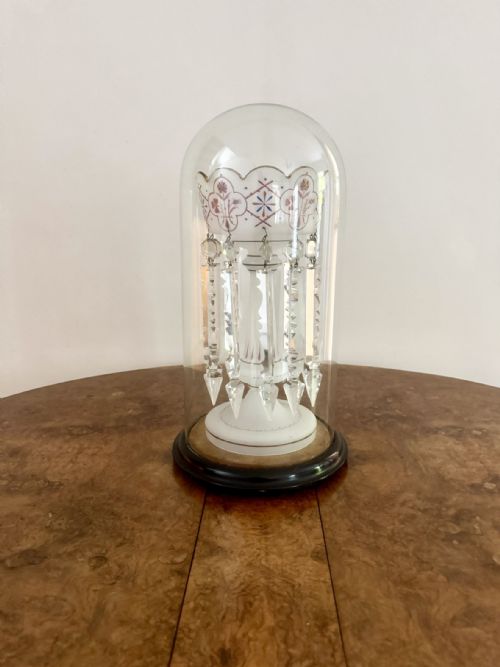
Some pieces feature enamel decoration painted directly onto the glass surfaces, adding floral or patterned details alongside the cut crystal prisms.
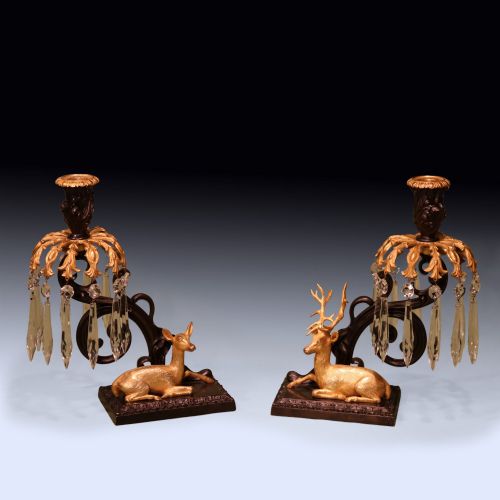
Stags and does occasionally participate in the illumination, serving as bronze mounts holding up the sparkling glass.
What varies in quality
The clarity and weight of the crystal or glass set the baseline for a piece, alongside the precision of the hand-cut facets. Heavy, clear crystal with sharp, clean cutting distinguishes superior examples from simpler pressed glass alternatives.
The richness and depth of the glass colour, particularly in ruby, cranberry, and opaline varieties, dictate visual appeal. Rich saturated hues combined with expert layering create greater depth.
Mounts cast in bronze or ormolu display varying degrees of chiselling and gilding detail. Finer pieces integrate metalwork and glass harmoniously without loose fittings.
The Crystal Prism Lustres Glossary
- Lustre
- A decorative tabletop candle holder hung with cut glass pendants that catch and reflect candlelight.
- Prism
- A cut glass pendant suspended from the rim of a lustre to refract light.
- Ormolu
- Gilt bronze mounted onto decorative objects, popular in Regency and French-influenced pieces.
- Overlay glass
- Glass formed of two or more distinct layers of different colours, where the outer layer is cut away to reveal the colour beneath.
- Opaline glass
- An opaque, pale glass with a milky appearance, often used for Victorian mantel lustres.
Crystal Prism Lustres: Frequently Asked Questions
What are crystal prism lustres?
These decorative objects are ornamental candle holders designed with hanging glass drops to catch and multiply candlelight.
They sit on mantelpieces, tables, or sideboards primarily for visual effect rather than practical illumination.
How do I identify a Victorian lustre?
Victorian examples often feature vibrant coloured glass bodies such as ruby, cranberry, or green, paired with cut glass prisms.
They frequently appear as matched pairs intended to ornament nineteenth-century drawing rooms.
Where were these lustres made?
The listings show pieces originating from English and French workshops, alongside Bohemian glassmakers.
Styles range from Regency clarity to ornate Victorian and French rococo revivals.
How do I care for crystal lustres?
Dust the glass bodies and hanging prisms gently with a soft cloth to maintain their refractive quality.
Remove prisms carefully if washing is necessary to avoid damaging the connecting wire loops.