

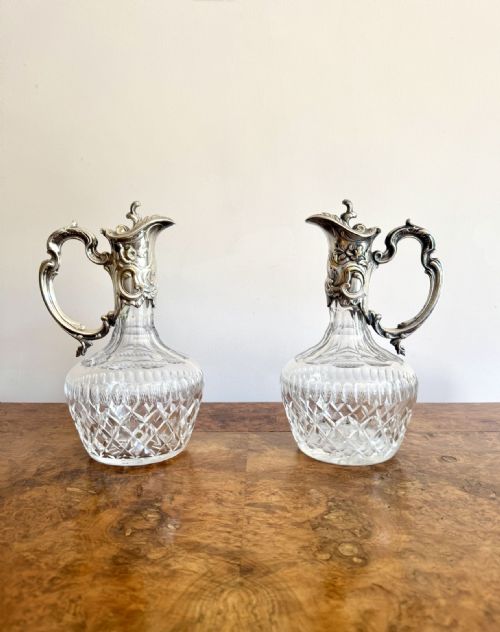
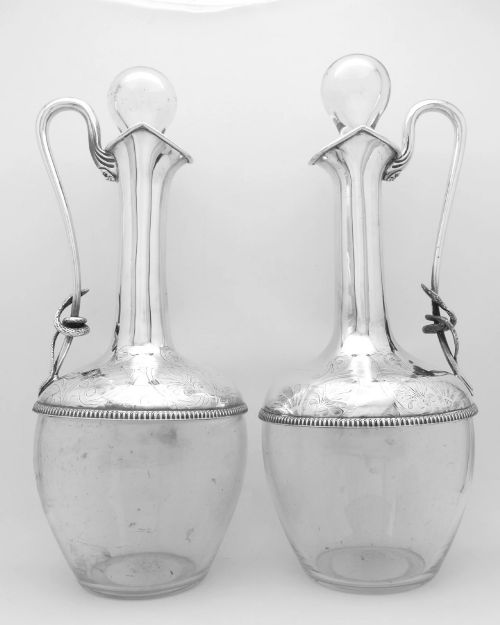


Crystal Glass Wine Jug
A crystal glass wine jug brings heavy cut glass and gleaming mounts to the table, offering a traditional way to pour claret and dessert wine.
Crystal Glass Wine Jug
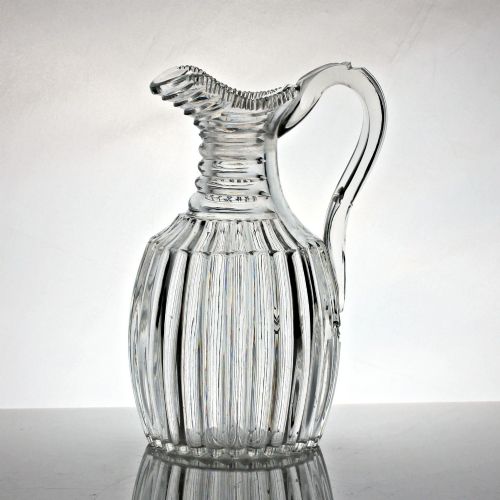
A crystal glass wine jug combines heavy blown or moulded glass bodies with fitted metal mounts, often taking the form of claret jugs, ewers, and tall pitchers. When you search for this phrase, you will find pieces stretching from the mid-nineteenth century through the Edwardian era and into the Art Deco period.
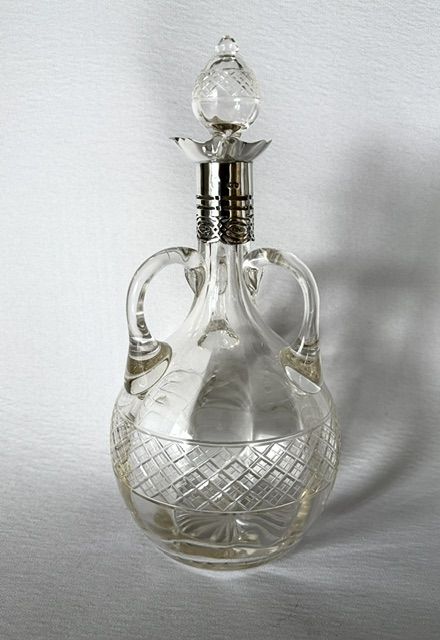
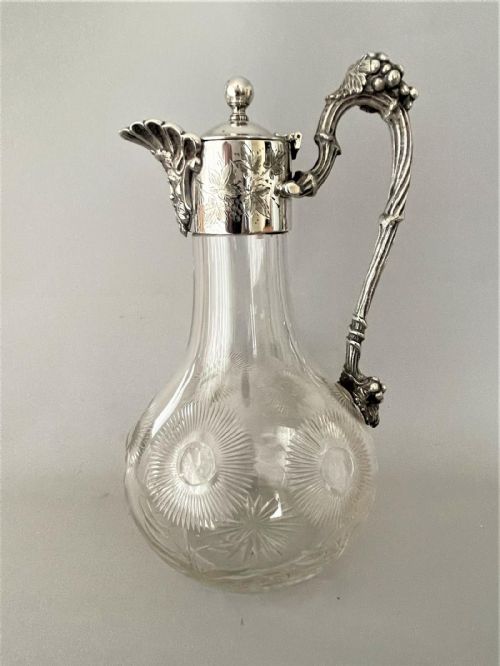
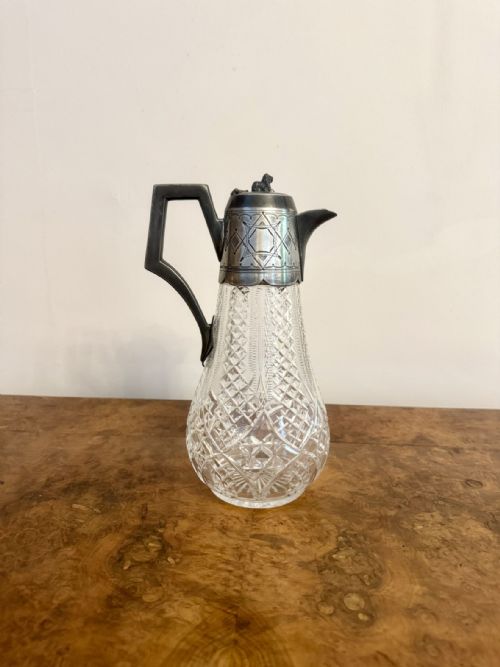
The most common examples on this page date from the Victorian and Edwardian periods, featuring deep cut glass patterns and silver-plated or sterling silver collars, handles, and hinged lids. Makers combined these glass bodies with decorative elements such as Bacchus masks, serpent handles, and engraved fruiting vines.
Object designations overlap significantly in this category, encompassing claret jugs, decanters, ewers, and pitchers used interchangeably for serving wine, water, and cordials. Form follows function closely, with pouring spouts and sturdy handles designed for steady service at the dining table.
Materials and construction
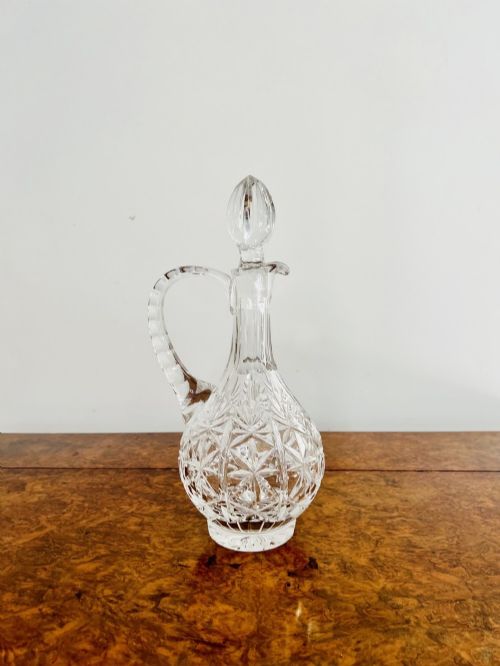
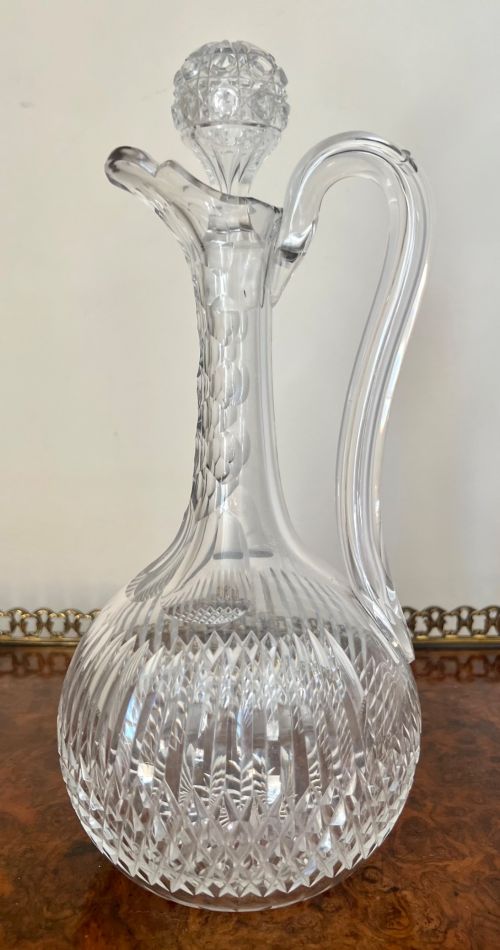
Makers produced the glass bodies of these vessels using lead crystal, clear glass, and coloured glass, which were then heavily cut, etched, or engraved with floral, geometric, and vine motifs. Techniques such as pillar and prism cutting created sharp, light-catching facets across the surface of the glass.
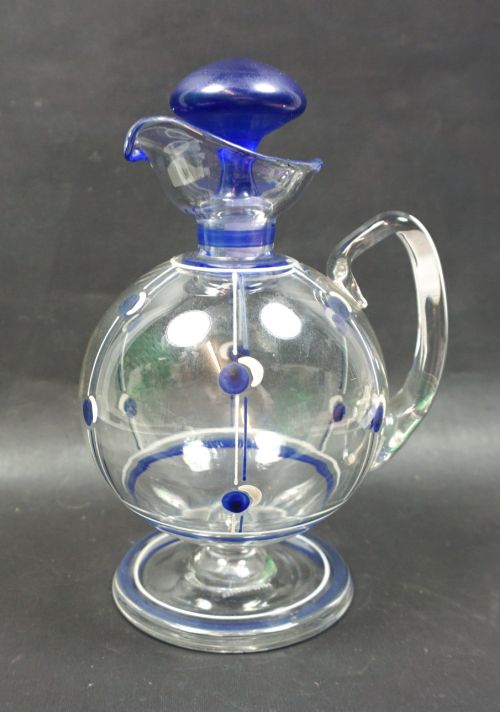
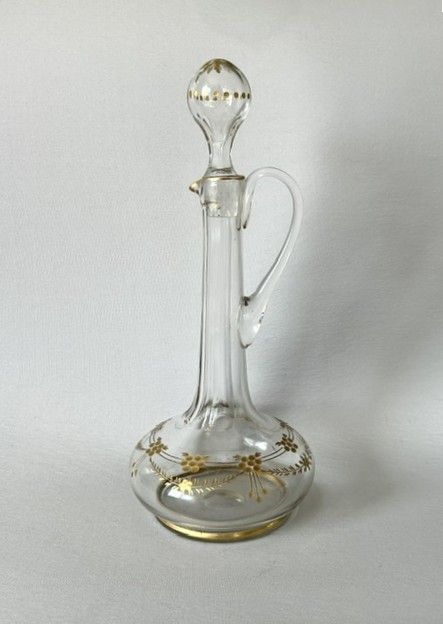
Silver plate and sterling silver formed the mounts, collars, hinged lids, and handles, frequently secured directly around the neck of the glass vessel. Artisans also incorporated specialised decorative techniques like blue and white latticinio glasswork, gilding, and enamel decoration on continental and English pieces.
Materials recorded across the selection include lead crystal, clear glass, sterling silver, silver plate, and coloured glass with enamel or gilt decoration.
Assessing craftsmanship and execution
Quality rests in the crispness of the glass cutting and the weight of the crystal, where deeper, cleaner facets reflect light more brightly than shallow moulding. The thickness and clarity of the glass body distinguish standard production items from important exhibition pieces.
The execution of the metal mounts separates standard items from finer works, visible in the detail of cast silver or plated elements like serpent handles and Bacchus masks. A well-balanced jug feels substantial in the hand, with a securely fitted lid and handle that align precisely with the pour of the spout.
Asprey and Co. Ltd·Webb Corbett·Baccarat
The Crystal Glass Wine Jug Glossary
- Claret jug
- A specialised vessel designed specifically for serving red Bordeaux wine, usually fitted with a handle, hinged metal cover, and pouring spout. These jugs combine cut crystal bodies with silver or silver-plated mounts.
- Ewer
- A large jug with a wide-spouted mouth and a curved handle, historically used for water or wine service. In antique examples, the form leans toward decorative classical shapes.
- Latticinio
- A decorative glass technique involving opaque white or coloured glass threads twisted within clear glass. It creates delicate net-like patterns inside the walls of the vessel.
- Bacchus mask
- A decorative sculptural face representing the classical god of wine, commonly cast into the silver mounts or spouts of nineteenth-century vessels. The motif ties the function of the jug directly to classical winemaking themes.
- Rock crystal
- A term used in the trade for highly transparent, colourless quartz or for exceptionally clear, high-purity lead glass that is deeply wheel-engraved. It allows for intricate, highly polished decorative scenes across the surface.
Crystal Glass Wine Jug: Frequently Asked Questions
What is a crystal glass wine jug?
A crystal glass wine jug is a decorative serving vessel featuring a heavy cut or engraved glass body paired with metal mounts and a hinged lid. They were designed for holding and pouring wine at the dining table.
Most surviving examples date from the Victorian and Edwardian eras. They combine utilitarian function with ornate craftsmanship, often utilising silver plate or sterling silver.
How do I date a crystal wine jug?
Dating relies primarily on the style of the metal mounts, maker marks on the silver, and the specific cutting patterns on the glass. Victorian examples often feature heavy star cutting and naturalistic grape motifs.
Edwardian and later pieces may incorporate sleeker lines or distinct maker stamps. Hallmarks on the silver collars provide the most precise manufacturing dates.
Can I use an antique wine jug?
Yes, these jugs remain functional for serving wine, water, or cordials today. The sturdy lead crystal and fitted metal mounts are built for regular use.
Care should be taken when washing them by hand, as antique silver plate and delicate glass handles require gentle treatment. Avoid using automatic dishwashers to protect the metal and glass.