


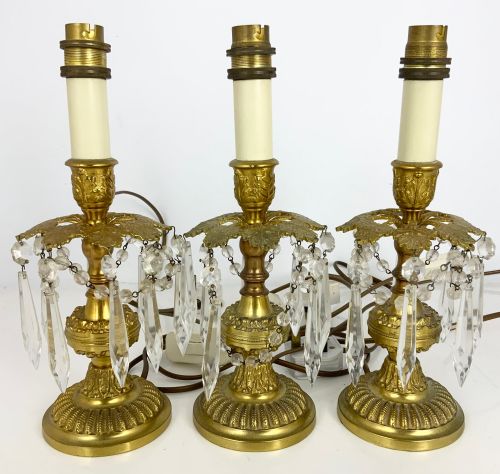


Crystal Drop Candlesticks
Crystal drop candlesticks catch the light on a mantelpiece and bring nineteenth-century illumination into a modern room.
Crystal Drop Candlesticks
When buyers search for crystal drop candlesticks, they look at mantle lustres, candelabras, and table lamps dressed with hanging prisms. These decorative pieces emerge chiefly from Victorian and Regency periods, alongside earlier eighteenth-century examples and later twentieth-century interpretations.
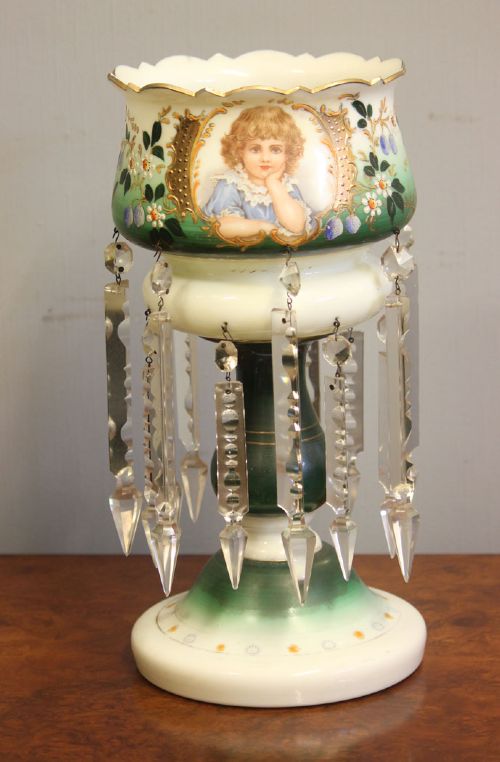
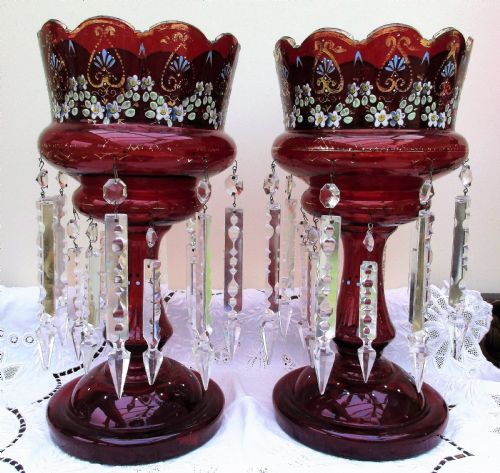
The most frequent form on this page is the mantle lustre or pair of table candelabras, combining glass bodies with faceted pendants. Makers combined cast metals, gilt bronze, or coloured glass such as ruby and cranberry with hanging cut crystals to refract candlelight.
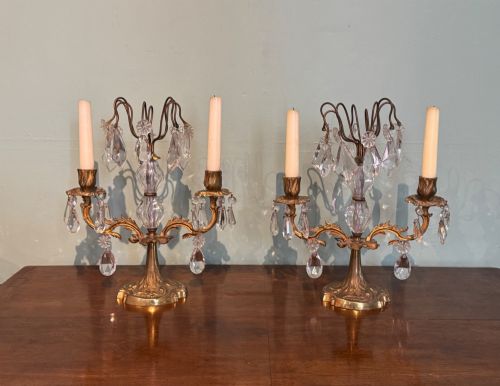
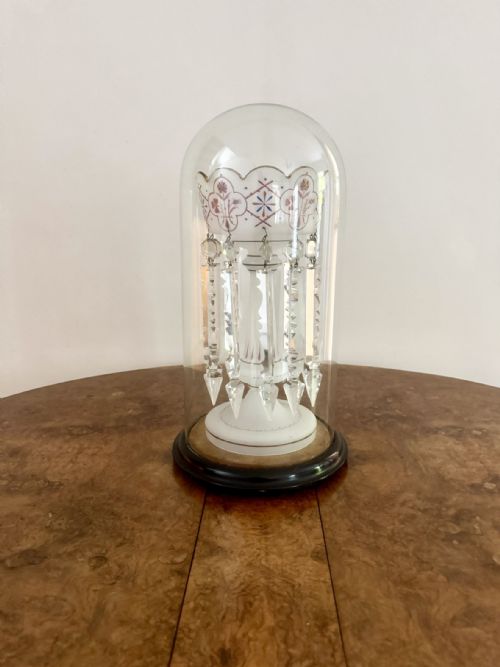
Examples range from single branch candlesticks to multi-arm candelabras fitted with storm shades and glass domes. French, Italian, and English workshops each contributed distinct stylistic interpretations ranging from Rococo revival curves to restrained Regency lines.
What varies in quality
Quality rests in the crispness of the glass cutting and the weight of the metal mounts. Superior pieces display deep, sharp facets on the crystal drops that disperse light cleanly, while lesser examples show softer, moulded edges.
The integrity of the ensemble dictates value, specifically whether the hanging drops match the body in age and cut style. Heavier cast bronze or ormolu bases with intricate chasing outrank simpler stamped brass frames.
Listings feature items spanning from the eighteenth century through to the Edwardian period, utilising glass, ruby glass, gilt bronze, and ormolu.
The Crystal Drop Candlesticks Glossary
- Mantle lustre
- A decorative table ornament featuring a central stem with a bowl and hanging glass prisms, designed to sit upon a fireplace mantelpiece. They became particularly popular during the Victorian era in ruby, cranberry, and clear glass.
- Candelabra
- A branched candlestick holding multiple lights on separate arms. These often incorporate hanging crystal drops around the central stem or drip pans.
- Ormolu
- Finely chopped and mercurically gilded bronze used extensively for decorative mounts on nineteenth-century lighting. The technique yields a rich golden finish that resists tarnishing.
- Prism
- A cut glass pendant suspended from the rim of a lustre or candelabra to refract candlelight. They take various shapes including spears,icicles, and buttons.
- Regency
- An English design period spanning the early nineteenth century defined by classical restraint and influences from French Empire styles. Pieces from this era often utilise bronze, ormolu, and clean cut-glass profiles.
Crystal Drop Candlesticks: Frequently Asked Questions
How do I clean crystal drop candlesticks?
Remove the hanging drops gently and wash them in lukewarm soapy water using a mild detergent. Dry each piece with a lint-free cloth before rehanging them to avoid water spots.
Polish the metal and glass bodies separately with a soft dry cloth. Avoid harsh chemical cleaners that can damage gilt surfaces or older glass patinas.
Are all hanging drops original?
Many pieces lost or broke prisms over the decades, leading to replacement drops being fitted later. Examine the cut style, glass tint, and wear around the suspension holes to gauge consistency.
Matching cuts and uniform glass colour indicate a cohesive set, though married drops remain common in historical lighting.
What is the difference between a lustre and a candelabra?
A lustre serves primarily as a decorative ornament with hanging prisms, sometimes featuring a central candle nozzle or functioning purely as a display piece. They often sit under glass domes on mantlepieces.
A candelabra is built specifically to hold multiple candles across branched arms, though many Victorian examples also incorporate hanging drops for added illumination.
How do I date an antique lustre?
Examine the base construction, metal casting quality, and the type of glass used. Regency examples favour bronze and clear cut glass, while Victorian pieces frequently introduce coloured ruby and cranberry glass.
The shape of the prisms and the method used to wire them to the body also offer clues to the manufacturing decade.