
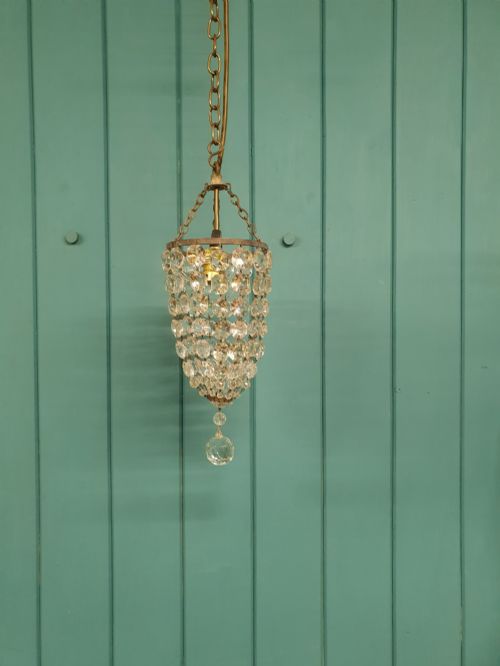


Crystal Basket Pendant
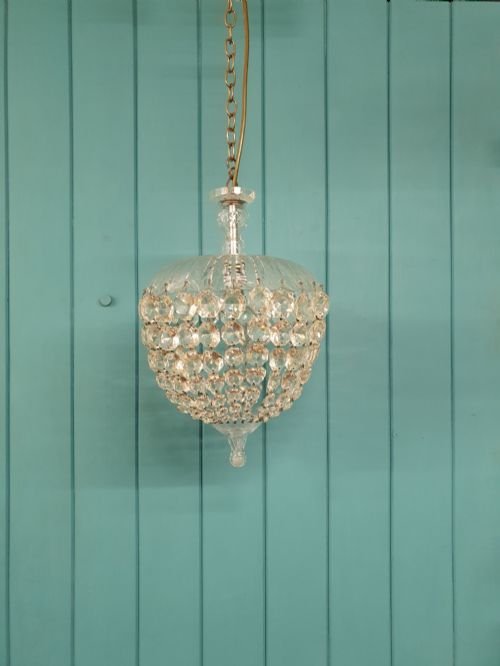
A crystal basket pendant brings focused illumination and classical proportion into a room, gathering light through tiers of glass prisms.
Crystal Basket Pendant
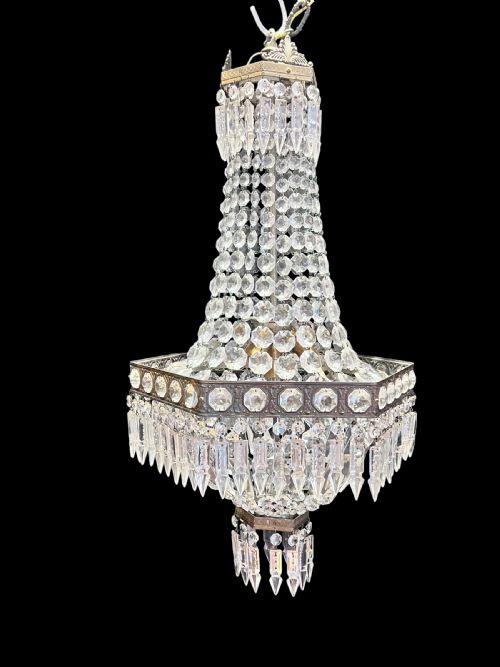
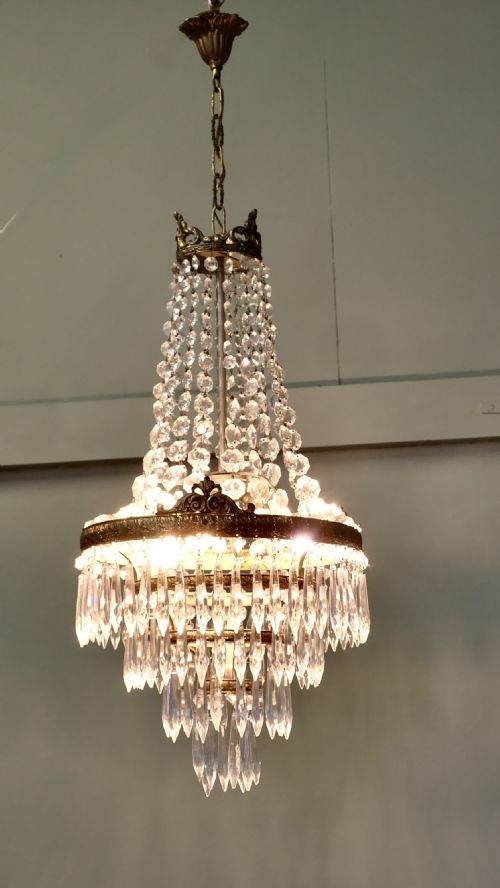
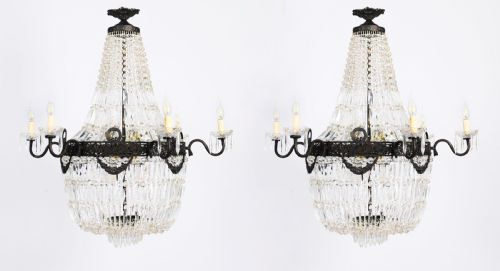
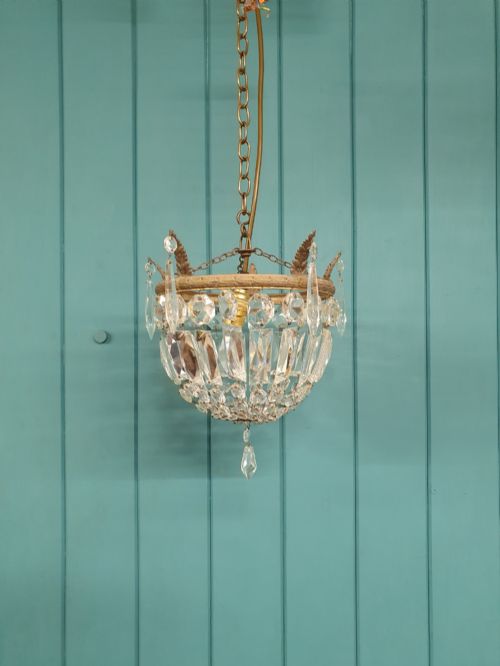
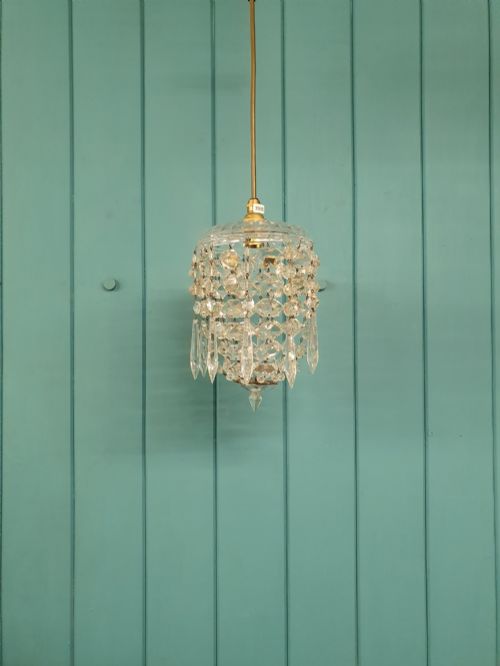
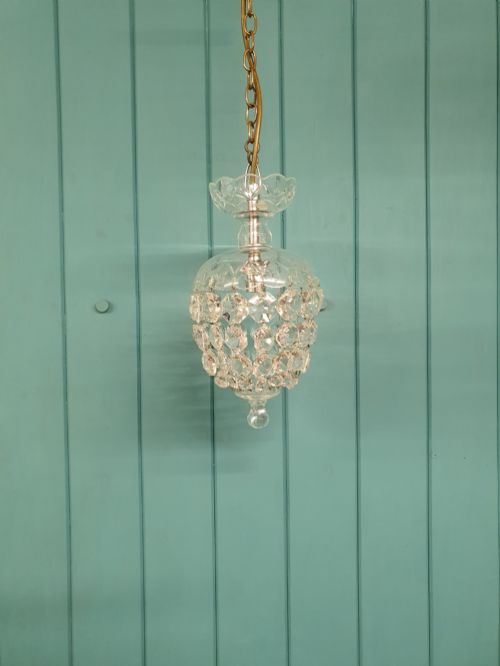
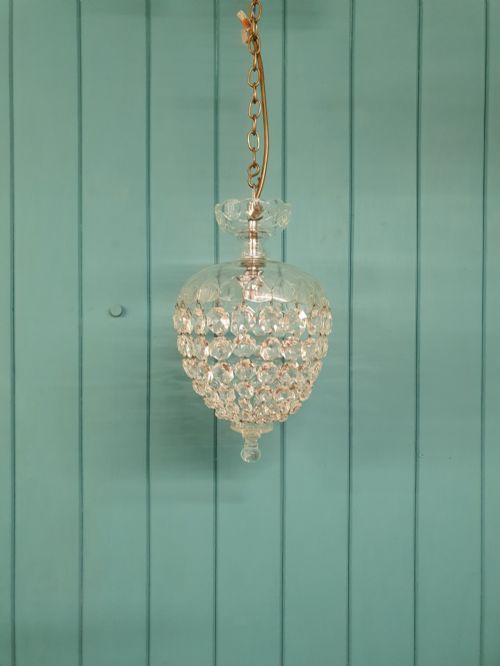
When you search for a crystal basket pendant, you encounter hanging light fixtures designed to distribute illumination through arrangements of glass prisms, beads, and metal mounts. These fittings originate predominantly from the early decades of the twentieth century, including Edwardian examples and pieces dated from 1900 through to the 1930s.
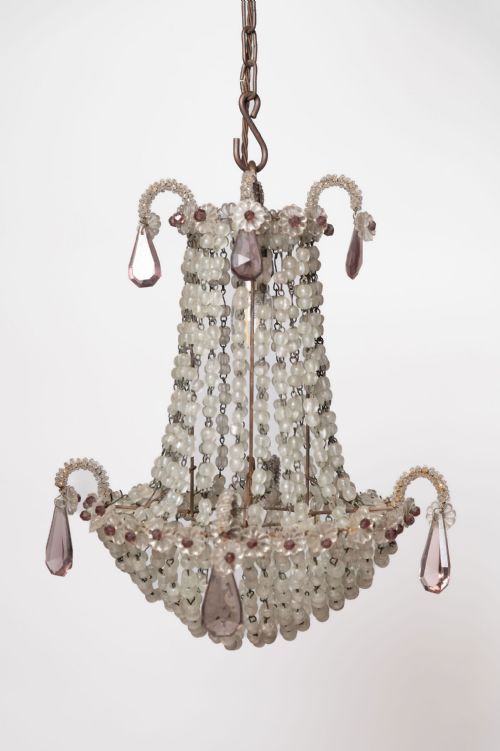
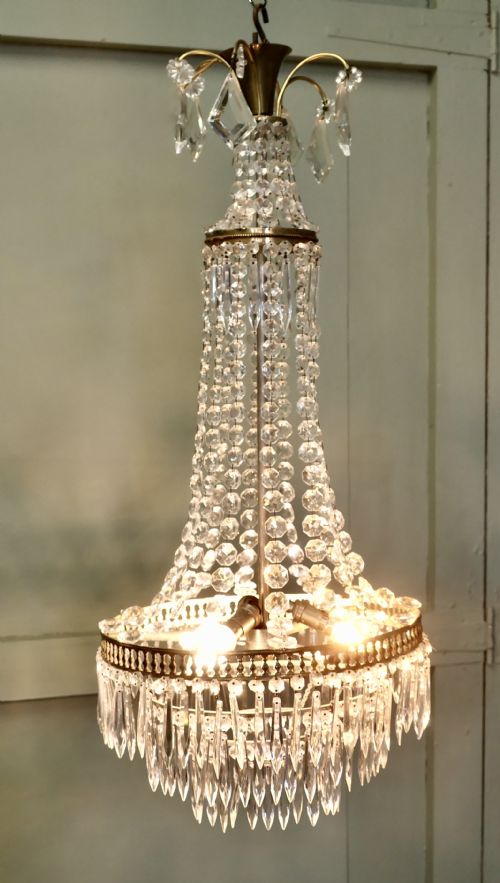
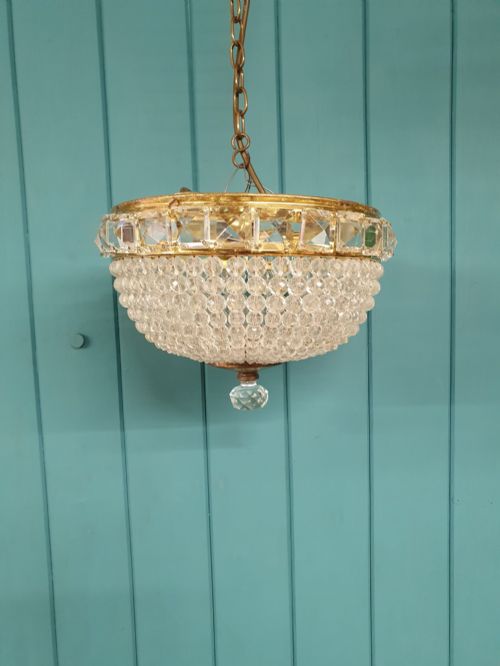
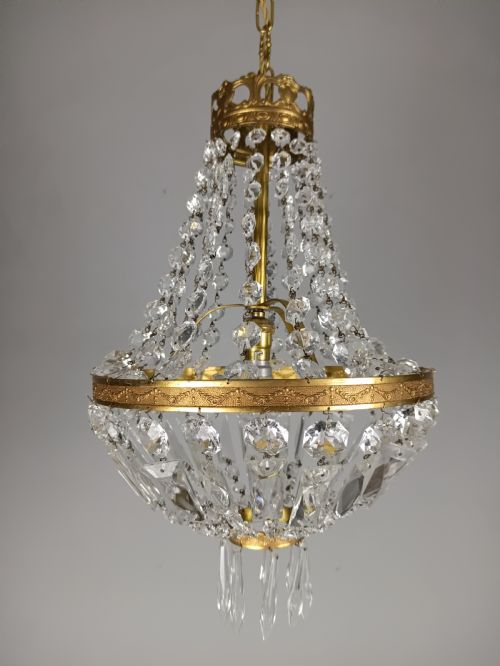
The prevalent forms on this page include bag chandeliers, dome top lights, and tent and waterfall configurations, often styled after French Empire or Louis Revival designs. Such fixtures suit smaller spaces or specific architectural niches where a standard hanging chandelier would overwhelm the proportion of the room.
Origin details in the evidence point towards French and Italian workshops alongside domestic Edwardian production, spanning single-light basket forms up to multi-light ballroom fixtures. Brass frames and bronze structures support intricate assemblies of cut glass elements that direct the glow downward.
How they were made
Makers constructed the structural framework of these pendants using cast brass or bronze, forming rings, bands, and decorative mounts to hold the glass components securely. These metal chassis provide the necessary rigidity to suspend hundreds of individual drops without warping under tension.
Cut glass and crystal elements, including coffin prisms, beads, and faceted drops, were hand-wired onto the metal frames using small brass pins or links. This meticulous assembly method allows each prism to move slightly, catching ambient light from multiple angles and dispersing it across the surrounding walls.
Listings feature brass and bronze frames paired with cut crystal and glass, spanning Edwardian and 1930s periods.
What varies in quality
The calibre of the glass cutting and the clarity of the crystal define the upper tier of these pendants, creating sharper refractive patterns than simpler pressed glass alternatives. Heavier brass mountings and more intricate configurations of tents, waterfalls, and beaded swags likewise signal superior execution.
Attention to detail in the assembly, such as uniform wire fixings and harmonious prism shapes throughout the basket and dome, separates refined examples from utilitarian production. Retaining matching coloured prisms or original metal patination further distinguishes the finest surviving specimens.
Wedgwood
The Crystal Basket Pendant Glossary
- Bag chandelier
- A light fixture featuring a flattened or tapered lower profile shaped like a small pouch, densely hung with cut glass prisms. This form became popular during the Edwardian period and the 1930s for rooms with lower ceilings.
- Tent and waterfall
- A mounting style where an upper conical section of glass beads descends over a wider lower tier resembling cascading water. It originates from French Empire designs popularised across the nineteenth and early twentieth centuries.
- Coffin prism
- A long, flat-backed pendant drop with bevelled edges resembling the traditional geometric shape. These are frequently found suspended from the perimeter rings of early twentieth-century baskets.
- Prism
- A cut glass or crystal element designed to refract light into distinct spectral colours. They appear in various geometric formats across Edwardian and French Revival lighting.
- Brass mount
- The structural metal collar or band that secures the glass components and conceals the electrical fitting. These mounts often feature cast decorative patterns consistent with Empire or Louis Revival styles.
Crystal Basket Pendant: Frequently Asked Questions
How do I hang a crystal basket pendant?
These pendants suspend from a ceiling hook or rose using a matching chain or direct brass rod attachment, depending on the drop required for the room.
Professional installation ensures the weight of the metal frame and glass prisms is supported securely by ceiling joists rather than plaster alone.
What rooms suit a crystal basket pendant?
Their compact proportions make them well suited to hallways, bedrooms, landings, and smaller reception spaces where downward light is preferred over wide spread.
They offer the decorative presence of a larger chandelier without dominating rooms with restricted ceiling heights.
How do I clean a crystal basket pendant?
Cleaning involves wiping individual glass prisms and beads with a dilute solution of warm water and mild detergent while they remain attached to the frame.
Using a soft cloth prevents scratching the cut surfaces and maintains the refractive clarity of the crystal.
How do I date an antique pendant?
Dating relies on examining the wiring methods, the composition of the brass or bronze mounts, and the specific cut of the glass prisms.
Edwardian and 1930s examples often display distinct fastening techniques and specific prism geometries that differentiate them from later reproductions.