
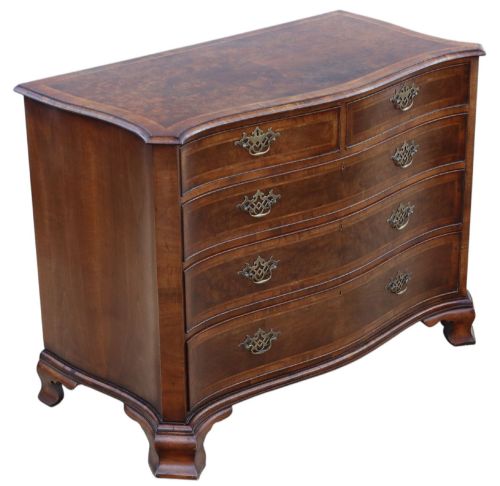
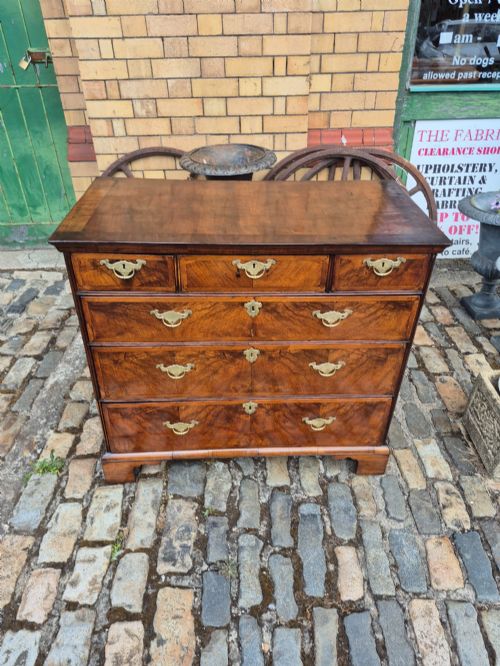
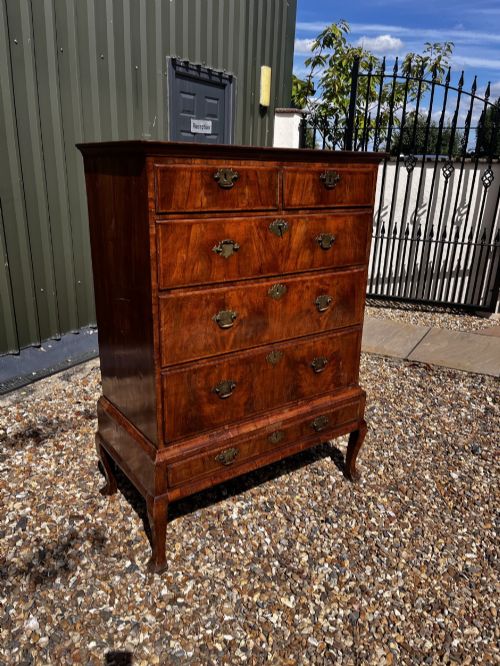
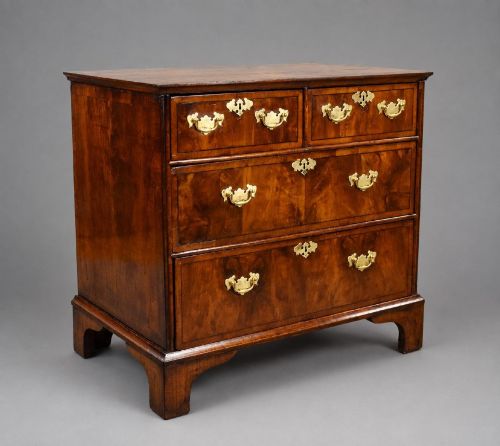
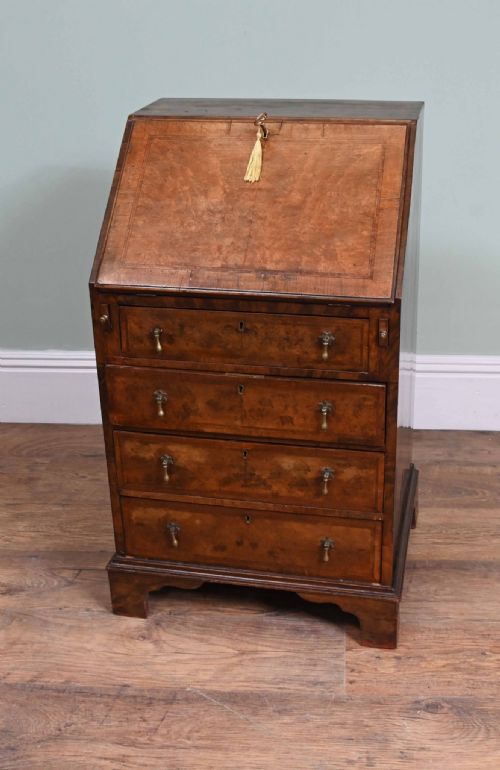

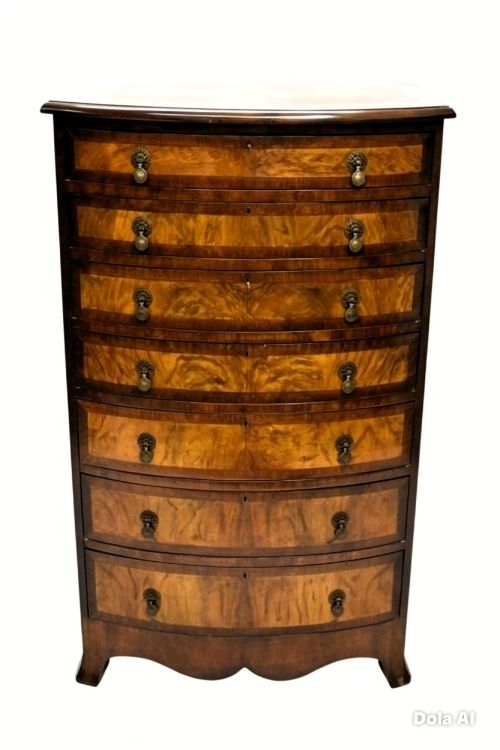


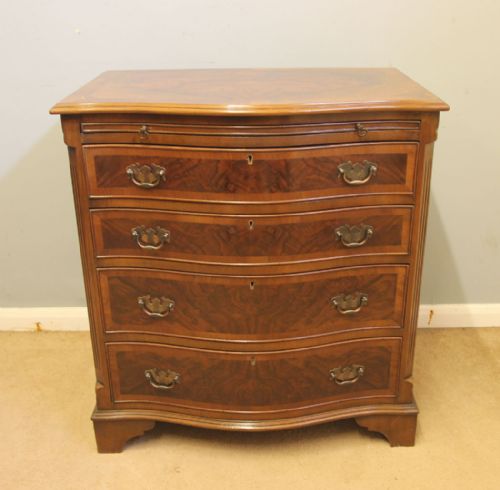
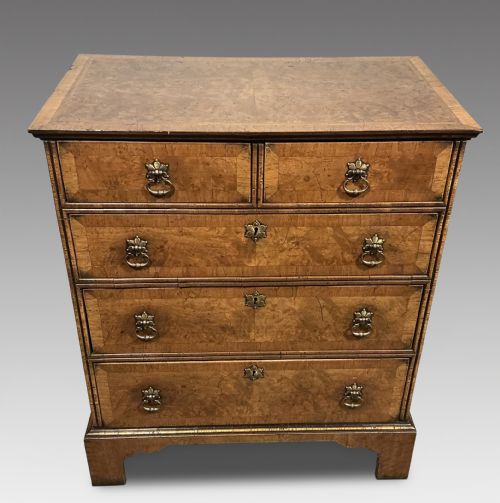

Crossbanded Walnut Drawers
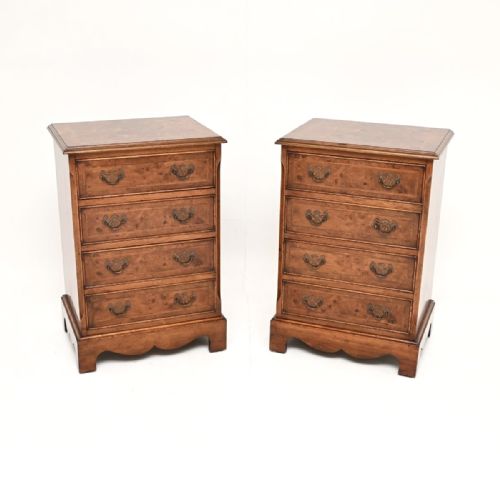
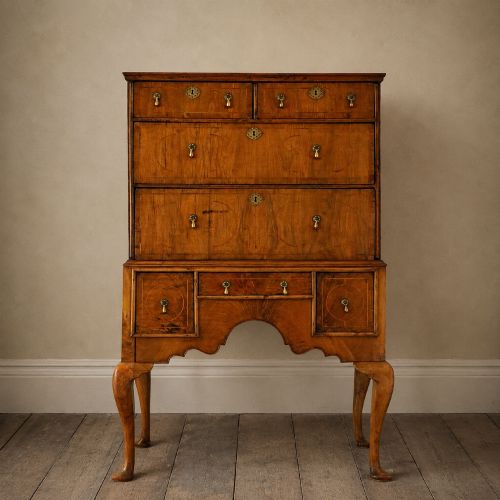
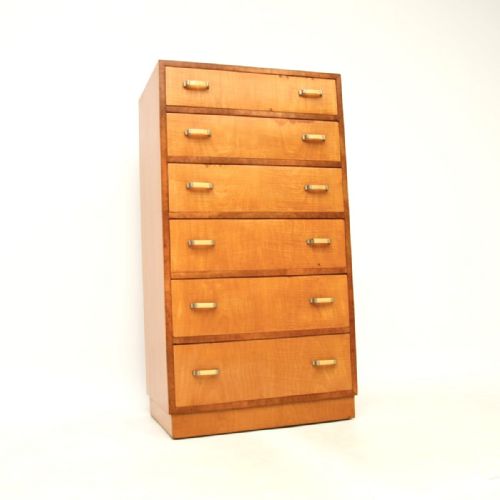
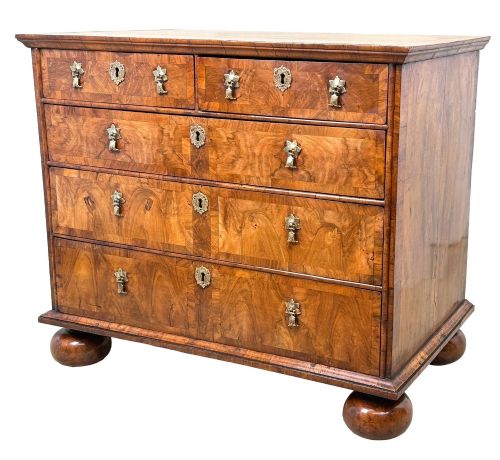
Crossbanded walnut drawers bring warmth and linear definition to a room through contrasting timber borders framing rich, figured grain.
Crossbanded Walnut Drawers
Crossbanded walnut drawers comprise storage forms built across the seventeenth, eighteenth, nineteenth, and twentieth centuries, using walnut and burr walnut timbers.
Buyers meet chest of drawers, chests on stand, chests on chest, bureaux, and bedside tables executed in Georgian, Queen Anne, Victorian, and Art Deco styles.
The selection ranges from early eighteenth-century Georgian pieces to later revival items produced in the nineteen-twenties and nineteen-thirties.
What varies in quality
Quality rests in the selection of the timber, distinguishing plain walnut boards from highly figured burr walnut veneers matched across drawer fronts.
Construction methods dictate longevity, seen in the precision of the crossbanded framing, the neatness of dovetail joints, and original oak linings.
The integrity of the surface finish and the retention of period brass handles influence the standing of each piece.
Listings span several centuries, featuring eighteenth-century Georgian origins alongside nineteen-thirties revival pieces in walnut, burr walnut, and oak.
The Crossbanded Walnut Drawers Glossary
- Crossbanding
- A border strip of veneer laid around the edge of a drawer front or table top so that the grain runs at right angles to the main surface. This technique creates a distinct frame effect that highlights the central panel.
- Burr walnut
- Timber taken from a tree growth or wart, yielding complex, swirling grain patterns highly prized by cabinetmakers. It provides rich visual texture on eighteenth-century and later drawer fronts.
- Chest on stand
- A tall drawer section raised on a separate support frame featuring legs and stretchers. This form lightens the visual weight of heavy storage furniture.
- Bureaus and desks
- Writing furniture incorporating a sloping fall-front that opens to reveal internal compartments and small drawers above main storage drawers. These combined writing and storage functions for domestic use.
Crossbanded Walnut Drawers: Frequently Asked Questions
How do I date a walnut chest?
Dating relies on examining construction methods, timber choices, and hardware styles across different eras from the seventeenth century onwards. Secondary woods like oak linings and the style of bracket feet offer further chronological clues.
Changes in dovetailing and drawer construction help separate early Georgian originals from later twentieth-century revival pieces.
Where were these pieces used?
These items served principally in domestic bedrooms, private studies, and formal reception rooms for storing linens, clothing, and writing materials. Their decorative wood grains meant they sat in primary living spaces rather than utility areas.
Smaller formats like bedside tables and miniature chests fitted into intimate chambers and dressing rooms.
How do I clean walnut furniture?
Maintenance requires gentle dusting with a soft, dry cloth to protect the historic polish and delicate veneer surfaces. Avoid modern silicone sprays and harsh chemical cleaners that strip natural patination.
Occasional application of appropriate wax feeds the timber and preserves the sheen of the crossbanded borders.
What is a chest on chest?
A chest on chest, or tallboy, consists of an upper section of smaller drawers stacked directly upon a wider lower chest. This configuration maximises vertical storage capacity while maintaining a structured architectural presence.
They emerged strongly in the eighteenth century, combining substantial capacity with refined proportions.