
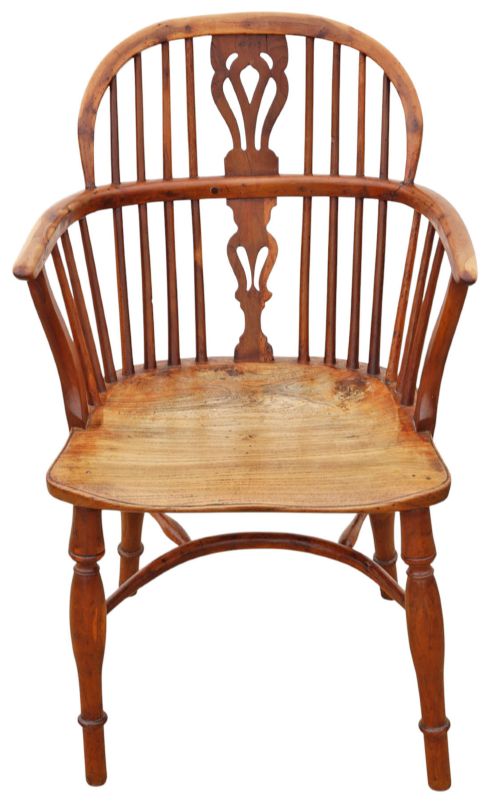

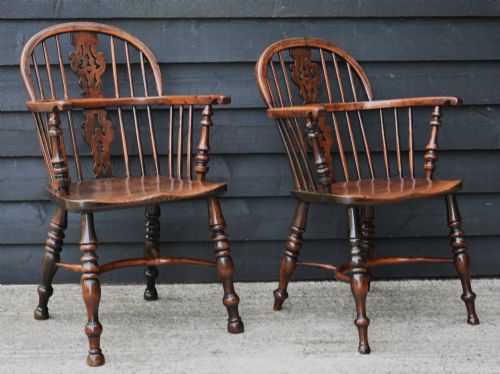
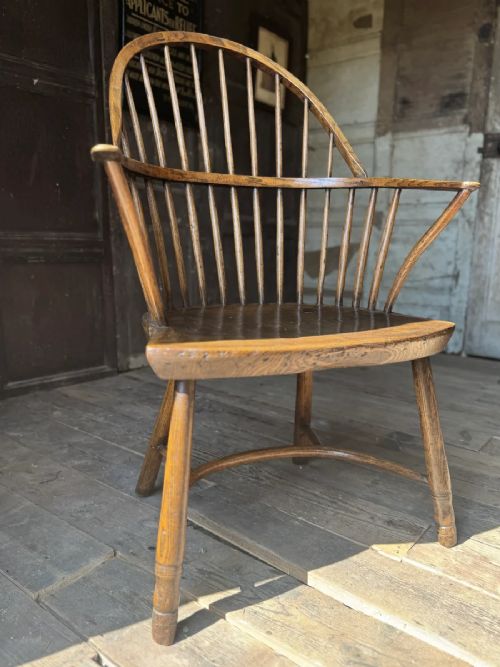
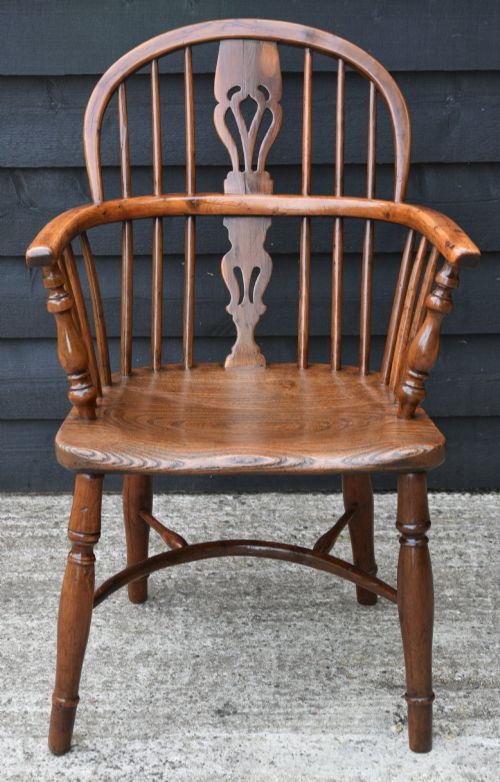



Crinoline Stretcher Windsor
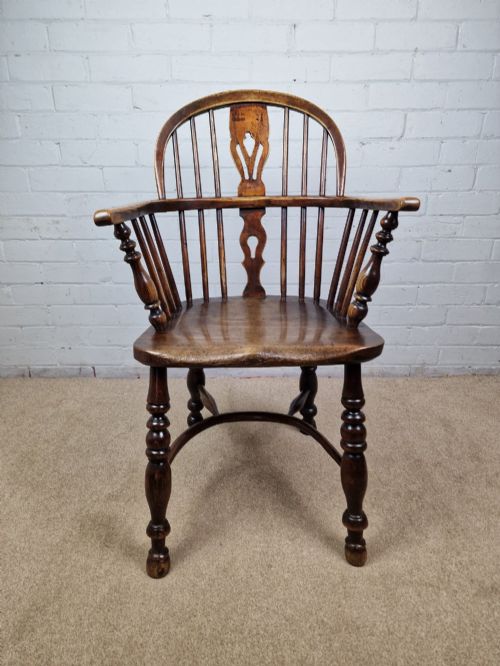
Crinoline stretcher windsor armchairs are traditional country seating featuring a distinctive curved underframe, prized for comfort and robust vernacular design.
Crinoline Stretcher Windsor
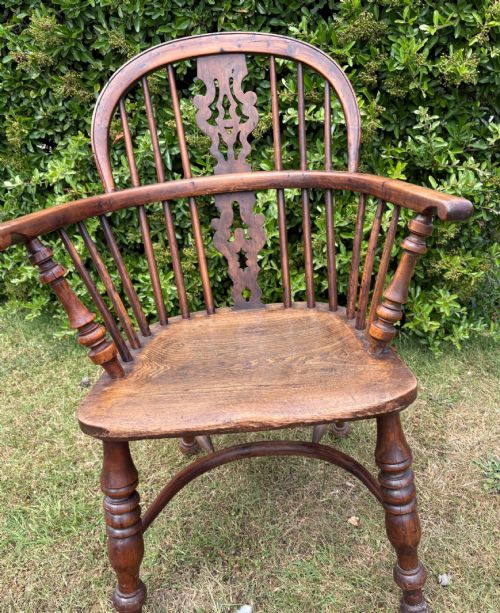
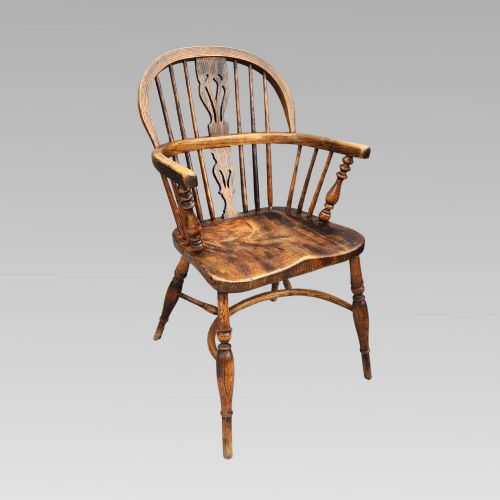
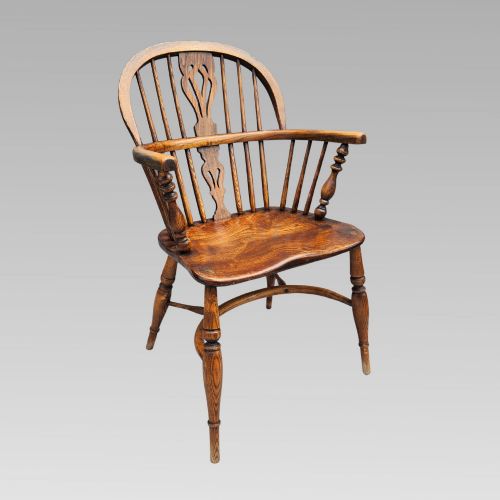
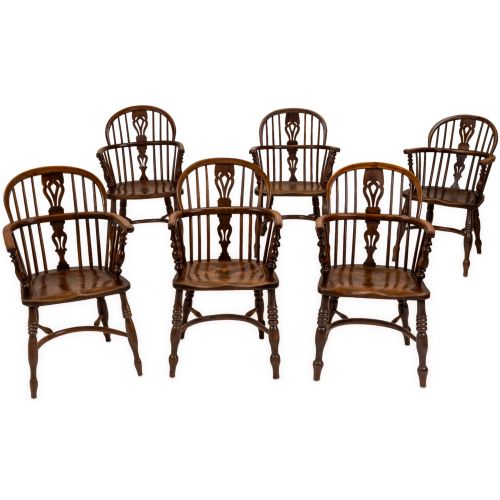
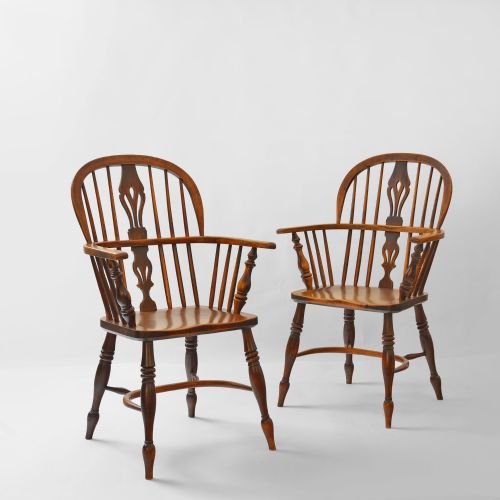
A crinoline stretcher windsor is a classic wooden armchair rooted in English country furniture traditions. These pieces appear across the Georgian and nineteenth century periods, taking forms such as low backs, high backs, child's chairs, and rocking chairs. Regional variations span Nottinghamshire and Yorkshire alongside general English country vernacular styles.
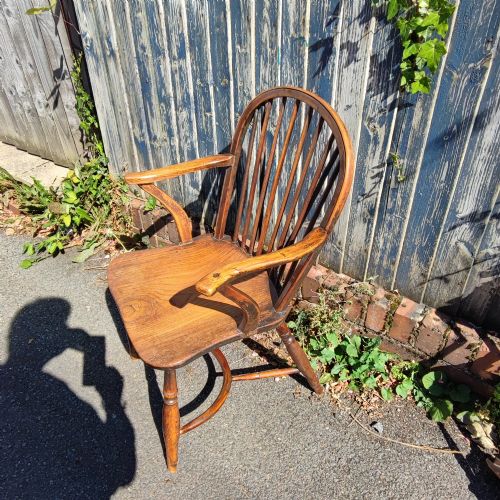
The defining characteristic is the curved underframe known as the crinoline stretcher, which links the legs to provide structural stability. Armchairs dominate the available evidence, often constructed as matched pairs, sets, or individual collector items. The visual presence combines solid wooden seats with stick backs or hoop backs.
Makers utilised native timbers to shape these robust armchairs for daily domestic use. Examples range from smaller child's seating to large armchairs featuring pad foot cabriole legs and heart details. Buyers encounter pieces spanning from the early eighteen hundreds through the late nineteenth century.
Materials and construction methods
Craftsmen built these chairs using a combination of native hardwoods selected for specific structural roles. Seats were typically carved from solid elm, while bending parts like the bow and the curved crinoline stretcher frequently relied on yew or ash. Additional structural elements incorporated fruitwood and beech.
The construction employs traditional stick-back and hoop-back techniques where spindles are wedged directly into a thick wooden seat. Underframes combine turned legs with the bowed stretcher that gives the design its name. Regional cabinetmakers and bodgers utilised simple hand tools to shape these durable items.
Crinoline Stretcher Windsor Retail Price Guide 2026
Typical asking prices for crinoline stretcher windsor among the pieces listed under this phrase on Sellingantiques today, from the lower quarter to the upper quarter. They describe what is for sale here now, not the wider market.
Certain country chairs feature secret heart-shaped cutouts on the seat, adding a touch of romance to the sturdy vernacular frame.
Distinctions in craftsmanship and design
Quality rests upon the selection and pairing of contrasting timbers within a single chair, particularly the rich grain patterns found in yew wood combined with elm seats. The elegance of the turned legs and the smoothness of the curved crinoline stretcher dictate visual refinement. Proportion and the specific sweep of the low back or high back define the overall silhouette.
Regional details elevate certain examples, such as the inclusion of cabriole legs with pad feet or heart carved motifs on the seat. Matched pairs and complete sets demonstrate superior desirability compared to single seating. The integrity of the original wood joints and the depth of surface patina further separate standard vernacular items from finer workshop output.
The Crinoline Stretcher Windsor Glossary
- Crinoline stretcher
- A curved underframe connecting the legs of a chair to provide rigidity. This arched brace resembles the hoop skirts worn in earlier fashion.
- Windsor chair
- A wooden seat constructed with individual spindles inserted into a solid carved plank. These chairs originated in rural England before evolving into diverse regional forms.
- Low back
- A chair design where the arms and back rail form a continuous low horizontal sweep around the sitter. This style emphasises compact proportions and sturdy construction.
- Hoop back
- A continuous bentwood bow forming the upper back and arm support of the chair. This technique requires skilled steaming to shape the timber without fracturing.
- Vernacular furniture
- Domestic objects made by regional craftsmen following local traditions rather than formal London patterns. These pieces prioritise functional utility and native materials.
Crinoline Stretcher Windsor: Frequently Asked Questions
What is a crinoline stretcher windsor?
It is a traditional wooden armchair featuring a curved underframe that braces the legs together. These seats originate from English country workshops during the Georgian and nineteenth-century periods.
Craftsmen built them using solid wooden seats combined with stick or hoop backs. The curved brace provides both structural reinforcement and a distinctive profile.
Which woods were used to make them?
Maker workshops relied primarily on native British timbers suited to different structural demands. Elm provided a stable, splitting-resistant base for carved seats.
Yew wood and ash were selected for their bending qualities, forming the bows, spindles, and curved stretchers. Fruitwood and beech also appear in legs and structural supports.
How do I identify the period?
Dating relies on stylistic evolution, construction methods, and timber characteristics. Georgian examples often display refined turnings and rich yew and elm combinations.
Nineteenth-century iterations encompass varied regional traits from locations like Yorkshire and Nottinghamshire. Child's chairs and rocking variants emerged as popular forms across the eighteen hundreds.
Were these chairs used indoors?
These robust armchairs served as principal seating within English country homes and farmhouses. Their durable construction suited daily domestic life around the hearth or dining table.
Today, they integrate readily into modern interiors as statement seating. Collectors place them in studies, hallways, or living rooms to introduce vernacular character.