


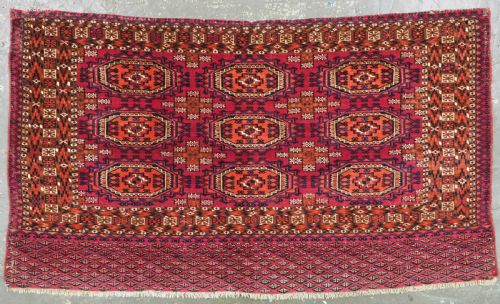

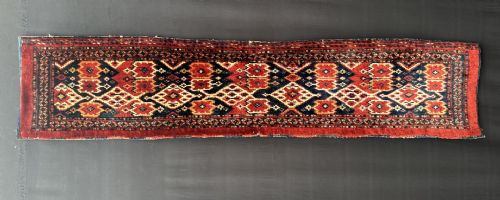


Crimson Wool Textile Panel
These crimson wool textile panel works are Central Asian tribal weavings valued for rich natural dyes and bold geometric designs.
Crimson Wool Textile Panel
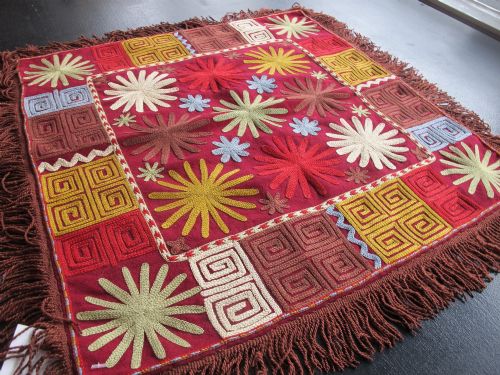
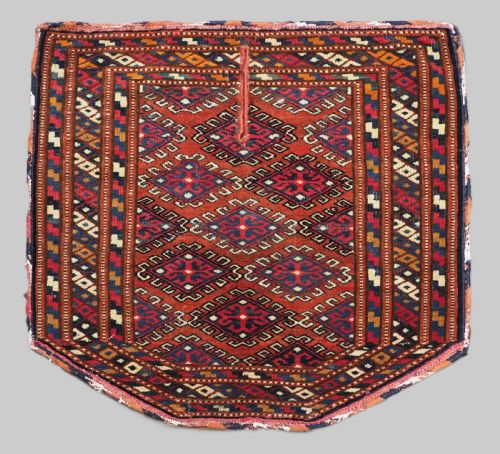
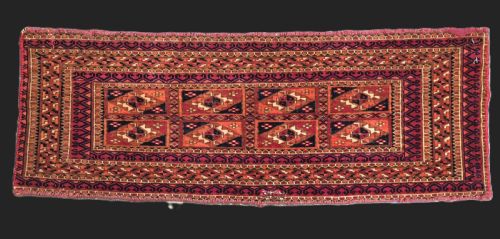
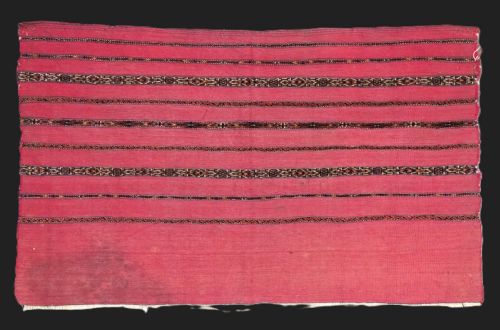
A crimson wool textile panel search reveals tribal weavings originating from Central Asia, including torba faces, chuval faces, and saddle covers. These pieces function primarily as tribal furnishings and tent trappings rather than ordinary floor coverings.
Materials and construction
Weavers utilised wool combined with silk and linen elements, dyed using natural colour sources to achieve deep red tones. The structure relies on dense knotting and fine weave techniques characteristic of nomadic workshops.
Tribal artisans constructed these panels to withstand practical daily usage while displaying complex repeating guls and traditional geometric motifs. The survival of these textiles depends on the resilience of these animal fibres and dye methods.
Listings span the eighteenth to the twentieth centuries, featuring Turkmen tribal traditions from Merv and the Amu Darya region.
Distinctions in quality
Quality rests upon the fineness of the weave and the precision of the drawing within the guls. Panels displaying particularly sharp graphic clarity and deep natural dye variations stand apart from standard examples.
Condition and completeness also dictate distinction, as intact chuval faces and undamaged torba pieces preserve the integrity of the original tribal design more effectively than fragment pieces.
The Crimson Wool Textile Panel Glossary
- Chuval
- A large storage bag face produced by nomadic tribes for household organisation inside a yurt. These panels feature repeating guls arranged in structured rows.
- Torba
- A smaller storage bag face traditionally hung against the interior lattice walls of a tent. They display intricate geometric patterns and rich red dye fields.
- Gul
- A primary medallion motif used in Central Asian carpet and textile design. Each tribal group utilises distinct repeating variations to signify heritage.
- Mafrash
- A rectangular storage container or bedding bag panel woven in technical structures unique to nomadic groups. Surviving faces are mounted and collected as textile art.
Crimson Wool Textile Panel: Frequently Asked Questions
How were these panels used?
Nomadic families utilised these textiles primarily as functional storage bags and tent trappings inside traditional dwellings. They served to organise household belongings and decorate living spaces.
Over time, many of these storage pieces have been separated from their original backings and preserved as flat textile panels for display.
How do I hang a textile panel?
Mounting requires a method that distributes the weight evenly across the top edge without puncturing the historic wool fibres. Conservation-grade Velcro or custom fabric sleeves provide secure support.
Displaying them away from direct sunlight protects the natural dyes from fading over the years.
What is a gul design?
A gul is a repeating octagonal medallion that identifies the specific tribe or clan responsible for the weaving. Different groups such as the Tekke, Yomut, and Saryk employed distinct drawing styles.
Recognising these motifs helps collectors attribute panels to particular regions in Central Asia.
How old are these weavings?
The pieces listed date mainly from the nineteenth century, spanning from the early decades through to the 1900s. Earlier examples reflect traditional nomadic dyeing and spinning methods.
Dating relies on stylistic analysis of the guls, structural density, and the composition of the wool.