

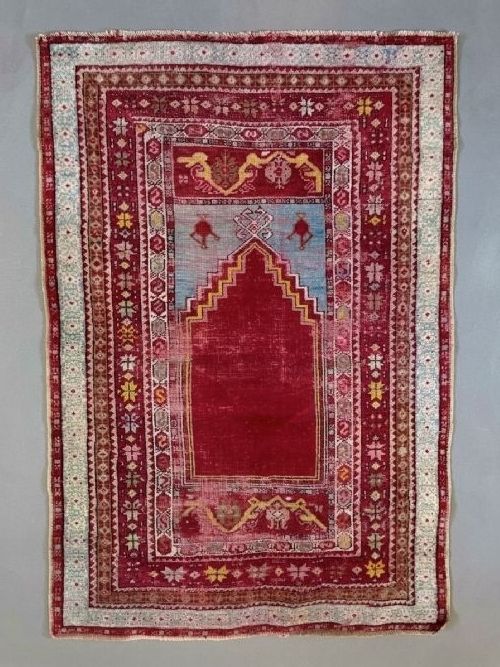


Crimson Prayer Mat
A crimson prayer mat brings deep red wool and cotton floor coverings into a room, made for daily devotion across the nineteenth and early twentieth centuries.
Crimson Prayer Mat
A crimson prayer mat is a woven textile featuring a mihrab design or niche, produced across various regions including Anatolia, Persia, the Caucasus, and Central Asia. These floor coverings served traditional devotional purposes for kneeling during prayer.
The selections available here span from the mid-nineteenth century up to the nineteen-twenties. Buyers will find tribal and village styles such as Turkmen, Baluch, Caucasian, and Anatolian pieces.
Forms include square formats and standard rectangular prayer rugs. Each piece demonstrates the distinct weaving traditions of its specific origin, from Persian Kashan to Afghan Kizil Ayak groups.
How they were made
These textiles utilise wool and cotton as their primary materials for pile and foundation structures. Weavers knotted the pile by hand onto sturdy warps and wefts to create durable floor coverings.
Natural dyeing methods yielded the deep red and crimson tones seen across the pieces. Artisans employed traditional geometric and floral motifs specific to their tribal or regional workshops.
Crimson Prayer Mat Retail Price Guide 2026
Typical asking prices for crimson prayer mat among the pieces listed under this phrase on Sellingantiques today, from the lower quarter to the upper quarter. They describe what is for sale here now, not the wider market.
The listings show pieces dated across the nineteenth and early twentieth centuries, constructed from wool and cotton.
What varies in quality
The standard of materials and the fineness of the knotting distinguish individual rugs. Tighter knots and resilient wool pile indicate superior construction in these older textiles.
Design clarity and the depth of the crimson dye also separate standard examples from finer works. Regional characteristics executed with greater precision elevate the character of a piece.
The Crimson Prayer Mat Glossary
- Mihrab
- The arched niche on a prayer mat that indicates the direction of prayer. It forms the central visual focus of the design.
- Pile
- The upright yarn loops or tufts that form the surface of the rug. It is woven from wool in these examples.
- Warp
- The vertical foundation threads stretched tightly on the loom before weaving begins. Cotton is commonly utilised here.
- Weft
- The horizontal threads passed through the warps to hold the knots in place. This structure secures the body of the rug.
Crimson Prayer Mat: Frequently Asked Questions
What is a crimson prayer mat?
A crimson prayer mat is a traditional woven rug featuring a distinct architectural niche design. These pieces were historically used for individual daily prayers.
They originate from diverse regions such as Anatolia, the Caucasus, Persia, and Central Asia, utilising wool and cotton construction.
How do I date an old prayer rug?
Dating relies on stylistic indicators, structural analysis, and material characteristics. Pieces on this page range from the mid-nineteenth century to the nineteen-twenties.
Tribal motifs and natural colour palettes help place rugs into specific historical periods and regional workshops.
Where were these rugs made?
The pieces originate from traditional weaving centres including Turkey, the Caucasus, and Central Asia. Specific tribal groups such as the Baluch and Turkmen produced many of these examples.
Persian and Anatolian villages also contributed distinct regional styles to this group of textiles.
How should I care for a wool rug?
Wool prayer rugs require gentle maintenance to preserve the pile and natural dyes. Regular light vacuuming without a beating brush prevents dirt accumulation.
Professional cleaning suited to antique textiles helps maintain the integrity of the wool and cotton fibres over time.