
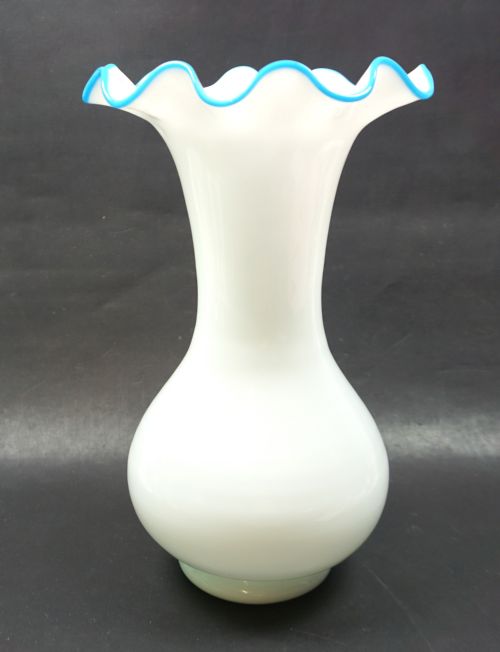


Crimped Glass Vase
A crimped glass vase brings tactile texture to any room, offering ruffled rims and gathered shapes caught from the molten gather.

Crimped Glass Vase
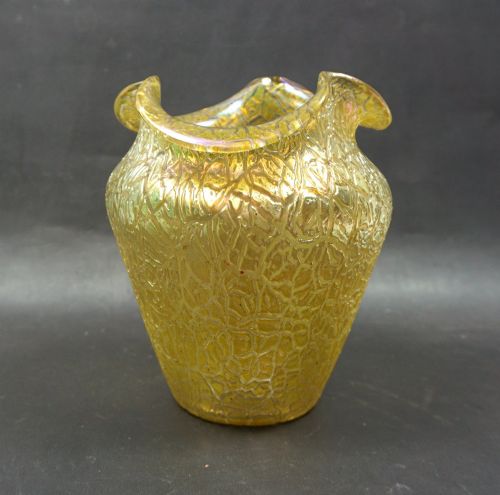
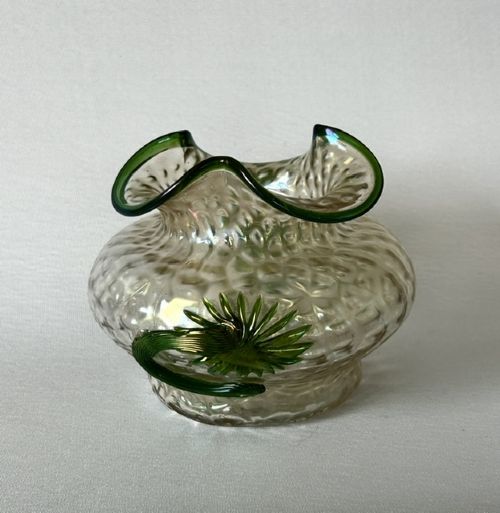
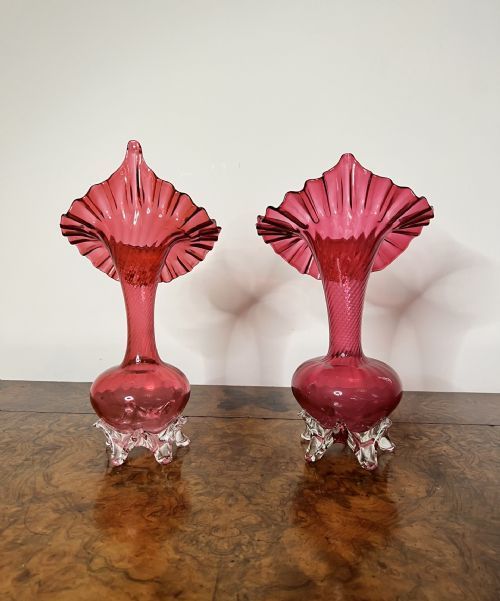
A crimped glass vase centres on a distinctive ruffled, fluted or pinched rim that defines its silhouette. These pieces stretch from nineteenth-century Victorian table centrepieces and jack-in-the-pulpit forms to Art Nouveau creations.
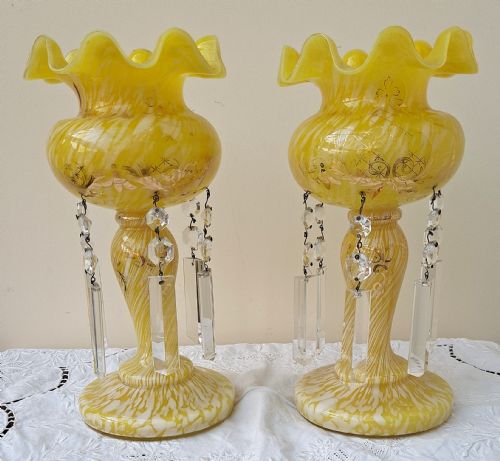
The selection ranges widely across stylistic traditions, including English cranberry glass, satin glass, and Bohemian art glass. Vases appear alongside related tablewares such as lustres, epergnes, and cornucopia vessels.
Makers and origins span English glasshouses, French manufacturers, and Bohemian workshops. Pieces date from the mid-nineteenth century through to the early twentieth century.
Production and Materials
Hot glass manipulation sits at the heart of these objects, where gaffers shaped molten metal using tools to fold, pinch and crimp the rims while pliable. Cased glass, uranium green additions, and enamel decoration reveal complex layering techniques.
Satin glass achieved its signature texture through acid-treating, whilst iridescence relied on metallic oxide vapours applied to the hot surface. Hand-painted details and applied trails of contrasting glass added surface pattern.
Some nineteenth-century glass glows a vibrant green under ultraviolet light because makers added tiny amounts of uranium to the molten batch.
Judging Quality and Execution
The crispness of the manipulated rim dictates visual success, separating sharply folded edges from soft, indistinct shaping. Depth of colour within cranberry, cased or satin glass adds layers of optical richness.
The balance of the silhouette and the finesse of any applied trails or hand-painted enameling show the hand of the master blower. Integrated elements like uranium green bases or white cane decoration display precise technical control.
Loetz·Kralik·Baccarat·Thos. Webb & Sons·Powell·Nazeing
The Crimped Glass Vase Glossary
- Cranberry glass
- A rich red-pink transparent glass coloured with gold chloride. It forms a cornerstone of nineteenth-century decorative glassware.
- Satin glass
- Glass with a velvety, acid-etched matte finish that diffuses light softly. It gained immense popularity during the Victorian era.
- Jack-in-the-pulpit vase
- A vessel featuring a wide, sweeping flared rim resembling the flower spathe. Makers achieved this shape by pulling and folding the hot glass upward.
- Epergne
- A large multi-armed centrepiece featuring a central trumpet vase surrounded by hanging baskets or smaller vases. These pieces dominated grand dining tables in the Victorian period.
- Cased glass
- Glass composed of two or more distinct layers of different colours fused together while hot. Blowers often cut through the outer layer to reveal the contrasting colour beneath.
Crimped Glass Vase: Frequently Asked Questions
How do I date a crimped glass vase?
Dating relies on stylistic markers, colour palettes, and manufacturing techniques recorded across the periods. Victorian examples often feature rich cranberry hues, while Art Nouveau pieces show iridescent finishes and organic contours.
Examining pontil marks, rims, and any registration numbers provides further clues to the precise era of manufacture.
What is the difference between satin glass and regular glass?
Satin glass undergoes a specific acid-treatment process that gives the surface a matte, velvety texture rather than a high gloss. This technique diffuses light differently and was favoured by nineteenth-century makers for decorative effect.
Standard glass retains a smooth, reflective finish achieved through fire polishing or annealing without the chemical etching step.
How were epergnes used on a table?
Epergnes served as grand table centrepieces during formal Victorian dining occasions, holding fruit, sweets, or cut flowers. The central trumpet and hanging baskets created height and visual drama across the table.
Guests would admire the vibrant cranberry or yellow glass catching the candlelight during extended dinner courses.
Are all crimped rims made by hand?
The traditional crimped rim was shaped by hand using specialised metal tools while the glass remained hot and pliable on the blowpipe. Each fold and pinch reflects the individual gaffer's technique and speed.
This manual manipulation ensures that no two rims share the exact same configuration or depth of fold.