

Cresting Gold Wall Mirror
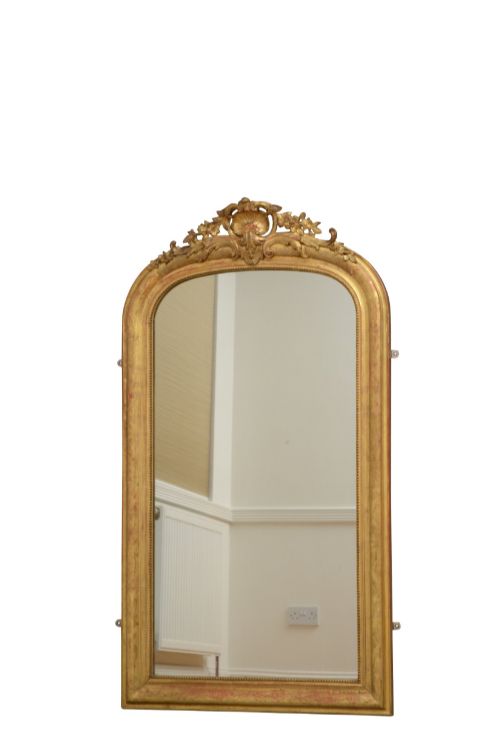
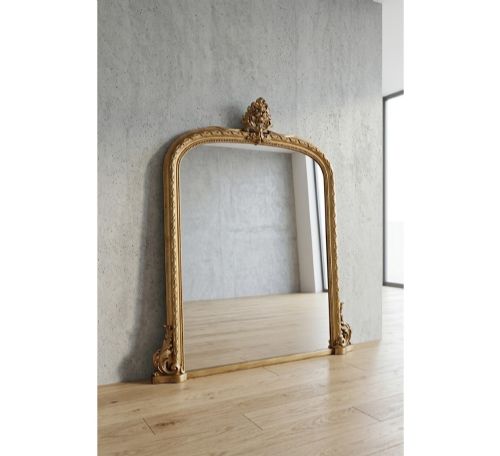
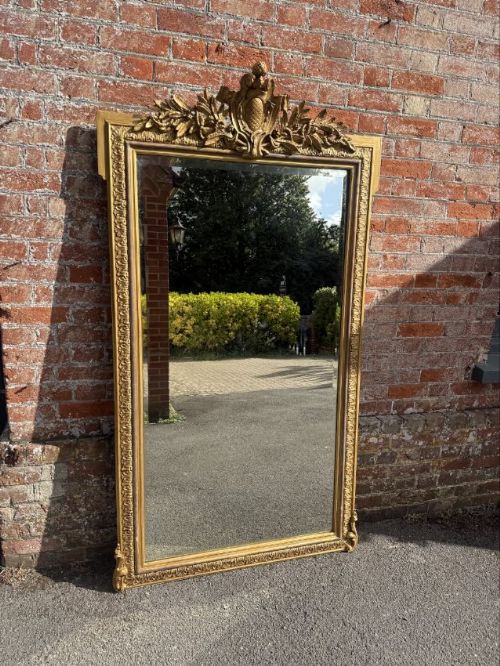
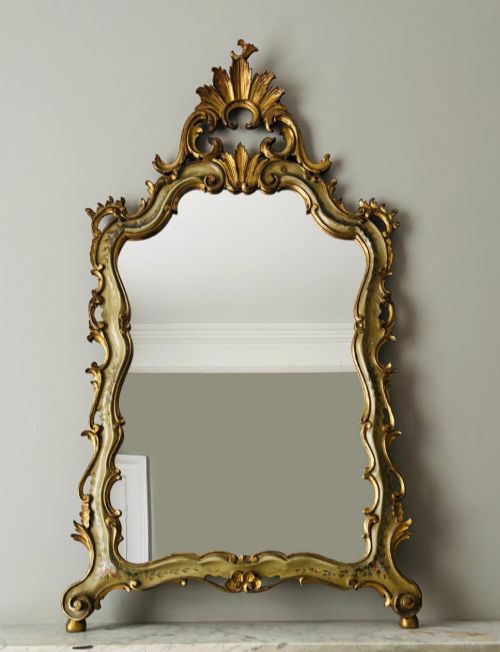
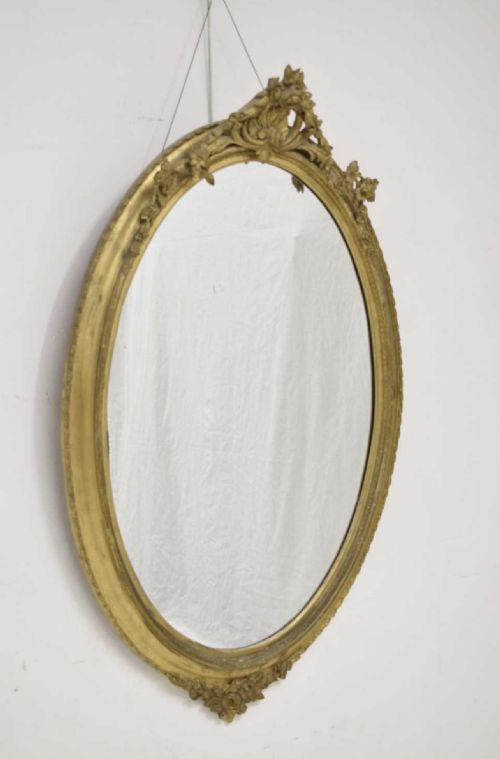
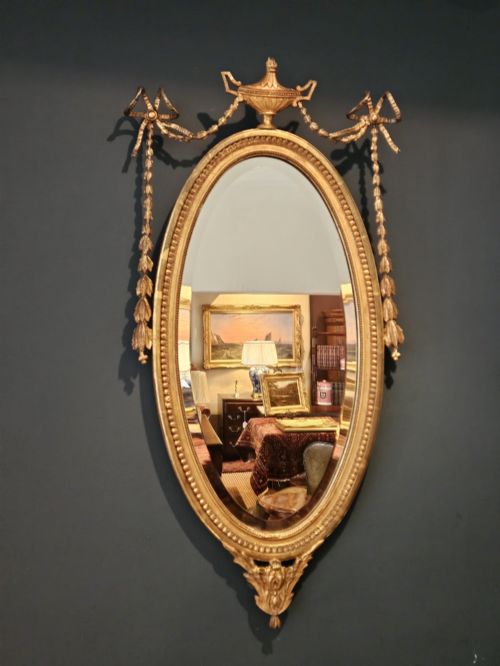
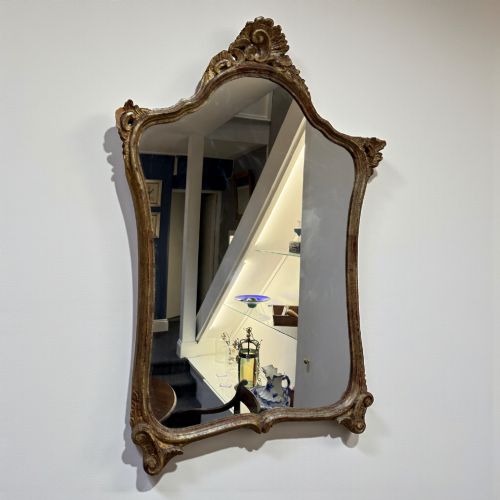
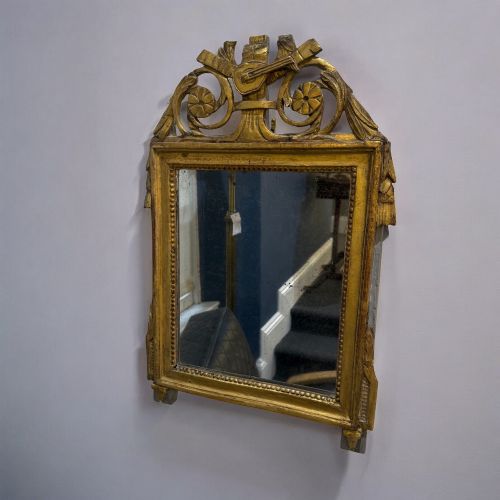
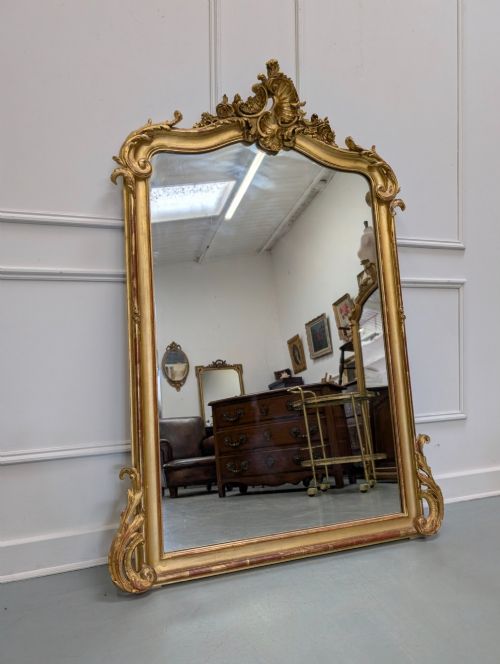
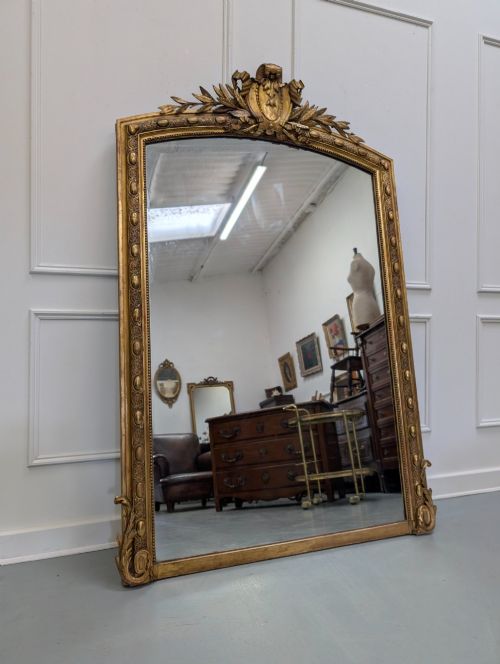
A cresting gold wall mirror brings architectural weight and reflective brilliance to a room, drawing the eye upwards through ornate carved ornament and gilded surfaces.
Cresting Gold Wall Mirror
When searching for a cresting gold wall mirror, buyers encounter grand overmantel pieces, vertical pier glasses, and circular convex forms designed to anchor large spaces. These items originate from the 18th century through to the early 20th century, drawing upon Georgian, Regency, and Victorian aesthetics alongside French Louis styles.
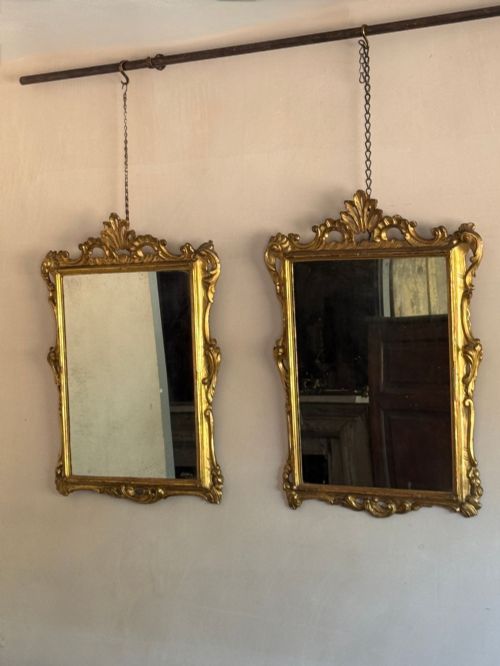
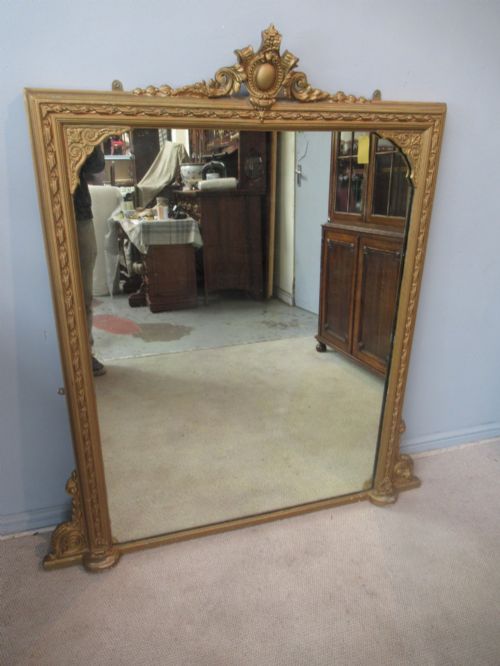
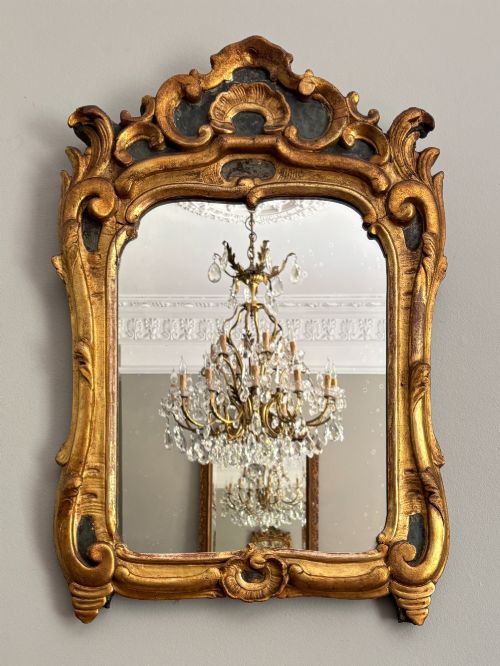
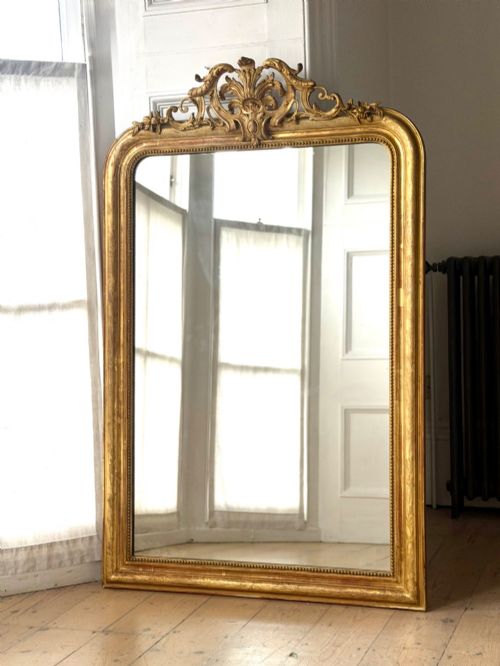
The version most commonly met on this page is the 19th-century giltwood and gesso overmantel mirror, often bearing elaborate carved decoration at the upper crown. Such pieces reflect both English craftsmanship and French chateau influences, ranging from straightforward architectural arches to ornate rococo revival framing.
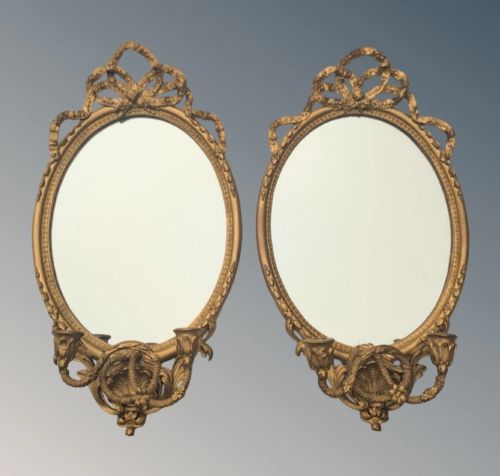
Beyond standard wall mirrors, the selection encompasses specialised items like convex mirrors with eagle crests, marginal mirrors, and painted wood frames highlighted with gold leaf. Each variation utilises historic glass types and traditional joinery to maintain period authenticity across diverse domestic settings.
Materials and construction
Makers constructed these frames primarily from carved wood, applying layers of gesso to build up intricate relief details before gilding the surfaces with gold leaf or metal leaf. This combination allowed artisans to achieve sharp architectural mouldings and deep sculptural crests that held their definition beneath the metallic finish.
Glazing involved mercury glass or early mirror glass, sometimes showing foxing from age, held within rebated frames or secured behind marginal glass panels. Larger overmantel examples often employed robust pine or hardwood carcasses to support the heavy weight of the glass and the elaborate cresting above.
Listings feature 19th-century French and English pieces utilising giltwood, gesso, and original mirror glass across overmantel, pier, and convex wall formats.
Distinctions in quality
Quality rests in the depth and crispness of the hand-carved ornament on the crest, where skilled carving separates exceptional examples from simpler moulded versions. The integrity of the original gesso and gold leaf surface, free from heavy modern re-gilding, dictates the visual authenticity of the piece.
Structural robustness also separates the tier; heavy overmantel mirrors require sound internal joinery to support substantial glass plates over centuries of hanging. The presence of original backboards, unblemished mercury glass, and intact cresting elements elevates a piece above those with replaced components.
The Cresting Gold Wall Mirror Glossary
- Giltwood
- Wood that has been coated with gold leaf over a prepared ground. This material defines the lustrous finish seen on most historic wall mirrors.
- Gesso
- A plaster-like mixture applied to wood frames to create a smooth surface for carving and gilding. Artisans built up deep relief ornaments using this pliable medium before applying gold leaf.
- Overmantel mirror
- A large mirror designed to hang specifically above a fireplace mantelpiece. These substantial pieces frequently feature decorative crests to fill vertical wall space.
- Convex mirror
- A circular mirror with an outward-curving glass plate that provides a wide-angle reflection of the room. Regency examples often incorporate eagle surmounts and candle arms.
- Pier mirror
- A tall, narrow mirror designed to hang on the wall space between windows. These vertical glasses often feature painted or ebonised wood elements alongside traditional gilding.
Cresting Gold Wall Mirror: Frequently Asked Questions
How do I hang a heavy overmantel mirror?
These massive frames require professional wall anchoring directly into structural studs or masonry using heavy-duty brackets. The weight of the wood, gesso, and glass demands secure load-bearing support to prevent movement.
Ensuring the hanging wire or integrated mirror plates match the structural capacity of the wall keeps the frame stable and safe over time.
What is foxed mirror glass?
Foxed glass refers to the natural oxidation and degradation of the reflective backing over decades or centuries. This process creates dark spots, mottling, and atmospheric patches across the surface.
Many collectors prize original foxed mercury glass because it confirms the genuine age of the mirror plate.
How do I clean a giltwood frame?
Giltwood surfaces require gentle dusting with a soft, dry brush to remove particles without disturbing the delicate gold leaf. Moisture and modern chemical cleaners strip the historic finish.
Maintaining a stable indoor humidity prevents the underlying gesso from cracking or separating from the wooden carcass.
How do I identify a Regency convex mirror?
Regency convex mirrors feature circular frames, often framed with ebonised reeded inner lips and ball-tooled bezels. They frequently include a prominent carved eagle surmount at the top.
These pieces typically date from the early 19th century and reflect the neoclassical taste of the period.