
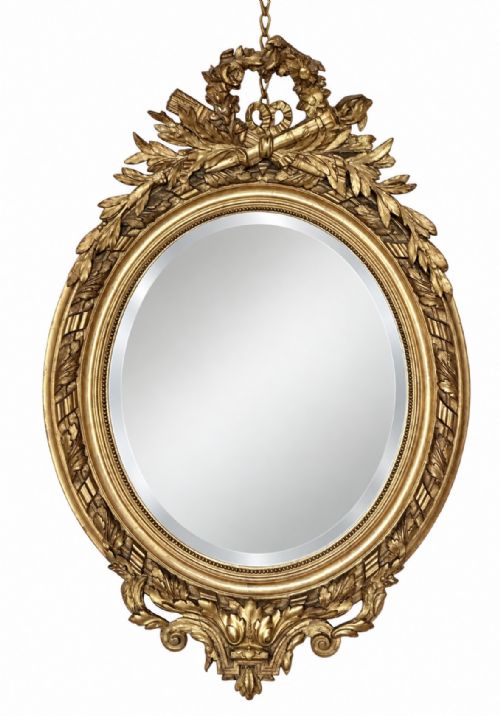
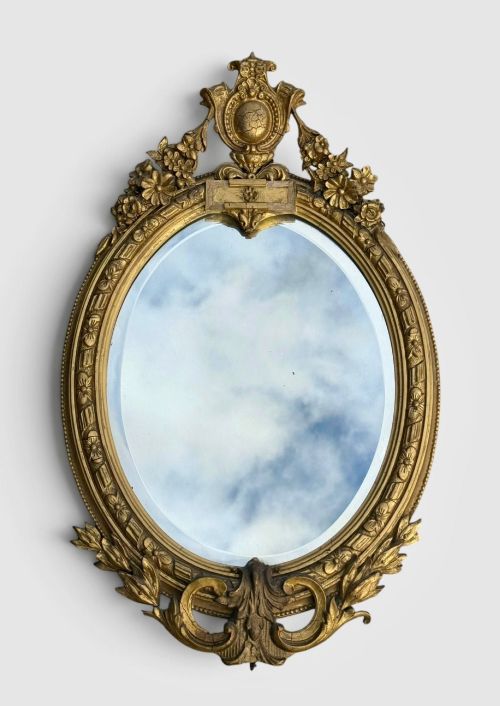
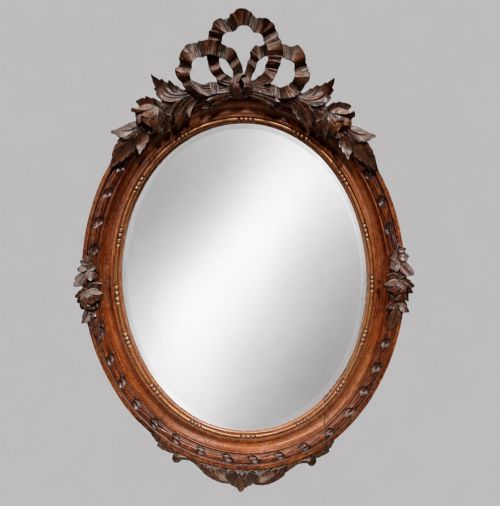
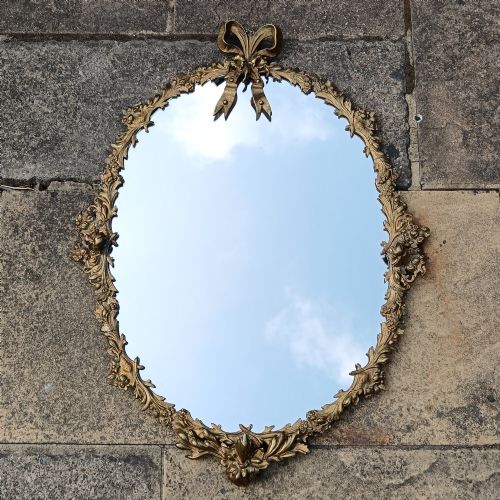


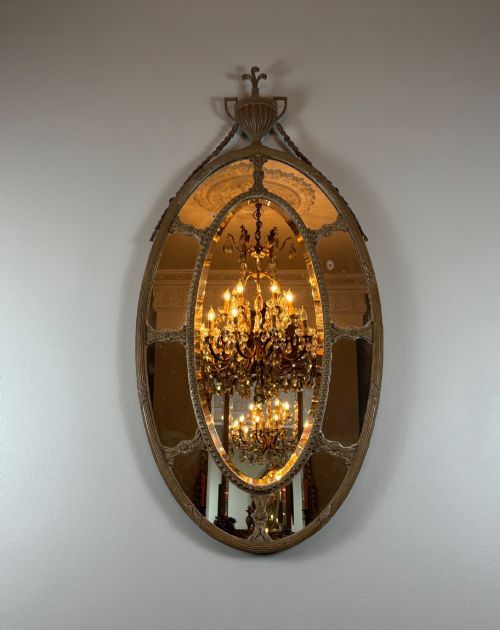
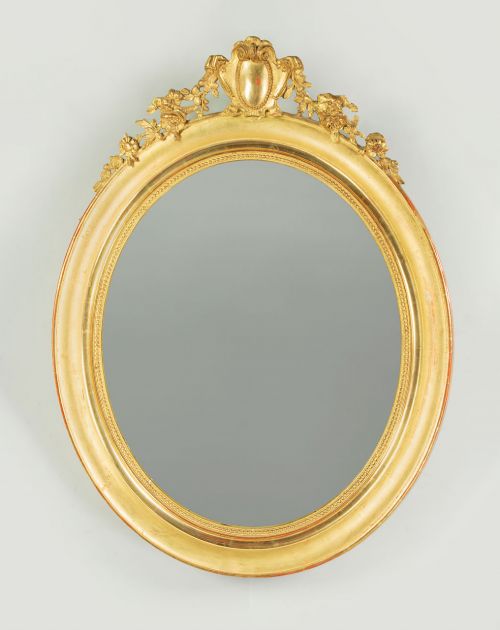
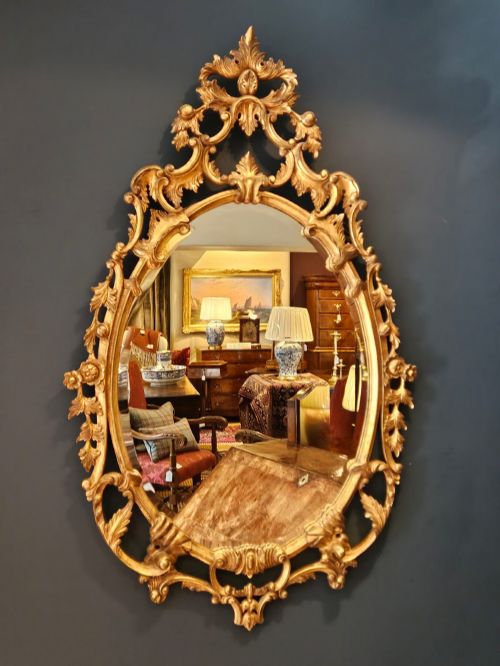
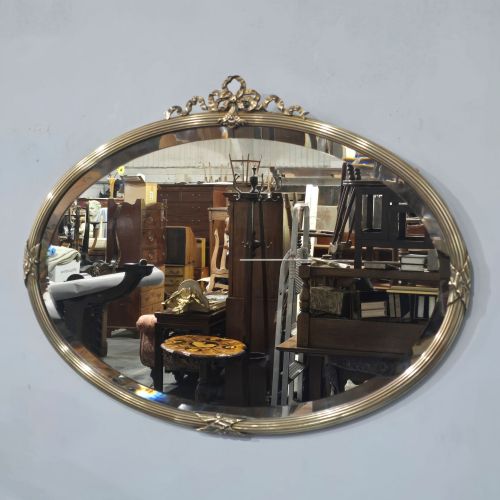
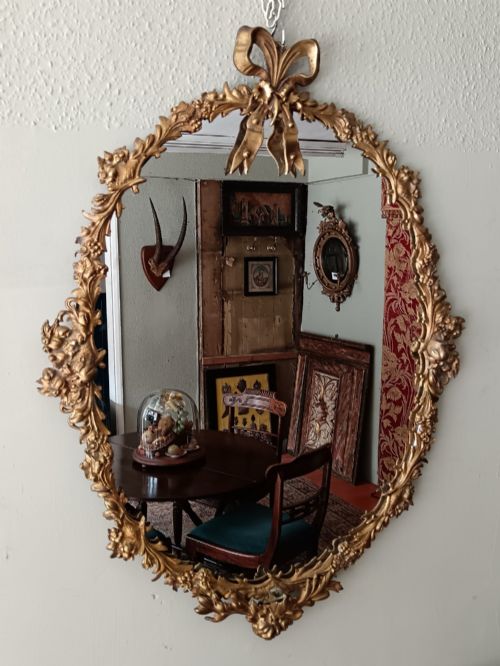
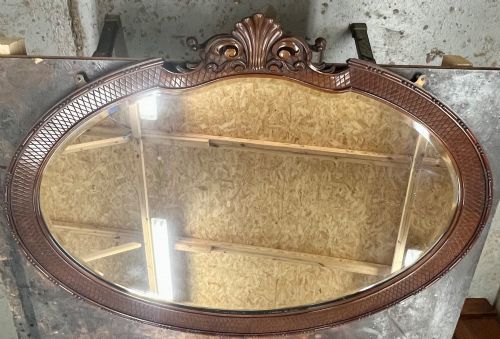
Crested Oval Wall Mirror
A crested oval wall mirror brings vertical harmony to a room, catching the light in its curved frame.
Crested Oval Wall Mirror
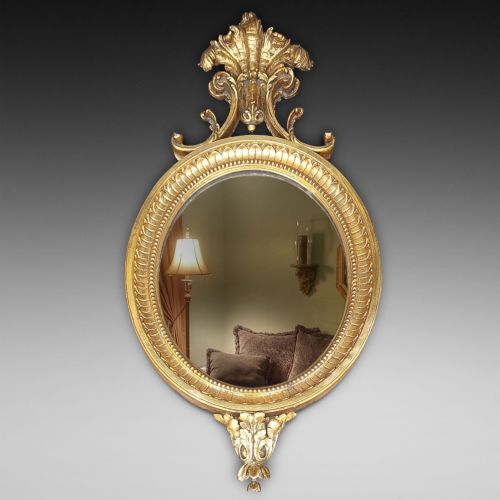
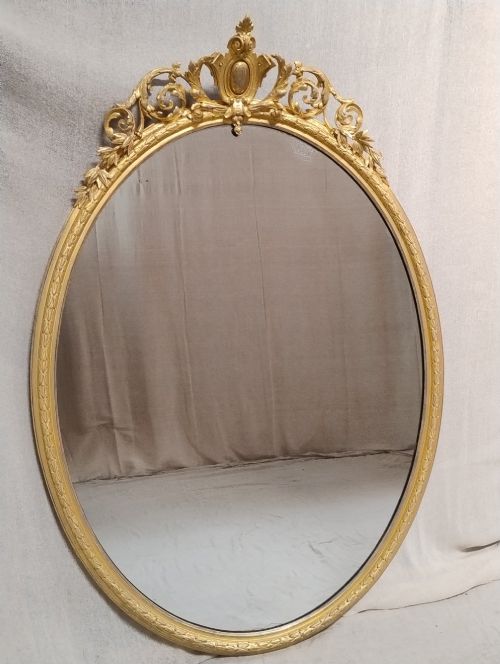
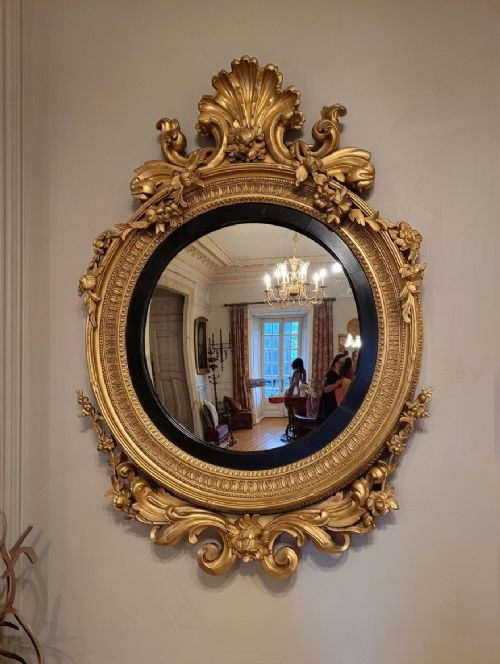
When searching for a crested oval wall mirror, collectors encounter vertical looking glasses featuring distinct ornamental toppings, most commonly seen in nineteenth-century interpretations of classical styles. These pieces function as both practical reflectors and decorative wall ornaments, often positioned above mantelpieces, in hallways or between windows.
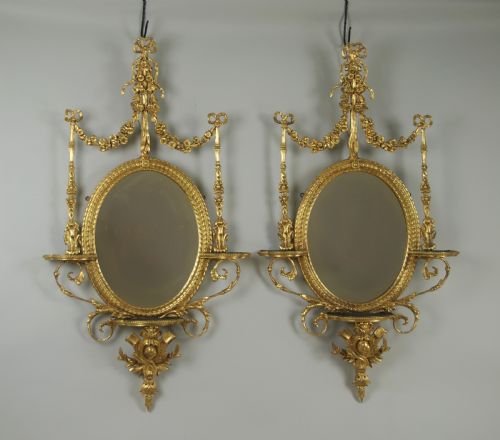
The inventory on this page spans the nineteenth century through the early twentieth century, drawing heavily on Victorian and Regency periods alongside French revivals. The dominant forms include giltwood frames adorned with carved wooden crests, urns, swags or ribbon bows, alongside simpler ebonised and brass interpretations.
Materials and construction
The construction of these frames typically relies on a combination of carved wood, gesso and composition moulded ornament applied over a timber substrate. Giltwood and parcel-gilt finishes dominate the selection, often achieved through the application of gold leaf over red bole or preparation layers.
Mirrors from the mid-to-late nineteenth century frequently retain their original mercury plate or early bevelled glass, showing subtle signs of ageing such as foxing. Brass, bronze and ebonised wood also appear in the evidence, providing alternative textural contrasts for the wall.
Some mirrors wear their age on their faces, letting you gaze into a gentle winter storm of foxed mercury glass.
Quality and craftsmanship
The distinction between standard and finer examples rests upon the depth and crispness of the carved detail within the crest and frame. Hand-carved wooden ornament possesses a sharper definition than moulded composition, which can appear softer in the contours.
Preservation of the original gilding and the retention of authentic mirror plates elevate an example. Pieces that maintain their original surface patination without heavy regilding offer greater integrity to the collector.
The Crested Oval Wall Mirror Glossary
- Giltwood
- Timber that has been coated with gold leaf or gold paint. This finish gives the frame its characteristic metallic gleam.
- Gesso
- A plaster-like mixture applied to wood frames to create a smooth surface for carving or moulding ornamentation. It takes gilt layers effectively.
- Composition
- A moulded mixture of whiting, resin and glue used to form decorative details on frames. It offers an alternative to hand carving.
- Mercury plate
- An early type of mirror glass backed with a tin-mercury amalgam. This creates a characteristic speckled appearance and deep reflection.
- Girandole
- A wall mirror featuring attached candle sconces. The candleholders project forward from the frame to reflect the flame.
Crested Oval Wall Mirror: Frequently Asked Questions
Where should I hang an oval mirror?
These vertical looking glasses suit narrow wall spaces, narrow hallways or narrow expanses between doorways where horizontal frames would overwhelm the proportions.
Positioning them at eye level ensures they reflect light effectively while functioning as a focal point within the room arrangement.
How do I identify a Victorian mirror?
Victorian examples often display heavier ornamentation, utilising gesso and composition techniques to replicate earlier Rococo or Neoclassical motifs.
Examining the backboards, fixings and the composition of the glass helps confirm the nineteenth-century production period.
Are these mirrors original?
The listings comprise antique pieces originating primarily from the nineteenth and early twentieth centuries, representing various revival styles of the period.
Checking the materials, frame construction and glass characteristics assists in verifying the age of each individual mirror.