





Cream Wood Wall Mirror
These cream wood wall mirrors bring painted warmth and reflective depth to a room, spanning French provincial designs and English overmantels.
Cream Wood Wall Mirror
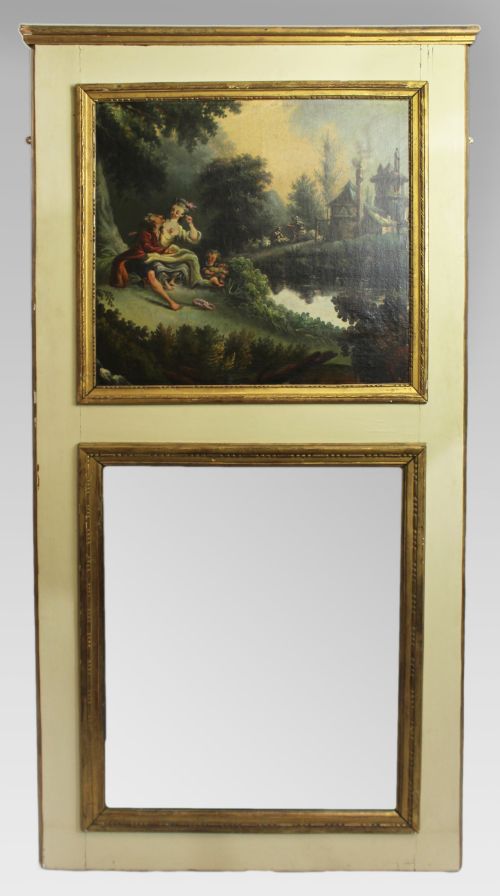
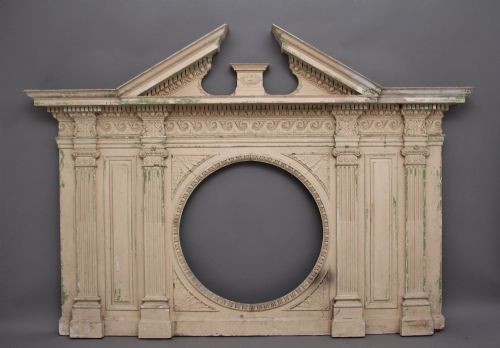
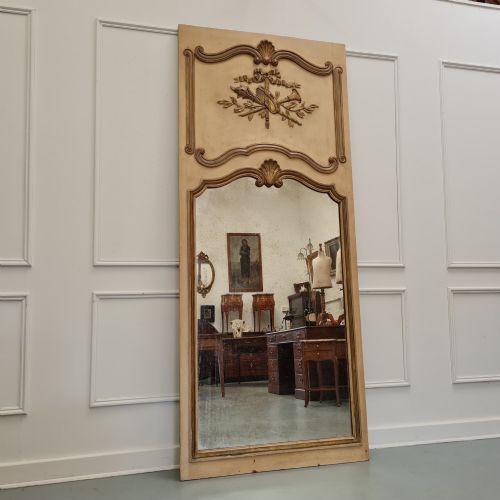
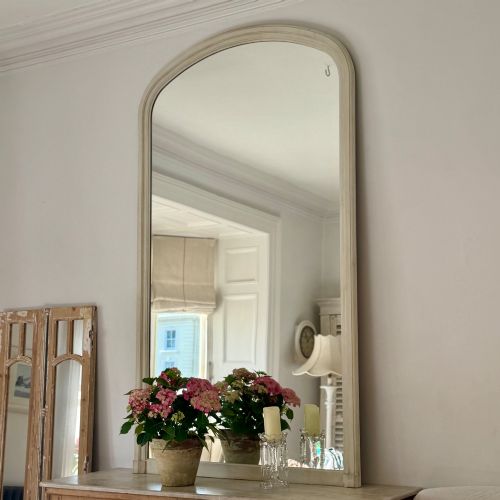
When you search for a cream wood wall mirror, you encounter pieces designed to hang on principal room walls or sit above fireplaces. These objects range from tall French trumeau panels featuring pastoral oil paintings to substantial English overmantles and arched Italian frames.
The pieces appearing on this page stretch from the eighteenth century through the Victorian and Edwardian eras, uniting carved wooden structures with painted or gesso surfaces. French chateau and provincial styles sit alongside English architectural forms and Venetian rococo interpretations.
You find rectangular formats, shaped tops, and oval silhouettes, often finished in layered cream paint that reveals glimpses of underlying gilt or wood. Whether built as pier glasses or overmantles, these mirrors combine structural timber with decorative paintwork.
How they were made
Craftsmen built the underlying structures using pine, carved wood, and shaped timber frameworks. These wooden bases provided the stability needed for substantial glass plates and elaborate mouldings.
Makers applied layers of gesso over the carved wood to create smooth grounds for ornamentation and paint. This plaster-like mixture allowed artisans to carve crisp architectural details, scrolls, and floral motifs before applying paint and gold leaf accents.
Some nineteenth-century mirrors secretly double as amateur art galleries through pastoral oil paintings inserted just above the looking glass.
What varies in quality
The depth and crispness of the hand-carved wood and gesso ornamentation separate standard joinery from finer artistic output. Elaborate architectural mouldings, column frames, and integrated oil paintings indicate workshop pieces requiring high skill.
The integrity of the painted surface and the character of the mirror glass itself define the upper tier of examples. Original glass plates showing age interact with layered, distressed cream paint to create depth absent in routine reproductions.
The Cream Wood Wall Mirror Glossary
- Trumeau
- A decorative wall mirror incorporating a painted panel or artwork above the glass plate. These vertical mirrors originated in eighteenth-century France and hung between windows.
- Overmantle
- A large mirror designed specifically to hang on the wall directly above a fireplace mantelpiece. These horizontal or arched pieces often reflect the architectural proportions of the hearth.
- Gesso
- A plaster mixture applied to wood frames to create a smooth surface for gilding and painting. Artisans carved intricate relief details directly into this hardened material.
- Pier glass
- A tall mirror intended to be positioned on the wall space between two windows. They frequently feature hand-painted details and matching console tables.
- Parcel gilt
- A finishing technique where portions of a frame are highlighted with thin sheets of gold leaf while the rest remains painted. This contrasts the metallic sheen against the cream wood.
Cream Wood Wall Mirror: Frequently Asked Questions
Where should I hang a cream wood wall mirror?
These mirrors suit placement above a living room fireplace as an overmantle or on a prominent dining room wall where they amplify natural light.
Larger vertical formats, such as trumeau mirrors, work effectively in hallways or between windows to create a sense of expanded architectural space.
How do I identify a nineteenth-century mirror?
Nineteenth-century examples frequently feature heavy carved wood and gesso construction combined with hand-mixed cream paint over pine or regional hardwoods.
Examination of the reverse and the edges of the mirror glass often reveals period construction techniques and hand-beveled edges.
What is the difference between a trumeau and an overmantle?
A trumeau is typically a tall, vertical wall mirror that incorporates a decorative oil painting or carved panel within the upper section of the wooden frame.
An overmantle is wider or arched, engineered to sit horizontally across the expanse of a chimney breast above a fireplace.
Can these mirrors be cleaned safely?
The painted wood and gesso frames require dusting with a dry, soft cloth to preserve the layered finish and prevent moisture damage.
Mirror glass can be cleaned using standard glass cleaner applied sparingly to a cloth rather than sprayed directly onto the antique frame.