
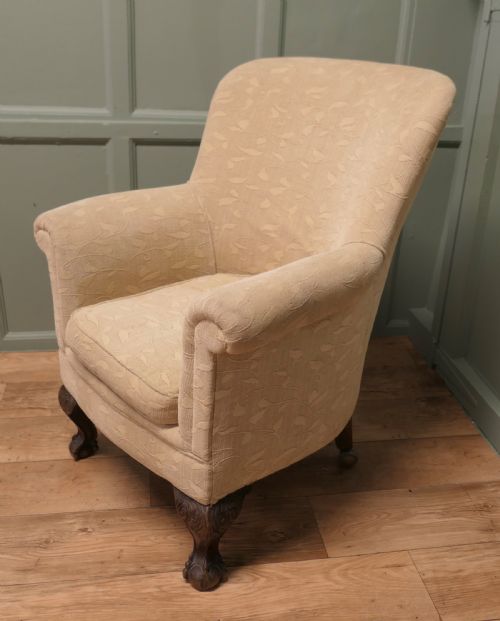
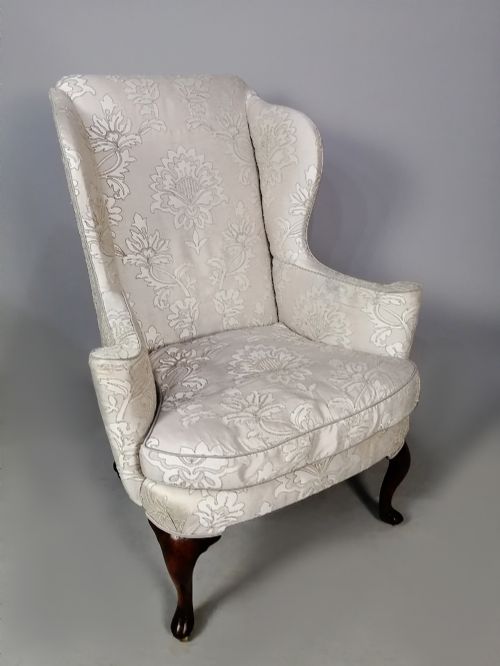
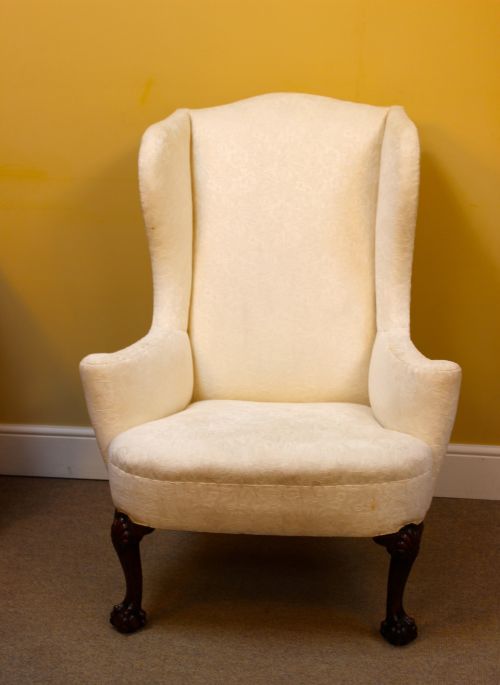
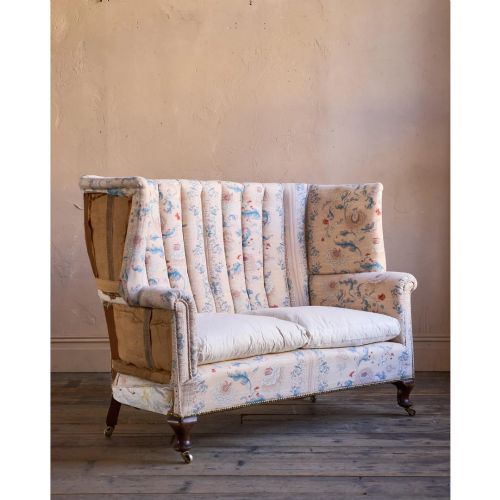
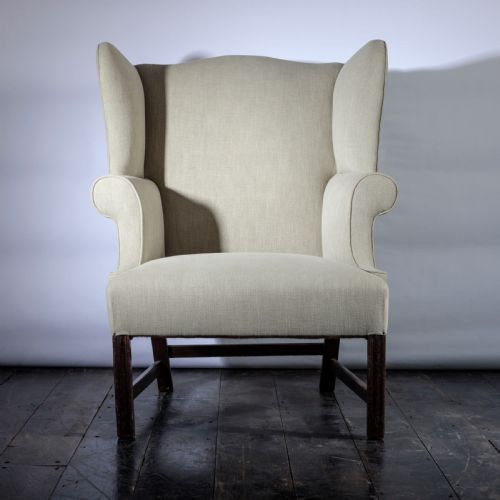
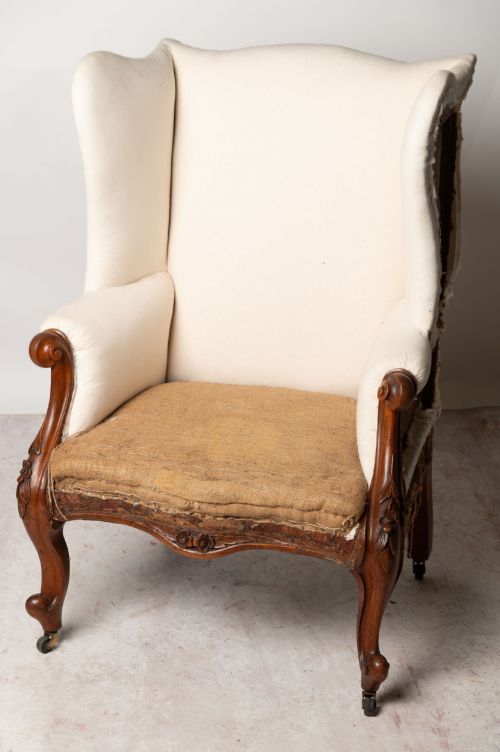
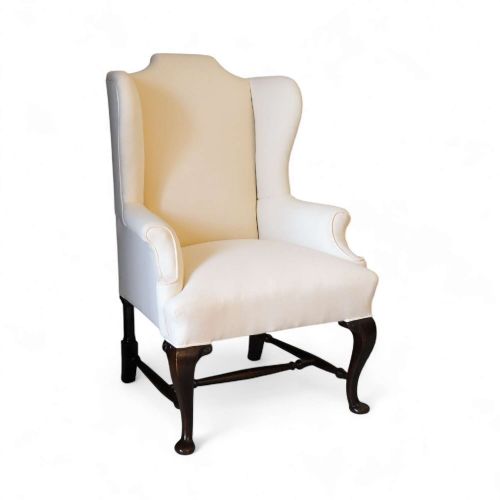
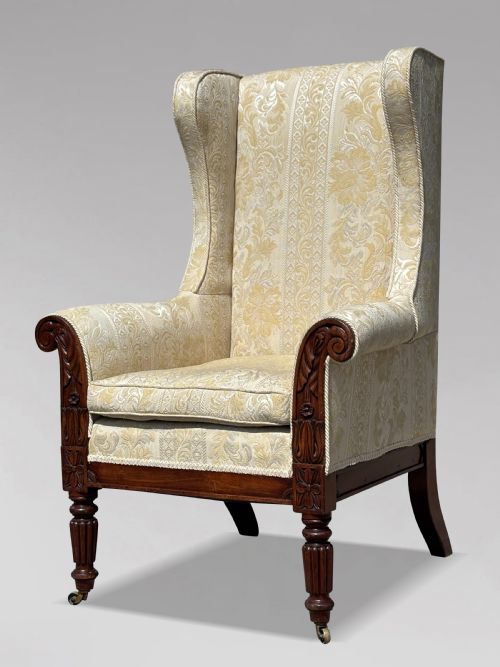


Cream Wingback Armchair
A cream wingback armchair provides deep comfort and classic draught-excluding wings, drawing on centuries of domestic seating design.
Cream Wingback Armchair
A cream wingback armchair combines functional protection from draughts with formal elegance, originating in domestic interiors from the Georgian and Victorian eras. Buyers seeking this seating type encounter variations spanning 18th century examples through to Edwardian and later revivals.
The selections on this page feature robust timber frames paired with neutral upholstered finishes such as calico, linen, and damask fabric. The predominant forms include traditional high-backed wing chairs, barrel back armchairs, and occasional variations.
Originating across English and French workshops, these pieces demonstrate styles ranging from Chippendale and Carolean to Queen Anne Revival. The most common survivals on this page date from the nineteenth century in walnut and mahogany.
Assessing quality and proportion
Quality in these armchairs rests upon the integrity of the timber frame and the grace of the carved cabriole or straight legs. Superior examples maintain balanced proportions in the wings and backrest without appearing clumsy.
The refinement of hand-carved details on the mahogany or walnut woodwork distinguishes standard workshop output from finer artisan production. Original framing timber condition dictates the structural longevity of the seating.
Several armchairs arrive in plain calico, waiting patiently for someone to grant them a colourful final coat.
The Cream Wingback Armchair Glossary
- Wingback
- An upholstered armchair featuring protective side panels attached to the backrest. These wings originally deflected draughts in older homes.
- Calico
- A plain-woven unbleached textile frequently utilised as an initial upholstery stage before final decorative fabric application.
- Damask
- A reversible figured fabric traditionally woven on a jacquard loom with patterns visible on both sides.
- Mahogany
- A durable tropical hardwood selected for its rich reddish-brown tone and strength in furniture frames.
- Bergere
- An enclosed upholstered French armchair featuring exposed wooden framing and cane or upholstered sides.
Cream Wingback Armchair: Frequently Asked Questions
How do I clean a calico or linen upholstered wing chair?
Surface dust should be gently removed using a soft brush attachment on a vacuum cleaner.
Professional textile cleaning is recommended for deeper stains to protect the underlying vintage padding materials.
Are these armchairs suitable for daily sitting?
Most examples possess sturdy hardwood frames designed to withstand regular domestic use.
Buyers should verify the internal suspension and padding condition if intended for primary seating.
How can I tell an 18th century chair from a Victorian revival?
Examination of timber patination, hand-cut joinery marks, and tool indicators reveals the age of the wooden frame.
Revival pieces often display machine tooling and different construction density compared to Georgian originals.
What is the purpose of the wings on the backrest?
The extended sides historically trapped heat from a fireplace and blocked cold air currents in draughty rooms.
They also offer a comfortable resting place for the head during extended periods of reading or rest.