
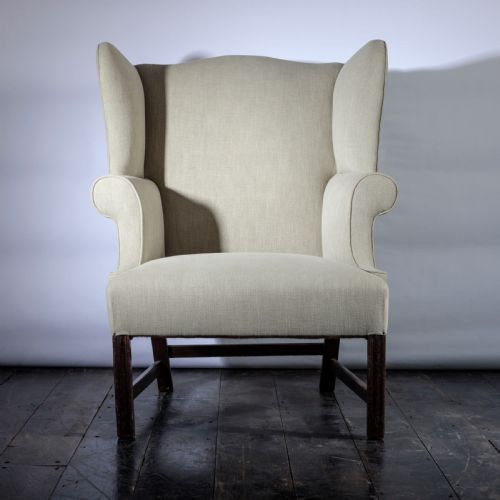
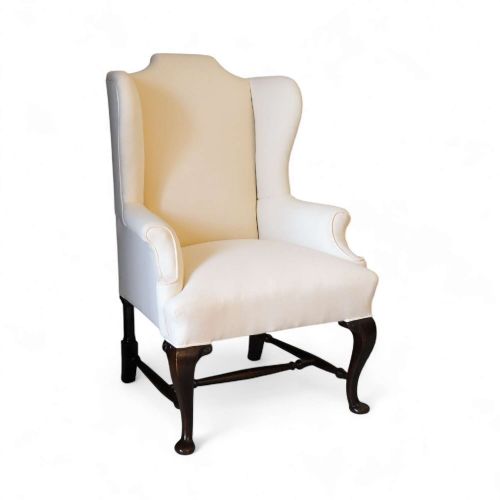
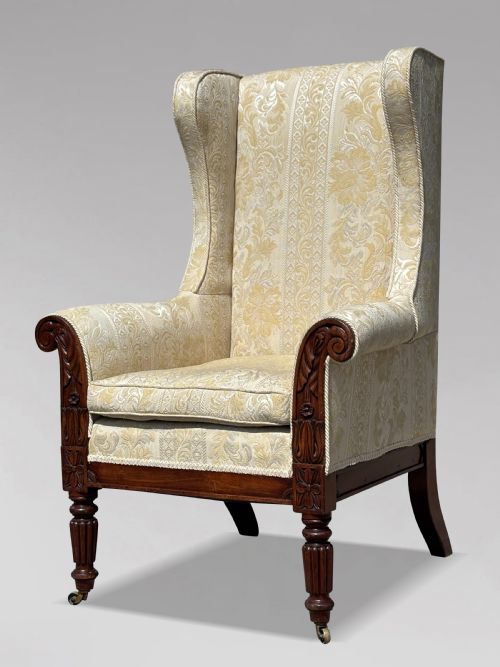


Cream Upholstered Wingback
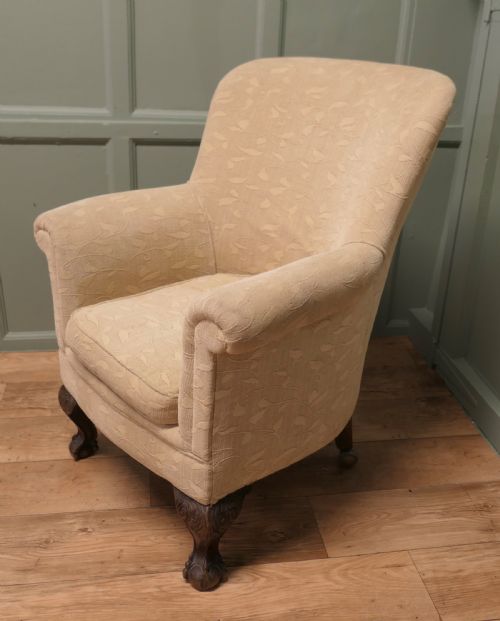
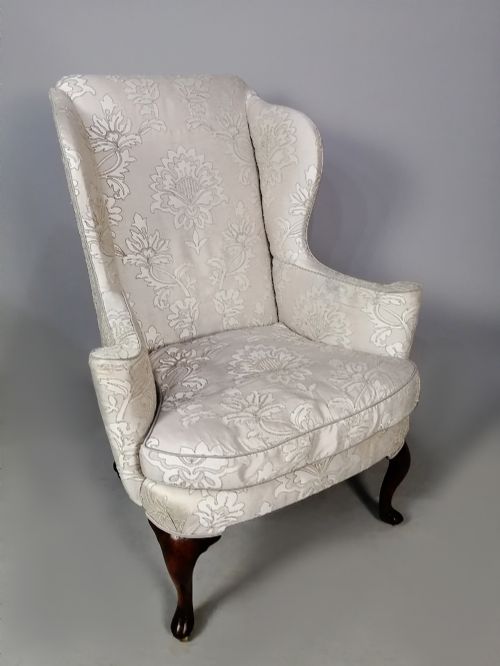
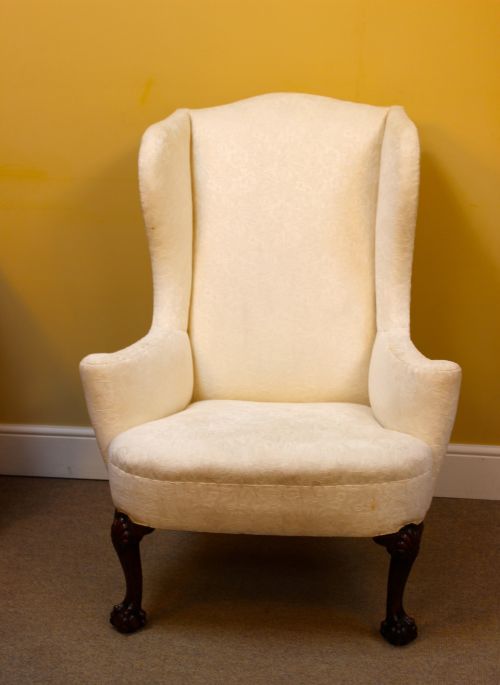
A cream upholstered wingback provides deep-seated comfort with tall protective sides, a classic form designed to shield the sitter from draughts.
Cream Upholstered Wingback
A cream upholstered wingback represents a traditional seating form designed to keep draughts away from the head and shoulders, featuring high winged sides and a substantial padded back. The selection spans robust Georgian and Victorian examples down to Edwardian interpretations, offering generous proportions suited to fireside placement.
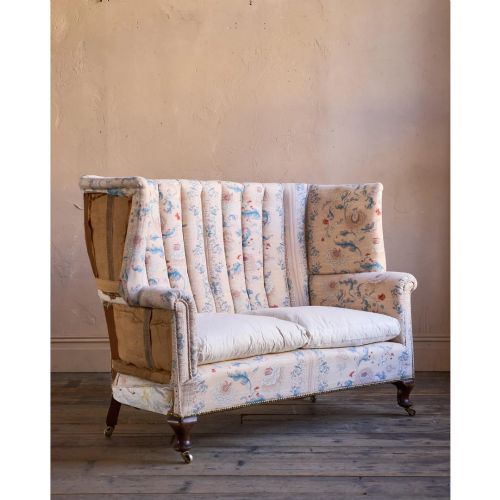
Most pieces encountered here date from the eighteenth and nineteenth centuries, with walnut and mahogany framing visible beneath modern or period fabric. Alongside standard armchairs, variations include barrel back shapes, sofas, and daybeds sharing the characteristic upholstered silhouette.
Makers and workshops constructed these seats for domestic comfort, ranging from formal library chairs to smaller bedroom variants. The enduring appeal lies in the combination of a sheltering wooden frame and neutral textile coverings that integrate into various interiors.
Materials and construction
Frames rely principally on hardwoods such as mahogany and walnut, chosen for structural strength in supporting the deep wings and high backs. Cabinetmakers shaped legs and stretchers to reflect prevailing tastes from the Georgian period through to the Edwardian era.
Upholstery techniques involve layers of traditional stuffing secured over webbing and springs, finished with fabrics ranging from plain calico and linen to damask. Brass tacking often secures the textile edges along the wooden rails of the frame.
Early sitters relied on the wings to trap micro-climates of fireplace heat before central heating made personal windbreakers redundant.
Factors determining quality
The refinement of the woodwork dictates much of the standing, where crisply carved mahogany or figured walnut indicates superior cabinetmaking. Proportions matter significantly, with well-balanced wings and harmonious rake to the back legs separating standard pieces from exceptional ones.
Originality of the timber frame and the retention of structural integrity without excessive replacement timber mark the better examples. The quality of the underlying frame construction ensures the piece maintains its supportive shape over generations of use.
Hampton And Sons Pall Mall
The Cream Upholstered Wingback Glossary
- Wingback
- An armchair featuring projecting side panels designed originally to deflect cold draughts away from the user's head. These wings form an integral part of the upholstered upper frame.
- Calico
- A plain-woven cotton textile frequently used as an underlying upholstery layer or as a neutral temporary cover awaiting final decorative fabric. It provides a clean, taut foundation.
- Barrel back
- A seating form where the upholstered back curves continuously around to form enclosed arms, creating a circular cocoon for the sitter.
- Damask
- A reversible figured fabric traditionally woven with patterns in rich textures, often utilised on formal seating to add decorative depth.
- Mahogany
- A durable, reddish-brown tropical hardwood favoured by cabinetmakers across the eighteenth and nineteenth centuries for its strength and fine carving qualities.
Cream Upholstered Wingback: Frequently Asked Questions
What is a wingback armchair?
A wingback armchair is a traditional seat featuring high sides attached to the arms, originally created to trap heat from a fire and protect the sitter from draughts.
The tall back and padded wings define its classic silhouette, which has remained a staple of domestic comfort for centuries.
How do I date an antique wing chair?
Dating relies on examining the timber of the exposed frame, the style of the legs, and construction methods hidden beneath the upholstery. Georgian examples often display disciplined carving, while Victorian pieces tend towards heavier proportions.
Secondary woods and nail patterns also provide clues to the exact period of manufacture.
Where should I place a wingback chair?
These chairs suit living rooms, studies, and bedrooms, particularly positioned near a fireplace or in a corner where the high back creates a private seating nook.
Their neutral cream upholstery allows them to sit comfortably alongside both antique and contemporary furnishings.