
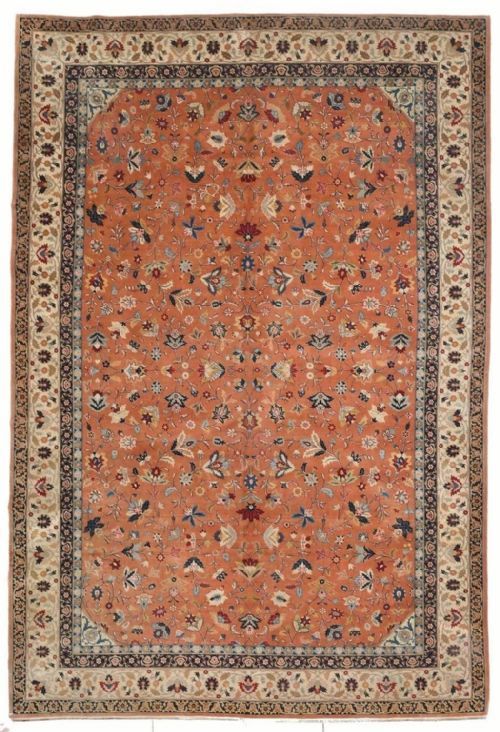


Cream Tabriz Carpet
A cream tabriz carpet brings refined Persian artistry to a room, offering dense wool pile and intricate floral design.
Cream Tabriz Carpet
A cream tabriz carpet represents a traditional Persian floor covering originating from North-West Persia. These pieces arrive in roomsize proportions and smaller area formats, suited to various interior layouts.
The aesthetic centres on traditional Persian floral medallion designs executed in soft pastel colours. Pieces span from the late 19th century through to the 1930s, displaying enduring craftsmanship.
Buyers encounter examples categorised under styles such as Persian Traditional and Persian Qajar alongside standard Tabriz designations. Each rug demonstrates the established weaving traditions of the region.
How they were made
These carpets utilise wool for the substantial pile, providing a dense and durable surface underfoot. Cotton forms the foundation structure, offering stability and strength to the overall weave.
Weavers employed traditional knotting techniques characteristic of North-West Persia to achieve detailed floral motifs. Natural dyeing methods produced the soft pastel colour palettes seen across the period examples.
Some carpets arrive carrying the distinguished signature of Benlian or Hajji Jalili in their attributed weaves.
What varies in quality
Quality rests in the precision of the woven floral medallion design and the finesse of the pile. Finer knot counts allow for sharper botanical detail and greater definition in the pattern.
The handling of the wool and the subtlety of the pastel colour palette distinguish the superior examples. Maker attribution also plays a role, with specific workshops commanding higher regard for their artistic output.
Benlian·Hajji Jalili
The Cream Tabriz Carpet Glossary
- Tabriz
- A type of Persian carpet originating from the city of Tabriz in North-West Persia. These pieces are known for fine knotting and sophisticated floral designs.
- Medallion
- A central ornamental motif set within the field of a carpet. This design element anchors the symmetrical layout of traditional Persian rugs.
- Pile
- The vertical or slanted yarn that forms the textured surface of a carpet. Wool pile provides both comfort and durability to older roomsize rugs.
- Qajar
- A Persian dynastic period associated with specific artistic styles in textiles and carpets. Pieces from this era reflect the court aesthetics of the time.
Cream Tabriz Carpet: Frequently Asked Questions
How do I date a tabriz carpet?
Dating relies on stylistic markers, material analysis, and historical attribution to periods like the late nineteenth century or the 1930s. Certain workshops and structural traits provide clear chronological clues.
Examining the specific floral medallion designs and the palette of soft pastel colours helps narrow down the decade of production. Comparative study with documented pieces confirms the era.
Where were these carpets made?
These floor coverings were woven in Tabriz, located in North-West Persia. This city has a long history as a major centre for carpet production.
Master weavers in the region produced both roomsize carpets and smaller area rugs for domestic use and export. Their output defined traditional Persian weaving standards.
What materials make up the pile?
The pile is constructed from wool, chosen for its resilience and ability to hold dye. This provides a soft yet durable surface for daily use.
Beneath the pile, cotton serves as the foundation warp and weft. This combination ensures structural stability across large dimensions.
How do I style a large roomsize carpet?
A large roomsize piece anchors the furniture arrangement in a reception room or study. Placing the front legs of seating upon the edge integrates the rug into the space.
The neutral cream ground and soft pastel colours allow the carpet to complement both period furnishings and contemporary interiors.