


Cream Silk Suzani
A cream silk suzani brings tactile Central Asian folk art into a room, offering richly embroidered textile panels that catch the eye immediately.
Cream Silk Suzani
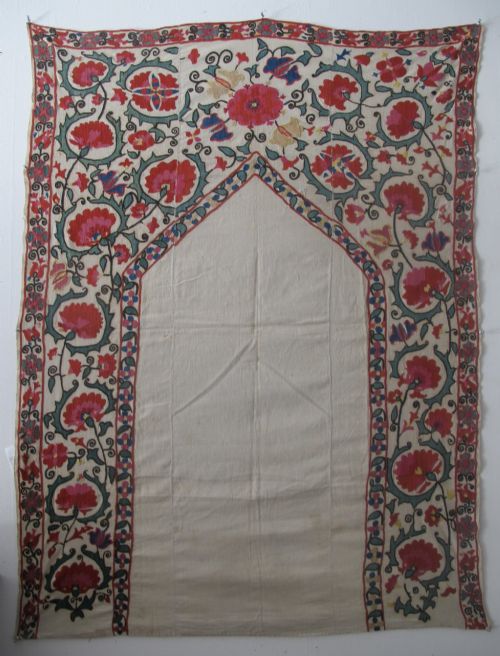
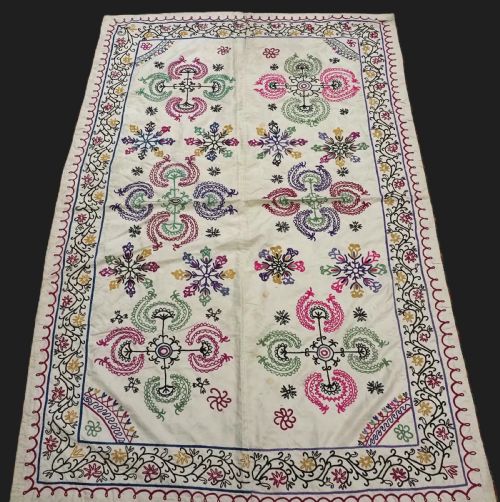
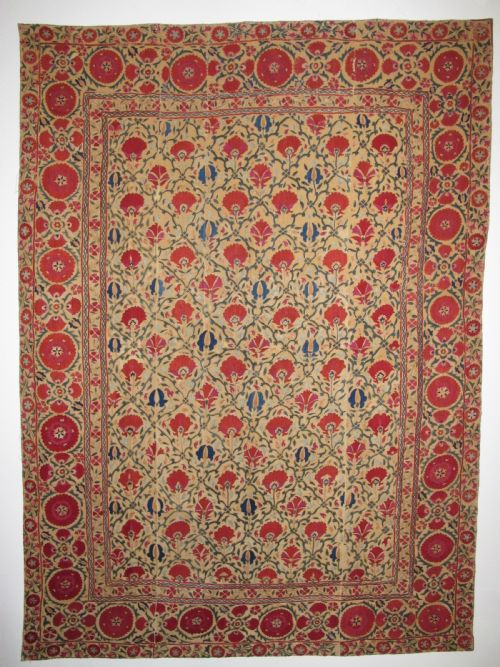
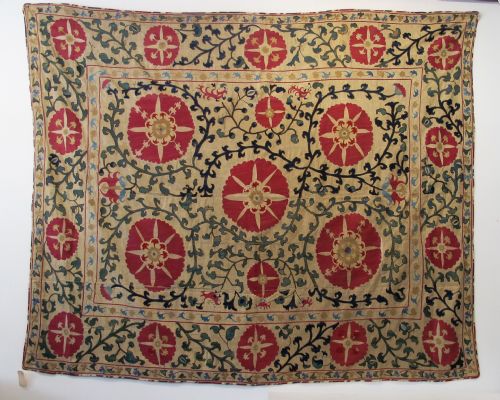
When searching for a cream silk suzani, buyers encounter traditional Central Asian textiles originating from historic centres such as Bokhara, Samarkand, Nurata, and Ura Tube. These decorative wall hangings and tapestries showcase intricate needlework produced across the nineteenth and early twentieth centuries, spanning periods from roughly eighteen fifty to nineteen thirty.
The pieces on this page are predominantly Uzbek and Tajik tribal works, featuring classic formats including architectural designs, prayer formats, and smaller mounted panels. Most examples rely on a pale ground fabric that allows the vibrant silk thread embroidery to stand out clearly against the neutral backdrop.
Quality variations in needlework
Quality in these textiles depends heavily on the density and precision of the silk thread embroidery. Finer examples display meticulous stitch work and balanced composition across large formats, whereas simpler pieces utilise broader, less intricate patterns.
The complexity of the regional design also distinguishes individual works, with sophisticated architectural and prayer formats representing a higher tier of traditional craftsmanship compared to standard field patterns.
Nomadic embroiderers often left deliberate tiny imperfections in their repeating patterns to ward off the evil eye and honour absolute perfection as the domain of the divine.
The Cream Silk Suzani Glossary
- Suzani
- A type of embroidered tribal textile originating from Central Asia, traditionally made as part of a bride's dowry. These pieces are typically worked in silk thread on a cotton or linen ground.
- Nim-Suzani
- A half-size or smaller format suzani, useful for compact spaces where full-sized wall hangings prove too large. They feature the same traditional embroidery techniques as their larger counterparts.
- Prayer format
- A textile layout incorporating a mihrab or arch design traditionally associated with prayer rugs. In suzanis, this motif frames specific symbolic embroidery.
- Bokhara
- A major historic centre for textile production in Uzbekistan, renowned for distinctive regional embroidery styles and finely worked floral motifs.
Cream Silk Suzani: Frequently Asked Questions
How do I hang a suzani?
Most collectors mount these textiles onto a padded wooden batten or frame them behind glass to protect the delicate silk threads from dust and tension. Hanging them flat distributes the weight evenly across the cotton or linen ground cloth.
Ensure you position the textile away from direct sunlight to prevent the natural dyes in the embroidery from fading over time.
What is a nim-suzani?
A nim-suzani is simply a smaller version of the standard wall hanging, usually measuring around half the surface area of a full-sized piece. These smaller formats were often made for specific domestic spaces or as quicker commissions.
They offer the same intricate silk embroidery and regional motifs as larger examples but fit more easily into modern residential interiors.
Where were suzanis made?
These embroidered panels were produced across Central Asia, primarily within regions that now form modern Uzbekistan and Tajikistan. Historic towns such as Bokhara, Samarkand, and Nurata developed distinct local styles.
Each region favoured specific motifs, colour palettes, and compositional structures, allowing knowledgeable collectors to identify the origin of a particular piece.
Are suzanis fragile?
While the ground fabrics are typically sturdy cotton or linen, the silk embroidery threads can be susceptible to abrasion if handled roughly. Gentle care ensures these historic textiles remain stable over decades of display.
Avoid folding the pieces repeatedly along the same crease lines, as this stresses the historic thread work and the surrounding foundation fabric.