




Cream Satsuma Ware
Cream satsuma ware brings together earthenware bodies, fine enamel, and gold leaf in Japanese vessels from the Meiji period and the early twentieth century.
Cream Satsuma Ware
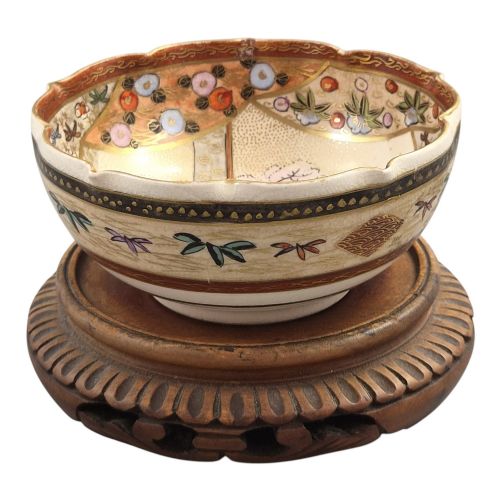
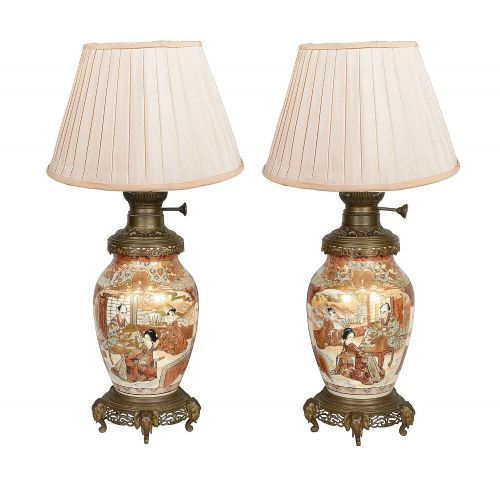
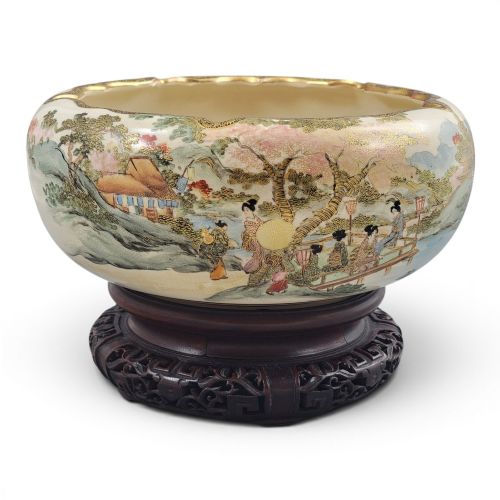
Cream satsuma ware comprises Japanese ceramic vessels, figures, and decorative objects made primarily during the Meiji period and subsequent Taisho and Showa eras. These pieces range from miniature vases and shallow dishes to monumental jars, table lamps, and okimono figures.
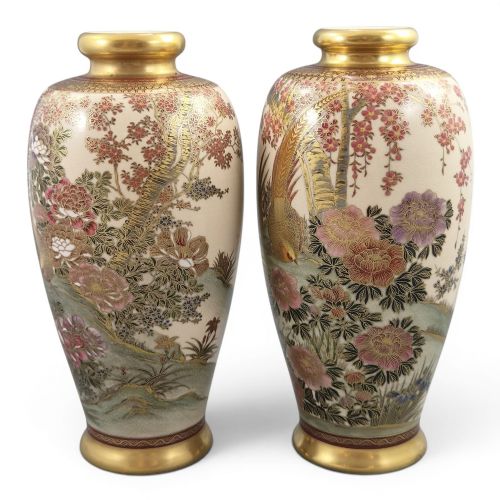
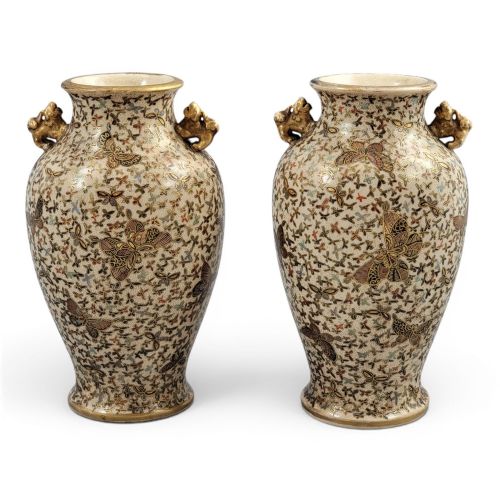
Vessels carry intricate hand-painted scenes featuring flowers, birds, landscapes, and figural processions set against a distinctive cream-coloured crackle glaze. Buyers encounter items originating from major production centres such as Kyoto and Kobe, often bearing artisan signatures and family crests.
How they were made
Potters shaped the earthenware bodies before applying a characteristic ivory-toned glaze that cooled to form a fine network of surface crazing. Artisans then hand-painted detailed polychrome enamels directly onto this crackled ground.
Workers added extensive gold leaf and gilt detailing to accentuate robes, borders, and motifs. Wood, brass, and silk elements frequently appear in fitted lamp conversions and decorative additions.
Elephants and guardian lions share shelf space with butterflies and tea jars.
What varies in quality
Quality rests upon the precision and density of the hand-painted enamel work and the delicacy of the gilding. Master artisans executed complex figural scenes and layered landscapes with remarkable clarity.
The fineness of the crackle glaze and the presence of recognised signatures from celebrated workshops or makers distinguish exhibition-grade pieces from standard commercial output.
Manpei·Kinkōzan·Kinzan·Shizan·Chosei·Kizan·Seiko-en Chokei·Yamashu·Nikko·Hakusan·Tagawa·Hododa·Kotobuki-do·Tokyo Taizan·Meizan·Shozan·Hattori·Ippo·Taniguchi
The Cream Satsuma Ware Glossary
- Okimono
- A Japanese freestanding decorative figurine designed for display on a shelf or in a tokonoma alcove. These carved or ceramic figures often depict deities, historical figures, or everyday subjects.
- Koro
- An incense burner featuring a perforated lid to allow scented smoke to escape. They frequently stand on three feet and incorporate guardian lion handles.
- Shimazu Mon
- The heraldic badge or crest of the Shimazu clan, featuring a cross within a circle. This mark commonly appears on Satsuma ware associated with the Satsuma Domain.
- Meiji Period
- The era of Japanese history lasting from 1868 to 1912, marked by the reign of Emperor Meiji. Pieces from this period often display elaborate craftsmanship geared toward export markets.
Cream Satsuma Ware: Frequently Asked Questions
What is cream satsuma ware?
Cream satsuma ware consists of Japanese earthenware pottery characterised by an ivory-toned, crackled glaze painted with polychrome enamels and gold leaf.
These decorative objects and vessels were produced extensively during the Meiji period and early twentieth century for both domestic use and export.
How do I identify a Meiji period piece?
Meiji period items typically display exceptional detail in their hand-painted enamel scenes and often carry artist signatures or workshop marks on the base.
The materials combine earthenware bodies with fine gilding, reflecting the decorative standards of late nineteenth-century Japanese craftsmanship.
How do I care for satsuma items?
Keep these fragile earthenware vessels away from direct sunlight and excessive moisture to protect the delicate enamel and gold leaf decorations.
Dust them gently with a dry, soft cloth rather than using liquid cleaning agents that could penetrate the crackled glaze.