

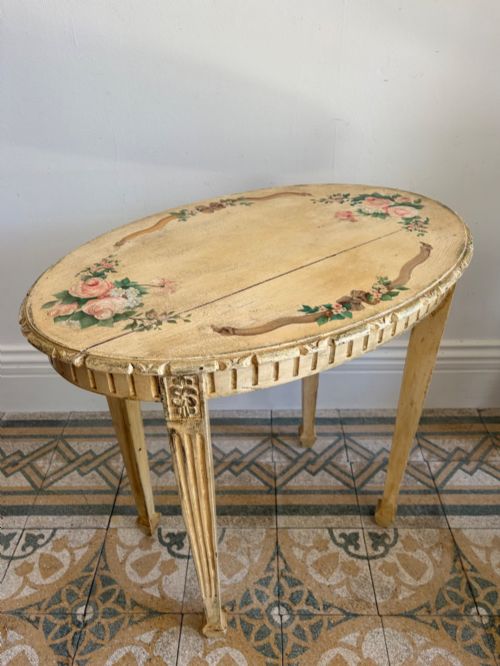
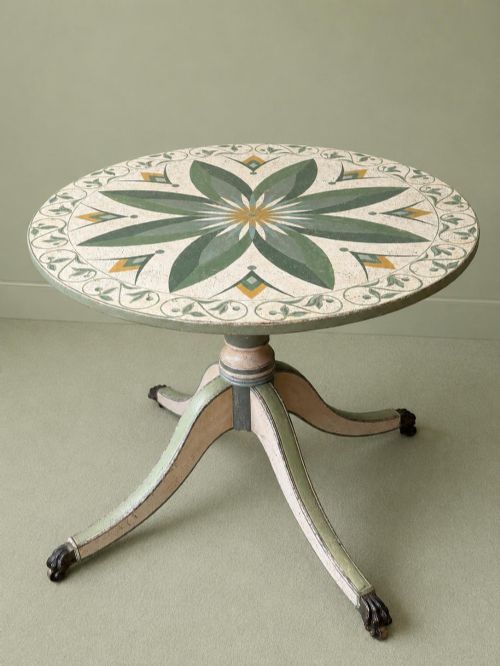
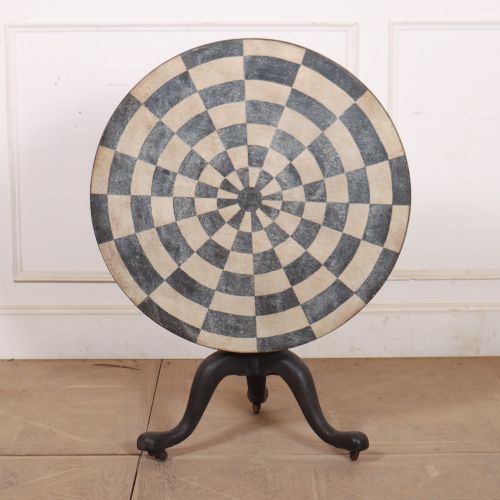
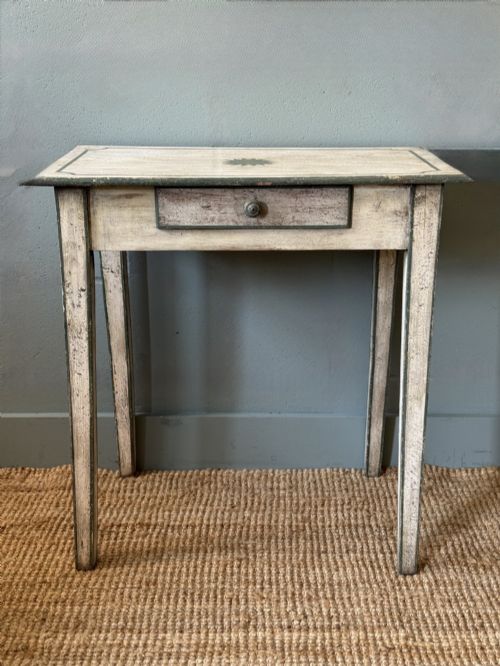
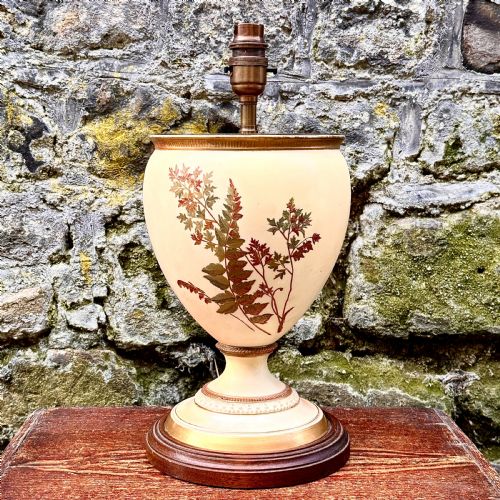
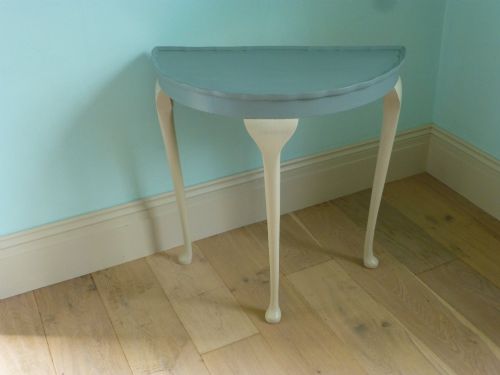


Cream Painted Accent Table
These cream painted accent table pieces offer practical surface space and painted charm, drawing on 18th century, Victorian, Edwardian, and later traditions.
Cream Painted Accent Table
A cream painted accent table provides a functional surface for lamps, books, and daily items while introducing a soft painted finish to a room. These pieces appear across various forms such as side tables, occasional tables, console tables, and lamp tables.
The selection on this page draws from the 18th century, 19th century, Victorian, Edwardian, and periods like 1900, 1910, 1920, and 1930. French Provincial, French Chateau, Georgian, Queen Anne Style, and Venetian Revival styles shape many of the designs.
Visitors are most likely to encounter painted wood and timber items featuring surface decoration, sometimes paired with marble, brass, gesso, or gold leaf. Alongside standard tables, the current inventory includes stools, table lamps, and centre tables.
Materials and construction
Makers built these pieces primarily using wood, timber, and fruitwood as a structural base for subsequent painting. Artisans applied paint directly to the wooden surfaces, often layering tones to achieve the desired cream finish.
Detailing on these items frequently incorporates gesso and gold leaf to highlight carved motifs and edges. Certain pieces integrate marble tops or brass hardware, combining solid timber foundations with decorative surface materials.
Cream Painted Accent Table Retail Price Guide 2026
Typical asking prices for cream painted accent table among the pieces listed under this phrase on Sellingantiques today, from the lower quarter to the upper quarter. They describe what is for sale here now, not the wider market.
Listings span the 18th century through 1930, uniting painted wood, marble, brass, and gold leaf across side, console, and lamp table forms.
Quality variations
The sophistication of the painted surface work distinguishes different grades of these tables. Hand-applied paint finishes with nuanced tonal depth sit above uniform or flat modern applications.
Structural integrity depends on the underlying timber joinery and the preservation of original materials like brass fittings and marble inserts. Tables that retain their early painted surfaces alongside stable frames hold greater interest.
The Cream Painted Accent Table Glossary
- Demilune
- A half-moon shape used for console tables designed to sit flush against a wall. This profile saves floor space in hallways and reception rooms.
- Gesso
- A plaster-like material applied to wood as a base for painting or gilding. It provides a smooth surface for detailed ornamentation.
- Tripod table
- A small freestanding table supported by a pillar above three legs. Many historical examples feature tilt-top mechanisms for storage.
- Parcel gilt
- A decorative technique where selected areas of an object are covered in gold leaf. This highlights specific carved details against a painted background.
Cream Painted Accent Table: Frequently Asked Questions
How do I use a cream painted accent table?
These tables function well beside seating to hold lamps, drinks, or decorative objects. Console and hall variants suit narrow transition spaces.
Their compact dimensions allow them to move easily between rooms as requirements change.
What periods do these tables come from?
The available pieces span the 18th century, the Victorian era, the Edwardian period, and the early decades of the 20th century including 1900, 1910, 1920, and 1930.
Stylistic influences range from French provincial designs to Georgian and Venetian revival aesthetics.
What materials are used on these tables?
Construction relies primarily on wood, timber, and fruitwood finished with paint. Selected pieces incorporate brass hardware, gesso detailing, gold leaf, or inset marble tops.
Surface finishes range from simple painted wood to ornate Italian and French decorative schemes.
How do I care for a painted wood surface?
Dust the surface regularly with a soft, dry cloth to prevent dirt accumulation. Avoid harsh chemical cleaners that can damage historical paint layers.
Keep tables away from direct heat sources and strong sunlight to protect the painted finish.