




Cream Geometric Tribal Rug
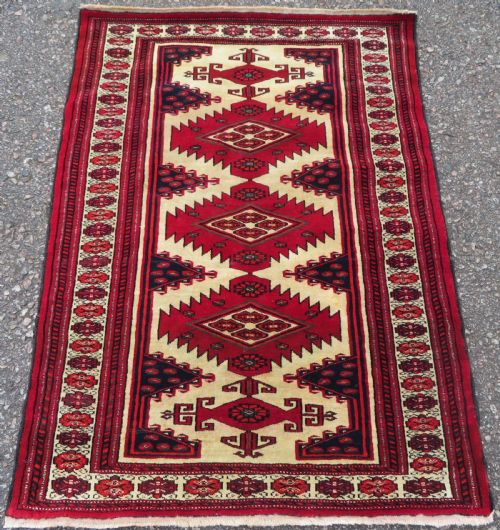
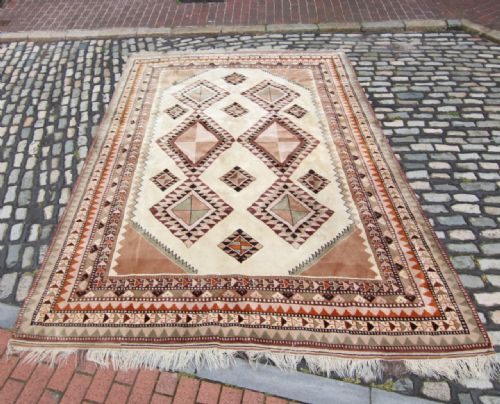
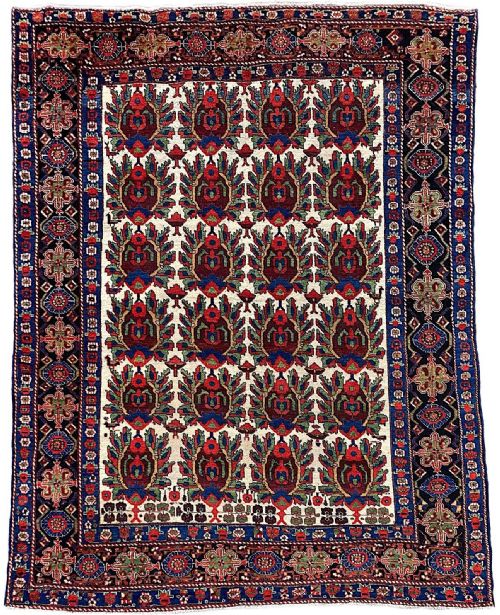
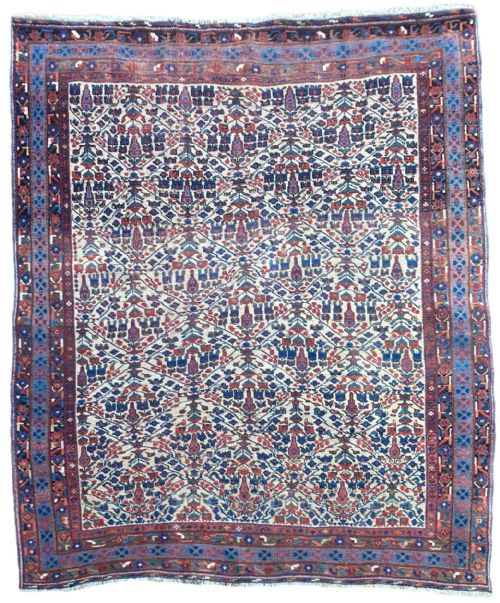
A cream geometric tribal rug delivers warm neutral tones alongside the strong, symbolic patterns woven by nomadic and village makers.
Cream Geometric Tribal Rug
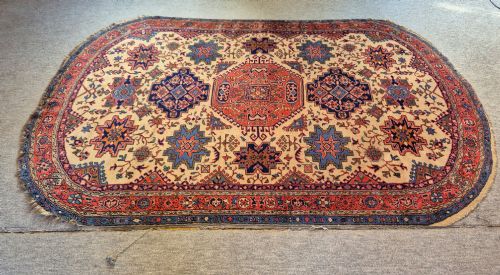
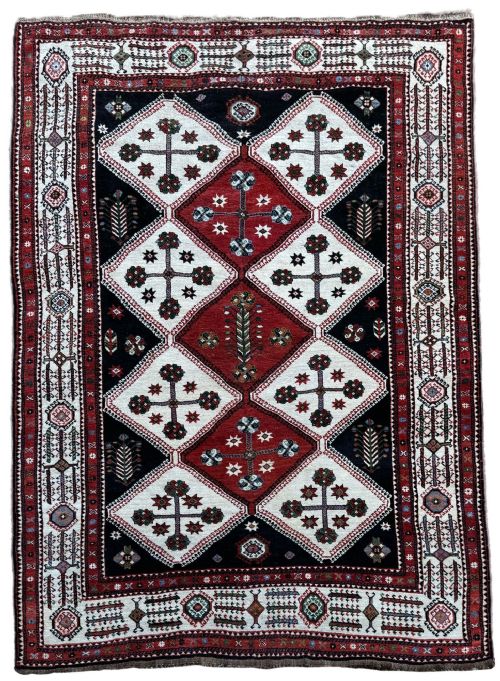
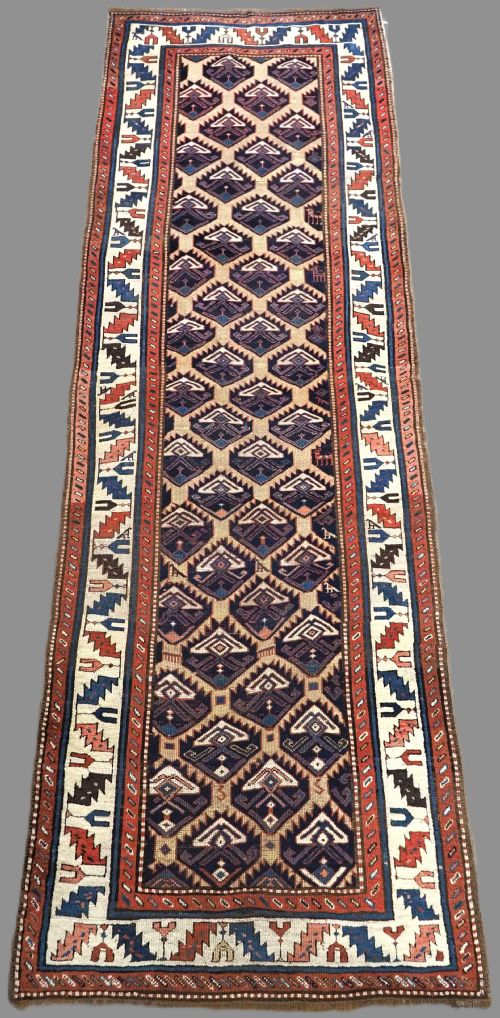
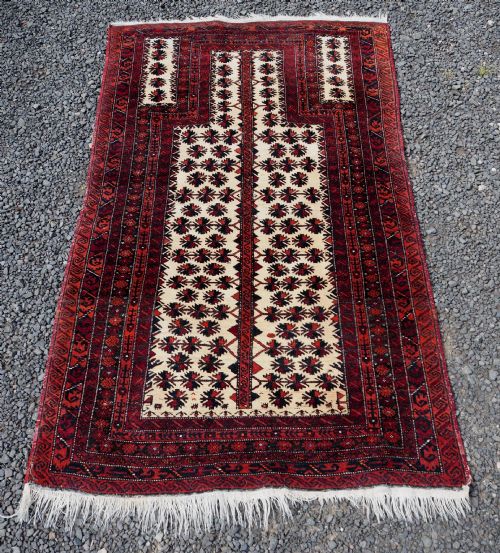
A cream geometric tribal rug brings together light-ground village and nomadic weaving traditions from Persia, the Caucasus, Anatolia and Central Asia. These textiles span periods from the mid nineteenth century through to the early decades of the twentieth century, taking forms such as area rugs, runners, prayer rugs and flatwoven kilims.
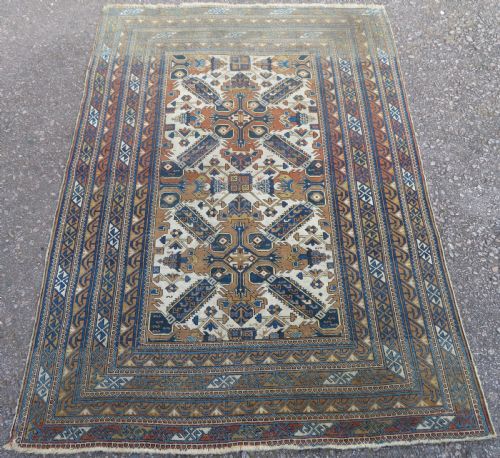
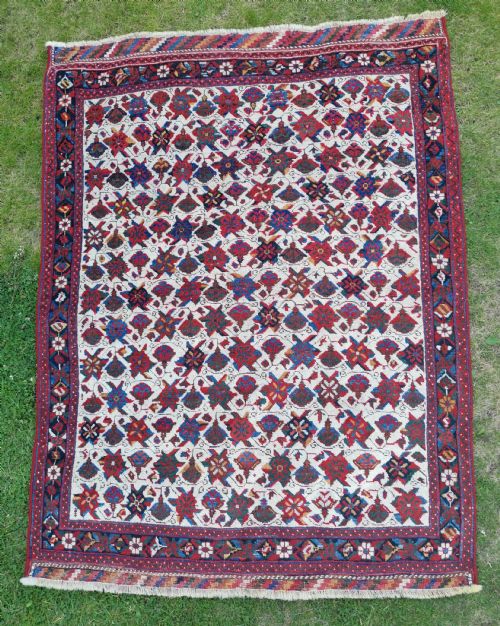
Buyers seeking a cream geometric tribal rug will encounter pieces featuring lattice designs, medallions and tribal motifs set against pale ivory or cream backgrounds. The selection leans heavily into regional styles including Afshar, Kurdish, Bakhtiar, Heriz and Shirvan village or nomadic production.
Beyond standard floor coverings, the category encompasses utilitarian items adapted into decorative textiles, such as bread sofrehs, horse blankets, bag face cushions and tent bands. Each format preserves the practical geometry and regional coloration characteristic of traditional tribal weaving.
Assessing quality in regional weavings
Quality rests in the precision of the geometric layout and the handling of the ivory or cream ground field. Tighter knot counts and secure structural foundations separate finely executed village and nomadic pieces from coarser utilitarian grades.
The nuance and depth of the natural dyes used for the motifs dictate visual success. Subtle shifts in colour within the wool indicate skilful dye baths, while crisp delineation of lattices and tribal symbols elevates the stature of the textile.
Listings feature village and nomadic weavings spanning from the mid nineteenth century to 1930, constructed predominantly from wool, cotton and natural dyes.
The Cream Geometric Tribal Rug Glossary
- Kilim
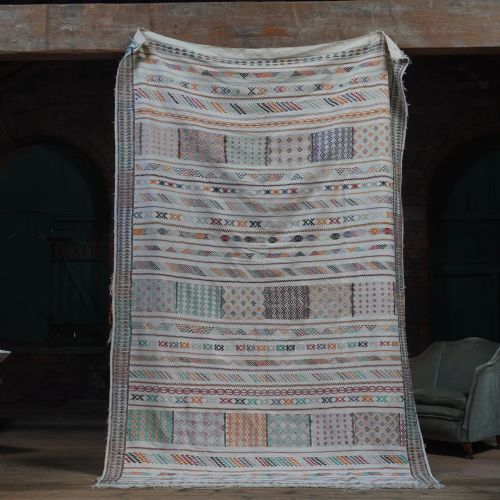
- A flatwoven textile produced without a pile by tightly interweaving warp and weft threads. These pieces often display sharp geometric patterns and lighter structures.
- Prayer rug
- A small carpet featuring a mihrab or niche design used historically for daily devotions. These items frequently highlight specific regional motifs on ivory fields.
- Runner
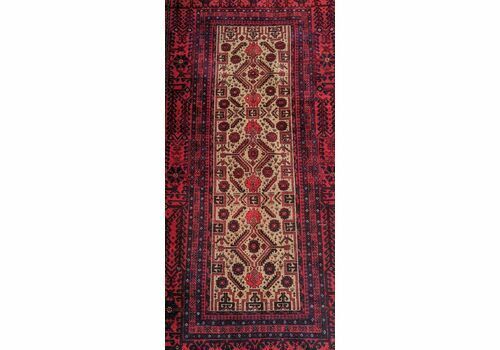
- A long, narrow carpet format designed for hallways, corridors or narrow spaces. They often showcase repeating lattice designs or medallions.
- Sofreh
- A cloth or spread traditionally used for serving bread or food within nomadic households. These woven items double as compact decorative carpets with strong tribal graphics.
- Warp
- The vertical foundation threads stretched tightly on a loom before weaving begins. The visible ends often terminate in fringes.
Cream Geometric Tribal Rug: Frequently Asked Questions
How do I clean an antique tribal rug?
Surface dust should be removed gently using a suction-only vacuum without a rotating brush bar. Professional antique textile cleaning is recommended for deeper maintenance to protect natural wool and traditional dyes.
Water exposure and standard household detergents can damage natural fibres or cause colour migration. Consult a specialist familiar with village and nomadic weaves before attempting any wet treatment.
Where were these geometric rugs made?
The pieces originate across a wide geographic expanse covering Persia, the Caucasus, Anatolia and Central Asia. Specific styles link to tribal groups such as the Afshar, Bakhtiari, Kurdish and Qashqai.
Village communities and nomadic confederations produced these textiles for personal use or local trade. Each region developed distinct structural habits and symbolic motifs that identify their origin.
Can I use a runner in a hallway?
Narrow formats and hallway runners are structured precisely for transitional spaces, corridors and stair landings. Their dimensions accommodate high-footfall areas while adding warmth to hard flooring.
Placing a suitable underlay beneath the textile prevents slipping and cushions the weave against hard subfloors. This extra layer reduces friction between the wool foundation and the floorboards.
What makes an ivory ground rug desirable?
Pale ivory and cream backgrounds provide high contrast for saturated natural dyes used in tribal medallions and lattice work. Lighter fields brighten interior spaces while framing intricate geometric compositions.
Finding an ivory ground from nineteenth or early twentieth-century village workshops appeals to collectors seeking neutral decorative foundations with historical depth.