
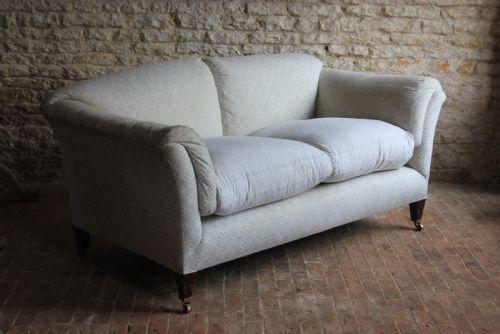


Cream Fabric Sofa
A cream fabric sofa brings nineteenth-century comfort and traditional craftsmanship into a modern room.
Cream Fabric Sofa
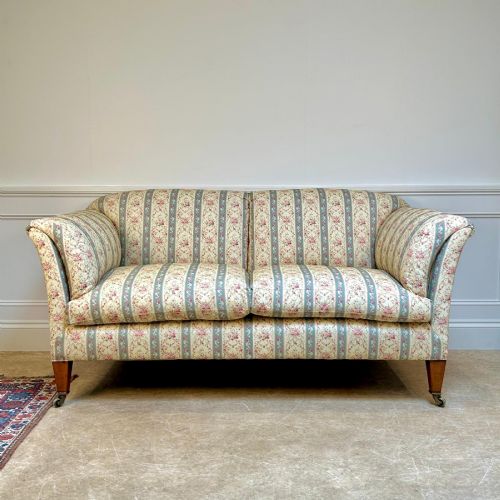
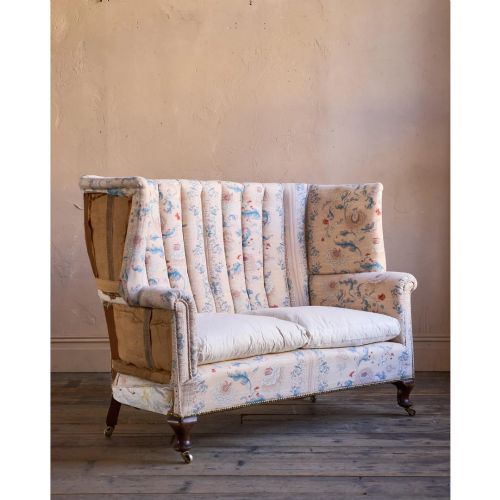
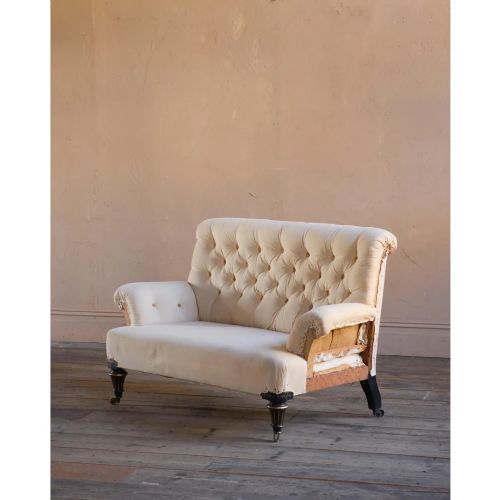
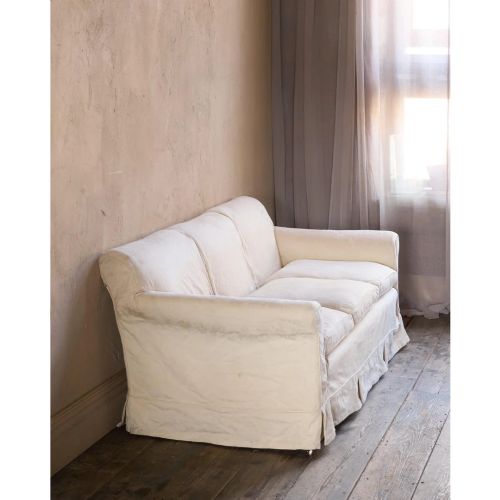
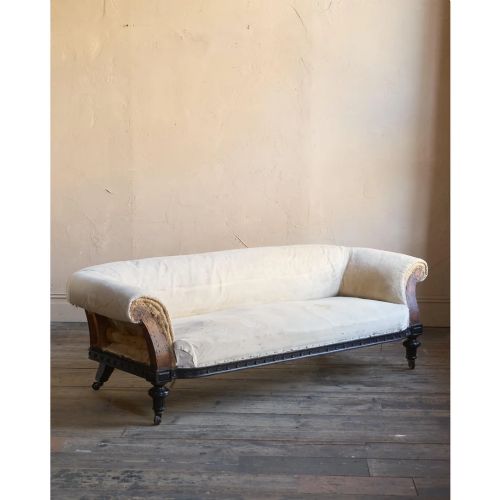
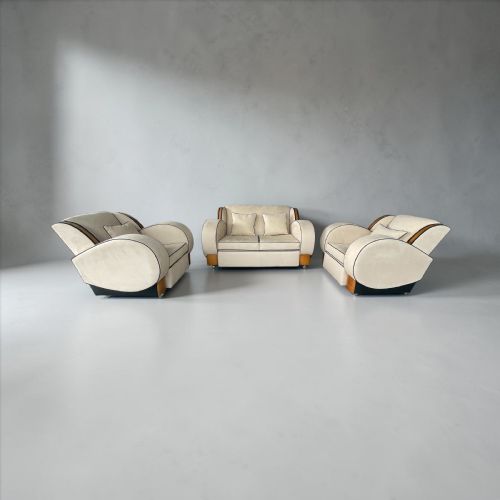
A cream fabric sofa encompasses nineteenth-century settees, Victorian scroll arm designs, and Edwardian country house seating upholstered in neutral calico, damask, or fabric. Buyers seeking a cream fabric sofa encounter diverse historical forms ranging from walnut chaise longues to mahogany camel back settees and Louis XV style painted canapes.
The selection includes nineteenth-century pieces alongside Edwardian and Art Deco seating, reflecting styles from George III revivals to Aesthetic Movement ebonised frames. Many examples display exposed timber frames in mahogany, walnut, or painted wood paired with soft upholstered cushions and seating areas.
Materials and construction
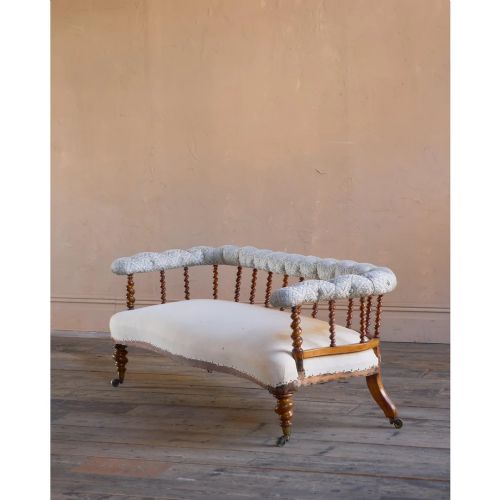
Frames are constructed from solid hardwoods such as mahogany, walnut, and timber, frequently featuring carved details, fluted elements, or brass castors and lion paw feet. Wood sections are shaped into spindle backs, scroll arms, or cabriole legs characteristic of Victorian, Edwardian, and earlier revival periods.
Upholstery relies on traditional textiles including fabric, calico, damask, and upholstery fabric stretched over supportive internal lining and padding. Structural integrity depends upon sturdy wooden joinery and hand-finished woodwork supporting the upholstered body.
Listings feature eighteenth-century revival styles alongside nineteenth-century Victorian, Edwardian, and Art Deco periods utilising mahogany, walnut, brass, and fabric.
Assessing craftsmanship and condition
Quality separates through the crispness of timber carving, the choice of dense mahogany or walnut framing, and the integrity of internal webbing and stuffing. Finer pieces demonstrate precise joinery, balanced proportions, and high-grade textile selection.
The distinction between standard production and superior craftsmanship rests in the weight of the frame, the retention of original brass hardware or castors, and the harmony of period styling such as inlay or painted finishes.
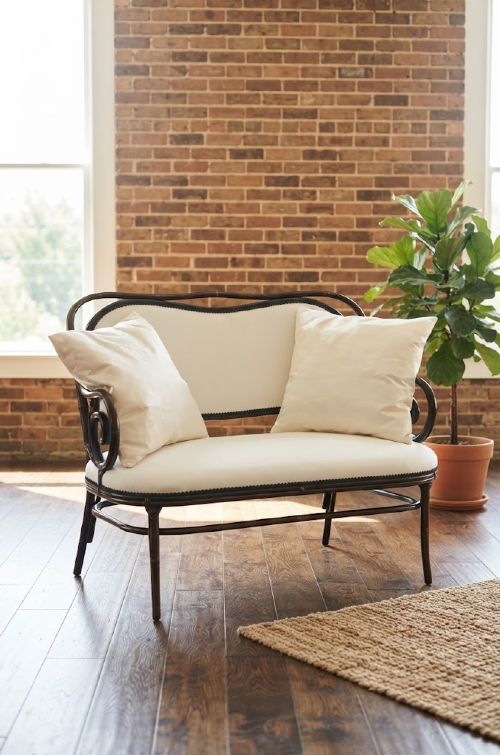
Thonet·Howard & Sons·C. Hindley & Sons·Jackson and Graham
The Cream Fabric Sofa Glossary
- Calico
- A plain-woven unbleached textile often used as a base upholstery layer or primary covering on traditional sofas. It provides a neutral, durable surface suited to heritage seating.
- Camel back
- A classic sofa silhouette featuring a graceful, undulating curved top rail that resembles the hump of a camel. This profile gained popularity during the eighteenth century and subsequent revival periods.
- Chaise longue
- An elongated upholstered seat designed for reclining, combining elements of a chair and a day bed. Nineteenth-century examples frequently feature carved walnut or mahogany frames.
- Canape
- A French upholstered settee or sofa characterised by an exposed wooden frame, often carved and painted. These pieces follow historical design idioms like Louis XV and Louis XVI styles.
- Wingback
- An armchair or sofa style featuring protective side panels attached to the backrest. These wings historically blocked draughts and retained heat around the seated person.
Cream Fabric Sofa: Frequently Asked Questions
How do I clean a vintage fabric sofa?
Historic upholstery requires careful vacuuming using a low suction attachment with a soft brush guard to remove surface dust without straining the fabric. Professional dry cleaning is recommended for spot removal to protect older textiles.
Avoid using harsh household detergents or soaking the fabric with water, as moisture can damage internal stuffing and wooden frames. Test any cleaning method on a hidden underside area first.
Are these sofas comfortable for daily use?
Period sofas offer firm traditional support derived from coil springs, webbing, and horsehair or cotton stuffing. They provide a distinct seating experience compared to modern foam-filled furniture.
Many buyers use them in living rooms, studies, or hallways where their supportive build suits regular seating. Adding scatter cushions can adjust the depth to personal preference.
How do I identify a Victorian sofa?
Victorian sofas typically feature dark hardwoods such as walnut or mahogany with heavy carving, buttoned upholstery, and scrolled or curved arms. They often rest on turned wooden legs fitted with brass castors.
Construction methods visible underneath, such as hand-tied springs and traditional webbing, help confirm the nineteenth-century manufacturing period alongside stylistic clues.
Can I reupholster an antique settee?
Reupholstering allows you to refresh worn fabric while preserving the underlying wooden frame and traditional spring system. Skilled restorers retain original tacks and inner padding where possible to maintain historical integrity.
Choosing neutral fabrics like calico or linen respects the traditional aesthetic of nineteenth-century seating while adapting the piece to contemporary interiors.