


Cream Fabric Mahogany Chair
A cream fabric mahogany chair offers a traditional seating option, combining sturdy timber frames with neutral upholstered finishes for domestic spaces.
Cream Fabric Mahogany Chair
When you search for a cream fabric mahogany chair, you encounter a variety of period seating types built from dark timber and paired with lighter textiles. These pieces range from single armchairs and compact nursing chairs to sets of dining chairs and multi-piece settees originating across the eighteenth, nineteenth, and twentieth centuries.
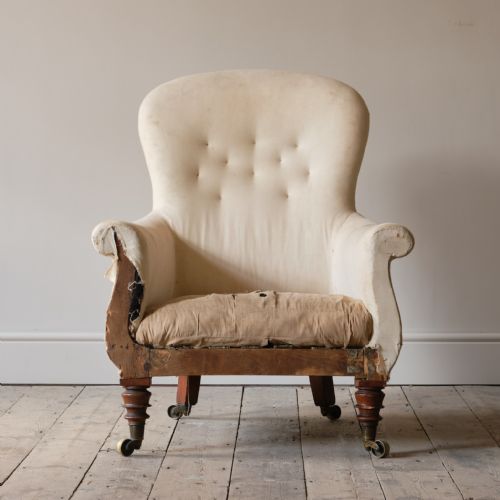
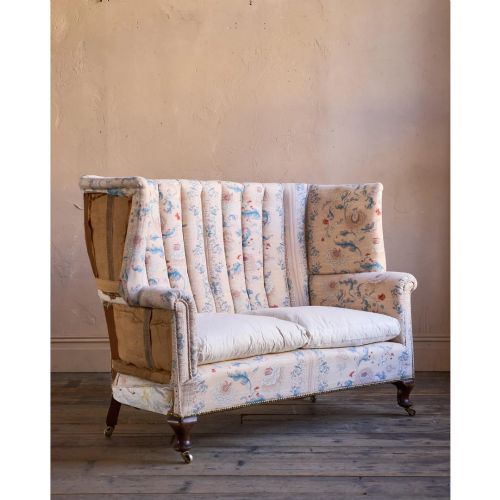
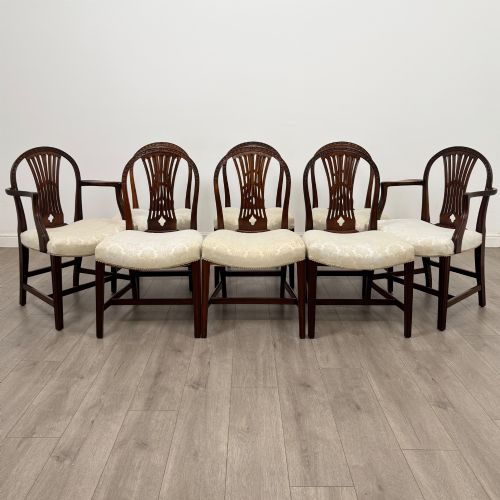
The most common formats on this page include nineteenth-century armchairs with exposed show frames, Edwardian inlaid tub chairs, and various revival dining seats. Makers utilised classic silhouettes such as the shield back, barrel back, and wingback, finished in neutral cotton, calico, or general upholstery.
Dating spans from Georgian and Regency forms through Victorian interpretations and later mid-twentieth-century productions. These items function well as functional seating or decorative accents in sitting rooms, libraries, and studies.
How they were made
The primary structural material is mahogany timber, often shaped into cabriole legs, carved open armframes, or inlaid surfaces. Workshops used solid wood to construct durable frames capable of supporting heavy upholstery.
Seating portions incorporate fabric, cotton, calico, and traditional padding secured over timber foundations. Brass components such as castors also appear on specific nineteenth-century library and armchair designs.
Available forms include armchairs, dining chairs, settees, tub chairs, and nursing chairs.
What varies in quality
The standard of carving and timber selection differentiates basic utility seating from high-end parlour pieces. Finely figured mahogany grain, intricate hand-carved details, and substantial proportions indicate superior craftsmanship.
Makers' marks, original castors, and intact period show frames elevate the desirability of individual armchairs and settees. The integration of satinwood inlay or specialised upholstery themes further distinguishes finer examples.
Hamptons and sons·Howard and Sons
The Cream Fabric Mahogany Chair Glossary
- Show frame
- A wooden structural framework left exposed around the upholstered portions of an armchair or settee. This mahogany border defines the silhouette of Victorian and Edwardian seating.
- Shield back
- A chair back shaped in the outline of a heraldic shield, commonly found on dining chairs from the eighteenth century onwards. This design gained popularity through Sheraton and Hepplewhite styles.
- Tub armchair
- A rounded seat where the arms curve continuously into the backrest to form a protective enclosure. Edwardian versions frequently incorporate inlaid mahogany decoration.
- Cabriole leg
- A furniture leg that curves outward at the knee and tapers inward toward the foot, inspired by animal limbs. Victorian mahogany chairs often utilise this classic form.
- Wingback
- An armchair featuring protective side panels attached to the backrest to deflect drafts. Nineteenth-century variants utilise deep buttoning and upholstered finishes.
Cream Fabric Mahogany Chair: Frequently Asked Questions
How do I date a mahogany chair?
Dating relies on examining the timber characteristics, construction methods, and stylistic cues present in the frame. Periods range from Georgian and Regency eras through Victorian and Edwardian revivals.
Specific details such as cabriole legs, inlaid satinwood, or maker stamps help narrow down the exact decade of manufacture.
Are these chairs comfortable for daily use?
Many nineteenth-century and Edwardian armchairs offer generous proportions and padded upholstery suitable for regular sitting. Barrel back and library chairs were specifically designed for extended periods of reading or relaxation.
Dining chairs and nursing chairs provide firmer support suited for their original domestic functions around the home.
What maintenance does cream fabric require?
Cream cotton, calico, and general upholstery fabrics benefit from regular gentle vacuuming to remove surface dust. Spot cleaning depends on the specific textile composition used in the individual piece.
Protecting the neutral fabric from direct sunlight prevents premature fading of the lighter textiles.
Can I mix different styles together?
Combining various periods such as Georgian dining chairs with later Victorian armchairs creates a layered interior look. Mahogany frames share a dark tonal quality that helps unify disparate seating types within a single room.
Matching timber finishes allow different chair styles to sit comfortably alongside one another.