

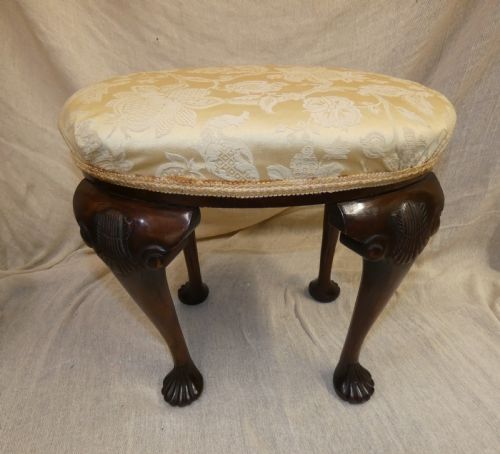

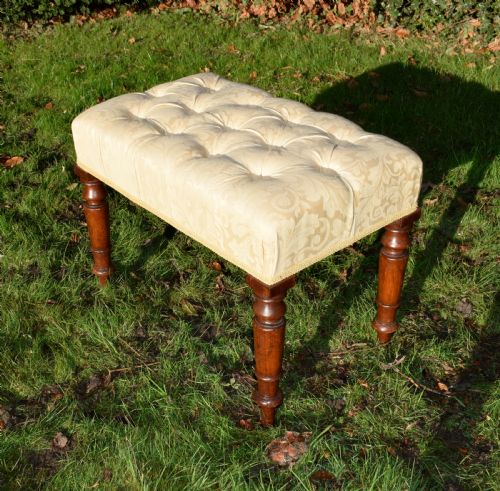


Cream Damask Footstool
These cream damask footstool examples bring period upholstery and timber framing together to anchor a room.
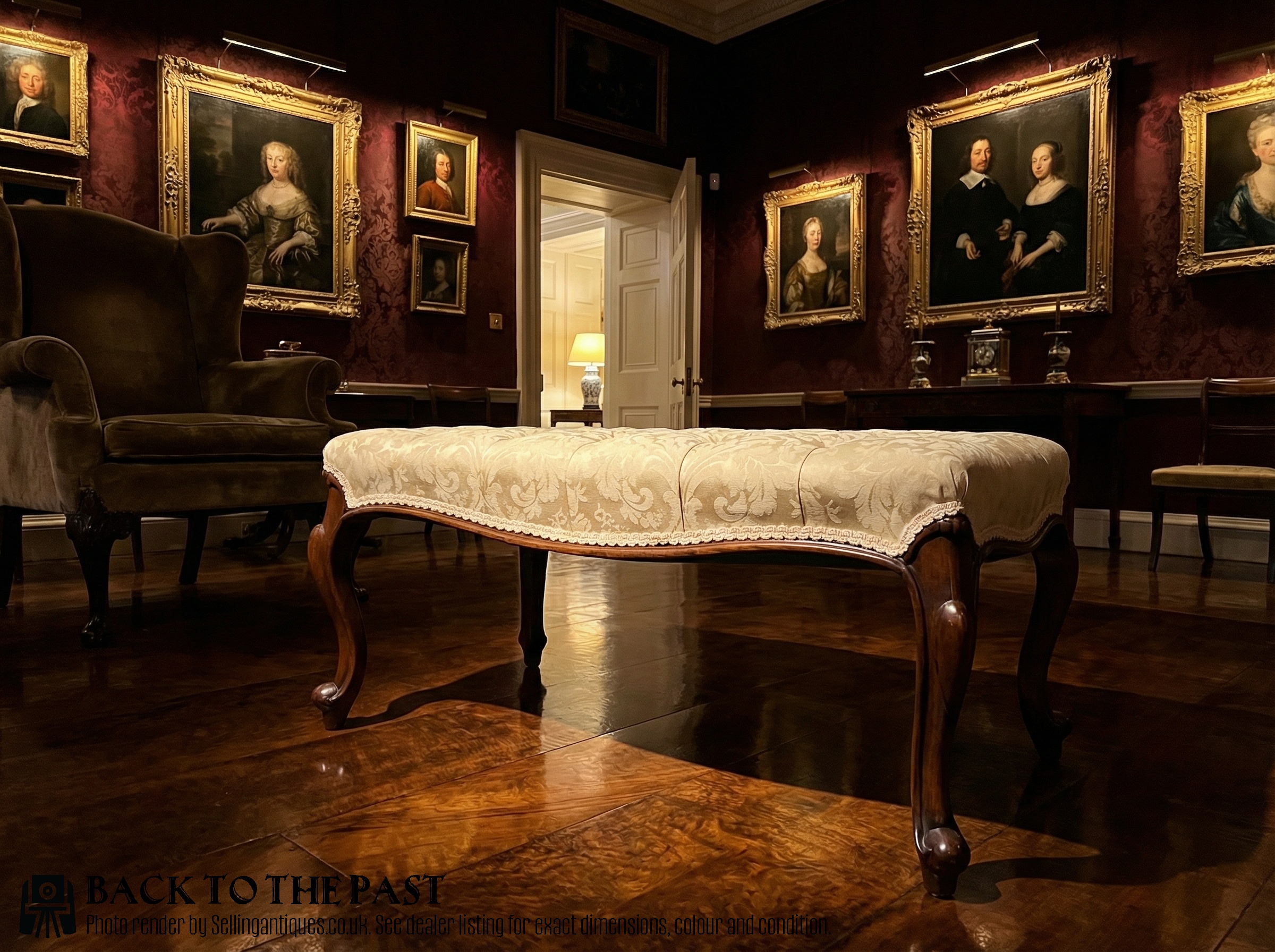
Cream Damask Footstool
A cream damask footstool combines patterned fabric upholstery with a timber or giltwood frame originating across the nineteenth and early twentieth centuries.
The selection ranges from Victorian buttoned stools and Regency mahogany square forms to Chippendale style and Louis XVI style revival pieces.
Makers utilised mahogany, walnut, painted wood, and giltwood for the bases, supporting dressing stools, boudoir stools, and larger ottoman forms.
Materials and construction
Frames rely on solid timbers such as mahogany and walnut, alongside carved giltwood and painted wood surfaces finished with turned or tapered legs.
Upholstery employs damask fabric, often featuring buttoning and detailed carving to the surrounding wooden chassis.
Cream Damask Footstool Retail Price Guide 2026
Typical asking prices for cream damask footstool among the pieces listed under this phrase on Sellingantiques today, from the lower quarter to the upper quarter. They describe what is for sale here now, not the wider market.
Listings span the nineteenth and twentieth centuries, uniting mahogany, walnut, and giltwood frames with damask fabric.
Judging quality in a cream damask footstool
Distinctions lie in the crispness of the timber carving, particularly on Chippendale or Baroque style frames where hand work defines the edge.
The choice of secondary woods and the precision of turned and tapered legs separate standard workshop output from finer nineteenth century items.
The Cream Damask Footstool Glossary
- Damask
- A reversible figured fabric traditionally woven on a jacquard loom with patterns that catch the light. It provides the characteristic textured surface seen on these footstools.
- Giltwood
- Timber coated with fine gold leaf or gilt preparation. This finish appears on Baroque and revival pieces.
- Regency
- A British architectural and decorative period dating from the early nineteenth century. Pieces from this era often feature clean lines and mahogany frames.
- Chippendale Revival
- A later nineteenth century style reinterpreting mid eighteenth century motifs. It typically includes carved mahogany woodwork.
Cream Damask Footstool: Frequently Asked Questions
What periods do these footstools date from?
The pieces span the nineteenth century, including Regency and Victorian eras, alongside early twentieth century examples.
Revival styles from these periods draw on earlier Chippendale, Baroque, and Louis XVI designs.
How do I care for damask upholstery?
Damask fabric benefits from gentle surface brushing and careful vacuuming using a low suction attachment.
Protecting the textile from direct sunlight preserves the woven pattern and cream colour.
Are these stools sturdy enough for daily seating?
Most examples utilise solid timber frames such as mahogany and walnut constructed for regular use.
Their primary function as footstools or dressing stools suits domestic placement in living spaces and bedrooms.
How do I identify a revival style?
Revival pieces combine nineteenth century manufacturing methods with decorative motifs borrowed from earlier centuries.
Characteristics include specific carving details reminiscent of Louis XVI or Chippendale aesthetics applied to later timber frames.