


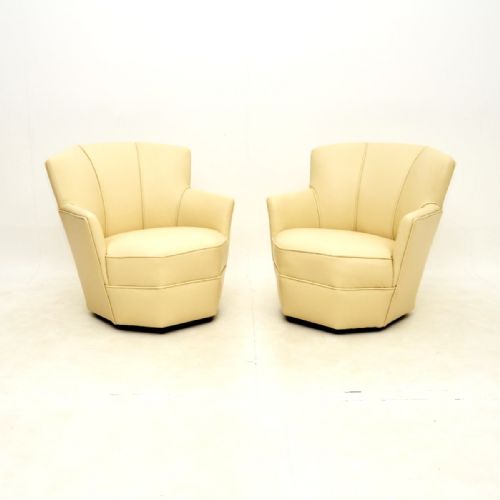
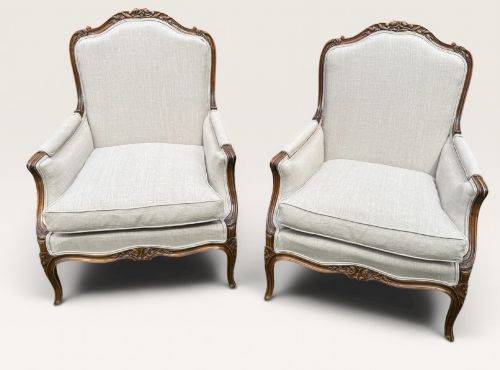
Cream Club Chairs
Cream club chairs are substantial upholstered armchairs built for comfort, and this selection ranges from 1930s Art Deco designs to Victorian framing.
Cream Club Chairs
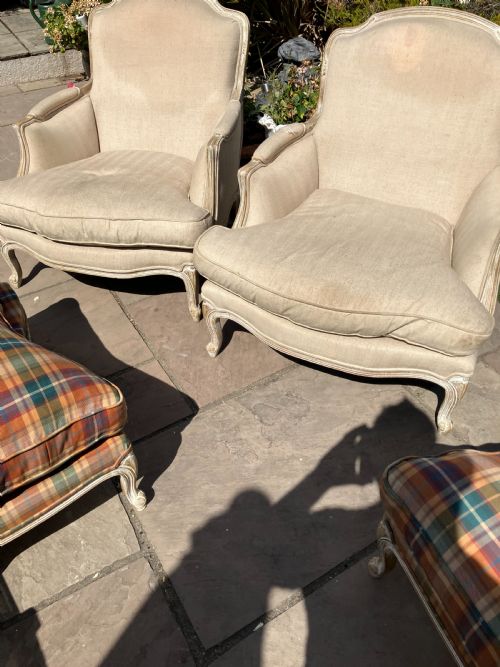
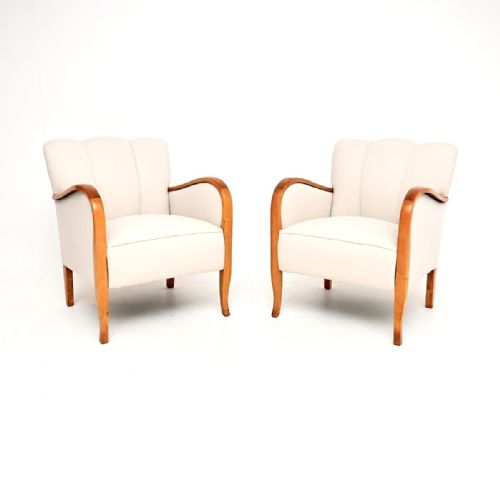
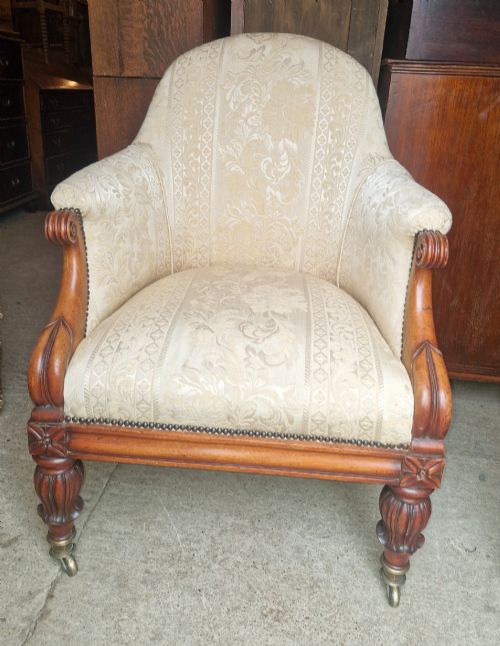
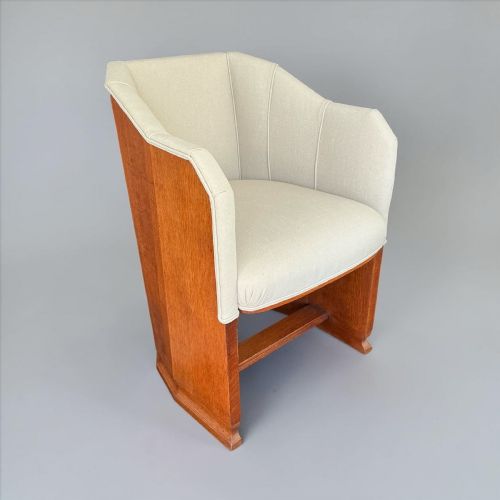
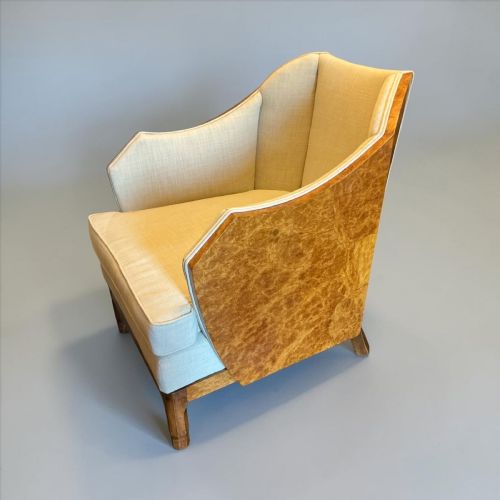
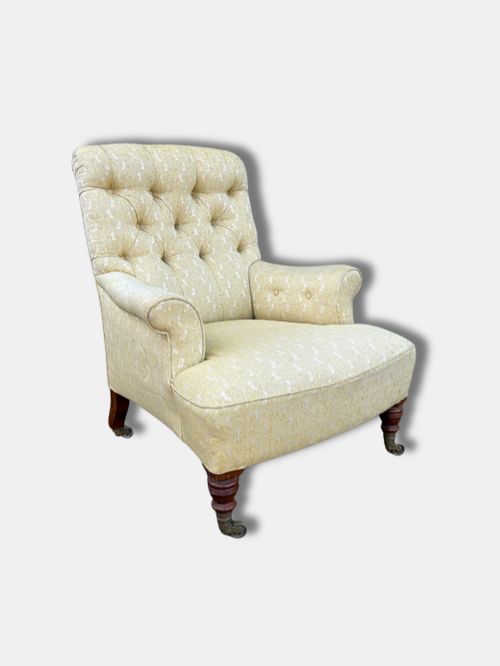
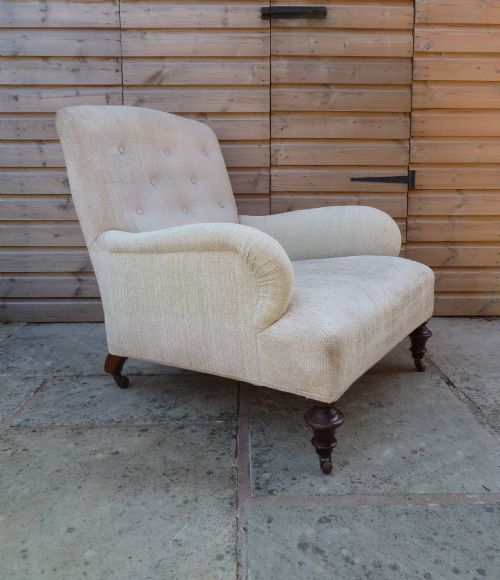
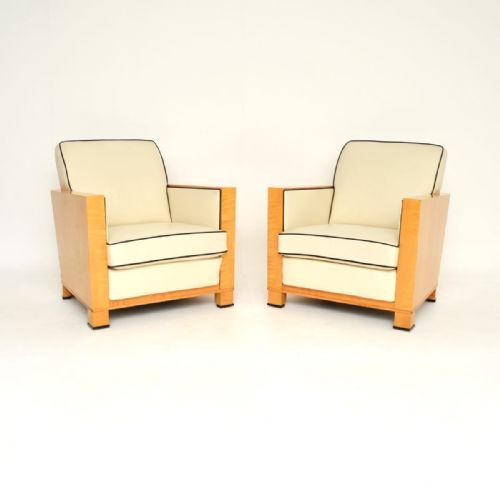
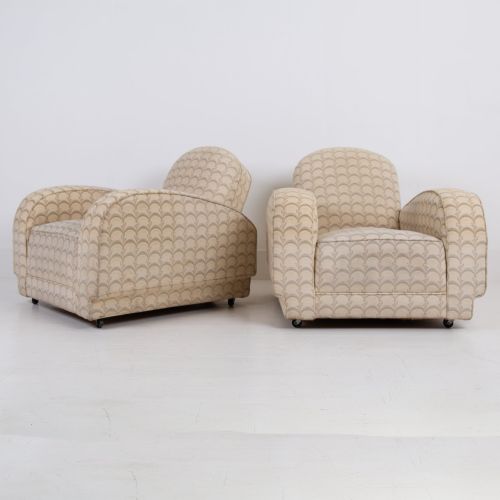
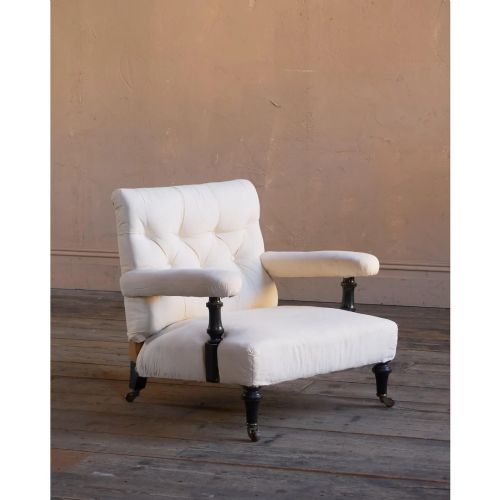
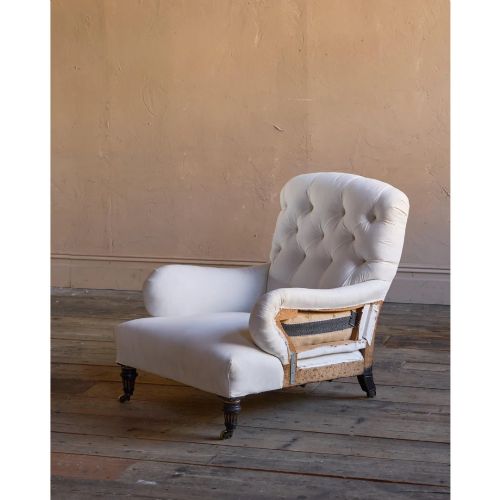
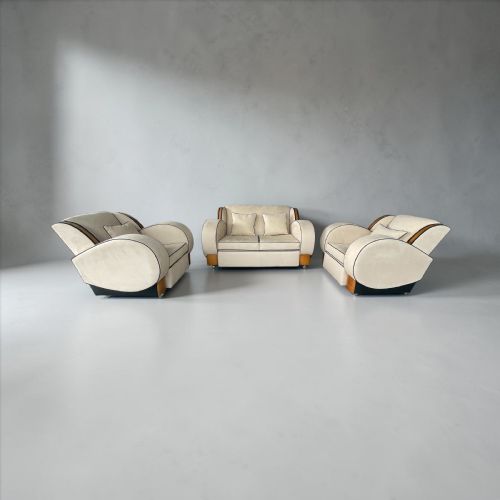
Cream club chairs encompass heavy lounge seating, occasional chairs and library armchairs originating from the nineteenth and twentieth centuries. Buyers seeking cream club chairs frequently encounter nineteenth-century Howard style pieces alongside 1930s Art Deco armchairs upholstered in light fabrics or leather. The forms span deep-seated country house armchairs, French Napoleon III curved back chairs and Swedish satin birch armchairs.
The selection includes pairs and individual lounge suites, with frames constructed from mahogany, walnut, oak and satin birch. These seats serve as central lounging furniture in domestic interiors, combining generous proportions with supportive armrests.
How they were made
Makers built these frames using traditional timbers such as mahogany, walnut, oak and satin birch, often incorporating exposed polished wood alongside upholstered sections. Brass elements and carved details appear on specific nineteenth-century and French models.
Upholstery techniques rely on traditional stuffing and springing finished in fabric, calico or leather. Swedish Art Deco and English examples demonstrate skilled cabinetmaking paired with durable upholstery work.
Several armchairs incorporate horse racing themed upholstery, bringing unexpected sporting character to traditional nineteenth-century seating forms.
What varies in quality
Quality rests upon the integrity of the underlying timber frame and the precision of the joinery, from carved oak lion heads to sleek satin birch veneers. Maker attribution significantly elevates a piece, particularly works originating from established workshops like Howard and Sons or Hille.
The choice of covering material and the execution of the upholstery dictate the finish, whether utilising Italian leather, satin birch or classic fabric. Original framing components and period-correct materials distinguish superior examples from later adaptations.
Howard and Sons·Hille·Mellier and Co·Hary and Lou Epstein
The Cream Club Chairs Glossary
- Art Deco
- A design style from the 1920s and 1930s characterised by clean lines and streamlined forms. Pieces from this era often utilise satin birch or walnut.
- Bergere
- An enclosed upholstered armchair with wooden framing. These chairs frequently feature woven cane panels or padded arms.
- Calico
- A plain-woven unbleached textile often used as a base layer for upholstery. It provides a neutral foundation before top covers are applied.
- Napoleon III
- A French nineteenth-century style known for ornate buttoned upholstery and curved backs. These chairs often feature high buttoned cushioning.
- Satin Birch
- A pale lustrous hardwood favoured by Swedish makers in the early twentieth century. It offers a distinctive grain pattern for Art Deco frames.
Cream Club Chairs: Frequently Asked Questions
How do I identify a Howard and Sons chair?
Howard and Sons armchairs typically exhibit characteristic frame proportions, specific caster designs and branded stampings on the legs or upholstery webbing.
Examining the construction methods and nineteenth-century labelling helps confirm attribution alongside stylistic markers like aesthetic movement legs.
What defines an Art Deco club chair?
Art Deco club chairs from the 1930s feature geometric silhouettes, smooth wooden veneers such as satin birch or walnut, and low-slung seating.
These pieces often appear in pairs or suites, paired with leather or smooth fabric upholstery.
Where were French club chairs used?
French club chairs and Napoleon III armchairs served as formal or relaxing seating in Parisian salons, chateaux and drawing rooms.
Their curved backs and buttoned upholstery were designed to provide structured support in period reception spaces.
How do I care for leather club chairs?
Leather-upholstered club chairs require regular dusting and occasional conditioning to maintain the suppleness of the hide.
Keeping them away from direct heat sources prevents the leather and underlying timber frames from drying out.