



Cream and Gold Chairs
Cream and gold chairs bring aristocratic French flair and gilded warmth into a room, offering both sculptural presence and period seating.
Cream and Gold Chairs
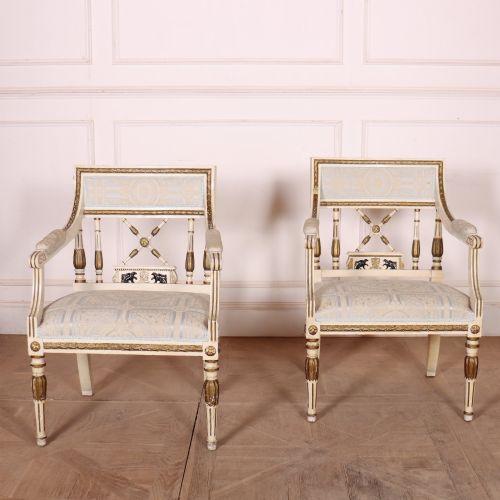
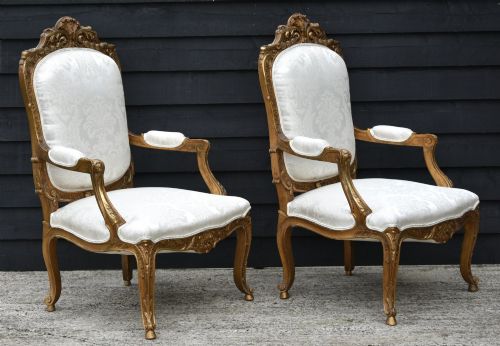
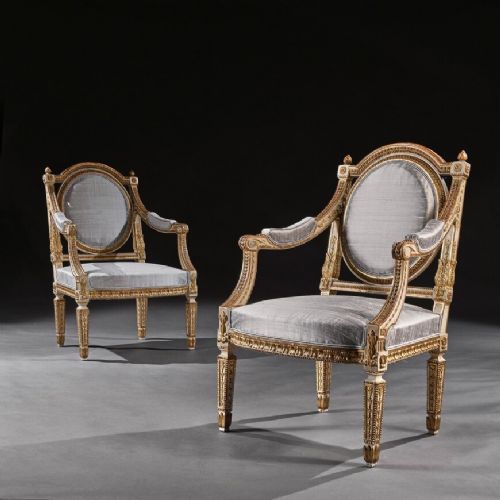
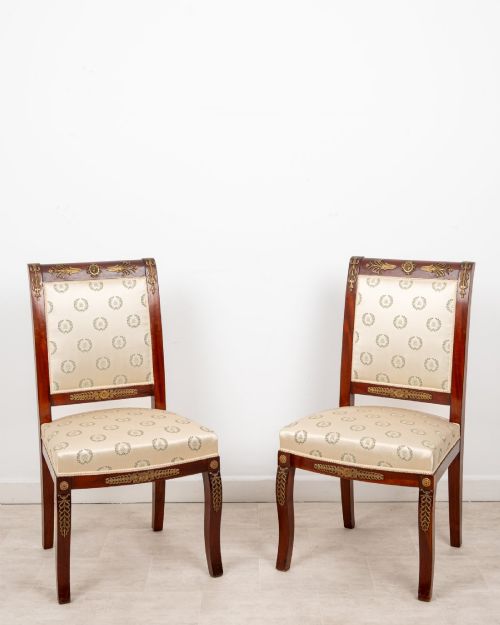
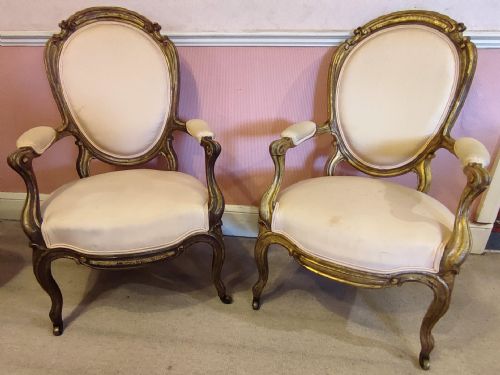
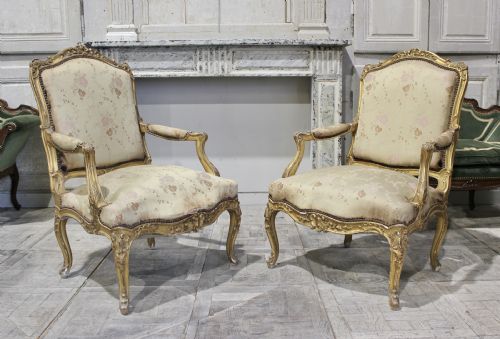
Cream and gold chairs encompass grand French-inspired seating, dominated by nineteenth-century revivals and neoclassical forms. You will frequently encounter pairs of giltwood armchairs and salon chairs displaying Louis XVI or Rococo influences.
The selection spans from eighteenth-century origins to early twentieth-century interpretations, including painted wood frames, side chairs, and larger salon suites. These pieces range from restrained Swedish Empire designs to ornate French chateau seating.
Materials and construction
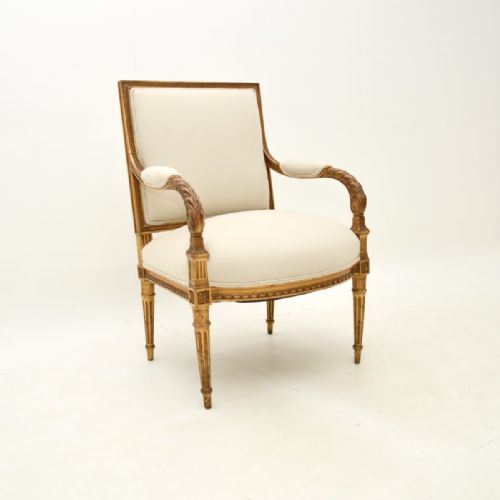
Carved timber such as beech serves as the structural foundation for these frames, often receiving layers of gesso before being gilded with gold leaf or painted in cream tones. Artisans applied parcel gilding to highlight carved details like acanthus leaves and fluted legs.
Upholstery relies on traditional textiles, incorporating silk damask and patterned fabric secured to the frames. Metal elements such as brass or ormolu mounts appear on specific revival pieces to accent the woodwork.
Even a boudoir stool can harbour imperial ambitions when draped in carved giltwood and finished with neoclassical restraint.
Assessing quality and craftsmanship
Depth and precision in the wood carving separate standard framing from exceptional work, particularly in hand-carved giltwood and parcel-gilt details. Crisp lines on neoclassical motifs and substantial timber weight indicate superior creation.
The integrity of the original surface finish, whether aged paint or applied gold leaf, dictates the visual merit of the piece. Superior examples maintain cohesive proportions across large armchairs and matched salon suites.
The Cream and Gold Chairs Glossary
- Giltwood
- Wood that has been coated with gold leaf or powder. This finish defines the reflective, bright appearance seen on many nineteenth-century revival frames.
- Neoclassical
- A style inspired by classical antiquity characterised by straight lines and symmetrical balance. It heavily influences Louis XVI revival seating.
- Ormolu
- Gilded bronze mounts applied to furniture. These metallic decorative elements frequently adorn nineteenth-century Empire revival side chairs.
- Damask
- A reversible figured fabric traditionally used for heavy upholstery. It provides the textured background standard on period salon suites.
Cream and Gold Chairs: Frequently Asked Questions
How do I identify a Louis XVI style chair?
Look for straight, fluted legs, rectangular or oval backs, and classical motifs like ribbons and acanthus carvings. These structural traits distinguish them from the more curved lines of Rococo designs.
They also frequently utilise cream paint and parcel gilding to emphasise the architectural geometry of the frame.
Where should I place a giltwood armchair?
These chairs function well as statement pieces in sitting rooms, drawing rooms, or master bedrooms where their reflective finish catches natural light. Pairing them with neutral walls allows the carved woodwork to stand out.
Ensure they sit away from direct sunlight to protect the fragile gilded surfaces and delicate fabric upholstery.
What is a salon suite?
A salon suite consists of matching seating furniture, often combining a larger settee or day bed with multiple armchairs and side chairs designed for formal entertaining. They share identical wood finishes, carving styles, and upholstery fabrics.
Finding a complete suite offers a unified aesthetic for large reception spaces.
How do I care for antique gilded furniture?
Dust the carved wooden frames gently with a dry, soft brush to avoid damaging the thin layer of gold leaf. Keep the furniture away from excessive moisture and sudden temperature changes.
Professional conservation is recommended for any repairs to the gesso or gilding.