
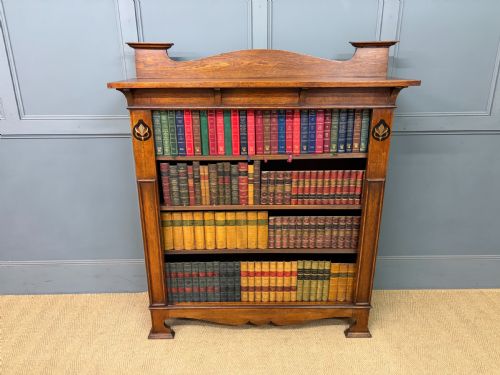
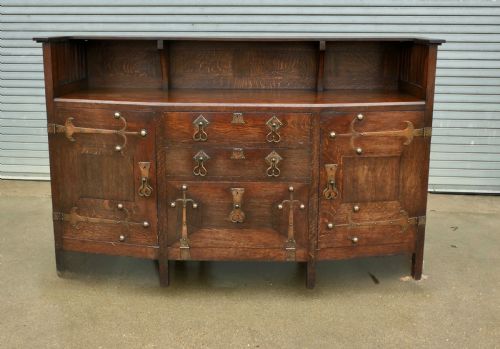
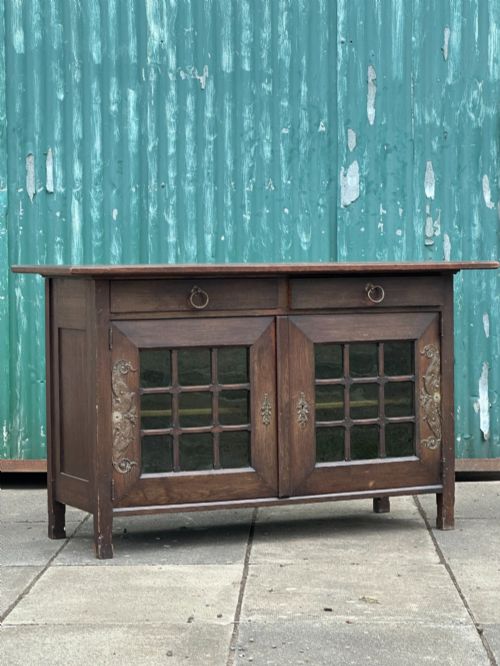
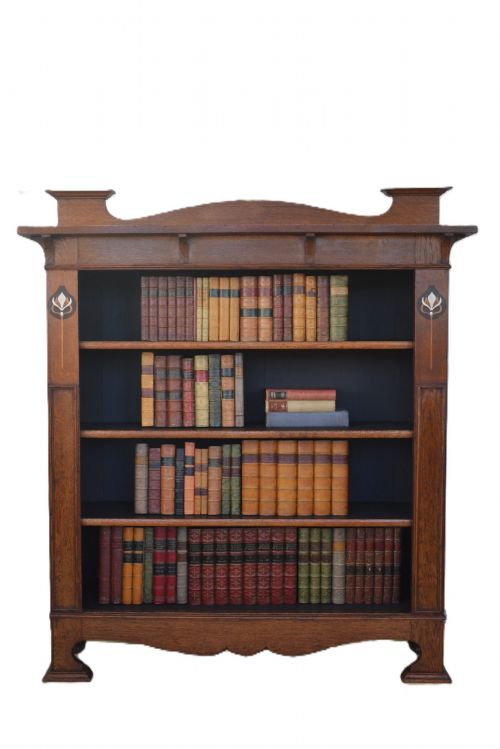


Craftsman Oak Cabinet
These craftsman oak cabinet pieces are honest, solidly built expressions of the Arts and Crafts movement that ground a room with utility and period character.
Craftsman Oak Cabinet
A craftsman oak cabinet encompasses a variety of functional domestic forms, ranging from sideboards and bookcases to bedside cabinets and bureaus. These pieces date principally from the late nineteenth and early twentieth centuries, spanning the Edwardian era into the nineteen-thirties.
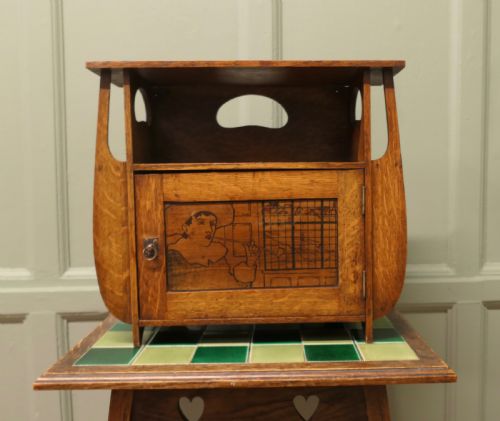
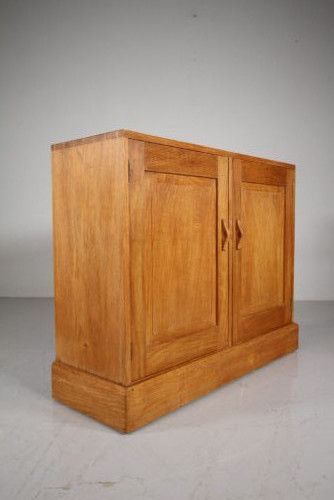
The aesthetic is rooted firmly in the Arts and Crafts style, prioritising straightforward utility and visible construction over excessive ornamentation. Buyers encounter domestic furniture items designed for storage and display, including wall cabinets, dressers, and side cabinets.
Makers and designers of the period applied this philosophy to everyday furniture, creating robust storage items in English oak. Such pieces function as practical additions to modern interiors while retaining their historical vernacular.
How they were made
Construction relies heavily on solid oak and English oak, selected for durability and pronounced grain patterns. Workshops utilised traditional joinery methods to build sturdy carcases capable of withstanding decades of daily use.
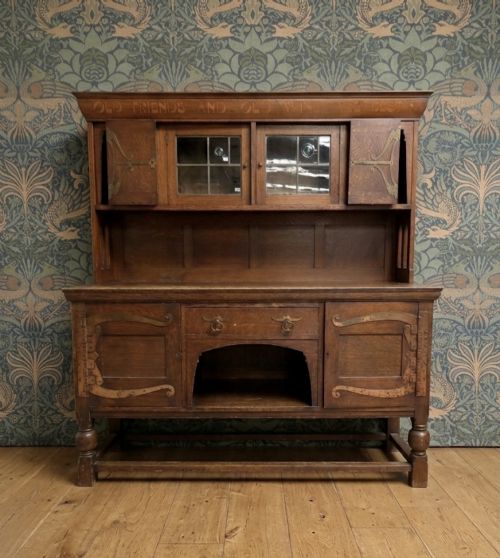
Metal hardware plays a functional and decorative role, featuring brass, iron, and copper handles, hinges, and strapwork. Selected examples incorporate marquetry details to add subtle visual contrast to the timber surfaces.
Materials recorded across the inventory include plain oak, English oak, glass, brass, iron, copper, and marquetry.
What varies in quality
Quality in these pieces is dictated by the pedigree of the design and the integrity of the workshop execution. Works associated with notable firms or identifiable designers carry greater weight among collectors.
The sophistication of the timber selection and the restraint shown in decorative details such as marquetry or metalwork distinguish standard production from exceptional examples.
Ambrose Heal for Heal & Son·Leonard Wyburd·Liberty & Co.·Shapland and Petter·James Shoolbred & Co
The Craftsman Oak Cabinet Glossary
- Arts and Crafts
- A design movement spanning the late nineteenth and early twentieth centuries that championed traditional craftsmanship and simple forms. It rejected mass production in favour of hand-finished materials.
- Marquetry
- The art of applying pieces of veneer to a structure to form decorative patterns. Craftsmen utilised this technique to enrich plain timber surfaces.
- Cotswold School
- A twentieth-century design grouping associated with furniture made by hand using traditional regional methods. Pieces from this circle emphasise the natural qualities of the wood.
- Bureau
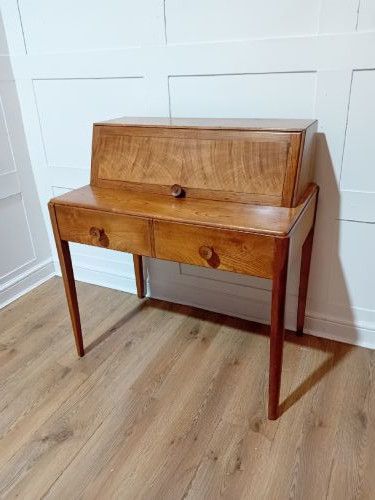
- A desk featuring a sloping flap that conceals fitted interior pigeonholes and drawers. These items served as functional writing furniture in period homes.
- Sideboard
- A large dining room cabinet designed for storing tableware and serving food. They frequently feature cupboards, drawers, and raised back panels.
Craftsman Oak Cabinet: Frequently Asked Questions
What rooms suit a craftsman oak cabinet?
These versatile pieces adapt well to living rooms, studies, and dining spaces where storage and display are required. Their straightforward timber construction complements both traditional and contemporary interiors.
Smaller forms like bedside cabinets function effectively in bedrooms, whilst bookcases and sideboards anchor larger communal areas.
How do I care for period oak furniture?
Solid oak benefits from regular dusting with a dry cloth and occasional treatment with traditional beeswax to nourish the timber. Avoid placing pieces near direct heat sources to prevent the wood from drying out.
Maintaining a stable room temperature helps preserve the integrity of the joints and the original finish.
How are different periods identified?
Pieces from the late nineteenth century often display heavier proportions and more pronounced Victorian influences. Items from the nineteen-thirties tend to reflect the simplified, regional approach of the Cotswold School.
Design attribution and construction details help narrow down the date of manufacture within the broader Arts and Crafts timeline.
What is the difference between a sideboard and a side cabinet?
Sideboards are generally larger dining room items equipped with a combination of cupboards and drawers for storing tableware. Side cabinets are typically more compact storage units used across various domestic rooms.
Both forms utilise sturdy oak construction, but their scale and internal arrangement reflect their intended household functions.