
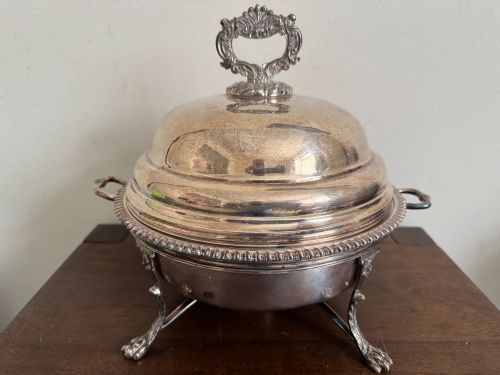


Covered Silver Vegetable Server
Covered silver vegetable servers bring practical elegance to the dining table, offering a polished vessel for side dishes that retains heat and anchors a formal setting.
Covered Silver Vegetable Server
A covered silver vegetable server provides a dedicated lidded dish for presenting side dishes during formal meals, keeping food warm at the table. These pieces range from Georgian and Victorian designs to later Edwardian and Art Deco interpretations, appearing in rectangular, oval, and circular forms.
Buyers searching for a covered silver vegetable server will most frequently encounter Edwardian and nineteenth-century silver plated examples on this page. These domestic vessels often include matching lids and occasional warming stands, reflecting the dining customs of their respective periods.
Materials and construction
These items are constructed primarily from sterling silver or various plated methods, including Sheffield plate, electroplated nickel silver, and standard silver plate over base metals like copper and nickel silver. The application of silver plating allowed workshops to produce substantial dining wares with the appearance of solid silver at a more accessible cost.
Silversmiths shaped the bodies by hand or utilised early industrial rolling and stamping techniques, applying cast decorative mounts to handles, rims, and lids. Joints were typically soldered, and handles were often insulated or designed for ergonomic lifting during service.
Materials represented include sterling silver, Sheffield plate, electroplated nickel silver, copper, and general silver plate.
Assessing quality and craftsmanship
Quality in a covered silver vegetable server rests upon the thickness of the silver application, the crispness of applied cast ornamentation, and the balance of the piece. Finer examples display substantial weight in the metal and hand-chased details rather than thin, stamped pressed decoration.
The durability of the hinge mechanisms, the snugness with which the lid fits the base, and the integrity of any maker marks or crests further distinguish superior production. Pieces that retain their original silver layer without extensive base metal telegraphing demonstrate better initial manufacture and careful preservation.
Mappin and Webb·Matthew Linwood·William Hutton and Sons·Christofle / Gallia
The Covered Silver Vegetable Server Glossary
- Entree dish
- A lidded serving vessel designed for holding courses served before the main meat, typically rectangular or oval in shape.
- Sheffield plate
- An early fusing technique where a sheet of silver is fused to a thicker copper core by heat and pressure before rolling.
- EPNS
- An abbreviation for electroplated nickel silver, denoting a base metal alloy coated in silver via an electrolytic process.
- Tureen
- A deep, bowl-like serving vessel with a fitted lid, often utilised for soups, sauces, or larger vegetable portions.
Covered Silver Vegetable Server: Frequently Asked Questions
How were covered vegetable servers used?
These dishes were brought directly to the dining table by domestic staff or passed among guests during multi-course meals. The fitted lid kept vegetables warm between the kitchen and the dining room.
They sat alongside large meat platters and tureens, forming part of a coordinated tableset that prioritised both presentation and temperature control.
How do I clean silver plated servers?
Maintenance requires mild, non-abrasive silver polish applied with a soft cloth to avoid wearing through the thin silver layer. Gentle washing in warm soapy water immediately after use prevents food residues from tarnishing the metal.
Storage in tarnish-resistant flannel rolls or dry environments helps preserve the polished surface between occasional uses on the dining table.
Can I use these for modern dinners?
Modern dining benefits greatly from the aesthetic warmth and functional utility of these lidded dishes. They serve side dishes effectively at family gatherings or dinner parties just as they did in past centuries.
Care should be taken to avoid dishwashers and metal utensils that might scratch the historical silver surface.
How do I date an antique server?
Dating relies upon a combination of maker marks, style markers, and manufacturing techniques recorded on the piece. Victorian and Edwardian examples often display registry numbers or specific plated marks unique to their decade of production.
Earlier Georgian pieces typically feature clear sterling hallmarks or characteristic Sheffield plate construction methods visible at exposed edges.