


Countryside Watercolour Artwork
Countryside watercolour artwork captures rural scenes through delicate pigments on paper, bringing historic pastoral landscapes into modern interiors.
Countryside Watercolour Artwork
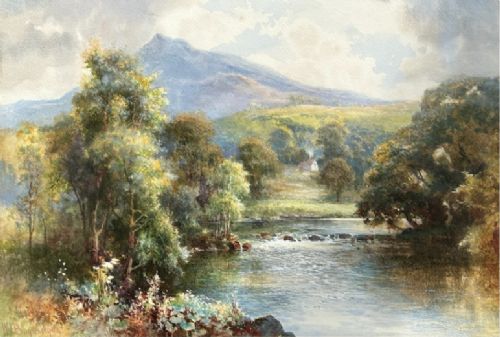
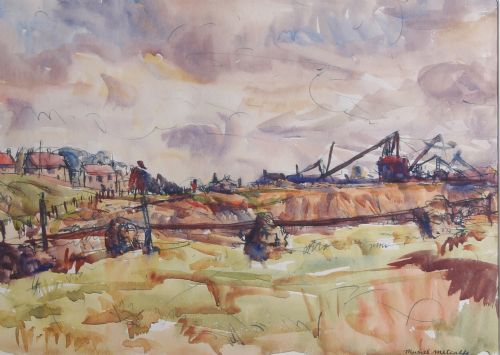
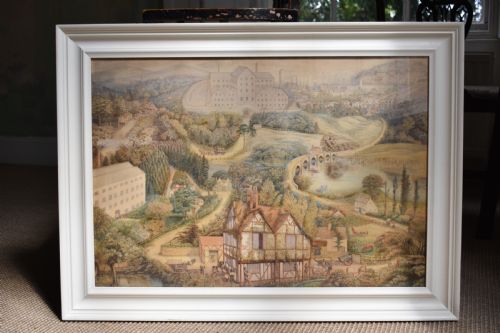
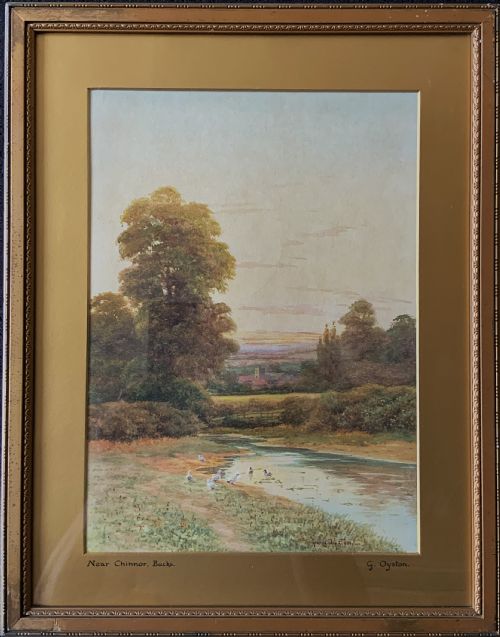
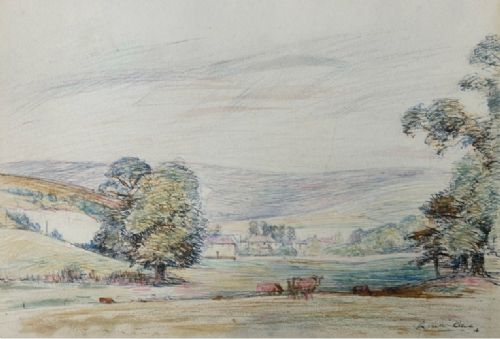
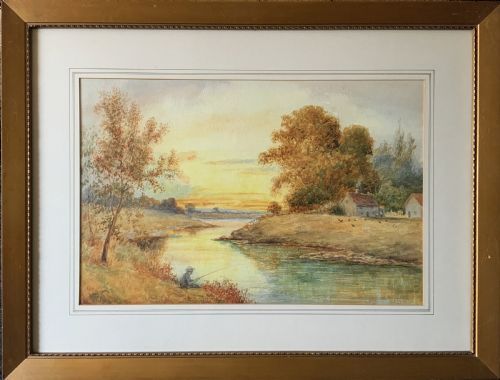
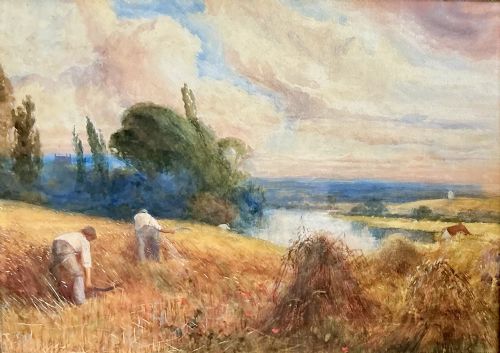
Countryside watercolour artwork encompasses original landscape paintings created on paper substrates, capturing rural life, rivers, cottages, and agricultural settings. These pieces span from the Victorian period through the mid-twentieth century, reflecting changing British and European artistic interpretations of the countryside.
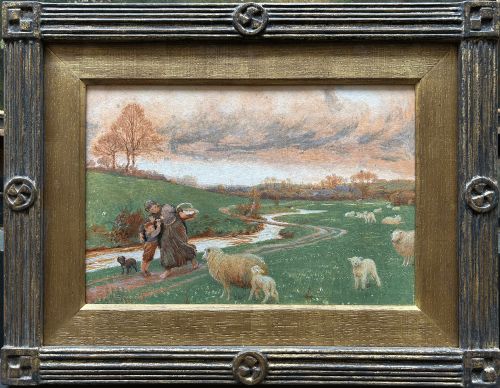
The selections on this page are predominantly framed paintings originating from the nineteenth and early twentieth centuries. Buyers encounter works featuring pastoral views, livestock, Welsh and Yorkshire valleys, and harvests rendered by named regional artists as well as traditional practitioners.
How They Were Made
Artists built these compositions utilising watercolour pigment and graphite on paper, sometimes incorporating gold leaf for highlights. The application typically involved transparent washes of paint layered to achieve depth in skies, water, and foliage.
Framing frequently utilises wood and glass to protect the delicate paper surface from atmospheric moisture and handling. Original period frames often accompany the paintings, maintaining their historical context.
Several artists preferred documenting stray sheep blocking rural lanes over grand vistas.
What Varies in Quality
Quality rests upon the artist's handling of light, atmospheric perspective, and fine detail within the landscape. Master practitioners achieve subtle tonal gradations and spatial depth that lesser works lack.
Condition of the paper and pigment vibrancy also differentiate pieces. Examples that retain their original colour without fading or extensive foxing represent the finer tier of surviving works.
William Joseph Boyes·Muriel Metcalfe·Frederick Walker·George Oyston·Russell Sidney Reeves·Frederick Hines·Alfred George Morgan·Edgar Woollatt·Charles Gregory·Samuel Timmins·Henry Charles Fox·Fred Lawson·Cuthbert Crossley·Arthur Tucker·James William Booth·Frederick Septimus Lewis·William Hoggatt·Thomas Hunn·Stanley Orchart·James Orrock·Robert Thorne Waite·Henry Bailey·Robert Winchester Fraser·George Arthur Fripp·Harold Lawes
The Countryside Watercolour Artwork Glossary
- Watercolour pigment
- Ground colour mixed with a water-soluble binder, applied to paper in translucent washes. This medium allows light to reflect from the white paper beneath through the layers of paint.
- Graphite
- A form of carbon used as a drawing material beneath watercolours. Artists utilised it to sketch foundational outlines before applying pigment.
- Edwardian Pastoral
- A movement celebrating rural idylls and agricultural life during the early twentieth century. These works emphasise peaceful countryside scenes and traditional farming practices.
Countryside Watercolour Artwork: Frequently Asked Questions
How do I hang antique watercolours?
Display watercolours away from direct sunlight to prevent the pigments from fading over time. Utilising UV-protective glass further shields the delicate paper from light damage.
Ensure the room maintains stable humidity levels to protect both the paper support and the wooden frame. Hang the artwork at eye level using secure picture hooks rated for the weight of the frame.
Are these paintings original?
The selections on this page consist of original hand-painted watercolours rather than modern prints or reproductions. Each piece was individually executed by an artist using brush and pigment upon paper.
Signatures, dates, and inscriptions often appear on the front or reverse of the works, providing evidence of their hand-painted origins.
What periods do these artworks represent?
The inventory spans the nineteenth and twentieth centuries, encompassing Victorian, Edwardian, and mid-century eras. Artists working during these periods documented rural landscapes undergoing various stages of industrial and agricultural change.
Specific dates within the titles and descriptions indicate when particular pieces were created, ranging from the mid-nineteenth century to the nineteen-sixties.
How do I identify different landscape styles?
Victorian watercolours tend to feature detailed, naturalistic depictions of countryside scenes with careful attention to botanical and architectural elements. Later twentieth-century pieces often show broader brushwork and a focus on atmospheric mood rather than fine detail.
Examining the treatment of light, brush technique, and subject matter helps distinguish between nineteenth-century pastoral works and subsequent modernist interpretations.