
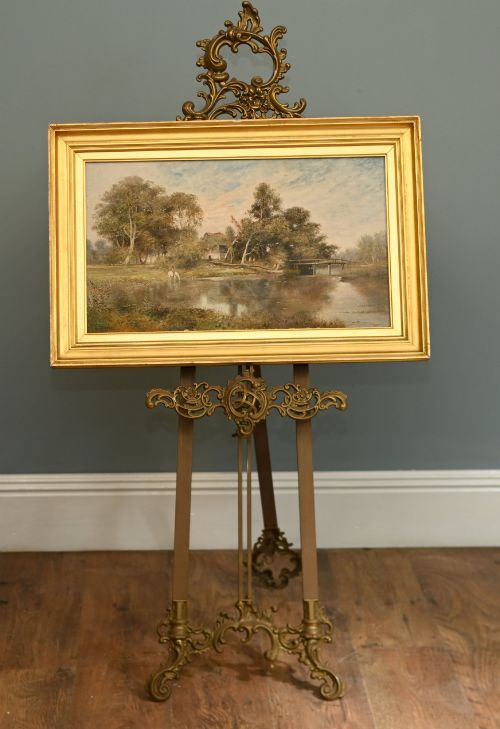
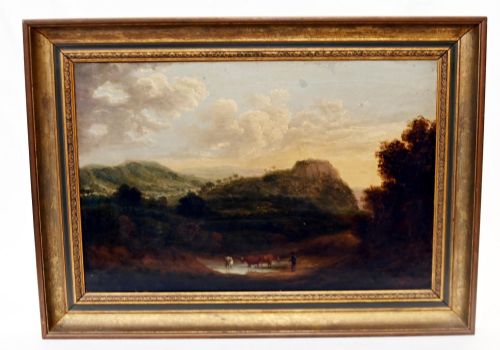
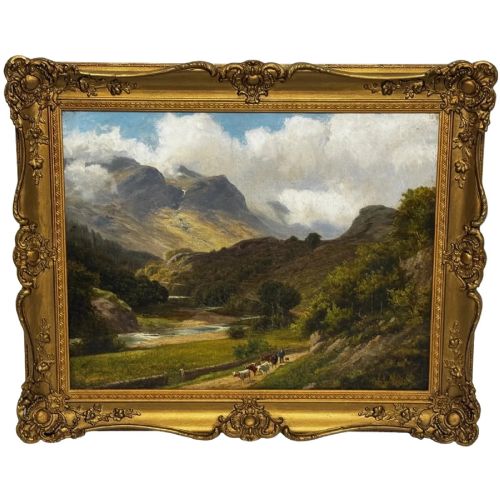
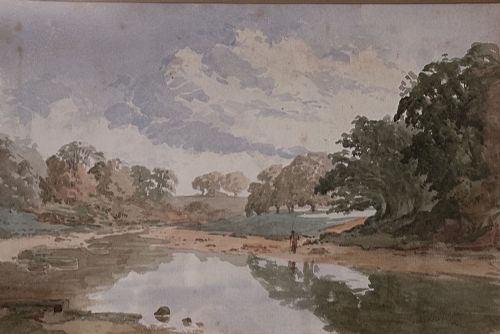

Countryside Oil Landscape
When you search for a countryside oil landscape, you open a window to rural life and open skies captured by brush across centuries.
Countryside Oil Landscape
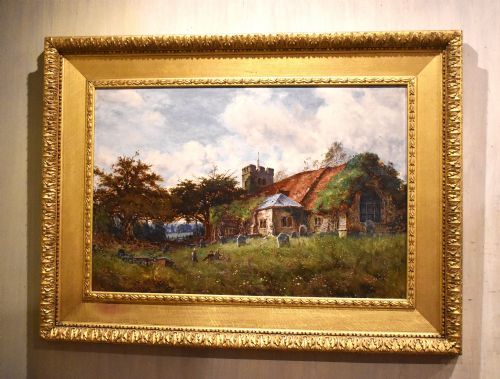
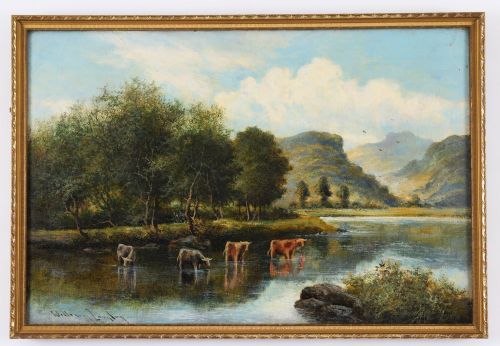
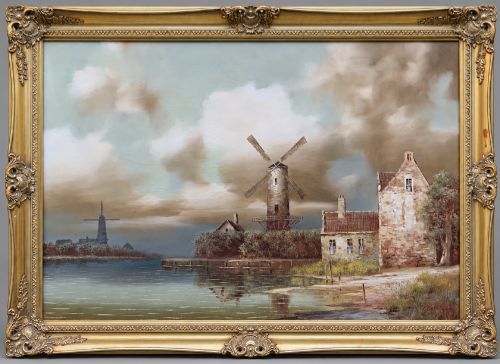
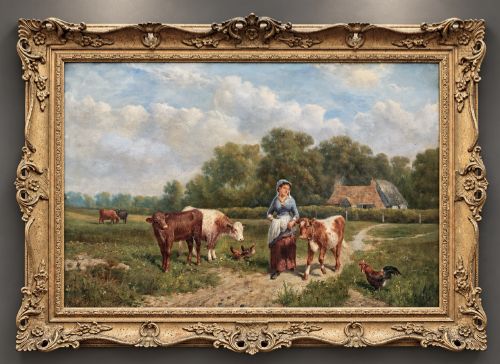
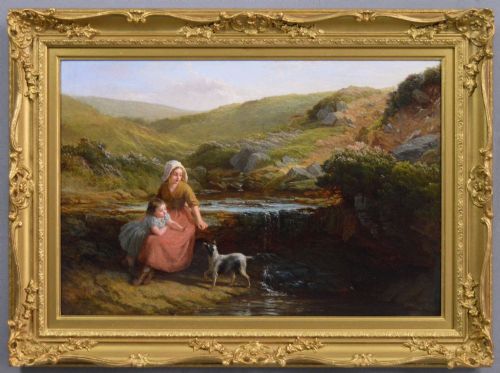
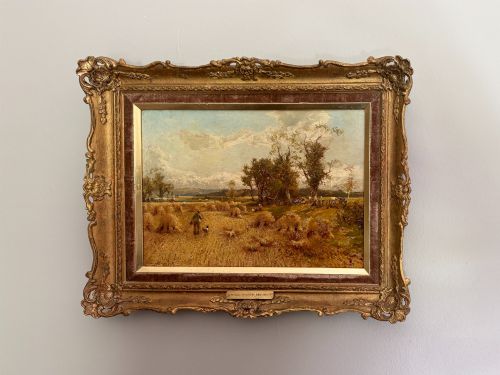
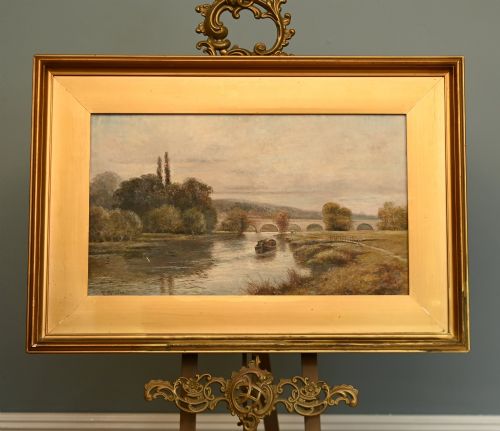
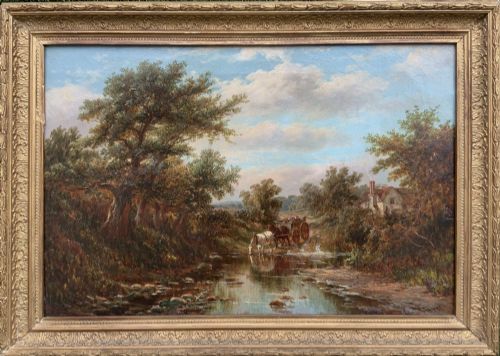
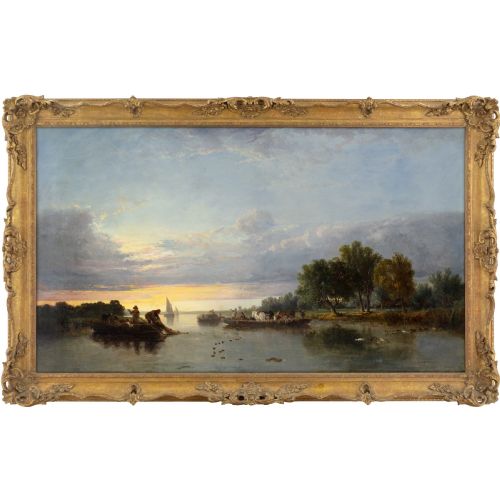
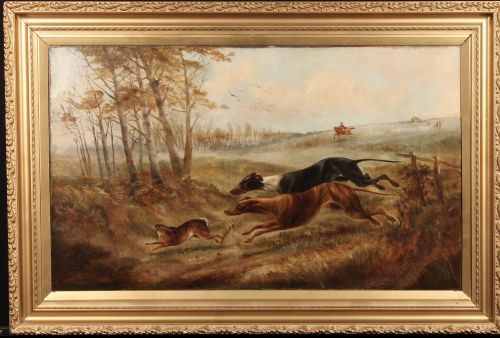
A countryside oil landscape brings rural scenery, agricultural life, and natural vistas into focus through painted canvas and wooden panels. These works capture rivers, woodland, cottages, and pastures under changing seasonal light.
The selections available here span from the nineteenth century through the mid twentieth century, including Victorian pastoral scenes, Edwardian views, and works influenced by British and French impressionism. You will encounter both signed compositions by named painters and traditional pieces from the British school.
Framed paintings dominate the range, often presented in gilded wood frames that complement the natural subjects. The scale varies from intimate cabinet panels to large canvases suited for central wall placement.
How they were made
Artists built these countryside oil landscape works using oil paint applied to stretched canvas, wooden panels, or board supports. The medium allowed for rich texture, layering, and subtle tonal shifts to render foliage, water, and sky.
Many of the pieces rely on traditional framing using gilded wood or carved wooden surrounds to protect and present the painted surface. Pigments were manipulated with brushes and knives to achieve both smooth atmospheric skies and thick impasto foliage.
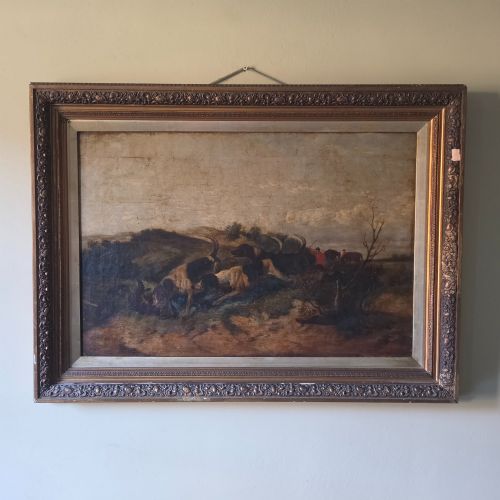
Several canvases capture cows, sheep, and heavy shire horses lingering patiently in the middle of British farming history.
What varies in quality
The strength of a countryside oil landscape rests upon the artist's handling of light, atmosphere, and perspective within the rural setting. Finer examples demonstrate confident brushwork and a convincing sense of depth, whereas simpler works remain formulaic in composition.
Materials also differentiate the collection, with stable canvas supports and well-preserved oil paint retaining their original vibrancy. The presence of period-appropriate gilded wood frames adds to the integrity of the piece.
Richard Sebastian Bond·William H Myers·Frederick Marriott·Arthur Wardle·William Joseph Shayer Senior·Hendrik Willem Schweickhardt·Herbert Royle·Robert Morson Hughes·Gabriel Mathieu·David Bates·Harald Foss·Eric Brown·Henri Ottmann·Richard Redgrave·Ernest Higgins Rigg·Peter Newcombe·Rene Levrel·Vernon DeBeauvoir Ward·Florence Adelina Hess·Alexander Wellwood Rattray·John Horace Hooper·Hubert Wellington·Percy Hipkiss·Jack Cross·John Westall
The Countryside Oil Landscape Glossary
- Canvas
- A heavy woven fabric stretched across a wooden frame to serve as a painting surface. It provides the primary support for many nineteenth and twentieth century works.
- Impasto
- Paint applied thickly to a canvas or panel so that it stands out from the surface. This technique gives texture to elements like foliage and water highlights.
- Panel
- A flat piece of wood used as a rigid support for oil paint instead of stretched fabric. Panels are common in smaller nineteenth century landscape studies.
- Gilt wood
- Wood decorated with a thin layer of gold leaf or metallic gilt finish. It forms the traditional decorative framing seen around many period paintings.
Countryside Oil Landscape: Frequently Asked Questions
What periods do these paintings come from?
The works span from the eighteenth and nineteenth centuries through the Victorian era and into the mid twentieth century. Artists worked across distinct movements including British realism and impressionism.
Each period brings specific approaches to rural subjects, from romantic pastoral views to later modernist interpretations of countryside light and topography.
Are these paintings supplied with frames?
Many listings include period or decorative frames, frequently made of gilded wood that suits the traditional nature of the artwork. The framing style often reflects the era in which the painting was created.
Details regarding the specific frame accompany individual listings so you can assess the complete presentation.
How do I identify a regional school?
British school labels usually indicate works created by artists working within the British tradition without a specific named author. Clues often appear in the depicted architecture, flora, and atmospheric conditions.
Pignents, canvas stamps, and regional framing styles help narrow down the geographic origin and period.