

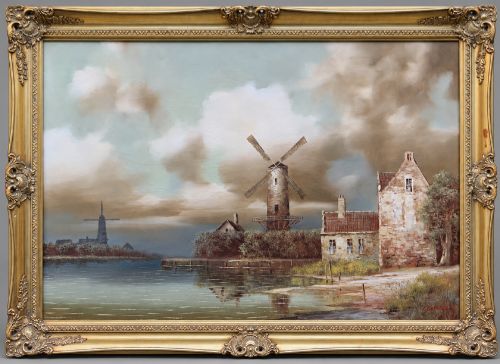


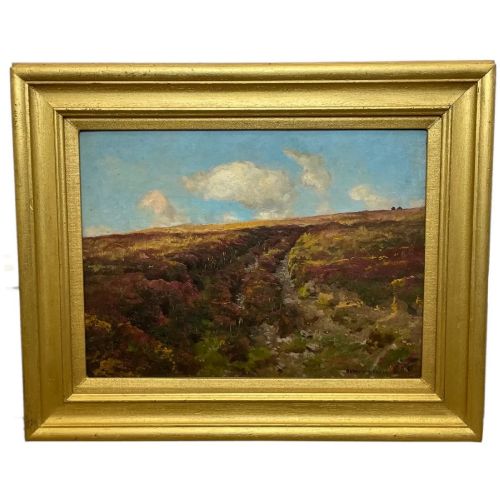
Countryside Oil Art
These countryside oil art pieces capture rural life and natural vistas, offering buyers a direct window into historical landscapes through layered pigment.
Countryside Oil Art
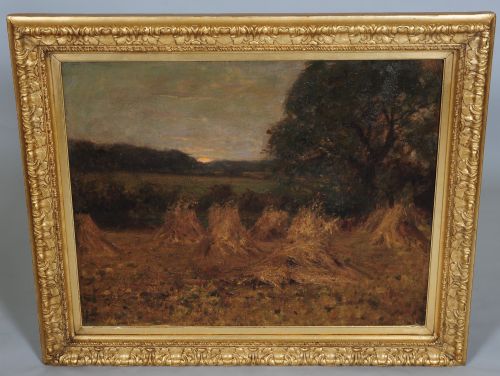
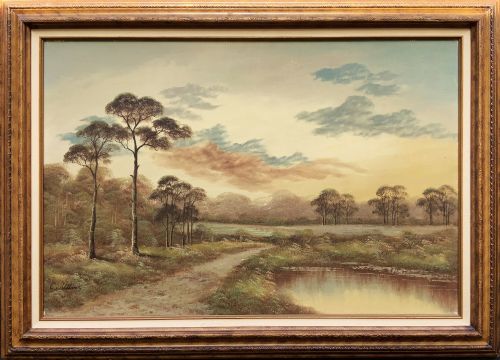
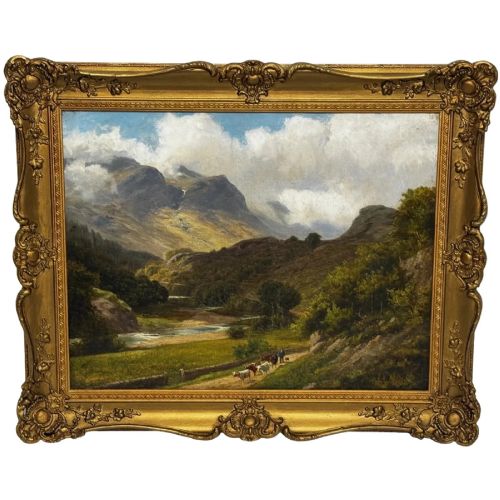
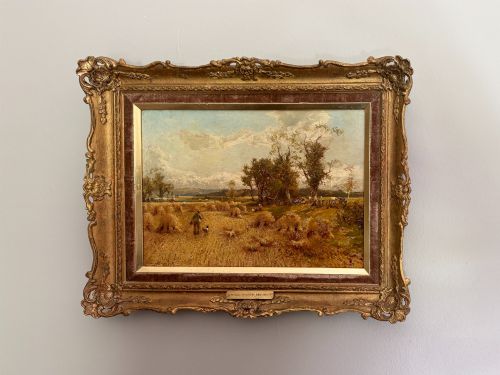
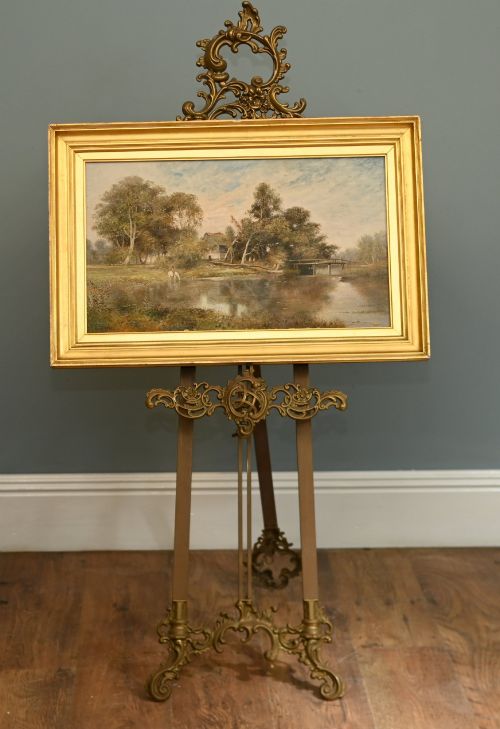
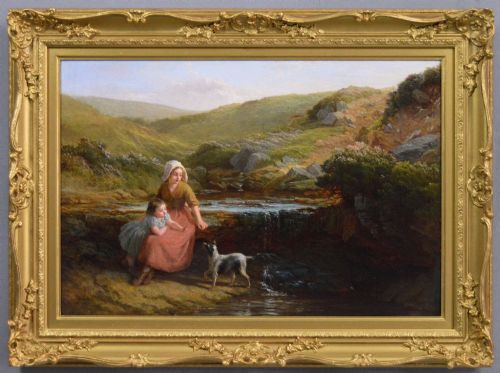
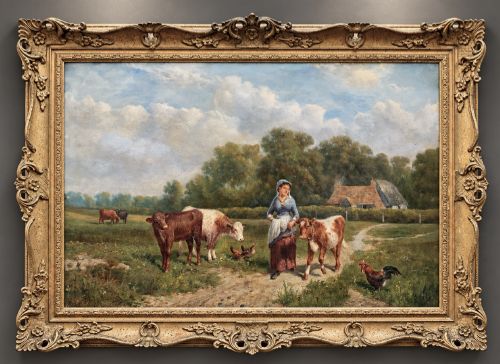
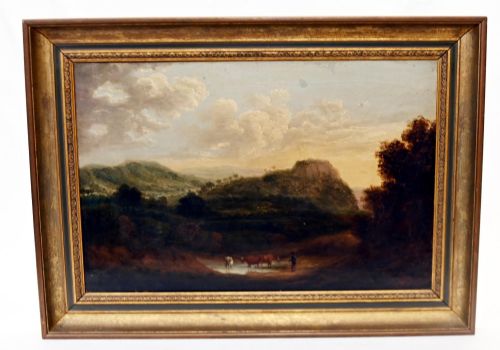
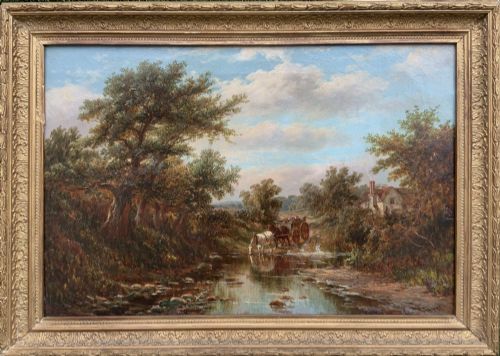
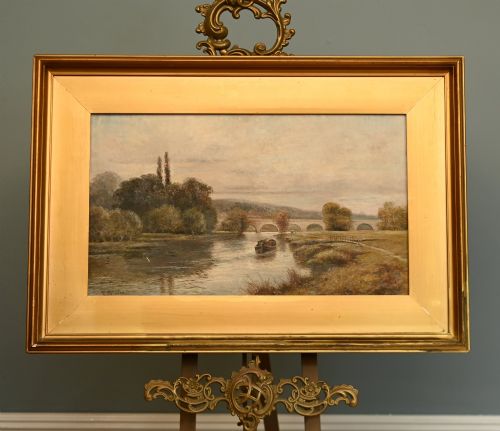
Countryside oil art encompasses canvas and wood panel works spanning the eighteenth century through the mid twentieth century, with a strong representation of Victorian and Edwardian periods. Buyers encounter pastoral scenes, river views, and agricultural labour depicted across framed paintings and original fine art.
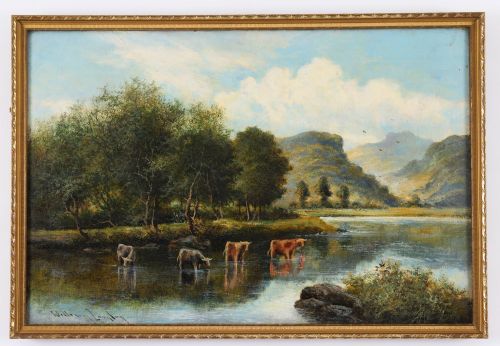
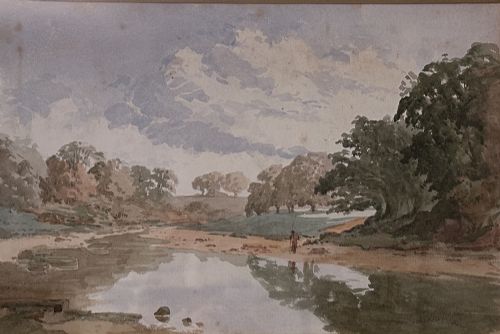
The subjects range from cattle and farmyards to rural riverbanks and woodland landscapes, reflecting British realism, naturalism, and impressionism. Many pieces feature signed works by named artists alongside notable examples from the wider British and European schools.
Materials and construction
Artists painted primarily using oil paint applied to woven canvas supports or wooden boards, often housed within wood frames enhanced by gesso and gilt. The interaction of oil mediums on textured surfaces allowed painters to build depth and atmospheric light across pastoral scenes.
The framing often matches the period of the painting, utilising moulded wood and decorative gesso finishes to protect the edges of the canvas or board while completing the visual presentation.
Countryside Oil Art Retail Price Guide 2026
Typical asking prices for countryside oil art among the pieces listed under this phrase on Sellingantiques today, from the lower quarter to the upper quarter. They describe what is for sale here now, not the wider market.
Several canvases secretly feature local cows pausing mid-graze to critique the artist's progress.
Assessing quality in rural paintings
Quality rests in the handling of light, the accuracy of composition, and the confidence of brushwork across the landscape or figures. Stronger works demonstrate a clear command of atmospheric perspective and natural proportion within the rustic setting.
The preservation of the original paint surface and the condition of the supporting canvas or board influence the overall integrity of the piece. The articulation of fine details, such as livestock anatomy or foliage, distinguishes accomplished academic works from simpler regional studies.
James Elliot·William Langley·Samuel Joseph Clark·Edward Holmes·William Manners·E Steele·F Staple·Thomas Thomas·Edward Williams·George Armfield·William H Myers·George Graham·Frederick Marriott·Arthur Wardle·William Joseph Shayer Senior·Hendrik Willem Schweickhardt·Herbert Royle·Robert Morson Hughes·Thomas Barker of Bath·Gabriel Mathieu·David Bates·Lucy Pratt·Harald Foss·Eric Brown·Henri Ottmann
The Countryside Oil Art Glossary
- Oil on canvas
- A painting technique where oil paint is applied to a stretched woven fabric support. This combination allows for rich colour blending and textured brushwork.
- Gesso
- A plaster-like mixture applied to wood frames to create a smooth surface for gilding. It provides structural detail and ornamental relief around the artwork.
- British Realism
- An artistic movement focusing on truthful, unidealised depictions of everyday subjects and landscapes. It avoids romantic exaggeration in favour of observable detail.
- Pastoral landscape
- A genre of art depicting rural scenes, farmland, and agricultural life. These works celebrate the tranquility and labour of the countryside.
Countryside Oil Art: Frequently Asked Questions
What periods do these paintings cover?
The selection spans from the eighteenth century through the Victorian and Edwardian eras up to the mid twentieth century. Works reflect shifting artistic movements including naturalism, impressionism, and realism.
Most pieces date from the nineteenth century, showcasing traditional rural scenes and pastoral views executed by British and European painters.
How should I care for an oil painting?
Keep paintings away from direct sunlight and fluctuating humidity to protect the canvas and oil pigments from cracking. Display them on stable walls away from heat sources.
Dust the surface gently with a soft, dry brush and avoid using water or chemical cleaners on the paint or gilt frame.
What subjects are common in these artworks?
Common subjects include agricultural labour, cattle grazing by rivers, woodland paths, and picturesque village views. Figures engaged in rural tasks frequently populate the foreground.
Artists also recorded specific regional topographies, from the Thames Valley to the Lake District and international monasteries.